
Deutscher Apotheker Verlag
Specialist books in the fields of pharmacy - drug information - medicine.
View Rights Portal Trusted Partner

Specialist books in the fields of pharmacy - drug information - medicine.
View Rights Portal
The German Cultural Forum for Central and Eastern Europe publishes richly illustrated non-fiction books about the cultural history of those areas of Central and Eastern Europe where Germans used to, or still do live. The carefully edited titles with elaborated appendices are written by well-known experts who are able to present information about Central and Eastern Europe in an attractive way by cultural travel guides or historical overview books. The Cultural Forum also edits an annual and a bimonthly magazine, Blickwechsel ("Change of perspective") and Kulturkorrespondenz östliches Europa ("Cultural Correspondence Central and Eastern Europe"). Furthermore, the Forum organizes popular lectures, discussions, readings, exhibitions, concerts, journalist trips, writer residencies and prize-givings.
View Rights Portal Trusted Partner
Trusted Partner
Trusted Partner

"Die hier versammelten Briefe Gerhard Gershom Scholems sind zum allergrößten Teil Zeugnisse aus jungen Jahren; gerichtet an Werner Kraft, den heute in Jerusalem lebenden Dichter und homme de lettres. In jenen Jahren, die in diesen Briefen aufleuchten, nämlich den Jahren 1917 bis 1931, gab es für Scholem hauptsächlich eines zu tun: leidenschaftlich, unentwegt zu lernen, und zwar, so Werner Kraft, fast ausschließlich »bezogen auf das Studium der heiligen Schriften«. Wie Scholem derjenige wurde, dem man sein Botschaft glaubte, weil er sie vertrat – dies verdeutlichen diese Briefe an den Jugendfreund, der, mit weit größeren Schwierigkeiten, als Scholem sie hatte, ebenfalls zu »seinem« Judentum finden mußte."
Trusted Partner

 Trusted Partner

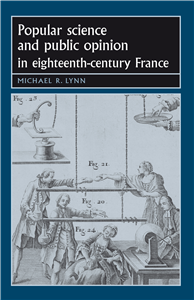
Now available in paperback, Michael R. Lynn's book analyses the popularisation of science in Enlightenment France. He examines the content of popular science, the methods of dissemination, the status of the popularisers and the audience, and the settings for dissemination and appropriation. Lynn introduces individuals like Jean-Antoine Nollet, who made a career out of applying electric shocks to people, and Perrin, who used his talented dog to lure customers to his physics show. He also examines scientifically oriented clubs like Jean-François Pilâtre de Rozier's Musée de Monsieur which provided locations for people interested in science. Phenomena such as divining rods, used to find water and ores as well as to solve crimes; and balloons, the most spectacular of all types of popular science, demonstrate how people made use of their new knowledge. Lynn's study provides a clearer understanding of the role played by science in the Republic of Letters and the participation of the general population in the formation of public opinion on scientific matters.
Trusted Partner
Trusted Partner
Trusted Partner

In this book, Michael R. Lynn analyses the popularisation of science in Enlightenment France. He examines the content of popular science, the methods of dissemination, the status of the popularisers and the audience, and the settings for dissemination and appropriation. Lynn introduces individuals like Jean-Antoine Nollet, who made a career out of applying electric shocks to people, and Perrin, who used his talented dog to lure customers to his physics show. He also examines scientifically oriented clubs like Jean-François Pilâtre de Rozier's Musée de Monsieur which provided locations for people interested in science. Phenomena such as divining rods, used to find water and ores as well as to solve crimes; and balloons, the most spectacular of all types of popular science, demonstrate how people made use of their new knowledge. Lynn's study provides a clearer understanding of the role played by science in the Republic of Letters and the participation of the general population in the formation of public opinion on scientific matters.
Trusted Partner
Schon als Rainer Werner Fassbinder 1982 starb, wollte Ian Penman dem exzessiv produktiven Macher von Filmen wie Angst essen Seele auf oder Die Ehe der Maria Braun ein Buch widmen. Vierzig Jahre später greift er den Plan wieder auf. Sein Pitch: »Diese Story hat alles! Sex, Drogen, Kunst, Großstadt, Moderne, Kino und Revolution. In ihm sind Viele. Er wurde sein eigenes Hollywood.« Das Ergebnis: ein Wirbelsturm biografischer Fragmente und Aperçus, ein Kaleidoskop der »Fassbundesrepublik« mit ihrer unterdrückten Vergangenheit, ihrer Paranoia, ihren radikalen künstlerischen Experimenten. Kiefer, Syberberg, Tangerine Dream. Für Ian Penman hat RWF den Status, den Baudelaire für Walter Benjamin hatte: Protagonist und Medium einer Spätphase – einer Epoche, die bereits die nächste träumt.
Trusted Partner

 Trusted Partner
 Trusted Partner
Trusted Partner
Trusted Partner

Im Körper von Johannes Schneider regiert der Krebs. Auch wenn seine Familie sich rührend kümmert, es besteht wenig Hoffnung. Er fürchtet sich vor dem, was kommt, und davor, daß nichts bleibt von ihm und seinem Leben. Im Schreiben geht er gegen die Angst und das Vergessen an und träumt sich zurück in seine Kindheit im Rheinischen, an einen geradezu mythischen Ort - ins Wiesenhaus. Hier blüht das Leben wie die Landschaft. Doch bringt der Blick zurück auch Verdrängtes ans Licht, unerwartet bekommt das Familienidyll erste Risse. Langsam, aber sicher schreibt Schneider sich voran, hin zur Wahrheit darüber, was damals wirklich geschah und wie er zu dem wurde, der er heute ist. Mit großer Empathie erzählt Christoph Schmitz von einem Mann, der sich erinnert, um eine Zukunft zu haben.
Trusted Partner
Trusted Partner
Trusted Partner
Trusted Partner
 Trusted Partner
In fresh readings of Theodor W. Adorno, Giorgio Agamben, Hannah Arendt, Judith Butler, Barbara Cassin, Michel Foucault, Werner Hamacher, Martin Heidegger, and many more, Gotman rearticulates the foundations of broadly western philosophical thinking to carve out a shadowy space of recalcitrant thought 'in dark times'. At once indebted to the legacy of critique and enmeshed in affective and performative approaches to language, anti-theatricality, critical race theory and gender studies, she weaves a poetic mesh of intimate fragments, reflections on what it means to think and to write, as she puts it, after spectacle. Almost but not quite a straight work of philosophy, distinctly literary and performative in its anti-genre, this book twists and turns, swerves and cuts, to show the work of thinking as an intimate act - a theatre of angles and openings, adjacencies and reverberations.






