
Your Search Results
-

-

Art of Crow
ART OF CROW is a brand that specializes in creating, featuring and publishing the Art of Books by the artist and writer CROW, and his curator and publisher Susanne M. Matz. The books are precious editions of prose or lyrics illustrated by artworks of paintings and photographic art. Titles are available as limited hardcover-editions, eBooks, and Audiobooks, designed by combining the spoken word and music. Order at artofcrow@outlook.com
View Rights Portal
-
Promoted Content

 Humanities & Social SciencesFebruary 2026
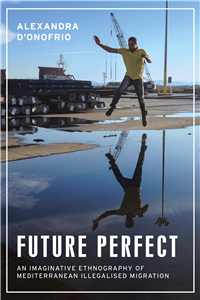
Future perfect
An imaginative ethnography of Mediterranean illegalised migration
by Alexandra D'Onofrio
The present volume emerges from a practice-based research that focuses on experiences of migration and border crossing during what are perceived as existential 'turning points' by the protagonists themselves. It recognizes the fundamental role that imagination plays in people's perceptions of reality, in their decisions and actions, and finally in the way they narrate their experiences. As a consequence, it makes a stance for ethnographic practice to include more creative and collaborative methodologies in order to explore such intangible and unstructured realms of existence. In particular, this ethnography developed theoretically and methodologically in close collaboration with a group of Egyptian men who crossed the Mediterranean Sea in search of better living opportunities in Italy, by engaging them through a range of the co-creative processes such as theatre improvisations, storytelling practices, collaborative filmmaking and participatory animation.
-
Promoted Content
 Humanities & Social SciencesNovember 2023
Rethinking Norman Italy
Studies in honour of Graham A. Loud
by Joanna Drell, Paul Oldfield
This volume on Norman Italy (southern Italy and Sicily, c. 1000-1200) honours and reflects the pioneering scholarship of Graham A. Loud. An international group of scholars reassesses and recasts the paradigm by which Norman Italy has been conventionally understood, addressing varied subjects across four key themes: historiographies, identities and communities, religion and Church, and conquest. The chapters revise and refine our understanding of Norman Italy in the eleventh and twelfth centuries, demonstrating that it was not just a parochial Norman or Mediterranean entity but also an integral player in the medieval mainstream.
-
 Trusted Partner
 Humanities & Social SciencesMay 2026
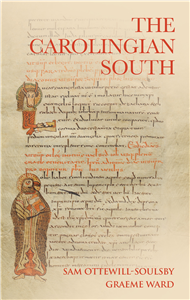
The Carolingian South
by Sam Ottewill-Soulsby, Graeme Ward
The Carolingian South turns the Frankish world upside down by taking as its subject the lands of the Carolingian empire south of the Loire and the Alps. It assembles an international group of scholars from different disciplines to examine how the Carolingians defined and were defined by this region. This book asks how Carolingian power was created and negotiated in the south. It views the Frankish empire from the perspective of the Christian and Muslim polities of the Mediterranean, while also following the movement of people and ideas through the endlessly fascinating world that they made.
-
Trusted Partner
 The ArtsDecember 2025
The films of Bigas Luna
by Santiago Fouz-Hernández
The films of Bigas Luna is the first comprehensive English-language study of the complete filmography of Spanish filmmaker Bigas Luna, spanning from Tatuaje (1976) to DiDi Hollywood (2010). Engaging with theoretical frameworks such as haptic cinema, erotic cinema, auteur theory, and studies of gender, sexuality, and national identity, the book situates close readings of Bigas Luna's films within broader discussions of production and marketing. Fouz Hernández draws on extensive archival research-including original screenplays, press materials, and interviews with industry professionals-while engaging with previous scholarship in multiple languages. Structured into five thematic chapters, the book explores key concerns in Bigas Luna's work, including genre, gender representation, Iberian and Mediterranean identities, and meta-cinematic narratives. It can be read as a cohesive study of his oeuvre or as a reference for specific films.
-
Trusted Partner
Humanities & Social SciencesJune 2023
Border images, border narratives
The political aesthetics of boundaries and crossings
by Johan Schimanski, Jopi Nyman
This interdisciplinary volume explores the role of images and narratives in different borderscapes. Written by experienced scholars in the field, Border images, border narratives provides fresh insight into how borders, borderscapes, and migration are imagined and narrated in public and private spheres. Offering new ways to approach the political aesthetics of the border and its ambiguities, this volume makes a valuable contribution to the methodological renewal of border studies and presents ways of discussing cultural representations of borders and related processes. Influenced by the thinking of philosopher Jacques Rancière, this timely volume argues that narrated and mediated images of borders and borderscapes are central to the political process, as they contribute to the public negotiation of borders and address issues such as the in/visiblity of migrants and the formation of alternative borderscapes. The contributions analyse narratives and images in literary texts, political and popular imagery, surveillance data, border art, and documentaries, as well as problems related to borderland identities, migration, and trauma. The case studies provide a highly comparative range of geographical contexts ranging from Northern Europe and Britain, via Mediterranean and Mexican-USA borderlands, to Chinese borderlands from the perspectives of critical theory, literary studies, social anthropology, media studies, and political geography.
-
Trusted Partner
 MedicineJanuary 2018
Mediterranean quarantines, 1780-1914
by David Cantor, John Chircop, Francisco Javier Martinez, Quim Bonastra, Dominique Bon, Anna Rosenberg, Costas Tsiamis, Effie Poulakou-Rebelakou, Eleni Thalassinou, Angelos Hatzakis, Malika Ezzahidi, Christian Promitzer, Laurinda Abreu, Jon Arrizabalaga, Lisa Rosner, Pere Salas-Vives, Joana Maria Pujadas-Mora
-
Trusted Partner
 MedicineMarch 2018
Mediterranean quarantines, 1750–1914
Space, identity and power
by David Cantor, John Chircop, Francisco Javier Martinez, Quim Bonastra, Dominique Bon, Anna Rosenberg, Costas Tsiamis, Effie Poulakou-Rebelakou, Eleni Thalassinou, Angelos Hatzakis, Malika Ezzahidi, Christian Promitzer, Laurinda Abreu, Jon Arrizabalaga, Lisa Rosner, Pere Salas-Vives, Joana Maria Pujadas-Mora
-
Trusted Partner
-
Trusted Partner
 Humanities & Social SciencesSeptember 2025
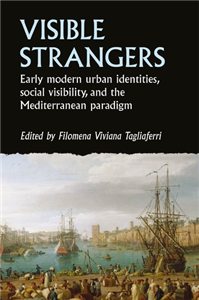
Visible strangers
Early modern urban identities, social visibility, and the Mediterranean paradigm
by Filomena Viviana Tagliaferri
Visible strangers is a collection of essays on the nature of cultural pluralism in the Mediterranean and the different ways in which this was managed in various cities during the early modern period. The book's nine chapters considers new case studies, where authors offer a diachronic view of the nature of the co-presence of minorities in different urban spaces, investigated through the lens of the fascinating relationship between visibility and identity. The considered case studies cover different areas of the Mediterranean space: the Adriatic, the Ottoman empire between Asia and Africa, the Italian and Iberian peninsulas, the island of Malta, at the centre of the Mare Nostrum and host to many of its influences. The analysis of the way cultural pluralism expressed itself wishes to overcome the bias induced by 'Mediterraneanism', that has led to the Mediterranean as an area of study hardening into a conceptual category.
-
Trusted Partner
 October 2011
Ritual Dynamics in the Ancient Mediterranean
Agency, Emotion, Gender, Representation
by Herausgegeben von Chaniotis, Angelos
-
Trusted Partner
-
Trusted Partner
-
Trusted Partner
 Humanities & Social SciencesJune 2021
Rethinking Norman Italy
by Joanna Drell, Paul Oldfield, C. E. Beneš
-
Trusted Partner
 Humanities & Social SciencesFebruary 2025
Missing persons, political landscapes and cultural practices
Violent absences, haunting presences
by Laura Huttunen
This book examines human disappearances anthropologically in various contexts, ranging from enforced disappearances under oppressive governments and during armed conflicts to disappearing undocumented migrants and, finally, to people who go missing under more everyday circumstances. Two focuses run through the book: the relationship between the state and disappearances, and the consequences of disappearances for the families and communities of missing persons. The book analyses both the circumstances that make some people disappear and the variety of responses that disappearances give rise to; the latter include projects focused on searching for the missing and identifying human remains, as well as political projects that call for accountability for disappearances. While providing empirical examples from a variety of places, with Bosnia-Herzegovina as they key empirical site, the book develops an analytic grip on the slippery category of the 'disappeared'.
-
Trusted Partner
-
Trusted Partner
 Literature & Literary StudiesDecember 2019
Reimagining North African immigration
by Véronique Machelidon, Patrick Saveau
-
Trusted Partner
Humanities & Social SciencesJuly 2024
Migration diplomacy in the Middle East and North Africa
by Gerasimos Tsourapas
-
Trusted Partner

 March 2024
The Strategy of Rescue
The past and present of a power-political concept
by Johannes F. Lehmann
"Rescue” has two fundamentally different “existential” dimensions. One is aimed at “saving” individual lives that are in danger. Firefighters, for instance, rescue people from fires, while the sea rescue services rescue shipwrecked people from the Mediterranean. The second dimension of “rescue”, on the other hand, concerns systems – think of the bailing out of banks, the euro or the climate disaster – and so points to a larger context that creates the conditions for “life” to even be possible, or at least to be preserved. The complex subject of this stringent essay is just to what extent politics enable or prevent “rescue attempts”, to what extent it understands its actions as “rescue actions”, and how decisively the “narrative”, i.e. the “talk of rescue”, ultimately dominates our entire understanding of politics.
-
Trusted Partner
 Humanities & Social SciencesMarch 2017
From Jack Tar to Union Jack
Representing naval manhood in the British Empire, 1870–1918
by Mary A. Conley
Jack Tar to Union Jack examines the intersection between empire, navy, and manhood in British society from 1870 to 1918. Through analysis of sources that include courts-martial cases, sailors' own writings, and the HMS Pinafore, Conley charts new depictions of naval manhood during the Age of Empire, a period which witnessed the radical transformation of the navy, the intensification of imperial competition, the democratisation of British society, and the advent of mass culture. Jack Tar to Union Jack argues that popular representations of naval men increasingly reflected and informed imperial masculine ideals in Victorian and Edwardian Britain. Conley shows how the British Bluejacket as both patriotic defender and dutiful husband and father stood in sharp contrast to the stereotypic image of the brave but bawdy tar of the Georgian navy. This book will be essential reading for students of British imperial history, naval and military history, and gender studies.
-
Trusted Partner
 Humanities & Social SciencesMay 2020
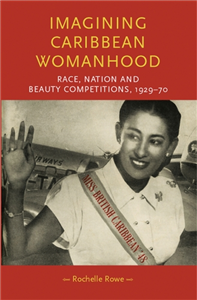
Imagining Caribbean womanhood
Race, nation and beauty competitions, 1929–70
by Pamela Sharpe, Rochelle Rowe, Penny Summerfield, Lynn Abrams, Cordelia Beattie
Over fifty years after Jamaican and Trinidadian independence, Imagining Caribbean womanhood examines the links between beauty and politics in the Anglophone Caribbean, providing a first cultural history of Caribbean beauty competitions, spanning from Kingston to London. It traces the origins and transformation of female beauty contests in the British Caribbean from 1929 to 1970, through the development of cultural nationalism, race-conscious politics and decolonisation. The beauty contest, a seemingly marginal phenomenon, is used to illuminate the persistence of racial supremacy, the advance of consumer culture and the negotiation of race and nation through the idealised performance of cultured, modern beauty. Modern Caribbean femininity was intended to be politically functional but also commercially viable and subtly eroticised.



