
Your Search Results
-

-

Michael O'Mara Books Ltd.
The Michael O’Mara imprint has illustrated and non- illustrated non-fiction titles for adults on history, sciences, marketing and management, biographies, humour and gift. The Buster imprint develops activity and reference titles for kids. The innovative range of this list develops the curiosity, knowledge and artistic fibre of our little ones. Finally, LOM Art includes a carefully curated list of artist-led titles. We have collaborated with talented illustrators from around the globe to create exquisite titles on drawing, painting, colouring, dot to dot, stickers and so much more!
View Rights Portal
-
Promoted Content
-
Promoted Content

 Humanities & Social SciencesJanuary 2012
The expansion of Europe, 1250–1500
by Michael North, Steve Rigby
-
 Trusted Partner

 June 1983
Die Amtswirtschaften von Osterode und Soldau.
Vergleichende Untersuchungen zur Wirtschaft im frühmodernen Staat am Beispiel des Herzogtums Preußen in der zweiten Hälfte des 16. und in der ersten Hälfte des 17. Jahrhunderts.
by North, Michael
-
Trusted Partner

 July 2021
The World of the North
Between Ragnarok and welfare utopia: A cultural-historical deconstruction
by Bernd Henningsen
— Analysis of how we view Europe's North and how this image emerged — An outsider's perspective on Nordic societies and their self image — Serves as an introduction into Northern European culture and society Our image of Northern Europe has been shaped by projections and desires in the long history of encounters: berserkers and war atrocities, bad weather, beautiful nature, stable political systems, social welfare, equality and prosperity, peacefulness, low corruption, hygge and Bullerby – all this is part of the Nordic narrative. But what about the religious, linguistic and ethnic homogeneity, what about the muchvaunted Nordic cooperation? How do politics "work" in the North? Why are Northern Europeans the happiest people?
-
Trusted Partner
 Humanities & Social SciencesSeptember 2025
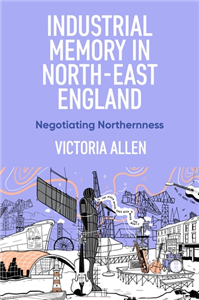
Industrial memory in North East England
Negotiating northernness
by Victoria Allen
Industrial memory in North East England examines how the region's industrial myth and memory have been articulated in the renegotiation of northernness. The book offers a critical contextualisation of the concept of northernness and the English North, and an introduction to the concept of the PopCultural Portfolio, a mixed-methods approach to conjunctural analysis in cultural and memory studies. The book provides six richly illustrated case studies to demonstrate the practical application of cultural studies' expansive and inclusive understanding of texts, bringing together materials from North East football, folk, indie and exhibition culture to establish how the North East's industrial past continues to be remembered and functionalised as industrial memory. In turn, the conjunctural analysis demonstrates how industrial memory is articulated and mythologised as north(east)ernes in contemporary popular culture.
-
Trusted Partner
 Literature & Literary StudiesDecember 2019
Reimagining North African immigration
by Véronique Machelidon, Patrick Saveau
-
Trusted Partner
 The ArtsJuly 2004
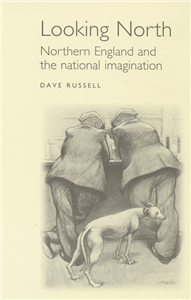
Looking North
Northern England and the national imagination
by David Russell, Jeffrey Richards, Martin Hargreaves
Investigating areas as diverse as travel literature, fiction, dialect, the stage, radio, and television, feature film, music and sport, this fascinating book assesses the attitudes and portrayal of the North of England within the national culture and how this has impacted upon attitudes to the region and its place within notions of 'Englishness'. ;
-
Trusted Partner
Humanities & Social SciencesJanuary 2026
Russian strategy in the Middle East and North Africa
by Derek Averre
-
Trusted Partner
 Geography & the EnvironmentOctober 2025
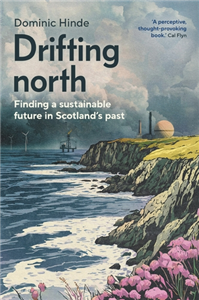
Drifting north
Finding the future at the top of the world
by Dominic Hinde
Scotland's past and future collide in this engaging journey through climate change, fossil capitalism and the struggle for a sustainable world. Scotland's history and future are entangled with climate change and the story of the modern world. This small country on the fringes of northern Europe pioneered fossil capitalism and played a key role in its spread across the planet. It is a living museum of the crisis of the west, of deindustrialisation, stagnation and the struggle to build a better future from the ashes. Journalist and sociologist Dominic Hinde travels from the treeless Highlands to the lowland cities, struggling to balance memories with aspiration. Through this journey he finds that his own sensory turmoil, shaped by recovery from a near fatal accident, mirrors the disarray of the fossil fuel transition - an uncertain passage between what was and what must be. Part memoir, part environmental history, part travelogue, this is a compelling narrative of connections - to place, energy and the possibility of renewal. Through the lens of one country, it asks a vital question: can the lessons of the past help us build a more sustainable future?
-
Trusted Partner
 Humanities & Social SciencesMarch 2026
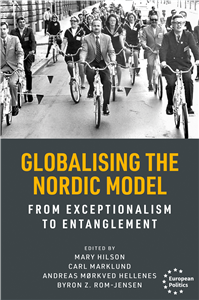
Globalising the Nordic Model
From exceptionalism to entanglement
by Mary Hilson
The five Nordic countries - Denmark, Finland, Iceland, Norway and Sweden - frequently attract attention as examples of a 'Nordic model'. The meanings of the term vary, but especially since the global financial crisis of 2008-9 the Nordic countries have often been portrayed positively, as examples of economic dynamism, innovation and social equality. Studies of these images of the Nordic countries and Nordic region and their international circulations are now a well-established field of research. This volume explores how the Nordic model has been shaped by global entanglements, in exchange not only with Western Europe and North America, but also with the Global South. Drawing on selected case studies, the volume offers new perspectives on the meanings of the Nordic model and Nordic exceptionalism in a global context during the half century since c. 1970.
-
Trusted Partner
 Humanities & Social SciencesMay 2025
The Caucasus Emirate
Ideology, identity, and insurgency in Russia’s North Caucasus
by Mark Youngman
Insurgency has plagued the North Caucasus since the collapse of the Soviet Union. Between 2007 and 2015, rebels waged their struggle under the banner of the Caucasus Emirate (Imarat Kavkaz, IK). This book systematically examines the IK's ideology to explain what the group claimed to be fighting for and against and how it sought to mobilise people behind its cause. It reveals a group with a weakly developed political programme, which aligned itself with global jihadism but consistently prioritised local concerns. It demonstrates the priority rebel leaders afforded to shaping local identities, but also their failure to forge a unified movement or revitalise armed struggle. Re-evaluating the IK's ideology helps us better understand the past and future of armed struggle in the North Caucasus.
-
Trusted Partner
 Humanities & Social SciencesJuly 2022
Crossing borders and queering citizenship
Civic reading practice in contemporary American and Canadian writing
by Zalfa Feghali
Can reading make us better citizens? In Crossing borders and queering citizenship, Feghali crafts a sophisticated theoretical framework to theorise how the act of reading can contribute to the queering of contemporary citizenship in North America. Providing sensitive and convincing readings of work by both popular and niche authors, including Gloria Anzaldúa, Dorothy Allison, Gregory Scofield, Guillermo Gómez-Peña, Erín Moure, Junot Díaz, and Yann Martel, this book is the first to not only read these authors together, but also to discuss how each powerfully resists the exclusionary work of state-sanctioned citizenship in the U.S. and Canada. This book convincingly draws connections between queer theory, citizenship studies, and border studies and sheds light on how these connections can reframe our understanding of American Studies.
-
Trusted Partner
 Literature & Literary StudiesMay 2026
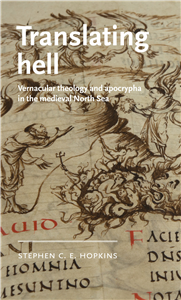
Translating hell
Vernacular theology and apocrypha in the medieval North Sea
by Stephen C. E. Hopkins
In the Middle Ages, hell was useful because it was vaguely defined. Canonical scriptures scarcely mention hell, leaving much to the imaginations of early Christians, who used it to sort out who belonged within the faith. This book explores how hell became a place for literary experiments with local challenges in theology and identity. Following the reception and transformations of two popular hell apocrypha, it argues that they served as this role because of their liminal textual authority. As noncanonical scriptures, apocrypha afforded medieval writers space to revise their hells (since they were not actually scripture), while also encouraging readers to revere those experiments as valid (since they seemed like scripture). The book brings together adaptations from early medieval England, Iceland, Ireland, and Wales, placing the early vernacular theologies of the North Sea in comparative conversation.
-
Trusted Partner
-
Trusted Partner
 Literature & Literary StudiesJuly 2022
Nordic Gothic
by Maria Holmgren Troy, Johan Hõglund, Yvonne Leffler, Sofia Wijkmark
Nordic Gothic traces Gothic fiction in the Nordic region from its beginnings in the nineteenth century, with a main focus on the development of Gothic from the 1990s onwards in literature, film, TV and new media. The volume gives an overview of Nordic Gothic fiction in relation to transnational developments and provides a number of case studies and in-depth analyses of individual narratives. It creates an understanding of this under-researched cultural phenomenon by showing how the narratives make visible cultural anxieties haunting the Nordic countries, their welfare systems, identities and ideologies. Nordic Gothic examines how figures from Nordic folklore function as metaphorical expressions of Gothic themes and Nordic settings are explored from perspectives such as ecocriticism and postcolonialism. The book will be of interest to researchers and post- and- undergraduate students in various fields within the Humanities.
-
Trusted Partner
Humanities & Social SciencesMarch 2017
The Arctic in the British imagination 1818–1914
by Andrew Thompson, John M. MacKenzie, Rob David
The Arctic region has been the subject of much popular writing. This book considers nineteenth-century representations of the Arctic, and draws upon an extensive range of evidence that will allow the 'widest connections' to emerge from a 'cross-disciplinary analysis' using different methodologies and subject matter. It positions the Arctic alongside more thoroughly investigated theatres of Victorian enterprise. In the nineteenth century, most images were in the form of paintings, travel narratives, lectures given by the explorers themselves and photographs. The book explores key themes in Arctic images which impacted on subsequent representations through text, painting and photography. For much of the nineteenth century, national and regional geographical societies promoted exploration, and rewarded heroic endeavor. The book discusses images of the Arctic which originated in the activities of the geographical societies. The Times provided very low-key reporting of Arctic expeditions, as evidenced by its coverage of the missions of Sir John Franklin and James Clark Ross. However, the illustrated weekly became one of the main sources of popular representations of the Arctic. The book looks at the exhibitions of Arctic peoples, Arctic exploration and Arctic fauna in Britain. Late nineteenth-century exhibitions which featured the Arctic were essentially nostalgic in tone. The Golliwogg's Polar Adventures, published in 1900, drew on adult representations of the Arctic and will have confirmed and reinforced children's perceptions of the region. Text books, board games and novels helped to keep the subject alive among the young.
-
Trusted Partner
-
Trusted Partner
-
Trusted Partner
-
Trusted Partner



