
Microcosmic International Culture Creative Ltd.
The strongest IP in history has appeared. From Taiwan Future World Center. The ultimate answer to human life that human beings around the world are waiting for.
View Rights Portal
The strongest IP in history has appeared. From Taiwan Future World Center. The ultimate answer to human life that human beings around the world are waiting for.
View Rights Portal

This book brings together studies of cultural institutions in Manchester from 1850 to the present day, giving an unprecedented account of the city's cultural evolution. These bring to light the remarkable range of Manchester's contribution to modern cultural life, including the role of art education, popular theatre, religion, pleasure gardens, clubs and societies. The chapters show the resilience and creativity of Manchester's cultural institutions since 1850, challenging any simple narrative of urban decline following the erosion of Lancashire's industrial base, at the same time illustrating the range of activities across the social classes. This book will appeal to everyone interested in the cultural life of the city of Manchester, including cultural historians, sociologists and urban geographers, as well as general readers with interests in the city. It is written by leading international authorities, including Viv Gardner, Stephen Milner, Mike Savage, Bill Williams and Janet Wolff.

This book offers insights into some of the digital innovations, structural adaptations and analogue solutions that enabled live performance in the UK to survive through the COVID-19 pandemic. It provides evidence of values-led policies and practices that have improved the wellbeing of the creative workforce and have increased access to live performance. Through sections that address digital innovations, workforce resilience and programming live performances outdoors and in community settings, this book provides practical insights into the challenges live performance faced during the pandemic. It shows how, in order to survive, individuals and companies within the sector drew on the creativity and resourcefulness of its workforce, and on new and existing networks. In these accounts, the pandemic functioned as catalyst for technological innovations, stock-taking regarding exploitative industry structures, and a re-valuing of the role of live performance for community-building.
 Trusted Partner
Where civil society is often seen as a driving force for equality, this book addresses a challenging topic: civil society elites. Drawing on a comprehensive study of Italy, Poland, Sweden, and the UK, this ground-breaking research investigates the often-overlooked power structures within civil society. By combining elite studies with civil society research, the book uncovers how a distinct civil society elite emerges and how it interacts with leaders in politics and business. The findings reveal a fascinating paradox. While this elite may be a powerful engine for social change, its integration into wider power circles risks reproducing the very inequalities it seeks to dismantle. By exploring how this elite can become disconnected from its grassroots, the book provides essential insights into the future of civil society and its democratic promise.
Trusted Partner
Trusted Partner


Sooner or later everything is thrown away. In the consumer society, however, usable and serviceable products that may be as good as new are also thrown away. Such behaviour is the result of a long-term process that has developed over a period of one-and-a-half centuries. The change was led by the USA, and the Federal Republic of Germany followed. It started at the turn of the last century with personal hygiene: articles such as toilet paper, sanitary towels, nappies and paper handkerchiefs. After the Second World War, a large number of other disposable articles were soon added, such as paper cups and plastic dishes, nylon stockings and pens, razor blades, beverage cans and much more besides. Wolfgang König shows how business and consumers have together made throwing things away perfectly normal – and discusses how the throwaway society may be overcome.
Trusted Partner

This volume offers new practical and theoretical perspectives on one of the most complex questions regarding the formation of international law, namely that actors other than states contribute to the making of customary international law. Notwithstanding the International Law Commission's valuable contribution, the making of customary international law remains riddled with acute practical and theoretical controversies that continue to be intensively debated. Making extensive reference to the case-law of international law courts and tribunals, as well as the most recent scholarly work on customary international law, this volume provides a comprehensive study of the contribution of international organisations and non-state actors to the formation of customary international law. With innovative tools and guidance for law students, legal scholars, and researchers in law, as well as legal practitioners, advisers, judges, arbitrators, and counsels, this collection is essential reading for those wishing to understand and address contemporary questions of international law-making.
Trusted Partner
 Trusted Partner
Trusted Partner
Trusted Partner
Capitalising on developments in the field over the past decade, Riddles at work provides an up-to-date microcosm of research on the early medieval riddle tradition. The book presents a wide range of traditional and experimental methodologies. The contributors treat the riddles both as individual poems and as parts of a tradition, but, most importantly, they address Latin and Old English riddles side-by-side, bringing together texts that originally developed in conversation with each other but have often been separated by scholarship. Together, the chapters reveal that there is no single, right way to read these texts but rather a multitude of productive paths. This book will appeal to students and scholars of early medieval studies. It contains new as well as established voices, including Jonathan Wilcox, Mercedes Salvador-Bello and Jennifer Neville.
Trusted Partner

Sam Hanna (1903-96), a pioneering filmmaker from Burnley, Lancashire, was dubbed the 'Lowry of filmmaking' by BBC broadcaster Brian Redhead in the 1980s. The well-meant label stuck, even though it misses the variety of Hanna's remarkable output. Hanna's intimate glimpses into the lives of strangers enable us to imagine the possible stories that lie behind the images. Away from mid-century exponents of documentary filmmaking and photography, Hanna shows us humanity and a microcosm of a world in change, where his subjects are caught up in issues far beyond their grasp that we, as onlookers years later, encounter and see afresh. Written and curated by historian Heather Norris Nicholson, Round our way combines stills, essays and archive photography to document Hanna's unique visual record on film, particularly in northern England, but also further afield, during decades of profound change.
Trusted Partner
Trusted Partner
Trusted Partner
Dave Haslam presents conversations with creative trailblazers. Over forty years, DJ, writer and broadcaster Dave Haslam has interviewed some of the most fascinating figures in music, literature, film and art. Creative journeys gathers revelatory conversations with creative characters including Neneh Cherry, Maxine Peake, Lemn Sissay, Andrew Weatherall, Raymond Carver and Jeremy Deller. From politics and performance to art, fame and addiction, Haslam's interviewees speak with honesty about their creative journeys. Viv Albertine discusses 'Typical Girls' and Paddy Considine recalls Dead Man's Shoes. Jarvis Cocker goes deep into 'This is Hardcore'. Terry Hall and Miki Berenyi speak about childhood trauma. Bernard Sumner recalls the loss of Ian Curtis. Jonathan Franzen talks about torturing his characters. There's darkness but much humour too. The interviews provide fascinating stories of unorthodox, creative artists navigating negativity and personal setbacks to become celebrated cultural icons.
Trusted Partner
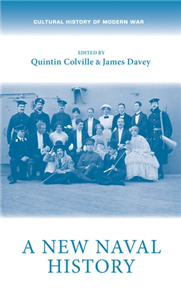
A New Naval History brings together the most significant and interdisciplinary approaches to contemporary naval history. The last few decades have witnessed a transformation in how this field is researched and understood and this volume captures the state of a field that continues to develop apace. It examines - through the prism of naval affairs - issues of nationhood and imperialism; the legacy of Nelson; the socio-cultural realities of life in ships and naval bases; and the processes of commemoration, journalism and stage-managed pageantry that plotted the interrelationship of ship and shore. This bold and original publication will be essential for undergraduate and postgraduate students of naval and maritime history. Beyond that, though, it marks an important intervention into wider historiographies that will be read by scholars from across the spectrum of social history, cultural studies and the analysis of national identity.
Trusted Partner
Trusted Partner

A compilation of case studies illustrating the use of arts, culture and other community assets individuals and communities used to cope and develop resilience during the Covid-19 pandemic, demonstrating valuable lessons that might help us develop resilience in similar future crises.
Trusted Partner


Culture and diversity are both challenge and opportunity. This volume looks at what psychologists are and can be doing to help society meet the challenges and grasp the opportunities in education, at work, and in clinical practice. The increasingly international and globalized nature of modern societies means that psychologists in particular face new challenges and have new opportunities in all areas of practice and research. The contributions from leading European experts cover relevant intercultural issues and topics in areas as diverse as personality, education and training, work and organizational psychology, clinical and counselling psychology, migration and international youth exchanges. As well as looking at the new challenges and opportunities that psychologists face in dealing with people from increasingly varied cultural backgrounds, perhaps more importantly they also explain and discuss how psychologists can deepen and acquire the intercultural competencies that are now needed in our professional lives. Target Group: psychotherapists / clinical psychologists / mental health professionals
Trusted Partner
This book represents the first comprehensive collection of essays in English dedicated entirely to the study of lesbian inscriptions in francophone society and culture. Spanning the period from the early nineteenth to the twenty-first century, the volume offers a range of interdisciplinary perspectives on ways in which lesbianism has been represented and represented itself, with essays on poetry and the novel, contemporary film and television, photography and architecture. These essays will appeal to students and scholars of gender studies and French literature and culture. ;
Trusted Partner
Trusted Partner

This book focuses on British efforts to suppress the traffic in female slaves destined for Egyptian harems during the late-nineteenth century. It considers this campaign in relation to gender debates in England, and examines the ways in which the assumptions and dominant imperialist discourses of these abolitionists were challenged by the newly-established Muslim communities in England, as well as by English people who converted to or were sympathetic with Islam. While previous scholars have treated antislavery activity in Egypt first and foremost as an extension of earlier efforts to abolish plantation slavery in the New World, this book considers it in terms of encounters with Islam during a period which it argues marked a new departure in Anglo-Muslim relations. This approach illuminates the role of Islam in the creation of English national identities within the global cultural system of the British Empire. This book would appeal to those with an interest in British imperial history; Islam; gender, feminism, and women's studies; slavery and race; the formation of national identities; global processes; Orientalism; and Middle Eastern studies.



