Your Search Results

      • NORLA

        Books from Norway is a website providing you with information in English about Norwegian literature in all genres: Fiction, Non-fiction and Children and Young Adults’ literature.NORLA - Norwegian Literature Abroad, promotes the export of Norwegian literature through active profiling work and translation subsidies. The organisation disseminates knowledge about Norwegian books and authors abroad, and operations are financed by the Norwegian Ministry of Culture.

        View Rights Portal
      • NordSüd Verlag AG

        From North to South – Founded in 1961, NordSüd is a tradition-steeped children’s book publisher based in Zurich, Switzerland. NordSüd publishes around 50 new publications every year, all of which are high-quality illustrated children’s books in German and English, focusing on fictional and non-fictional picture books, fairy tales and classics. It is our aim to work closely with artists and create new books together, which we represent worldwide and sell translation rights. Next to our own creations we buy German rights for well-known illustrators like Jon Klassen, Oliver Jeffers, Kazuo Iwamura, Sophie Blackall, Isabelle Arsenault and many more.

        View Rights Portal
      • Trusted Partner
        Humanities & Social Sciences
        March 2026

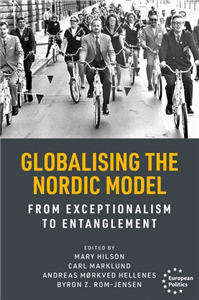
        Globalising the Nordic Model

        From exceptionalism to entanglement

        by Mary Hilson

        The five Nordic countries - Denmark, Finland, Iceland, Norway and Sweden - frequently attract attention as examples of a 'Nordic model'. The meanings of the term vary, but especially since the global financial crisis of 2008-9 the Nordic countries have often been portrayed positively, as examples of economic dynamism, innovation and social equality. Studies of these images of the Nordic countries and Nordic region and their international circulations are now a well-established field of research. This volume explores how the Nordic model has been shaped by global entanglements, in exchange not only with Western Europe and North America, but also with the Global South. Drawing on selected case studies, the volume offers new perspectives on the meanings of the Nordic model and Nordic exceptionalism in a global context during the half century since c. 1970.

      • Trusted Partner
        Literature & Literary Studies
        July 2022

        Nordic Gothic

        by Maria Holmgren Troy, Johan Hõglund, Yvonne Leffler, Sofia Wijkmark

        Nordic Gothic traces Gothic fiction in the Nordic region from its beginnings in the nineteenth century, with a main focus on the development of Gothic from the 1990s onwards in literature, film, TV and new media. The volume gives an overview of Nordic Gothic fiction in relation to transnational developments and provides a number of case studies and in-depth analyses of individual narratives. It creates an understanding of this under-researched cultural phenomenon by showing how the narratives make visible cultural anxieties haunting the Nordic countries, their welfare systems, identities and ideologies. Nordic Gothic examines how figures from Nordic folklore function as metaphorical expressions of Gothic themes and Nordic settings are explored from perspectives such as ecocriticism and postcolonialism. The book will be of interest to researchers and post- and- undergraduate students in various fields within the Humanities.

      • Trusted Partner
        Literature & Literary Studies
        May 2026

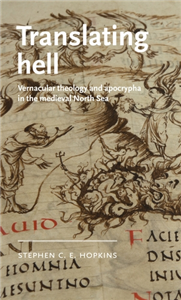
        Translating hell

        Vernacular theology and apocrypha in the medieval North Sea

        by Stephen C. E. Hopkins

        In the Middle Ages, hell was useful because it was vaguely defined. Canonical scriptures scarcely mention hell, leaving much to the imaginations of early Christians, who used it to sort out who belonged within the faith. This book explores how hell became a place for literary experiments with local challenges in theology and identity. Following the reception and transformations of two popular hell apocrypha, it argues that they served as this role because of their liminal textual authority. As noncanonical scriptures, apocrypha afforded medieval writers space to revise their hells (since they were not actually scripture), while also encouraging readers to revere those experiments as valid (since they seemed like scripture). The book brings together adaptations from early medieval England, Iceland, Ireland, and Wales, placing the early vernacular theologies of the North Sea in comparative conversation.

      • Trusted Partner
        Literature & Literary Studies
        March 2023

        Sleep and its spaces in Middle English literature

        Emotions, ethics, dreams

        by Megan Leitch

        Middle English literature is intimately concerned with sleep and the spaces in which it takes place. In the medieval English imagination, sleep is an embodied and culturally determined act. It is both performed and interpreted by characters and contemporaries, subject to a particular habitus and understood through particular hermeneutic lenses. While illuminating the intersecting medical and moral discourses by which it is shaped, sleep also sheds light on subjects in favour of which it has hitherto been overlooked: what sleep can enable (dreams and dream poetry) or what it can stand in for or supersede (desire and sex). This book argues that sleep mediates thematic concerns and questions in ways that have ethical, affective and oneiric implications. At the same time, it offers important contributions to understanding different Middle English genres: romance, dream vision, drama and fabliau.

      • Trusted Partner
        Literature & Literary Studies
        July 2021

        Old Fortunatus

        By Thomas Dekker

        by David McInnis

        With its fantasy of magical travel and inexhaustible riches, Thomas Dekker's Old Fortunatus is the quintessential early modern journeying play. The adventures of Fortunatus and his sons, aided by a magical purse and wishing-hat, offers the period's most overt celebration of the pleasures of travel, as well as a sustained critique of the dangers of intemperance and prodigality. Written following a period of financial difficulty for Dekker, the play is also notable for its fascination with the symbolic, mercantile and ethical uses of gold. This Revels Plays edition is the first fully annotated, single-volume critical edition of Old Fortunatus. It offers scholarly discussion of the play's performance and textual history, including attention to the German version printed and performed in the early seventeenth century. It provides a long overdue critical reappraisal of this unjustly neglected play.

      • Trusted Partner
        Literature & Literary Studies
        June 2026

        The politics of Middle English parables

        Fiction, theology, and social practice

        by Mary Raschko

        The politics of Middle English parables examines the dynamic intersection of fiction, theology and social practice in late-medieval England. Parables occupy a prominent place in Middle English literature, appearing in dream visions and story collections as well as in lives of Christ and devotional treatises. While most scholarship approaches the translated stories as stable vehicles of Christian teaching, this book highlights the many variations and points of conflict across Middle English renditions of the same story. In parables related to labour, social inequality, charity and penance, the book locates a creative theological discourse through which writers attempted to re-construct Christian belief and practice. Analysis of these diverse retellings reveals not what a given parable meant in a definitive sense but rather how Middle English parables inscribe the ideologies, power structures and cultural debates of late-medieval Christianity.

      • Trusted Partner
      • Trusted Partner
      • Trusted Partner
        Literature & Literary Studies
        December 2009

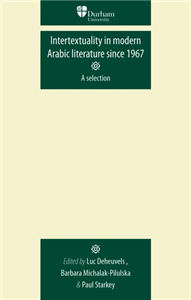
        Intertextuality in modern Arabic literature since 1967

        by Luc Deheuvels, Mike Thompson, Barbara Michalak-Pikulska, Paul Starkey

        This volume of essays is the first to be dedicated to the subject of intertextuality in modern Arabic literature. Beginning with a general overview of the topic by Roger Allen, it brings together essays on a range of writers from all parts of the Arab world, including, among others, Edwar al-Kharrat, Sa'd Allah Wannus, Najib Mahfuz, Rabi' Jabir, Salim Matar and the recently deceased Sudanese writer al-Tayyib Salih, whose seminal work Season of Migration to the North heralded a new phase in the modern Arabic literary tradition. The volume, which also includes two essays on aspects of intertextuality in Gulf literature, also discusses transformations of popular medieval literature such as the Alf Layla wa-Layla (the Thousand and One Nights) in modern Arabic literature. ;

      • Trusted Partner
      • Trusted Partner
        July 2021

        The World of the North

        Between Ragnarok and welfare utopia: A cultural-historical deconstruction

        by Bernd Henningsen

        — Analysis of how we view Europe's North and how this image emerged — An outsider's perspective on Nordic societies and their self image — Serves as an introduction into Northern European culture and society Our image of Northern Europe has been shaped by projections and desires in the long history of encounters: berserkers and war atrocities, bad weather, beautiful nature, stable political systems, social welfare, equality and prosperity, peacefulness, low corruption, hygge and Bullerby – all this is part of the Nordic narrative. But what about the religious, linguistic and ethnic homogeneity, what about the muchvaunted Nordic cooperation? How do politics "work" in the North? Why are Northern Europeans the happiest people?

      • Trusted Partner
        Humanities & Social Sciences
        August 2023

        The bad German and the good Italian

        by Paul Barnaby, Filippo Focardi

      • Trusted Partner
        Literature & Literary Studies
        March 2025

        The Catholicism of literature in the age of the Book of Common Prayer

        Poetry, plays, works, 1558-1689

        by Thomas Rist

        Offering a complete reading of English Literature throughout 1558-1689, this book demonstrates the continuity of Roman Catholicism in English Literature from the accession of Elizabeth I to the deposing of James II. Rist shows that poetry and plays promoted Roman Catholic ideas in a Biblicist age which established the Church of England through the Book of Common Prayer. From the very idea of literary works to chapters on the Eucharist, Purgatory, Christian worship and the Virgin Mary, Rist joins together major and minor authors of the era to present English Literature afresh. Important literary figures include William Shakespeare, Ben Jonson, Thomas Middleton, Queen Henrietta Maria, John Donne, John Dryden, Robert Herrick, Margaret Cavendish and Aphra Behn.

      • Trusted Partner
        Literature & Literary Studies
        August 2023

        Poison on the early modern English stage

        Plants, paints and potions

        by Lisa Hopkins, Bill Angus

        Many early modern plays use poison, most famously Hamlet, where the murder of Old Hamlet showcases the range of issues poison mobilises. Its orchard setting is one of a number of sinister uses of plants which comment on both the loss of horticultural knowledge resulting from the Dissolution of the Monasteries and also the many new arrivals in English gardens through travel, trade, and attempts at colonisation. The fact that Old Hamlet was asleep reflects unease about soporifics troubling the distinction between sleep and death; pouring poison into the ear smuggles in the contemporary fear of informers; and it is difficult to prove. This book explores poisoning in early modern plays, the legal and epistemological issues it raises, and the cultural work it performs, which includes questions related to race, religion, nationality, gender, and humans' relationship to the environment.

      • Trusted Partner
        Literature & Literary Studies
        June 2025

        Contemporary Slavic horror across media

        Cursed zones

        by Agnieszka Jezyk

        In the Western cultural production that puts individual or collective fear at its center, East/Central Europe has been portrayed as an othered space of horror - lawless, frightening zones where anything can happen. Incorporating articles on literature, film, visual arts, video games, music videos, and music festivals, Contemporary Slavic horror across media: Cursed zones is a pioneering anthology of academic essays devoted to Slavic horror fiction. The book focuses on works from the mid-20th century through the present, particularly the post-Soviet period. Assessing current trends in Czech, Polish, Russian, Slovak, Ukrainian, and East/Central European horror media, the book looks at similarities and idiosyncrasies of the genre in its Slavic variant. With this anthology we hope to tame 'the Easterner Other' and start exorcising 'monstrous' East/Central Europe.

      • Trusted Partner
        Literature & Literary Studies
        October 2019

        Old Fortunatus

        By Thomas Dekker

        by Richard Dutton, David McInnis

        With its fantasy of magical travel and inexhaustible riches, Thomas Dekker's Old Fortunatus is the quintessential early modern journeying play. The adventures of Fortunatus and his sons, aided by a magical purse and wishing-hat, offers the period's most overt celebration of the pleasures of travel, as well as a sustained critique of the dangers of intemperance and prodigality. Written following a period of financial difficulty for Dekker, the play is also notable for its fascination with the symbolic, mercantile and ethical uses of gold. This Revels Plays edition is the first fully annotated, single-volume critical edition of Old Fortunatus. It offers scholarly discussion of the play's performance and textual history, including attention to the German version printed and performed in the early seventeenth century. It provides a long overdue critical reappraisal of this unjustly neglected play.

      • Trusted Partner
        Humanities & Social Sciences
        March 2017

        The Arctic in the British imagination 1818–1914

        by Andrew Thompson, John M. MacKenzie, Rob David

        The Arctic region has been the subject of much popular writing. This book considers nineteenth-century representations of the Arctic, and draws upon an extensive range of evidence that will allow the 'widest connections' to emerge from a 'cross-disciplinary analysis' using different methodologies and subject matter. It positions the Arctic alongside more thoroughly investigated theatres of Victorian enterprise. In the nineteenth century, most images were in the form of paintings, travel narratives, lectures given by the explorers themselves and photographs. The book explores key themes in Arctic images which impacted on subsequent representations through text, painting and photography. For much of the nineteenth century, national and regional geographical societies promoted exploration, and rewarded heroic endeavor. The book discusses images of the Arctic which originated in the activities of the geographical societies. The Times provided very low-key reporting of Arctic expeditions, as evidenced by its coverage of the missions of Sir John Franklin and James Clark Ross. However, the illustrated weekly became one of the main sources of popular representations of the Arctic. The book looks at the exhibitions of Arctic peoples, Arctic exploration and Arctic fauna in Britain. Late nineteenth-century exhibitions which featured the Arctic were essentially nostalgic in tone. The Golliwogg's Polar Adventures, published in 1900, drew on adult representations of the Arctic and will have confirmed and reinforced children's perceptions of the region. Text books, board games and novels helped to keep the subject alive among the young.

      • Trusted Partner
        Literature & Literary Studies
        January 2023

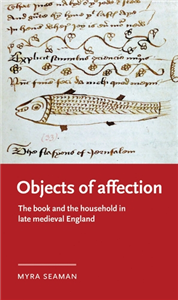
        Objects of affection

        The book and the household in late medieval England

        by Myra Seaman

        Objects of affection recovers the emotional attraction of the medieval book through an engagement with a fifteenth-century literary collection known as Oxford, Bodleian Library Manuscript Ashmole 61. Exploring how the inhabitants of the book's pages - human and nonhuman, tangible and intangible - collaborate with its readers then and now, this book addresses the manuscript's material appeal in the ways it binds itself to different cultural, historical and material environments. In doing so it traces the affective literacy training that the manuscript provided its late-medieval English household, whose diverse inhabitants are incorporated into the ecology of the book itself as it fashions spiritually generous and socially mindful household members.

      Subscribe to our

      newsletter