
Test Portal Suhrkamp
Portal for testing only
View Rights Portal

TESSLOFF VERLAG is one of the leading German non-fiction book publishers for children which offers first reading and classic non-fiction as well as activity and learning titles.
View Rights Portal

With its fantasy of magical travel and inexhaustible riches, Thomas Dekker's Old Fortunatus is the quintessential early modern journeying play. The adventures of Fortunatus and his sons, aided by a magical purse and wishing-hat, offers the period's most overt celebration of the pleasures of travel, as well as a sustained critique of the dangers of intemperance and prodigality. Written following a period of financial difficulty for Dekker, the play is also notable for its fascination with the symbolic, mercantile and ethical uses of gold. This Revels Plays edition is the first fully annotated, single-volume critical edition of Old Fortunatus. It offers scholarly discussion of the play's performance and textual history, including attention to the German version printed and performed in the early seventeenth century. It provides a long overdue critical reappraisal of this unjustly neglected play.
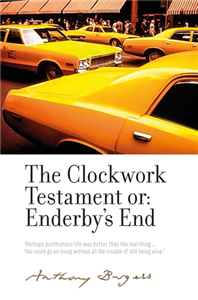
First published in 1974, this novel is a semi-autobiographical reflection on the author's experience of having been the subject of Stanley Kubrick's film adaptation of A Clockwork Orange in 1971. This is the end of Enderby, Anthony Burgess's finest comic creation. Dyspeptic and obese, this is the account of his last day as a visiting professor in New York, and his last day on Earth. The Irwell Edition of The Clockwork Testament will provide new information about the genesis of the novel, gleaned from a series of drafts and typescripts recently discovered in the archive of the International Anthony Burgess Foundation (IABF) in Manchester, as well as printing a deleted chapter for the first time in English.
 Trusted Partner
Trusted Partner
Trusted Partner

This volume questions and qualifies commonly accepted assumptions about the early modern English sonnet: that it was a strictly codified form, most often organised in sequences, which only emerged at the very end of the sixteenth century and declined as fast as it had bloomed, and that minor poets merely participated in the sonnet fashion by replicating established conventions. Drawing from book history and relying on close reading and textual criticism, this collection offers a more nuanced account of the history of the sonnet. It discusses how sonnets were written, published and received in England as compared to mainland Europe, and explores the works of major (Shakespeare, Sidney, Spenser) and minor (Barnes, Harvey) poets alike. Reflecting on current editorial practices, it also provides the first modern edition of an early seventeenth-century Elizabethan miscellany including sonnets presumably by Sidney and Spenser.
Trusted Partner
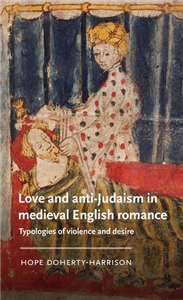
Love and anti-Judaism is a new examination of medieval romance for the questions it poses of the most significant events in Christian history. Providing new readings of Sir Gawain and the Green Knight, Sir Orfeo, Sir Gowther and Sir Amadace, the book argues that romance explores depictions of love-and the sacrifices it may necessitate-in the Hebrew Bible, especially where they do not easily fit into interpretations asserting that this history must prefigure Christ and the crucifixion. An examination of anti-Judaism as a discourse of violence and desire that could be turned inwardly to expose the irresolution in Christianity, this book will provoke new investigations into the religious crises of medieval romance.
Trusted Partner
 Trusted Partner
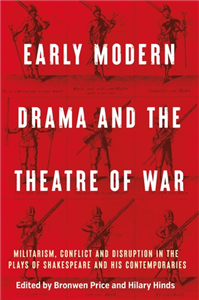
This volume explores the disruptive effects of militarism, war and social unrest in early modern drama. Engaging with Simon Barker's seminal work on dramatic representations of war and militarism, contributors highlight what often lies hidden beneath the surface of martial narratives, treating them as formative interventions in contemporary discourses, whether in justifying war, excluding dissident voices or shaping cultural identities. Discussions include new examinations of militarism, the figure of the soldier and early modern theories of war in Shakespearean tragedy, history and comedy, alongside antimasque and dramatic satire by lesser-known playwrights. The essays investigate how ideas of war underpin emerging concepts of gender, leadership, marriage and the family, as well as the continuing mobilisation of Shakespearean drama in the context of modern armed conflict. Together, they offer rich new contributions to the current lively critical debates on this topic.
Trusted Partner

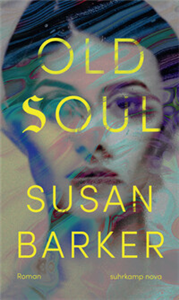
»Dieser Roman wird dich bis in deine Träume verfolgen.« Claire Fuller In Osaka verpassen Jake und Mariko ihren Flug. Sie kennen sich nicht, aber entdecken beim Abendessen eine verstörende Gemeinsamkeit: sowohl Jakes beste Freundin als auch Marikos Zwillingsbruder starben unter den gleichen unheimlichen Umständen. 6.000 Meilen voneinander entfernt. Beide sind in den Tagen vor ihrem Tod einer mysteriösen Fotografin begegnet. Die hinter sich her eine Spur von brutalen, erschreckend ähnlichen Todesfällen zieht und die von Japan nach Berlin, von London in die glühenden Weiten der amerikanischen Badlands führt. Jake folgt dieser Spur. Und er trifft auf die, die zurückgelassen wurden: verwirrt, ungläubig und doch fest überzeugt von dem, was sie gesehen haben. Gezeichnet von einem Grauen, das viel tiefer geht als der Tod. Ihre Geschichten führen Jake in die Wüste New Mexikos – zu einem Showdown, der tief ins Mark trifft. Old Soul rührt an unsere panische Angst davor, dass das Leben endet, mit einem subtilen, beklemmenden Horror, der in der Dunkelheit seine wirkliche Form annimmt und uns Seite um Seite von innen auffrisst.
Trusted Partner

With its fantasy of magical travel and inexhaustible riches, Thomas Dekker's Old Fortunatus is the quintessential early modern journeying play. The adventures of Fortunatus and his sons, aided by a magical purse and wishing-hat, offers the period's most overt celebration of the pleasures of travel, as well as a sustained critique of the dangers of intemperance and prodigality. Written following a period of financial difficulty for Dekker, the play is also notable for its fascination with the symbolic, mercantile and ethical uses of gold. This Revels Plays edition is the first fully annotated, single-volume critical edition of Old Fortunatus. It offers scholarly discussion of the play's performance and textual history, including attention to the German version printed and performed in the early seventeenth century. It provides a long overdue critical reappraisal of this unjustly neglected play.
Trusted Partner
 Trusted Partner
Trusted Partner
Trusted Partner

This book examines the distinctive aspects that insiders and outsiders perceived as characteristic of Irish and Scottish ethnic identities in New Zealand. When, how, and why did Irish and Scots identify themselves and others in ethnic terms? What characteristics did the Irish and the Scots attribute to themselves and what traits did others assign to them? Did these traits change over time and if so how? Contemporary interest surrounding issues of ethnic identities is vibrant. In countries such as New Zealand, descendants of European settlers are seeking their ethnic origins, spurred on in part by factors such as an ongoing interest in indigenous genealogies, the burgeoning appeal of family history societies, and the booming financial benefits of marketing ethnicities abroad. This fascinating book will appeal to scholars and students of the history of empire and the construction of identity in settler communities, as well as those interested in the history of New Zealand.
Trusted Partner
 Trusted Partner
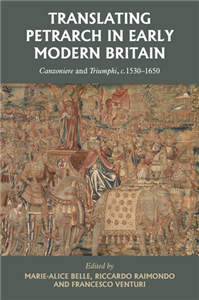
Translating Petrarch in early modern Britain gathers twelve essays by international scholars focusing on the translation of Petrarch's vernacular verse (Canzoniere and Triumphi) into English, from the Tudor age to the mid-seventeenth century (and beyond). Approaching translation as an interpretive process, but also a mode of literary emulation and cultural engagement with Petrarch's prestigious precedent, the collection explores the complex and interconnected trajectories of both poetic works in English and Scottish literary milieux. While situating each translation in its distinct historical, material, and literary context, the essays trace the reception of Petrarch's works in early modern Britain through the combined processes of linguistic and metric innovation, literary imitation, musical adaptation and cultural and material 'domestication'. The collection sheds light on the origins and development of early modern English Petrarchism as part of wider transnational - and indeed, translational-European literary culture.
Trusted Partner
Capitalising on developments in the field over the past decade, Riddles at work provides an up-to-date microcosm of research on the early medieval riddle tradition. The book presents a wide range of traditional and experimental methodologies. The contributors treat the riddles both as individual poems and as parts of a tradition, but, most importantly, they address Latin and Old English riddles side-by-side, bringing together texts that originally developed in conversation with each other but have often been separated by scholarship. Together, the chapters reveal that there is no single, right way to read these texts but rather a multitude of productive paths. This book will appeal to students and scholars of early medieval studies. It contains new as well as established voices, including Jonathan Wilcox, Mercedes Salvador-Bello and Jennifer Neville.
Trusted Partner
 Trusted Partner
In Berlin haben sie sich kennengelernt, in London werden sie ein Paar. Ihre Tage verbringen sie im Gerichtssaal des Old Bailey, um Anarchisten zu unterstützen, denen drakonische Haftstrafen drohen. Streiks, Hausbesetzungen, Anschläge der IRA und die harten Reaktionen der Regierung bestimmen den Alltag im Winter 1971. Schwerelos wie im Traum erkunden die beiden die Stadt. Über seine jüdische Familie weiß der Engländer (wie die Erzählerin den Gefährten nennt) nur wenig zu sagen. Jahrzehnte später, ihre Trennung liegt lange zurück, kommt der Engländer einem Familiendrama auf die Spur. Sie führt zurück ins Old Bailey: 1924, ein spektakulärer Betrugsfall, angeklagt Levy, sein Urgroßvater. Der rastlosen Suche des anderen folgend, sie mit ihren Fragen vorantreibend, stößt die Erzählerin auf das unergründliche Wirken der Geschichte, welche die entlegensten Episoden unseres Lebens miteinander verknüpft. Der leise, nüchterne, unerbittliche Ton macht Ulrike Edschmids Romane unverwechselbar. In Levys Testament verwandelt sich die Liebende in eine Chronistin und die Intimität des Gefühls in ein Instrument der Erkenntnis.
Trusted Partner
 Trusted Partner
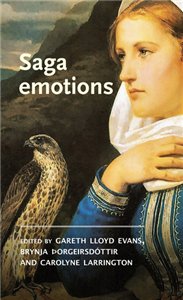
Focusing particularly on historically oriented sagas, Saga emotions identifies and examines a range of emotions from across Old Norse-Icelandic saga literature. Each chapter begins with a discrete emotion term, such as reiði (anger), gleði (joy), or the peculiarly Old Norse víghugr (killing-mood), exploring its usages within the broad saga corpus, and focusing on its contextual meanings and narrative purposes. The contributions explore the specifics of the lexical terms used for different emotion states and offer in-depth case studies that consider how various emotions manifest within particular examples of saga literature. The book offers the emotional granularity lacking in current studies of Norse emotion and serves as an essential foundation for future research and study into emotional depiction in Old Norse-Icelandic saga literature.
Trusted Partner


Hier schnurren, maunzen tanzen die Katzen … T. S. Eliots Old Possums Katzenbuch gelangte als Musical zum Welterfolg. Seit fast 40 Jahren wird Cats ununterbrochen gespielt; es ist das erfolgreichste Musical aller Zeiten – und wird nun mit internationaler Starbesetzung verfilmt. Selbst Katzenliebhaber verfasste Eliot diese heiteren und fantsievollen Verse einst für seine Patenkinder. Doch Grimmtiger, Rem Tem Trecker, Alt Deuteronium und Pus wurden unsterblich und verzaubern Groß und Klein bis heute.



