
Deutscher Apotheker Verlag
Specialist books in the fields of pharmacy - drug information - medicine.
View Rights Portal Trusted Partner

Specialist books in the fields of pharmacy - drug information - medicine.
View Rights Portal
The German Cultural Forum for Central and Eastern Europe publishes richly illustrated non-fiction books about the cultural history of those areas of Central and Eastern Europe where Germans used to, or still do live. The carefully edited titles with elaborated appendices are written by well-known experts who are able to present information about Central and Eastern Europe in an attractive way by cultural travel guides or historical overview books. The Cultural Forum also edits an annual and a bimonthly magazine, Blickwechsel ("Change of perspective") and Kulturkorrespondenz östliches Europa ("Cultural Correspondence Central and Eastern Europe"). Furthermore, the Forum organizes popular lectures, discussions, readings, exhibitions, concerts, journalist trips, writer residencies and prize-givings.
View Rights Portal

This is the first book written on Diane Kurys. It is essential for study of women filmmakers in France/Europe. An original and concise reading of Kurys' work.
Trusted Partner
Trusted Partner
Trusted Partner
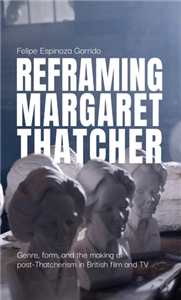
Against the backdrop of Britain's historically anti-Thatcherite films of the 1980s and 1990s, Reframing Margaret Thatcher outlines a decisive shift in the collective imagination of Thatcher. Drawing on genre, trauma, and queer studies, it demonstrates how post-Thatcherite films reflect upon their own entanglement in the polarization of the Thatcher years but also rewrite the clichéd Iron Lady. Chapters on The Iron Lady, This is England, Doomsday, 9 Dead Gay Guys, and the Sherlock TV series investigate various Thatcher imaginations, ranging from Thatcher as a lesbian mob boss, as prime minister in apocalyptic England, to Thatcher as an empty bust. This innovative study shows how the apparent depoliticization of British film makes visible new relations between genre, cinematic form, and imaginations of the past and offers fresh perspectives that both critique and reinterpret Thatcher's enduring impact.
Trusted Partner
Trusted Partner
Trusted Partner
Trusted Partner

Margaret Cavendish was one of the most prolific, complex and misunderstood writers of the seventeenth century. A contemporary of Descartes and Hobbes, she was fascinated by philosophical, scientific and imaginative advances, and struggled to overcome the political and cultural obstacles which threatened to stop her engagement with such discourses. Emma Rees examines how Cavendish engaged with the work of thinkers such as Lucretius, Plato, Homer and Harvey in an attempt to write her way out of the exile which threatened not only her intellectual pursuits but her very existence. What emerges is the image of an intelligent, audacious and intrepid early modern woman whose tale will appeal to specialists and general readers alike. ;
Trusted Partner
Trusted Partner
Trusted Partner

 Trusted Partner
Trusted Partner
Trusted Partner
Trusted Partner
Trusted Partner
Trusted Partner
Trusted Partner
Trusted Partner
Trusted Partner
Trusted Partner
Trusted Partner
Trusted Partner
Trusted Partner
Trusted Partner
Trusted Partner






