
Rachel Amphlett
USA Today bestselling author Rachel Amphlett is the creator of over 25 crime thrillers. Rachel’s titles are available for consideration to all parties interested in licensing IP.
View Rights Portal
USA Today bestselling author Rachel Amphlett is the creator of over 25 crime thrillers. Rachel’s titles are available for consideration to all parties interested in licensing IP.
View Rights Portal
Our publishing company was founded in 1957 by Paolo Boringhieri focusing on science, mythology and ethnology. In 1987 Giulio Bollati joined the company, taking with him his expertise in history, philosophy , and literary fiction.Since then , the two souls of the publisher scientific studies and humanities have followed intertwined paths. In 2009 Bollati Boringhieri was a cquired by Gruppo editoriale Mauri Spagnol (GeMS) a group including 11 publishing companiesand 20 imprints. On the non fiction side, we are strongly interested in every project that shows human comprehensive history. Gems of our list include, among others Edmund de Waal , Jim Al Khalili, Nick Bostrom, Adam Rutherford, Hannah Fry,Jonathan Gottschall , Frank Close, Max Tegmark.
View Rights Portal Trusted Partner
Trusted Partner
Trusted Partner

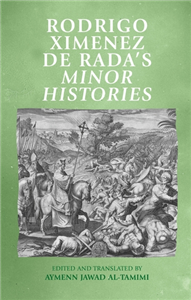
This work provides the first complete English translation of works by Toledan archbishop Rodrigo Ximénez de Rada (1170-1247 CE), whose 'Minor Histories' are sequels to his larger 'Gothic History' and thus round off his grand history of Spain project that he began at the request of King Ferdinand III. The 'Minor Histories' include Rodrigo's 'History of the Arabs' that can be considered the first surviving Western monograph focused on Arab and Islamic history and thus occupies a unique position in the medieval Latin corpus of writings. In addition to the translation, this book provides a thorough and accessible introduction to the life and works of Rodrigo, making sense of the context in which he wrote and his historical method. The translations are thoroughly annotated including cross-references to other Latin and Arabic sources for comparison.
Trusted Partner

In the mid-ninth century, Francia was rocked by the first royal divorce scandal of the Middle Ages: the attempt by King Lothar II of Lotharingia to rid himself of his queen, Theutberga and remarry. Even 'women in their weaving sheds' were allegedly gossiping about the lurid accusations made. Kings and bishops from neighbouring kingdoms, and several popes, were gradually drawn into a crisis affecting the fate of an entire kingdom. This is the first professionally published translation of a key source for this extraordinary episode: Archbishop Hincmar of Rheims's De divortio Lotharii regis et Theutbergae reginae. This text offers eye-opening insight both on the political wrangling of the time and on early medieval attitudes towards magic, penance, gender, the ordeal, marriage, sodomy, the role of bishops, and kingship.The translation includes a substantial introduction and annotations, putting the case into its early medieval context and explaining Hincmar's sometimes-dubious methods of argument.
Trusted Partner
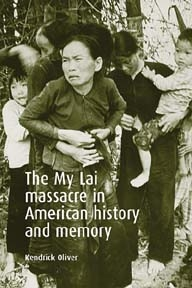
On 16 March 1968, two US infantry companies entered a Vietnamese village and in the course of a single morning killed over 400 of its unarmed, unresisting inhabitants . . . This is the first book to examine the response of American society to the My Lai massacre and its ambiguous place in American national memory. Kendrick Oliver argues that the massacre revelations left many Americans untroubled. It was only when the soldiers most immediately responsible came to be tried that opposition to the conflict grew, for these prosecutions were regarded by supporters of the war as evidence that the national leaders no longer had the will to do what was necessary to win. Oliver goes on to show that, contrary to interpretations of the Vietnam conflict as an unhealed national trauma or wound, many Americans have assimilated the war and its violence rather too well, and they were able to do so even when that violence was most conspicuous and current. US soldiers have been presented as the conflict's principal victims, and this was true even in the case of My Lai. It was the American perpetrators of the massacre and not the Vietnamese they brutalized who became the central object of popular concern. Both the massacre and its reception reveal the problem of human empathy in conditions of a counter-revolutionary war - a war, moreover, that had always been fought for geopolitical credibility, not for the sake of the Vietnamese. This incisive enquiry into the moral history of the Vietnam war should be essential reading for all students of the conflict, as well as others interested in the war and its cultural legacies. ;
Trusted Partner

Carol Reed is one of the truly outstanding directors of British cinema, and one whose work is long overdue for reconsideration. This major study ranges over Reed's entire career, combining observation of general trends and patterns with detailed analysis of twenty films, both acknowledged masterpieces and lesser-known works. Evans avoids a simplistic auteurist approach, placing the films in their autobiographical, socio-political and cultural contexts and relating these to the analysis of Reed's art. The critical approach combines psychoanalysis, gender theory, and the analysis of form. Archival research is also relied on to clarify Reed's relations with his creative team, financial backers and others. Films examined include Bank Holiday, A Girl Must Live, Odd Man Out, The Fallen Idol, The Third Man, Night Train to Munich, The Way Ahead, Outcast of the Islands, Trapeze and Oliver!.
Trusted Partner

In How to be multiple, Helena de Bres - a twin herself - argues that twinhood is a unique lens for examining our place in the world and how we relate to other people. The way we think about twins offers remarkable insights into some of the deepest questions of our existence, from what is a person? to how should we treat one another? Deftly weaving together literary and cultural history, philosophical enquiry and personal experience, de Bres examines such thorny issues as binary thinking, objectification, romantic love and friendship, revealing the limits of our individualistic perspectives. In this illuminating, entertaining book, wittily illustrated by her twin sister, de Bres ultimately suggests that to consider twinhood is to imagine the possibility of a more interconnected, capacious human future.
Trusted Partner
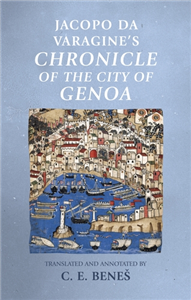
This book offers the first English translation of the Chronicle of the city of Genoa by the thirteenth-century Dominican Jacopo da Varagine, an author best known for his monumental book of saints' lives, the Golden legend. Jacopo's Chronicle presents a coherent vision of Genoa's place in history, the cosmos and Creation as written by the city's own archbishop - mixing eyewitness accounts with scholarly research about the city's origins and didactic reflections on the proper conduct of public and private life. Accompanied by an extensive introduction, this complete translation provides a unique perspective on a dynamic medieval city-state from one of its most important officials, broadening the available literature in English on medieval Italian urban life.
Trusted Partner

This book offers the first English translation of the Chronicle of the city of Genoa by the thirteenth-century Dominican Jacopo da Varagine, an author best known for his monumental book of saints' lives, the Golden legend. Jacopo's Chronicle presents a coherent vision of Genoa's place in history, the cosmos and Creation as written by the city's own archbishop - mixing eyewitness accounts with scholarly research about the city's origins and didactic reflections on the proper conduct of public and private life. Accompanied by an extensive introduction, this complete translation provides a unique perspective on a dynamic medieval city-state from one of its most important officials, broadening the available literature in English on medieval Italian urban life.
Trusted Partner
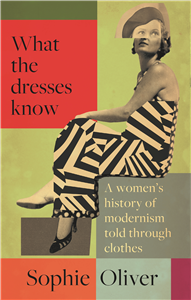
An exciting new history of modernism that re-examines the movement through some of its most brilliant female artists. Pioneering women were at the heart of the movement known as modernism. In What the dresses know, Sophie Oliver offers a new account of their radical experiments and extraordinary lives, told through the clothes they made and wore. From a dress Vanessa Bell rescued from the London Blitz to Frida Kahlo's huipiles and a waistcoat embroidered for Gertrude Stein by Alice B. Toklas, these special objects tell a story of artists seeking transformation. But getting dressed is rarely straightforward. Modernist women used clothes to think through the contradictions of the modern world: the inequalities of industrialisation, the terrible conformities demanded by fascism and racism and the call of feminists, socialists and avant-gardists to act differently and take up new forms of art. What the dresses know is an exhilarating account of women's bold attempts to make history during years of tumultuous change. A distinctive new voice in cultural criticism, Sophie Oliver uses clothes to explore the challenges modernist women faced - and to understand her own impulses in writing about them.
Trusted Partner


»& weiß nicht mehr in welcher stadt / ich war ich bin ich werde sei / so wie es jetzt am anfang war / gebet & uhrzeit sind verlegt / / 1 datum hinter glas. So könnte es gewesen.« Der Schreibnomade José Oliver ist auf steter Wörterreise. Ägypten, Dubai, Spanien, Slowakei, Schweiz, Niederlande, Litauen und immer wieder zurück zum Ausgangspunkt, in die fremde Heimat Schwarzwald, in den Zwischenraum zweier Sprachen, zum Glauben, in die Kindheitserinnerungen. Und das lyrische Ich notiert als unbestechlicher Fahrtenschreiber die Wahrnehmungsgeschwindigkeit in ihren Schwankungen, die Unhaltbarkeit der Bilder, grenzzerfließende Begegnungen, das Verhältnis von Zeit und Weg; Wiege, Baum und Kreuz – das Alphabet der Hölzer. »Der nomadische Heimatdichter José Oliver weiß genau, wie erfaßbar uns die ganze Welt und wie unverständlich uns das benachbarte Tal erscheinen kann. Dies ist das Privileg großer Dichter.« Ilija Trojanow
Trusted Partner
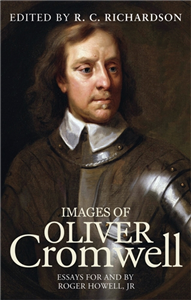
Oliver Cromwell has been both applauded and reviled and his memory invoked in periods and in countries other than his own. This complex historiography has left us today with many different versions of Cromwell as man, general and statesman of which the conflicting images are the subject of this book. Available in paperback for the first time, this classic study is based on the unfinished magnum opus of the leading scholar of seventeenth-century history, Roger Howell (1936?89). It includes chapters by a team of leading international experts on a broad range of subjects originally planned by Howell himself. It includes Howell's studies of the reactions to Cromwell in the Restoration period and in the eighteenth and nineteenth centuries. Added to these are reprints of his essays on psychohistorical approaches to Cromwell and on Cromwell's contribution to English liberty. Further historiographical portraits of the Protector are offered in chapters which consider Cromwell and the Glorious Revolution; Carlyle's Cromwell; Irish images of the Protector; American interpretations; and the comparisons made between Cromwell and the twentieth-century dictators. ;
Trusted Partner

Fernab vom alltäglichen Wortge- und -verbrauch schafft José F.A. Oliver, Chamisso-Preisträger von 1997, Klanggehäuse, in denen sich die Laute scheinbar spielend zu neuen Bedeutungen zusammenschließen. Die Gedichte sprechen vom Unterwegssein und vom Ankommen, von einer Sehnsucht nach Ursprünglichkeit, vom Pulsen im »sprachherztakt«. Olivers sprachmagische Gedichte wollen »uns lösen / vom schweren zungenschlag«, also von der tagtäglichen Sprache und zurückführen zu ihrem eigentlichen Ursprung: dem Klang. Der 1961 geborene Lyriker andalusischer Herkunft, aufgewachsen im Schwarzwald, moduliert die Sprachpartikel auf immer überraschende Weise; mit feinem Sensorium spürt er den Faltenwürfen der Wörter nach und stößt dabei auf bislang Ungehörtes. »José Oliver hat seine Poesie ganz tief in die deutsche Sprache eingeschrieben, eingegraben, ja, die deutsche Sprache mit ihr umgegraben«, schrieb Harald Weinrich.
Trusted Partner
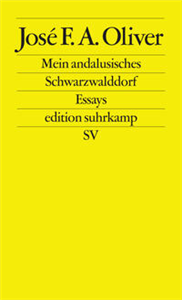
»Denn gleich dahinter, hinter dem Waldbergigen, hinter der Dämmerlinie der schweren, schwarzgrünen Tannen, lag Andalusien.Auch für mich.« Im Jahr 1960 kamen José F. A. Olivers Eltern auf der Suche nach Arbeit aus Málaga nach Deutschland und zogen in eine kleine Stadt im Schwarzwald. Dort wuchs er auf, als Andalusier und Alemanne zugleich. Erinnerungen an den Vater, die Strohhutfabrik, die Hausacher Spättlemadlee, die Fasent der Kindertage verdichten sich in seinen Essays und Texten zu Bildern eines Ortes, den es nicht geben kann und dennoch gibt, eines andalusischen Schwarzwaldes. Als Dichter zwischen den Kulturen, zwischen den Sprachen gibt Oliver Auskunft über die Erfahrungen eines »Gastarbeiterkindes«, dessen poetische Sensibilität der Zweisprachigkeit entspringt: »ich, Wortmensch Erde, will Sprachen wie Gastgeber Freunde.« José F.A. Oliver, geboren 1961 in Hausach im Schwarzwald. Seine Gedichte sind in mehrere Sprachen übersetzt.
Trusted Partner

»Er sieht genau hin, er hört genau hin und findet das ungehörte, unerhörte Wort, das Sprache und innerste Erfahrung zur Übereinstimmung bringt. Oliver klopft die Worte ab, um ihnen einen Laut wiederzuschenken, den sie irgendwann verloren haben.« Joachim Sartorius
Trusted Partner


Erster spannender Fall für Kalle Blomquist, den Meisterdetektiv! Der langweilt sich gerade zu Tode, weil er nicht in London oder Chicago ist, wo Verbrechen an der Tagesordnung sind, sondern im beschaulichen Kleinköping in Schweden! Doch dann findet er in einer alten Schlossruine eine auffällig schimmernde Perle und kurz darauf hört er von einem großen Juwelendiebstahl ... Erstmals ungekürzte Lesung des Lindgren-Klassikers, gelesen vom Hörspiel-Detektiv Nummer 1, Oliver Rohrbeck (Die drei ???).
Trusted Partner

José F. A. Oliver legt mit diesem Gedichtband sein viertes Buch im Suhrkamp Verlag vor. Sprache aus dem Bekannten herauszuhebeln, zu entzingeln, um ihr in neuen Klangelementen eine Aussagekraft zu verleihen, die über das allzu Verständliche hinausreicht, ist seine Art, auf die Rätselhaftigkeit der Welterfahrung aufmerksam zu machen. Den Blick zu ändern. Die Gedanken zu öffnen. Grenzen zu überschreiten. Sein »seelenfernglas « auf das bislang Ungesagte, Unsagbare gerichtet, die Liebe und den Tod vor Augen, ist er »schreibspur ganz / & der sich an die rücken heftet«. Mehrstimmig durchsiebt er die Sprache, »den worttrieb im zettelkasten «, erfindet und fügt neu zusammen. Olivers Gedichte entstehen sowohl aus zeitund ortsenthobenen Erlebnissen als auch aus Beobachtungen auf intensiven Reisen, so z.B. »1 vision in Kairo«. Er schreibt »die welt / die keine klärung war / die keiner klärung mehr bedurfte« und sucht »das unbestimmte des bestimmten«. Seine Gedichte gewähren den Sinnen unterschlupf, mindestens »1 Pessoa lang«.
Trusted Partner

Was es heißt, jenen einzigen Menschen zu finden, der die große Liebe bedeutet: Nichts Geringeres beschreibt Oliver Polak in seinem neuen Buch L’amour numérique. Oder, um es mit der Band Toto zu sagen: Hold the line. Love isn’t always on time. In verschiedenen Episoden erzählt er von den erhebenden und ernüchternden Herausforderungen der modernen Liebe. Search, Swipe and Date – so beginnen immer wieder die Abenteuer vor der Kulisse des romantischsten aller Orte, dem Pariser Café. Und die so arrangierten Begegnungen enden mal im Fauxpax, dann wieder entwaffnend menschlich. L’amour numérique ist wahrheitsgetreu erfunden und zugleich erfahrungsgesättigt. Ein tiefer Seelenstriptease des inneren Ichs, denn am Ende begegnet der Protagonist nur einer Person: sich selbst. Trifft er die Frauen, um sie zu lieben, oder trifft er sie nur, um sich selbst nicht zu lieben? Ein Buch über Sehnsucht, Verlangen und Zärtlichkeit in einer ungewissen Welt. Leonard Cohen, Batman, Oliver Polak: die großen Liebhaber mit durstigen Herzen.
Trusted Partner

Maylis de Kerangal, geboren 1967, veröffentlichte im Jahre 2000 ihren ersten Roman. Ihre Romane und Erzählungen wurden vielfach ausgezeichnet. Andrea Spingler, geboren 1949 in Stuttgart, ist seit 1980 als freie Übersetzerin tätig. Sie hat unter anderem Werke von Marguerite Duras, Alain Robbe-Grillet, Patrick Modiano, Jean-Paul Sartre, André Gide ins Deutsche übertragen. 2007 wurde sie mit dem Eugen-Helmlé-Preis für herausragende deutsch-französische Übersetzungen ausgezeichnet, 2012 mit dem Prix lémanique de la traduction. Sie lebt in Oldenburg und Südfrankreich.


