
Your Search Results
-

-

Carrot Ltd
Our original card sets are a way for any parent to play and interact with their child in a way that stimulates learning, improving cognitive skills and, perhaps more importantly, create a positive parent-child relationship. With the Carrot Cards both the parent and the child are engaged in an activity and they explore, learn, try, and experience together. We create every card set with a goal to make it as useful as possible, combining pedagogy and psychology, as well as aesthetics, creative writing and original concepts. Thus, allowing every child who opens a box of Carrot cards to experience a whole new learning experience. We have thousands of parents using the cards all over the world, sharing the excitement of learning and being curious together with their children. While striving to give more and more parents the opportunity to support their children’s development, we have also been recognized as a trustworthy partner for almost any kind of professionals working with children. From pre-school teachers to therapists, hundreds of experts use our cards in classrooms, offices, at presentations or as home assignments daily. Our contribution to early childhood development and our role as a supporter for parents were recognized in 2018 when we were selected as “Champions of Change” by the Reach for Change Foundation – Bulgaria, and we have been a part of the Reach for Change Global Network ever since.
View Rights Portal
-
Promoted Content

 1986
1986Die Hügel von Berlin
Erinnerungen an Deutschland
by Roussel, Stéphane / Übersetzt von Carroux, Margaret
-
Promoted Content
-
 Trusted Partner
-
Trusted Partner
-
Trusted Partner
-
Trusted Partner
 May 1994
Der Engel der Geschichte
Franz Rosenzweig - Walter Benjamin - Gershom Scholem
by Stéphane Mosès, Thomas Wiemer, Andreas B. Kilcher, Eva-Maria Thimme, Ursula Sarrazin, Dafna Mach
Stéphane Mosès, geboren 1931 in Berlin, floh 1937 nach Marokko, begann 1951 sein Studium in Paris. Er studierte, lehrte, kommentierte und übersetzte Schriften von Martin Buber, Franz Rosenzweig, Walter Benjamin, Gershom Scholem und Paul Celan. Mosès starb 2007 in Paris. Andreas B. Kilcher, geboren 1963 in Basel, studierte Germanistik, Geschichte und Philosophie an den Universitäten Basel und München. 1996 wurde Kilcher mit einer Dissertation zur Kabbala promoviert. Seit 2008 ist er Professor für Literatur- und Kulturwissenschaft an der ETH Zürich.
-
Trusted Partner

 The ArtsMay 2026
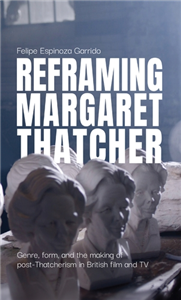
Reframing Margaret Thatcher
Genre, form, and the making of post-Thatcherism in British film and TV
by Felipe Espinoza Garrido
Against the backdrop of Britain's historically anti-Thatcherite films of the 1980s and 1990s, Reframing Margaret Thatcher outlines a decisive shift in the collective imagination of Thatcher. Drawing on genre, trauma, and queer studies, it demonstrates how post-Thatcherite films reflect upon their own entanglement in the polarization of the Thatcher years but also rewrite the clichéd Iron Lady. Chapters on The Iron Lady, This is England, Doomsday, 9 Dead Gay Guys, and the Sherlock TV series investigate various Thatcher imaginations, ranging from Thatcher as a lesbian mob boss, as prime minister in apocalyptic England, to Thatcher as an empty bust. This innovative study shows how the apparent depoliticization of British film makes visible new relations between genre, cinematic form, and imaginations of the past and offers fresh perspectives that both critique and reinterpret Thatcher's enduring impact.
-
Trusted Partner

 October 2010
Momentaufnahmen / Instantanés
by Stéphane Mosès
Mit den Eltern konnte Stéphane Mosès aus Nazi-Deutschland ins französisch dominierte Marokko fliehen. Nach dem Krieg studierte er in Paris. Über die Jahre wurde der Gelehrte, der den Weg zurück zur Religion fand, zu einer Größe, ja einer »grauen Eminenz« der französischen intellektuellen Szene. Die deutsch-jüdische Geistesgeschichte beschäftigte ihn zeit seines Lebens. Die "Momentaufnahmen", teils deutsch, teils französisch geschrieben, halten, knapp und komplex, Szenen aus seiner Kindheit und Jugend fest, Erinnerungsbilder aus der Zeit zwischen 1933 und 1953. Was erlebte er? Was verwunderte, was verletzte ihn? Mit welchen Büchern, welchen Filmen kam der Junge in Berührung? Was für Blicke, welche Bemerkungen trafen ihn, in der Schule, auf der Straße, im Internierungslager? In der letzten Momentaufnahme stößt Stéphane Mosès 1968 bei einer Demonstration in Paris auf den befreundeten Paul Celan. Der Dichter singt mit den Studenten die Internationale, Mosès nicht – denn im selben Jahr, beim Sechstagekrieg, hatte er die Gegner Israels dasselbe Lied singen hören. Sie trennen sich, Mosès wird Celan nicht wiedersehen.
-
Trusted Partner
-
Trusted Partner
-
Trusted Partner
-
Trusted Partner
-
Trusted Partner
-
Trusted Partner
-
Trusted Partner
-
Trusted Partner
-
Trusted Partner
-
Trusted Partner
March 1979
Die Dynastie
Ein Handelshaus in Hongkong. Roman
by Elegant, Robert S / Übersetzt von Carroux, Margaret
-
Trusted Partner
1989
Die Farben des Reichtums
Der Aufstieg des Hauses Niccolo. Roman
by Dunnett, Dorothy / Übersetzt von Carroux, Margaret; Übersetzt von Schleichert, Sonja
-
Trusted Partner

 October 2014
Ich bin Malala
Das Mädchen, das die Taliban erschießen wollten, weil es für das Recht auf Bildung kämpft
by Yousafzai, Malala mit Lamb, Christina
Übersetzt von Längsfeld, Sabine; Übersetzt von Längsfeld, Margarete; Übersetzt von Liebl, Elisabeth



