
March 2000
Your Search Results
-
Promoted Content


-
Promoted Content
-
 Trusted Partner
-
Trusted Partner

 1992
1992Ursinis grosser Coup
Ein Tatsachenroman über die moderne Mafia
by Russo, Enzo / Übersetzt von Raith, Werner
-
Trusted Partner

 Literature & Literary StudiesMay 2026
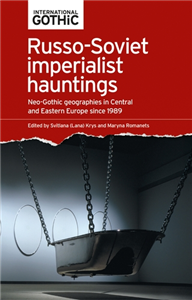
Russo-Soviet imperialist hauntings
Neo-Gothic geographies in Central and Eastern Europe since 1989
by Svitlana Krys, Maryna Romanets
Russo-Soviet imperialist hauntings attempts to capture some of the ghosts of the colonial and totalitarian past that have been proliferating in international political and cultural landscapes after the collapse of the USSR. By conflating postcolonial, post-totalitarian, postcommunist, and Gothic discourses, it maps virtually untouched aspects of cultural decolonization, focusing on unsettling "hauntings" of unresolved memory traces of Russo-Soviet domination in the former Eastern Bloc countries and Soviet republics. Operating within a vast intertextual field of social, cultural, and ideological discourses, the volume enables a productive exchange across distinct (inter)disciplinary boundaries and represents a range of voices from Europe and North America. The contributors' diverse interests draw on transmedia (literature, visual arts, and film), transnational, and translingual (diasporic literature) approaches, providing insights into a variety of forms that the Gothic has taken in the (late) twentieth and twenty-first centuries, and demonstrating its consistent engagement with history, ideology, and politics.
-
Trusted Partner

 September 2026
Faschismus
Ein Reader
by Fernando Esposito, Morten Paul
Der Faschismus ist in aller Munde, aber was er ist, scheint keineswegs klar. Hier setzt der vorliegende Reader an, der Selbstzeugnisse und frühe Analysen, theoretische Klassiker und Standardtexte der Historiographie, unkonventionelle Perspektiven und neuste Forschungsansätze miteinander ins Gespräch bringt. Maßgebliche Deutungen des Faschismus, u. a. von Clara Zetkin, Ernst Bloch, Franz Neumann, Aimé Césaire, Hannah Arendt, Félix Guattari, Cedric J. Robinson, Robert Paxton, Dagmar Herzog, Gáspár Miklós Tamás und Enzo Traverso, erklären seine Entstehung, erhellen seine Entwicklung und arbeiten seine Charakteristika wie Ultranationalismus und Terror heraus. Ein Ziel des Bandes besteht darin, die Wandlungsfähigkeit des Faschismus vor Augen zu führen und sein Wiederkehren begreiflich zu machen.
-
Trusted Partner

 August 2008
Enzo. Die Kunst, ein Mensch zu sein
Roman
by Stein, Garth / Übersetzt von Löcher-Lawrence, Werner
-
Trusted Partner
 April 2004
Die europäische Stadt
by Walter Siebel
In den kurzen goldenen Jahren nach dem Zweiten Weltkrieg schien die europäische Stadt der Modellfall eines sozial ausgeglichenen, kulturell integrierten und prosperierenden Gemeinwesens. Heute wird ihr Ende vorhergesagt. Ihre Gestalt verliert sich in einem gesichtslosen Siedlungsbrei. Der öffentliche Raum wird privatisiert. Leerstehende Wohnungen und Industriebrachen reißen Lücken in das städtische Gefüge. Es entstehen abgeschottete Quartiere der Armen und der Einwanderer. Die Globalisierung, die Macht der Immobilienentwickler und die Finanzmisere stellen die europäische Stadt als eine Bastion des Wohlfahrtsstaats in Frage. Aber es gibt auch soziale, kulturelle, ökonomische und politische Gegentendenzen. Sie werden in diesem Band diskutiert, der sich an Stadtplaner, Stadtpolitiker und alle stadtpolitisch Interessierten ebenso richtet wie an Architekten und Sozialwissenschaftler. Beiträger sind u. a. Dieter Läpple, Peter Marcuse, Enzo Mingione, Claus Offe, Saskia Sassen, Thomas Sieverts und Erika Spiegel.
-
Trusted Partner
-
Trusted Partner
-
Trusted Partner
-
Trusted Partner
-
Trusted Partner
-
Trusted Partner
-
Trusted Partner
-
Trusted Partner
-
Trusted Partner
January 1986
Das Wahre und das Falsche
Essay über die logische Struktur der psychoanalystischen Deutung
by Codignola, Enzo / Vorwort von Parin, Paul
-
Trusted Partner
-
Trusted Partner
 Humanities & Social SciencesOctober 2022
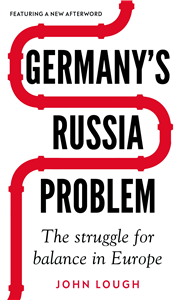
Germany's Russia problem
The struggle for balance in Europe
by John Lough
The relationship between Germany and Russia is Europe's most important link with the largest country on the continent. But despite Germany's unparalleled knowledge and historical experience, its policymakers struggle to accept that Moscow's efforts to rebalance Europe at the cost of the cohesion of the EU and NATO are an attack on Germany's core interests. This book explains the scale of the challenge facing Germany in managing relations with a changing Russia. It analyses how successive German governments from 1991 to 2014 misread Russian intentions, until Angela Merkel sharply recalibrated German and EU policy towards Moscow. The book also examines what lies behind efforts to revise Merkel's bold policy shift, including attitudes inherited from the GDR and the role of Russian influence channels in Germany.
-
Trusted Partner



