
Books From Australia
Each year the APA coordinates an Australian Collective Stand at Frankfurt Book Fair, supporting independent Publishers in attendance at the world’s largest book fair.
View Rights Portal
Each year the APA coordinates an Australian Collective Stand at Frankfurt Book Fair, supporting independent Publishers in attendance at the world’s largest book fair.
View Rights Portal
Mary Hare Director mary@alcagency.com +44 (0)7718 586425
View Rights Portal
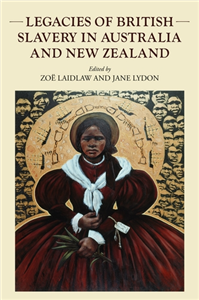
This book investigates the legacies of British slavery beyond Britain, focusing upon the colonisation of Australia and New Zealand, and explores why this history has been overlooked. After August 1833, when the British Parliament abolished slavery in the British Caribbean, Mauritius and the Cape, the former slave-owners were paid compensation for the loss of their 'property'. New research has begun to show that many beneficiaries had ties to other parts of the British Empire, including the settler colonies of Australia, New Zealand, Canada and South Africa. Through a range of case studies, contributors to this collection trace the movement of people, goods, capital, and practices from the Caribbean to the new Australasian settler colonies. Chapters consider a range of places, people and themes to reveal the varied ways that slavery continued to shape imperial relationships, economic networks, and racial labour regimes after 1833.

This edited collection investigates New Zealand's history as an imperial power, and its evolving place within the British Empire. It revises and expands the history of empire within, to and from New Zealand by looking at the country's spheres of internal imperialism, its relationship with Australia, its Pacific empire and its outreach to Antarctica. The book critically revises our understanding of the range of ways that New Zealand has played a role as an imperial power, including the cultural histories of New Zealand inside the British Empire, engagements with imperial practices and notions of imperialism, the special significance of New Zealand in the Pacific region, and the circulation of ideas of empire both through and inside New Zealand over time. The essays in this volume span social, cultural, political and economic history, and in testing the concept of New Zealand's empire, the contributors take new directions in both historiographical and empirical research.
 Trusted Partner
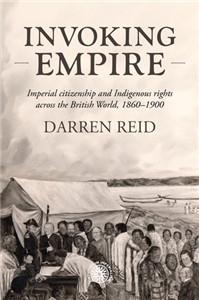
Invoking Empire examines the histories of Canada, South Africa, Australia, and New Zealand during the transitional decades between 1860-1900, when each gained some degree of self-government yet still remained within the sovereignty of the British Empire. It applies the conceptual framework of imperial citizenship to nine case studies of settlers and Indigenous peoples who lived through these decades to make two main arguments. It argues that colonial subjects adapted imperial citizenship to both support and challenge settler sovereignty, revealing the continuing importance of imperial authority in self-governing settler spaces. It also posits that imperial citizenship was rendered inoperable by a combination of factors in both Britian and the colonies, highlighting the contingency of settler colonialism on imperial governmental structures and challenging teleological assumptions that the rise of settler nation states was an inevitable result of settler self-government.
Trusted Partner

This book examines the distinctive aspects that insiders and outsiders perceived as characteristic of Irish and Scottish ethnic identities in New Zealand. When, how, and why did Irish and Scots identify themselves and others in ethnic terms? What characteristics did the Irish and the Scots attribute to themselves and what traits did others assign to them? Did these traits change over time and if so how? Contemporary interest surrounding issues of ethnic identities is vibrant. In countries such as New Zealand, descendants of European settlers are seeking their ethnic origins, spurred on in part by factors such as an ongoing interest in indigenous genealogies, the burgeoning appeal of family history societies, and the booming financial benefits of marketing ethnicities abroad. This fascinating book will appeal to scholars and students of the history of empire and the construction of identity in settler communities, as well as those interested in the history of New Zealand.
Trusted Partner

Rethinking settler colonialism focuses on the long history of contact between indigenous peoples and the white colonial communities who settled in Australia, Aotearoa New Zealand, Canada and South Africa. It interrogates how histories of colonial settlement have been mythologised, narrated and embodied in public culture in the twentieth century (through monuments, exhibitions and images) and charts some of the vociferous challenges to such histories that have emerged over recent years. Despite a shared familiarity with cultural and political institutions, practices and policies amongst the white settler communities, the distinctiveness which marked these constituencies as variously, 'Australian', 'South African', 'Canadian' or 'New Zealander', was fundamentally contingent upon their relationship to and with the various indigenous communities they encountered. In each of these countries these communities were displaced, marginalised and sometimes subjected to attempted genocide through the colonial process. Recently these groups have renewed their claims for greater political representation and autonomy. The essays and artwork in this book insist that an understanding of the political and cultural institutions and practices which shaped settler-colonial societies in the past can provide important insights into how this legacy of unequal rights can be contested in the present. It will be of interest to those studying the effects of colonial powers on indigenous populations, and the legacies of imperial rule in postcolonial societies.
Trusted Partner
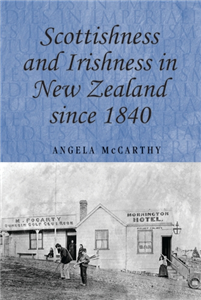
This book examines the distinctive aspects that insiders and outsiders perceived as characteristic of Irish and Scottish ethnic identities in New Zealand. When, how, and why did Irish and Scots identify themselves and others in ethnic terms? What characteristics did the Irish and the Scots attribute to themselves and what traits did others assign to them? Did these traits change over time and if so how? Contemporary interest surrounding issues of ethnic identities is vibrant. In countries such as New Zealand, descendants of European settlers are seeking their ethnic origins, spurred on in part by factors such as an ongoing interest in indigenous genealogies, the burgeoning appeal of family history societies, and the booming financial benefits of marketing ethnicities abroad. This fascinating book will appeal to scholars and students of the history of empire and the construction of identity in settler communities, as well as those interested in the history of New Zealand. ;
Trusted Partner

In 1901 most Australians were loyal, white subjects of the British Empire with direct connections to Britain. Within a hundred years, following an unparalleled immigration program, its population was one of the most diverse on earth. No other country has achieved such radical social and demographic change in so short a time. Destination Australia tells the story of this extraordinary transformation. Against the odds, this change has caused minimal social disruption and tension. While immigration has generated some political and social anxieties, Australia has maintained a stable democracy and a coherent social fabric. One of the impressive achievements of this book is in explaining why this might be so. Eric Richards recounts the experiences of many individual migrants from all over the world, examines the dramas and challenges of officials involved in this grand experiment and ends up telling a truly remarkable story. Compelling and revealing, Destination Australia is essentially the Australian story of the twentieth century. ;
Trusted Partner
Research on soldier settlement has to be set within the wider history of emigration and immigration. This book examines two parallel but complementary themes: the settlement of British soldiers in the overseas or 'white' dominions, Australia, Canada, New Zealand and South Africa, between 1915 and 1930. One must place soldier settlement within the larger context of imperial migration prior to 1914 in order to elicit the changes in attitude and policy which occurred after the armistice. The book discusses the changes to Anglo-dominion relations that were consequent upon the incorporation of British ex-service personnel into several overseas soldier settlement programmes, and unravels the responses of the dominion governments to such programmes. For instance, Canadians and Australians complained about the number of ex-imperials who arrived physically unfit and unable to undertake employment of any kind. The First World War made the British government to commit itself to a free passage scheme for its ex-service personnel between 1914 and 1922. The efforts of men such as L. S. Amery who attempted to establish a landed imperial yeomanry overseas is described. Anglicisation was revived in South Africa after the second Anglo-Boer War, and politicisation of the country's soldier settlement was an integral part of the larger debate on British immigration to South Africa. The Australian experience of resettling ex-servicemen on the land after World War I came at a great social and financial cost, and New Zealand's disappointing results demonstrated the nation's vulnerability to outside economic factors.
Trusted Partner
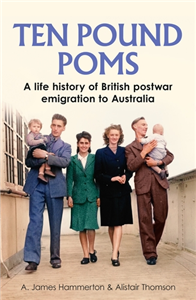
A riveting history of the 'Ten Pound Poms', a wave of British citizens who migrated to Australia and New Zealand after the Second World War. Between the 1940s and 1970s, more than a million Britons migrated to Australia. They were the famous 'Ten Pound Poms' and this is their story. The authors draw on a vast trove of letters, diaries and personal photographs, as well as hundreds of interviews with former migrants, to offer original insights into key historical themes. They explore people's motivations for emigrating, gender relations and family dynamics, the clashing experience of the 'very familiar and awfully strange', homesickness and the personal and national identities of both settlers and returnees. Filled with fascinating testimonies that shed light on migrant life histories, 'Ten Pound Poms' will engage readers interested in British and Australian migration history and intrigued about the power of migrant memories for individuals, families and nations.
Trusted Partner
Trusted Partner
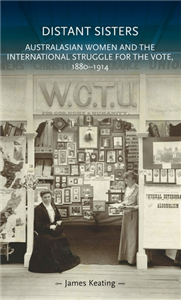
In the 1890s Australian and New Zealand women became the first in the world to win the vote. Buoyed by their victories, they promised to lead a global struggle for the expansion of women's electoral rights. Charting the common trajectory of the colonial suffrage campaigns, Distant Sisters uncovers the personal and material networks that transformed feminist organising. Considering intimate and institutional connections, well-connected elites and ordinary women, this book argues developments in Auckland, Sydney, and Adelaide-long considered the peripheries of the feminist world-cannot be separated from its glamourous metropoles. Focusing on Antipodean women, simultaneously insiders and outsiders in the emerging international women's movement, and documenting the failures of their expansive vision alongside its successes, this book reveals a more contingent history of international organising and challenges celebratory accounts of fin-de-siècle global connection.
Trusted Partner
Trusted Partner
Mistress of everything examines how indigenous people across Britain's settler colonies engaged with Queen Victoria in their lives and predicaments, incorporated her into their political repertoires, and implicated her as they sought redress for the effects of imperial expansion during her long reign. It draws together empirically rich studies from Canada, Australia, New Zealand and Southern Africa, to provide scope for comparative and transnational analysis. The book includes chapters on a Maori visit to Queen Victoria in 1863, meetings between African leaders and the Queen's son Prince Alfred in 1860, gift-giving in the Queen's name on colonial frontiers in Canada and Australia, and Maori women's references to Queen Victoria in support of their own chiefly status and rights. The collection offers an innovative approach to interpreting and including indigenous perspectives within broader histories of British imperialism and settler colonialism. ;
Trusted Partner

Child, nation, race and empire is an innovative, inter-disciplinary, cross cultural study that contributes to understandings of both contemporary child welfare practices and the complex dynamics of empire. It analyses the construction and transmission of nineteenth-century British child rescue ideology. Locating the origins of contemporary practice in the publications of the prominent English Child rescuers, Dr Barnardo, Thomas Bowman Stephenson, Benjamin Waugh, Edward de Montjoie Rudolf and their colonial disciples and literature written for children, it shows how the vulnerable body of the child at risk came to be reconstituted as central to the survival of nation, race and empire. Yet, as the shocking testimony before the many official enquiries into the past treatment of children in out-of-home 'care' held in Britain, Ireland, Australia and Canada make clear, there was no guarantee that the rescued child would be protected from further harm.
Trusted Partner
Insanity, identity and empire examines the formation of colonial social identities inside the institutions for the insane in Australia and New Zealand. Taking a large sample of patient records, it pays particular attention to gender, ethnicity and class as categories of analysis, reminding us of the varied journeys of immigrants to the colonies and of how and where they stopped, for different reasons, inside the social institutions of the period. It is about their stories of mobility, how these were told and produced inside institutions for the insane, and how, in the telling, colonial identities were asserted and formed. Having engaged with the structural imperatives of empire and with the varied imperial meanings of gender, sexuality and medicine, historians have considered the movements of travellers, migrants, military bodies and medical personnel, and 'transnational lives'. This book examines an empire-wide discourse of 'madness' as part of this inquiry.
Trusted Partner

In 2019, Solomon Islands made international headlines when the country severed its decades-old alliance with Taiwan in exchange for a partnership with Beijing. The decision prompted international condemnation and terrified Australian security experts, who feared Australia's historical Pacific advantage would come unstuck. This development is often framed as another example of China's inevitable capture of the region - but this misrepresents how and why the decision was made, and how Solomon Islanders have skilfully leveraged global angst over China to achieve extraordinary gains. Despite Solomon Islands' importance to Australia, local readers know little about the country, a fragile island-nation stretching over a thousand islands and speaking seventy indigenous languages. In Divided Isles, Edward Cavanough explains how the switch played out on the ground and its extraordinary potential consequences. He speaks with the dissidents and politicians who shape Solomon Islands' politics, and to the ordinary people whose lives have been upended by a decision that has changed the country - and the region - forever.
Trusted Partner
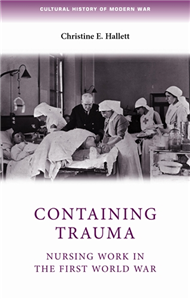
In this lucid and cogently-argued book, Christine Hallett explores the nature of the practices developed by nurses and their volunteer-assistants during the First World War. She argues that nurses found meaning in their complex and stressful work by identifying it as a process of 'containing trauma'. Broad in its scope and detailed in its research, the book analyses the work of nurses from Britain, Australia, New Zealand, Canada, South Africa and the United States of America. It draws on highly personal writings: letters and diaries drawn from archives and libraries throughout the world. This wide-ranging book explores a range of treatment scenarios, from the Western and Eastern Fronts to the Eastern Mediterranean, Mesopotamia and India. It considers both the efforts of nurses to provide physical, emotional and moral containment to their patients, and the work they did to maintain their own physical and emotional integrity. ;
Trusted Partner
Colonial frontiers explores the formation, structure and maintenance of boundaries and frontiers in settler colonies. Drawing on the work of anthropologists, historians, archaeologists and post-colonial theorists, the authors in this fascinating collection explore the importance of cross-cultural interactions in the settler colonies of Australia, New Zealand, South Africa and America. Taking key historical moments to illuminate the formation of new boundaries and the interaction between the settler societies and the indigenous groups, this book raises many important questions about how the empire worked 'on the ground'. Importantly, the collection attempts to theorise the indigenous experience. As we move towards globalisation, borders and boundaries have begun to fall away. This book reminds us that not long ago the frontiers and boundaries were the key sites for cross-cultural interaction. This collection, which includes chapters by John K. Noyes, Nigel Penn, Kay Schaffer and Ian McNiven, is broad in scope and presents an exciting new approach to the issues surrounding group interaction in colonial settings. Students and academics, from backgrounds such as imperial history, anthropology and post-colonial studies, will find this collection extremely valuable.
Trusted Partner
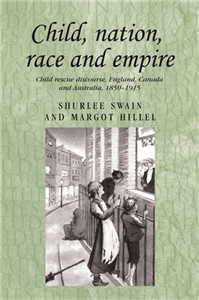
Child, nation, race and empire is an innovative, inter-disciplinary, cross cultural study that contributes to understandings of both contemporary child welfare practices and the complex dynamics of empire. It analyses the construction and transmission of nineteenth-century British child rescue ideology. Locating the origins of contemporary practice in the publications of the prominent English Child rescuers, Dr Barnardo, Thomas Bowman Stephenson, Benjamin Waugh, Edward de Montjoie Rudolf and their colonial disciples and literature written for children, it shows how the vulnerable body of the child at risk came to be reconstituted as central to the survival of nation, race and empire. Yet, as the shocking testimony before the many official enquiries into the past treatment of children in out-of-home 'care' held in Britain, Ireland, Australia and Canada make clear, there was no guarantee that the rescued child would be protected from further harm. ;
Trusted Partner

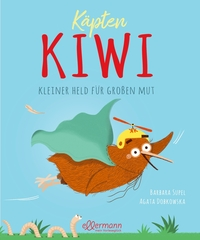
Mit Cape und Propeller-Helm: Käpten Kiwi, der kleine Angstbezwinger Angst vor der Dunkelheit, Monstern oder Fahrradfahren: Der kleine Kiwi weiß genau, wie es ist, wenn Sorgen die Stimmung verdüstern. Eines Tages hat er genug davon, Trübsal zu blasen, und beschließt, stattdessen ein Held zu werden! Mit Cape und Propellerhelm macht sich Kapitän Kiwi auf den Weg, anderen Tieren zu helfen: dem Strauß, der Angst im Dunkeln hat, dem Pfau, der die Schattenmonster fürchtet, dem Flamingo, der sich vor dem Gewitter versteckt. Das klappt auch ganz wunderbar – bis er wieder mit seinen eigenen Ängsten konfrontiert wird. Aber: Freundschaft ist das beste Sicherheitsnetz (nicht nur) für ängstliche Vögel. Neuer, ungewöhnlicher Protagonist: ein kleiner Piepmatz im Superhelden-Look Schöne Reime und niedliche Tiere von Kiwi über Pinguin bis Flamingo Ein Mutmach-Bilderbuch für Kinder ab 4 Jahren Wichtige Themen: Kinderangst, Anderssein und Mut finden


