
Self-Counsel Press
Livres Canada Books
View Rights Portal

We are from De Vecchi Ediciones / DVE, a publishing house with about 4000 titles in Spanish.
View Rights Portal
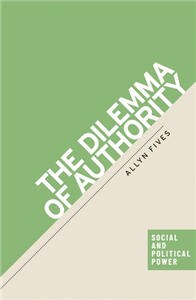
The moral problem of authority is the challenge of reconciling legitimate authority (the right to rule) with the demands of freedom and rationality. In this book, I argue that authority can have legitimacy, but when it does it generates a moral dilemma, where the obligation to obey comes at some cost to freedom and reason. Hence, not only do I depart from the views of those who insist that authority can never have legitimacy, but also those who maintain that insofar as authority is legitimate it simply satisfies the demands of freedom or rationality. My focus here will be on both what it is that justifies authority (in particular focusing on membership, and the goods of membership) as well what type of reason an authoritative directive is, how it can come into conflict with others reasons, and how those conflicts are resolved.


From a psychological perspective, there are many aspects to negotiating. Given the right knowledge of backgrounds and mechanisms, it is an art form possible to get to grips with and put into practice. In an entertaining and informative way, this book introduces the reader to the basics of communication and body language, cooperative negotiation, strategic negotiation, the different personalities of negotiators, and negotiating. Using practical exercises and valuable practical tips, this book takes the reader through the main psychological strategies and methods so he can negotiate in a flexible, goal-oriented, and successful manner. Target Group: For people who want to improve their negotiating skills.
 Trusted Partner
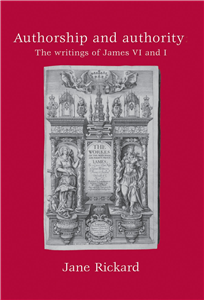
James VI of Scotland and I of England participated in the burgeoning literary culture of the Renaissance, not only as a monarch and patron, but as an author in his own right, publishing extensively in a number of different genres over four decades. As the first monograph devoted to James as an author, this book offers a fresh perspective on his reigns in Scotland and England, and also on the inter-relationship of authorship and authority, literature and politics in the Renaissance. Beginning with the poetry he wrote in Scotland in the 1580s, it moves through a wide range of his writings in other genres, including scriptural exegeses, political, social and theological treatises and printed speeches, concluding with his manuscript poetry of the early 1620s. The book combines extensive primary research into the preparation, material form and circulation of these varied writings, with theoretically informed consideration of the relationship between authors, texts and readers. The discussion thus explores James's responses to, and interventions in, a range of literary, political and religious debates, and reveals the development of his aims and concerns as an author. Rickard argues that, despite the King's best efforts to the contrary, his writings expose the tensions and contradictions between authorship and authority. This book will be of interest to scholars and students of the reign of James VI and I, the literary and political cultures of late sixteenth-century Scotland and early seventeenth-century England, the development of notions of authorship and the relationship between literature and politics. ;
Trusted Partner
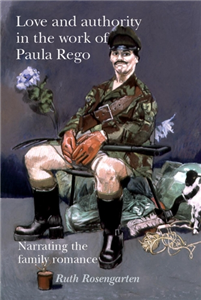
Rosengarten explores the narrative operations of Rego's work by mobilising both psychoanalytic theory and social history. She confronts, as case studies, three complex figure paintings from different moments in Rego's oeuvre: The Policeman's Daughter (1987), The Interrogator's Garden (2000), and The First Mass in Brazil (1993). The content of the three specimen paintings links them to the political context of the Estado Novo, the fascist-inspired regime that dominated Rego's childhood. Plotting links between the spheres of the political and the personal, Rosengarten throws light on the complex intertwining of state power and parental authority in Rego's work, focusing on the "labour of socialisation and resistance" that Rego's work evinces in relation to the Freudian model of the family romance. Rosengarten unveils the political context of Portugal under Salazar, and the workings of colonial fantasy, Catholic ideology and gender construction. In prodding the inalienable link between love and authority, this study offers a reading of Rego's work that interrogates, rather than subverts, the Oedipal model structuring the patriarchal family.
Trusted Partner
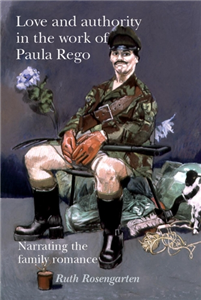
Rosengarten explores the narrative operations of Rego's work by mobilising both psychoanalytic theory and social history. She confronts, as case studies, three complex figure paintings from different moments in Rego's oeuvre: The Policeman's Daughter (1987), The Interrogator's Garden (2000), and The First Mass in Brazil (1993). The content of the three specimen paintings links them to the political context of the Estado Novo, the fascist-inspired regime that dominated Rego's childhood. Plotting links between the spheres of the political and the personal, Rosengarten throws light on the complex intertwining of state power and parental authority in Rego's work, focusing on the "labour of socialisation and resistance" that Rego's work evinces in relation to the Freudian model of the family romance. Rosengarten unveils the political context of Portugal under Salazar, and the workings of colonial fantasy, Catholic ideology and gender construction. In prodding the inalienable link between love and authority, this study offers a reading of Rego's work that interrogates, rather than subverts, the Oedipal model structuring the patriarchal family. ;
Trusted Partner

James VI of Scotland and I of England participated in the burgeoning literary culture of the Renaissance, not only as a monarch and patron, but as an author in his own right, publishing extensively in a number of different genres over four decades. As the first monograph devoted to James as an author, this book offers a fresh perspective on his reigns in Scotland and England, and also on the inter-relationship of authorship and authority, literature and politics in the Renaissance. Beginning with the poetry he wrote in Scotland in the 1580s, it moves through a wide range of his writings, including scriptural exegeses, political, social and theological treatises and printed speeches, concluding with his manuscript poetry of the early 1620s. The book combines extensive primary research into the preparation, material form and circulation of these varied writings, with theoretically informed consideration of the relationship between authors, texts and readers. The discussion thus explores James's responses to, and interventions in, a range of literary, political and religious debates, and reveals the development of his aims and concerns as an author.
Trusted Partner
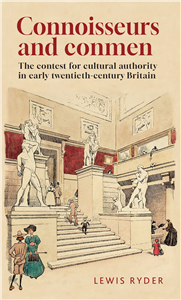
This book examines John Hilditch (1872-1930), a notorious collector of Chinese art who lied, hoaxed and manipulated in his struggle against museum experts to become a cultural authority. Previously overlooked as a pest with a dubious collection, this book uses Hilditch to interrogate how far the monumental social, cultural and political changes of the early twentieth century unsettled social and cultural hierarchies and how these hierarchies were remade. It shows how the cultural elites were forced to engage with the public and re-draw the boundaries of citizenship, expertise and high and low culture in response to unprecedented social mobility, the democratisation of culture and politics, as well as the effects of British imperialism which brought ordinary Britons access to antiquities as well as confidence to claim expertise over foreign cultures. The book will interest social and cultural historians of Modern Britain, museum scholars and art historians.
Trusted Partner

Rereading Chaucer and Spenser is a much-needed volume that brings together established and early career scholars to provide new critical approaches to the relationship between Geoffrey Chaucer and Edmund Spenser. By reading one of the greatest poets of the Middle Ages alongside one of the greatest poets of the English Renaissance, this collection poses questions about poetic authority, influence, and the nature of intertextual relations in a more wide-ranging manner than ever before. With its dual focus on authors from periods often conceived as radically separate, the collection also responds to current interests in periodisation. This approach will engage academics, researchers and students of Medieval and Early Modern culture.
Trusted Partner
 Trusted Partner
Trusted Partner
Trusted Partner
Trusted Partner
Trusted Partner
 Trusted Partner
 Trusted Partner
Local government in the UK is in crisis. It is now neither local in terms of the geography and populations of its principle units, nor does it truly govern in these areas. As this book reveals, over the previous 200 years local government has moved from a system in which local interests held governance over localities to one in which central government and national and multi-national agencies such as corporate businesses hold governance over local and community decision-making. These changes seriously undermine the important role that local government can play in liberal democracy in the UK. The book explains the nature of local government today and asks if there is any possibility of change.
Trusted Partner
Trusted Partner
Trusted Partner
 Trusted Partner
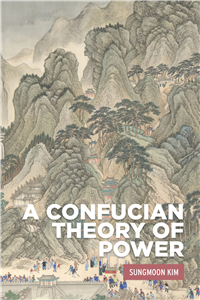
In the book's lead essay, Sungmoon Kim offers a comprehensive analysis of Confucian power. Through a blend of philosophical, political, and historical analysis, Kim challenges the dominant idea that Confucianism is primarily centred on virtue ethics. Instead, he argues that Confucianism perceives power through the prism of responsibility. Kim not only traces this perspective throughout history but also demonstrates its relevance to contemporary society. He contrasts this Confucian perspective with Western political theory's view of power as control. Political theorists and philosophers will offer essay responses to Sungmoon Kim's provocation, offering a dialogue approach to provide a comprehensive analysis of the Confucian conception of power.
Trusted Partner
Trusted Partner



