
Self-Counsel Press
Livres Canada Books
View Rights Portal

 Trusted Partner
Trusted Partner
Trusted Partner
Trusted Partner
Trusted Partner

 Trusted Partner
Trusted Partner
Trusted Partner
Trusted Partner
Trusted Partner

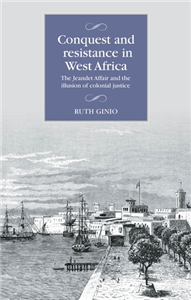
This book is an enthralling account of a legal scandal, which erupted in colonial Senegal in 1890 and reached the French metropolitan press and the parliament. The murder of a colonial administrator, Abel Jeandet, by one of his soldiers led to the brutal and illegal executions without trial of the killer and two local dignitaries. The volume follows the fascinating story of Ndiereby Ba, the widow of one of the dignitaries, who with the help of powerful métis men in the capital Saint Louis sued the French administrators who had supervised the executions for the murder of her husband. Through this captivating tale the book articulates the French expansion into West Africa, the resistance to colonial rule both violent and non-violent, and the lack of interest on the part of French politicians in the brutal conquest of a territory they know nothing about.
Trusted Partner

Speculative endeavours contributes to an emerging field of scholarship that focuses on alternative forms of knowledge production and speculation in nineteenth century US-American society. It sheds light on unofficial knowledges such as insider information, rumour, gossip, slander, emphasising how knowledges excluded by institutional discourses and authorities form a core part of the developing market economy. Ranging from the Early Republic to the Gilded Age, contributions analyse entanglements of financial, cultural, and social capital. They focus on social actors who differ from the newly minted ideal of the (free, white, male) entrepreneurial individual. The speculative endeavours discussed include illicit communications located in slave quarters and domestic spaces, communal interventions into a commercialised print market, debates on immigrant fiduciary and legal competency, and disciplinary techniques of pecuniary pedagogy. Taken together they offer unprecedented interdisciplinary insights into an emerging age of capital.
Trusted Partner
Trusted Partner
Trusted Partner
Trusted Partner
Trusted Partner
Trusted Partner
 Trusted Partner

The West must wait presents a new perspective on the development of the Irish Free State. It extends the regional historical debate beyond the Irish revolution and raises a series of challenging questions about post-civil war society in Ireland. Through a detailed examination of key local themes - land, poverty, politics, emigration, the status of the Irish language, the influence of radical republicans and the authority of the Catholic Church - it offers a probing analysis of the socio-political realities of life in the new state. This book opens up a new dimension by providing a rural contrast to the Dublin-centred views of Irish politics. Significantly, it reveals the level of deprivation in local Free State society with which the government had to confront in the west. Rigorously researched, it explores the disconnect between the perceptions of what independence would deliver and what was achieved by the incumbent Cumann na nGaedheal administration.
Trusted Partner
Trusted Partner
Trusted Partner


Mit dem West-östlichen Divan beginnt Goethes großes dichterisches Alterswerk. Mißverstanden und sogar abgelehnt wurde es in seiner Fremdartigkeit bis ins 20. Jahrhundert hinein. Und doch zählten schon früh Dichter wie Rückert, Platen, Heine und Gautier oder Philosophen wie Hegel und Marx zu seinen entschiedenen Bewunderern. Diese Ausgabe bietet den Divan erstmals in seinen verschiedenen Entstehungsphasen: als lückenlose Edition der Vorstufen und Vorabdrucke mit 160 aus den Handschriften herausgegebenen Nachlaßstücken. Auch heute noch gilt der West-östliche Divan als eines der schwierigsten Werke der neueren deutschen Literatur – obwohl die Forschung seit dem ersten Kommentar von 1834 immer wieder um sein Verständnis gerungen hat. In einem Kommentar von bisher unerreichter Akribie und Dichte nimmt Hendrik Birus die Erträge all dieser Bemühungen auf und führt sie auf dem aktuellen Stand der Diskussion zu verblüffenden Ergebnissen und einer neuen Synthese.
Trusted Partner
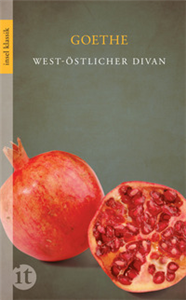
In seiner Gedichtsammlung »West-östlicher Divan« lässt Goethe Figuren aus orientalischen Epen über Liebe, Lebensgenuss und Toleranz sprechen – und schafft so einen Dialog zwischen Orient und Okzident.



