
Your Search Results


-
Promoted Content

 Business, Economics & LawJune 2020
The victim in the Irish criminal process
by Shane Kilcommins, Susan Leahy, Kathleen Moore Walsh, Eimear Spain
-
Promoted Content
 Humanities & Social SciencesMarch 2017
Child, nation, race and empire
Child rescue discourse, England, Canada and Australia, 1850–1915
by Margot Hillel, Shurlee Swain, Andrew Thompson, John M. MacKenzie
Child, nation, race and empire is an innovative, inter-disciplinary, cross cultural study that contributes to understandings of both contemporary child welfare practices and the complex dynamics of empire. It analyses the construction and transmission of nineteenth-century British child rescue ideology. Locating the origins of contemporary practice in the publications of the prominent English Child rescuers, Dr Barnardo, Thomas Bowman Stephenson, Benjamin Waugh, Edward de Montjoie Rudolf and their colonial disciples and literature written for children, it shows how the vulnerable body of the child at risk came to be reconstituted as central to the survival of nation, race and empire. Yet, as the shocking testimony before the many official enquiries into the past treatment of children in out-of-home 'care' held in Britain, Ireland, Australia and Canada make clear, there was no guarantee that the rescued child would be protected from further harm.
-
 Trusted Partner
 Humanities & Social SciencesAugust 2026
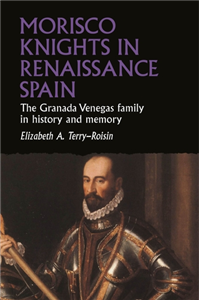
Morisco knights in Renaissance Spain
The Granada Venegas family in history and memory
by Elizabeth Terry-Roisin
How does a Morisco enter the Spanish nobility? This book reveals the cultural strategies through which a family of converts from Islam to Christianity overcame limpieza de sangre laws, rose in social status, avoided King Philip III's Morisco expulsions of 1609-14, and achieved a noble title. Drawing on archival sources from both Spain and Italy to re-create the original family archive, this book follows the Granada Venegas family from Granada, to Madrid, to the dusty Andalucían town of Campotéjar, of which they became Marquises, and finally to Italy. Their descendants would serve as Doges of Genoa in the eighteenth century.
-
Trusted Partner
 Humanities & Social SciencesMarch 2025
Straight nation
Heteronormativity and other exigencies of postcolonial nationalism
by Pavan Mano
In Straight Nation, Pavan Mano reveals the logic of straightness that sits at the heart of postcolonial nationalism in Singapore. Mano rejects the romantic notion of the nation as a haven of belonging, showing it to be a relentless force that is allied with heteronormativity to create a host of minoritized and xenologized figures. Through meticulous exploration and close reading of a swathe of texts, Mano unveils the instrumental role of sexuality in structuring the national imaginary. The book adroitly demonstrates how queerness is rendered foreign in postcolonial Singapore and functions alongside technologies of "race", gender, and class. A provocative critique of narrow contemporary identity politics and its concomitant stymying of a more ambitious political critique, Straight Nation sets out an argument that moves beyond the negativity of traditional critique into a space of (re)thinking, (re)building and (re)imagining.
-
Trusted Partner
 Humanities & Social SciencesMay 2020
Spain in the nineteenth century
New essays on experiences of culture and society
by Andrew Ginger, Geraldine Lawless
The nineteenth-century Hispanic world was shattered to its core by war, civil war, and revolution. At the same time, it confronted a new period of European and North-American expansion and development. In these essays, authors explore major, dynamic ways that people in Spain envisaged how they would adapt and change, or simply continue as they were. Each chapter title begins with the words "How to...", and examines the ways in which Spaniards conceived or undertook major activities that shaped their lives. These range from telling the time to being a man. Adaptability, paradox, and inconsistency come to the fore in many of the essays. We find before us a human quest for opportunity and survival in a complex and changing world. This wide-ranging book contains chapters by leading scholars from the United States, United Kingdom, and Spain.
-
Trusted Partner

 February 2007
Mister Moores Wortgestöber
Ein Wegweiser durch die Sprachen der Welt
by Moore, C.J / Deutsch Strüh, Christine
-
Trusted Partner
 The ArtsDecember 2022
D. W. Griffith's The Birth of a Nation
by Jenny Barrett, Douglas Field, Ian Scott
-
Trusted Partner
 Humanities & Social SciencesApril 2018
The Conservative Party and the nation
by Arthur Aughey, Richard Hayton
-
Trusted Partner
 Humanities & Social SciencesJuly 2010
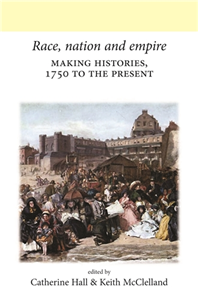
Race, nation and empire
Making histories, 1750 to the present
by Catherine Hall, Keith McClelland, Julian Hoppit
The essays in this collection show how histories written in the past, in different political times, dealt with, considered, or avoided and disavowed Britain's imperial role and issues of difference. Ranging from enlightenment historians to the present, these essays consider both individual historians, including such key figures as E. A. Freeman, G. M. Trevelyan and Keith Hancock, and also broader themes such as the relationship between liberalism, race and historiography and how we might re-think British history in the light of trans-national, trans-imperial and cross-cultural analysis. 'Britishness' and what 'British' history is have become major cultural and political issues in our time. But as these essays demonstrate, there is no single national story: race, empire and difference have pulsed through the writing of British history. The contributors include some of the most distinguished historians writing today: C. A. Bayly, Antoinette Burton, Saul Dubow, Geoff Eley, Theodore Koditschek, Marilyn Lake, John M. MacKenzie, Karen O'Brien, Sonya O. Rose, Bill Schwarz, Kathleen Wilson. ;
-
Trusted Partner
 January 2008
Love's Sacrifice
by A. T. Moore
A. T. Moore's thorough commentary on "Love's Sacrifice" is designed to be of use to all kinds of readers, from students of Early Modern drama to specialists in the field. The notes provide full explanations of obscure words and phrases, and offer analyzes of many aspects of staging and interpretation. The text for this edition is based on a fresh study of the quarto of 1633, the only authoritative early text. In his introduction to the play, Moore reappraises the evidence for the play's date of composition. He also looks at the circumstances of the play's genesis, presenting detailed discussions of both the theater where "Love's Sacrifice" was first performed and the acting company for which it was written. Arguing that Ford's adaptation of his source materials is the key to interpreting this remarkably allusive play, Moore provides a wealth of new information about Ford's sources.The introduction also includes a survey of critical responses, an overview of the play, stage history, and a bibliography of relevant secondary material. This new volume in the "Revels Plays" series is the most detailed and comprehensive edition of "Love's Sacrifice" ever published - and the first modern-spelling edition of Ford's tragedy in more than a century. The play's textual history is discussed in an appendix. A second appendix examines possible links between "Love's Sacrifice" and the real-life story of the murdered Italian prince and musician Carlo Gesualdo. ;
-
Trusted Partner
 Humanities & Social SciencesJuly 2010
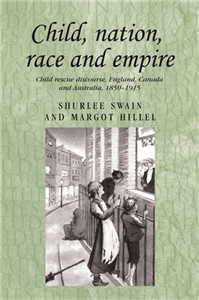
Child, nation, race and empire
Child rescue discourse, England, Canada and Australia, 1850–1915
by Margot Hillel, Shurlee Swain, Andrew Thompson, John Mackenzie
Child, nation, race and empire is an innovative, inter-disciplinary, cross cultural study that contributes to understandings of both contemporary child welfare practices and the complex dynamics of empire. It analyses the construction and transmission of nineteenth-century British child rescue ideology. Locating the origins of contemporary practice in the publications of the prominent English Child rescuers, Dr Barnardo, Thomas Bowman Stephenson, Benjamin Waugh, Edward de Montjoie Rudolf and their colonial disciples and literature written for children, it shows how the vulnerable body of the child at risk came to be reconstituted as central to the survival of nation, race and empire. Yet, as the shocking testimony before the many official enquiries into the past treatment of children in out-of-home 'care' held in Britain, Ireland, Australia and Canada make clear, there was no guarantee that the rescued child would be protected from further harm. ;
-
Trusted Partner
 Humanities & Social SciencesSeptember 2013
The Spanish Socialist Party and the modernisation of Spain
by Paul Kennedy, Steven Fielding, John Callaghan, Steve Ludlam
This book considers the most electorally successful political party in Spain, the Spanish Socialist Workers' Party (PSOE), which was in government for two of the three decades since it won office under Felipe González in 1982. Providing rich historical background, the book's main focus is on the period since General Franco's death in 1975. It charts Spain's modernisation under the PSOE, with a particular focus on the role played by European integration in this process. Covering events including the 2011 general election, the book is one of the most up-to-date works available in English and will be of great interest to academics and undergraduate and postgraduate students in the field of Spanish and European studies. ;
-
Trusted Partner
 The ArtsDecember 2025
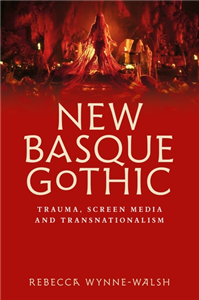
New Basque Gothic
Trauma, screen media and transnationalism
by Rebecca Wynne-Walsh
This monograph addresses the twenty-first century upsurge in Gothic screen media emanating from the Autonomous Basque Community, Euskadi, in Northern Spain. The book focuses on online video sharing, streaming and social media platforms, demonstrating the impact of multi-national co-production and distribution on the development of Basque film production; looking to the future of regional production in the digital era. This monograph fills a critical gap, presenting Basque Gothic screen media as a regionalist challenge to national models of cinema and identity. Wynne-Walsh establishes Basque Gothic as an expression of transgenerational trauma engendered by a history of state-suppression and socio-political violence. This regional iteration of the mode is addressed as a window into community perception and projection. While this project centres a Basque case study, it establishes a model for the reimagination of critical approaches to global, twenty-first century screen cultures.
-
Trusted Partner
 Humanities & Social SciencesMay 2020
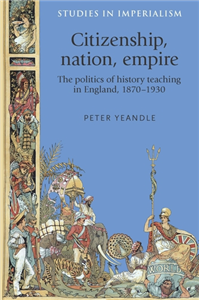
Citizenship, nation, empire
The politics of history teaching in England, 1870–1930
by Andrew Thompson, Peter Yeandle, John M. MacKenzie
Citizenship, nation, empire investigates the extent to which popular imperialism influenced the teaching of history between 1870 and 1930. It is the first book-length study to trace the substantial impact of educational psychology on the teaching of history, probing its impact on textbooks, literacy primers and teacher-training manuals. Educationists identified 'enlightened patriotism' to be the core objective of historical education. This was neither tub-thumping jingoism, nor state-prescribed national-identity teaching, but rather a carefully crafted curriculum for all children which fused civic as well as imperial ambitions. The book will be of interest to those studying or researching aspects of English domestic imperial culture, especially those concerned with questions of childhood and schooling, citizenship, educational publishing and anglo-British relations. Given that vitriolic debates about the politics of history teaching have endured into the twenty-first century, Citizenship, nation, empire is a timely study of the formative influences that shaped the history curriculum in English schools
-
Trusted Partner
-
Trusted Partner
 Literature & Literary StudiesMarch 2026
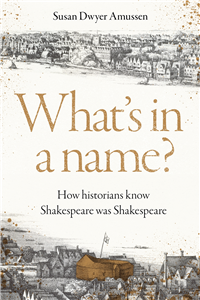
What's in a name?
How historians know Shakespeare was Shakespeare
by Susan Dwyer Amussen
A compelling tour of Shakespeare's England that makes a powerful contribution to the 'authorship question'. How do we know Shakespeare was Shakespeare? Could a glover's son who left school at fifteen really be the author behind such masterpieces as Hamlet, King Lear and The Tempest? Yes! says historian Susan Amussen. She transports readers back to early modern England, to travel the path that carried William Shakespeare from humble origins in Stratford to literary greatness on the London stage. This was a society undergoing rapid change. Grammar schools made education in Latin and Greek available to commoners, while touring players brought the latest dramatic productions to the masses. And in London, a metropolis filled with European visitors, ordinary people had the opportunity to see courtly life up close. No serious historian doubts that Shakespeare was the author of the plays that bear his name. Susan Amussen shares what they know: that Shakespeare's England was a complex and cosmopolitan place, with everything a talented young playwright needed to develop his craft and furnish his imagination.
-
Trusted Partner
 Humanities & Social SciencesJanuary 2026
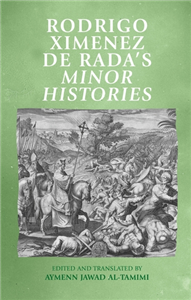
Rodrigo Ximenez de Rada’s Minor Histories
by Aymenn Al-Tamimi
This work provides the first complete English translation of works by Toledan archbishop Rodrigo Ximénez de Rada (1170-1247 CE), whose 'Minor Histories' are sequels to his larger 'Gothic History' and thus round off his grand history of Spain project that he began at the request of King Ferdinand III. The 'Minor Histories' include Rodrigo's 'History of the Arabs' that can be considered the first surviving Western monograph focused on Arab and Islamic history and thus occupies a unique position in the medieval Latin corpus of writings. In addition to the translation, this book provides a thorough and accessible introduction to the life and works of Rodrigo, making sense of the context in which he wrote and his historical method. The translations are thoroughly annotated including cross-references to other Latin and Arabic sources for comparison.
-
Trusted Partner
-
Trusted Partner
-
Trusted Partner
 Humanities & Social SciencesAugust 2021
Counter-terror by proxy
The Spanish State's illicit war with ETA
by Emmanuel Pierre Guittet
Between 1983 and 1987, mercenaries adopting the pseudonym GAL (Grupos Antiterroristas de Liberación, Antiterrorist Liberation Group) paid by the Spanish treasury and relying upon national intelligence support were at war with the Basque militant group ETA (Euskadi (e)Ta Askatasuna, Basque Country and Freedom). Over four years, their campaign of extrajudicial assassinations spanned the French-Spanish border. Nearly thirty people were killed in a campaign comprised of torture, kidnapping, bombing and the assassination of suspected ETA activists and Basque refugees. This establishment of unofficial counterterrorist squads by a Spanish Government was a blatant detour from legality. It was also a rare case in Europe where no less than fourteen high-ranking Spanish police officers and senior government officials, including the Minister of Interior himself, were eventually arrested and condemned for counter-terrorism wrongdoings and illiberal practices. Thirty years later, this campaign of intimidation, coercion and targeted killings continues to grip Spain. The GAL affair was not only a serious example of a major departure from accepted liberal democratic constitutional principles of law and order, but also a brutal campaign that postponed by decades the possibility of a political solution for the Basque conflict. Counter-terror by proxy uncovers why and how a democratic government in a liberal society turned to a 'dirty war' and went down the route of illegal and extrajudicial killing actions. It offers a fuller examination of the long-term implications of the use of unorthodox counter-terrorist strategies in a liberal democracy.





