
Your Search Results
-

-

Speaking Tiger
Speaking Tiger is an independent publishing company based in New Delhi. Founded in September 2014, the company publishes a diverse list comprising quality fiction and non-fiction from South Asia and the rest of the world, with a strong emphasis on new voices.
View Rights Portal
-
Promoted Content
-
Promoted Content

 Humanities & Social SciencesApril 2026
A Confucian theory of power
by Sungmoon Kim
In the book's lead essay, Sungmoon Kim offers a comprehensive analysis of Confucian power. Through a blend of philosophical, political, and historical analysis, Kim challenges the dominant idea that Confucianism is primarily centred on virtue ethics. Instead, he argues that Confucianism perceives power through the prism of responsibility. Kim not only traces this perspective throughout history but also demonstrates its relevance to contemporary society. He contrasts this Confucian perspective with Western political theory's view of power as control. Political theorists and philosophers will offer essay responses to Sungmoon Kim's provocation, offering a dialogue approach to provide a comprehensive analysis of the Confucian conception of power.
-
 Trusted Partner
 Humanities & Social SciencesJanuary 2025
The four dimensions of power
Understanding domination, empowerment and democracy
by Mark Haugaard
In this accessible and sophisticated exploration of the nature and workings of social and political power, Haugaard examines the interrelation between domination and empowerment. Building upon the perspectives of Steven Lukes, Michel Foucault, Amy Allen, Hannah Arendt, Anthony Giddens, Pierre Bourdieu and others, he offers a clear theoretical framework, delineating power in four interrelated dimensions. The first and second dimensions of power entail two different types of social conflict. The third dimension concerns tacit knowledge, uses of truth and reification. Drawing upon genealogical theory and accounts of slavery as social death, the fourth dimension of power concerns the power to create social subjects. The book concludes with an original normative pragmatist power-based account of democracy. Offering lucid and entertaining illustrations of complex theoretical perspectives, this book is essential reading for scholars and activists.
-
Trusted Partner
 Humanities & Social SciencesSeptember 2025
Writing power
Intellectuals, legitimacy, and the making of knowledge
by Sarah Victoria Alexandra Burton
Writing power radically rethinks the place of the canon and canonicity as objects and concepts in contemporary academia and the everyday intellectual practices of academics. It is distinctive in its demonstration of how academics' engagements with canons shape their writing practices but also how scholars' writing practices, spaces, proclivities, and desires shape the canon and changing ideas of value in canonicity. The book thinks through frequently discussed problems of legitimacy and knowledge production from fresh perspectives of lived experience and the everyday to offer new insights into the politics of knowledge in contemporary social sciences.
-
Trusted Partner
 Humanities & Social SciencesAugust 2022
The power of citizens and professionals in welfare encounters
The influence of bureaucracy, market and psychology
by Nanna Mik-Meyer
This book is about power in welfare encounters. Present-day citizens are no longer the passive clients of the bureaucracy and welfare workers are no longer automatically the powerful party of the encounter. Instead, citizens are expected to engage in active, responsible and coproducing relationships with welfare workers. However, other factors impact these interactions; factors which often pull in different directions. Welfare encounters are thus influenced by bureaucratic principles and market values as well. Consequently, this book engages with both Weberian (bureaucracy) and Foucauldian (market values/NPM) studies when investigating the powerful welfare encounter. The book is targeted Academics, post-graduates, and undergraduates within sociology, anthropology and political science.
-
Trusted Partner
-
Trusted Partner
 Geography & the EnvironmentJuly 2026
Environments of power
Vibrant terrain and landscapes of resistance
by Holly Randell-Moon
Environments of power provides unique case studies of environmental inclusion and exclusion across the Americas, Africa, Japan, India, and the South-Pacific. Using more-than-human and Indigenist approaches, chapters focus on Indigenous environmental resistance, marginalisation across social and physical environments, ecology as art, and how local communities are caught up in and resist development and infrastructure projects. The book demonstrates how environments influence which bodies and other matter belong (or not) in certain places.
-
Trusted Partner
 Humanities & Social SciencesMarch 2020
Toleration, power and the right to justification
by Rainer Forst, Bert van den Brink, Anthony Laden, Peter Niesen, David Owen
-
Trusted Partner
 Humanities & Social SciencesJune 2023
Soft power and the future of US foreign policy
by Hendrik W. Ohnesorge
-
Trusted Partner
 Humanities & Social SciencesApril 2022
Russian grand strategy in the era of global power competition
by Andrew Monaghan, Richard Connolly
-
Trusted Partner
 Humanities & Social SciencesMarch 2017
Imperialism and the natural world
by John M. MacKenzie
Imperial power, both formal and informal, and research in the natural sciences were closely dependent in the nineteenth century. This book examines a portion of the mass-produced juvenile literature, focusing on the cluster of ideas connected with Britain's role in the maintenance of order and the spread of civilization. It discusses the political economy of Western ecological systems, and the consequences of their extension to the colonial periphery, particularly in forms of forest conservation. Progress and consumerism were major constituents of the consensus that helped stabilise the late Victorian society, but consumerism only works if it can deliver the goods. From 1842 onwards, almost all major episodes of coordinated popular resistance to colonial rule in India were preceded by phases of vigorous resistance to colonial forest control. By the late 1840s, a limited number of professional positions were available for geologists in British imperial service, but imperial geology had a longer pedigree. Modern imperialism or 'municipal imperialism' offers a broader framework for understanding the origins, long duration and persistent support for overseas expansion which transcended the rise and fall of cabinets or international realignments in the 1800s. Although medical scientists began to discern and control the microbiological causes of tropical ills after the mid-nineteenth century, the claims for climatic causation did not undergo a corresponding decline. Arthur Pearson's Pearson's Magazine was patriotic, militaristic and devoted to royalty. The book explores how science emerged as an important feature of the development policies of the Colonial Office (CO) of the colonial empire.
-
Trusted Partner
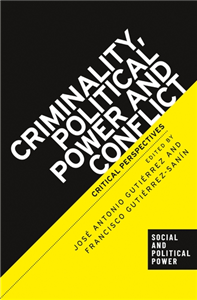 Humanities & Social SciencesDecember 2025
Criminality, political power and conflict
Critical perspectives
by José Antonio Gutiérrez Danton, Francisco Gutiérrez Sanín
In the aftermath of the greed vs. grievance debate and the new wars paradigm, the focus of conflict studies shifted decisively to understanding "predatory" behaviours as the raison d'etre of contemporary conflict. Conflict was viewed as a continuum in which the more you engage in criminal behaviour, the less political you are.This approach has been robustly criticised over the past 15 years; however, in the process, we have been left with unsuitable concepts to handle the complex interactions between civil war, political power and criminality. The departure point here is the understanding of politics and criminality as two historically differentiated domains of human activity. Different, but interrelated, often co-constitutive and overlapping. Here, we empirically and theoretically explore their interactions, connections, and convergences, not focusing solely on irregular actors, thus bringing back the State and elites into this debate.
-
Trusted Partner
 Humanities & Social SciencesMay 2022
The anthropology of power, agency and morality
by Victor de Munck, Elisa J. Sobo
-
Trusted Partner
 Political ideologiesMay 2017
Neoliberal power and public management reforms
by Professor Peter Triantafillou. Series edited by Mark Haugaard
This book examines the links between major contemporary public sector reforms and neoliberal thinking. The key contribution of the book is to enhance our understanding of contemporary neoliberalism as it plays out in the public administration and to provide a critical analysis of generally overlooked aspects of administrative power. The book examines the quest for accountability, credibility and evidence in the public sector. It asks whether this quest may be understood in terms of neoliberal thinking and, if so, how? The book makes the argument that while current administrative reforms are informed by several distinct political rationalities, they evolve above all around a particular form of neoliberalism: constructivist neoliberalism. The book analyses the dangers of the kinds of administrative power seeking to invoke the self-steering capacities of society and administration itself.
-
Trusted Partner

 July 2021
Patchwork Power!
So wird die Sache mit der Bonusfamilie zum echten Bonus
by Marita Strubelt
"Patchwork Power!" von Marita Strubelt ist ein wegweisender Ratgeber für Eltern in Patchworkfamilien, der praktische Lösungen und Strategien für den Umgang mit den Herausforderungen des Patchwork-Lebens bietet. Strubelt, selbst eine erfahrene Patchwork-Familien-Expertin, teilt ihr umfassendes Wissen und persönliche Erfahrungen, um Leserinnen und Lesern zu helfen, die Dynamiken ihrer eigenen Patchworkfamilien besser zu verstehen und positiv zu gestalten. Das Buch legt einen starken Fokus auf die Selbstfürsorge, den Perspektivwechsel und die Wertschätzung aller Familienmitglieder. Es leitet dazu an, aus Problemen Kraft zu schöpfen und die einzigartige Struktur einer Patchworkfamilie als echten Bonus zu begreifen. Durch seine enge Anbindung an das Magazin "Leben & erziehen" und eine aktive Facebook-Gruppe bietet es eine kontinuierliche Unterstützung und Gemeinschaft für Leserinnen und Leser. "Patchwork Power!" richtet sich an Patchwork-Eltern, die nach einem modernen, empathischen und praxisnahen Ansatz suchen, um ihr Familienleben zu bereichern und zu harmonisieren. Modern und praxisnah: Bietet einen zeitgemäßen Ratgeber, der auf den neuesten Erkenntnissen und realen Erfahrungen basiert. Lösungsorientierte Ansätze: Stellt konkrete, umsetzbare Strategien zur Verfügung, die aus dem Alltag einer Patchwork-Coachin stammen. Fokus auf Selbstfürsorge und Empathie: Betont die Bedeutung von Selbstfürsorge und einem empathischen Umgang innerhalb der Familie. Unterstützung durch eine aktive Community: Zugang zu einer hilfreichen Facebook-Gruppe und der Expertise einer Patchwork-Familien-Expertin. Vielseitig einsetzbar: Bietet wertvolle Einsichten und Tipps, die über die Patchwork-Thematik hinaus in vielen Lebensbereichen anwendbar sind. Empathische und wertschätzende Sprache: Spricht Leserinnen und Leser auf eine persönliche und respektvolle Weise an. Bewältigung spezifischer Herausforderungen: Geht gezielt auf typische Fallstricke und Lösungswege in Patchworkfamilien ein. Für verschiedene Familienmodelle geeignet: Das Buch bietet einen soliden Grundstock an Rat und Unterstützung für viele Konstellationen innerhalb der Patchwork-Dynamik.
-
Trusted Partner
Humanities & Social SciencesMarch 2017
Air power and colonial control
by David Omissi
Air policing was used in many colonial possessions, but its most effective incidence occurred in the crescent of territory from north-eastern Africa, through South-West Arabia, to North West Frontier of India. This book talks about air policing and its role in offering a cheaper means of 'pacification' in the inter-war years. It illuminates the potentialities and limitations of the new aerial technology, and makes important contributions to the history of colonial resistance and its suppression. Air policing was employed in the campaign against Mohammed bin Abdulla Hassan and his Dervish following in Somaliland in early 1920. The book discusses the relationships between air control and the survival of Royal Air Force in Iraq and between air power and indirect imperialism in the Hashemite kingdoms. It discusses Hugh Trenchard's plans to substitute air for naval or coastal forces, and assesses the extent to which barriers of climate and geography continued to limit the exercise of air power. Indigenous responses include being terrified at the mere sight of aircraft to the successful adaptation to air power, which was hardly foreseen by either the opponents or the supporters of air policing. The book examines the ethical debates which were a continuous undercurrent to the stream of argument about repressive air power methods from a political and operational perspective. It compares air policing as practised by other European powers by highlighting the Rif war in Morocco, the Druze revolt in Syria, and Italy's war of reconquest in Libya.
-
Trusted Partner
 Humanities & Social SciencesFebruary 2017
Cultures and caricatures of British imperial aviation
Passengers, pilots, publicity
by Gordon Pirie, Andrew Thompson, John M. MacKenzie
The new activity of trans-continental civil flying in the 1930s is a useful vantage point for viewing the extension of British imperial attitudes and practices. Cultures and caricatures of British imperial aviation examines the experiences of those (mostly men) who flew solo or with a companion (racing or for leisure), who were airline passengers (doing colonial administration, business or research), or who flew as civilian air and ground crews. For airborne elites, flying was a modern and often enviable way of managing, using and experiencing empire. On the ground, aviation was a device for asserting old empire: adventure and modernity were accompanied by supremacism. At the time, however, British civil imperial flying was presented romantically in books, magazines and exhibitions. Eighty years on, imperial flying is still remembered, reproduced and re-enacted in caricature.
-
Trusted Partner
 Humanities & Social SciencesApril 2005
Democracy, social resources and political power in the European Union
by Niilo Kauppi
In this book Kauppi develops a structural constructivist theory of the European Union and critically analyses, through French and Finnish empirical cases, the political practices that maintain the Union's 'democratic deficit'. Kauppi conceptualises the European Union as both an arena for political contention and a nascent political order. In this evolving, multi-levelled European political field, individuals and groups construct material and symbolic structures of political power, grounded in a variety of social resources such as nationality, culture, and gender. The author shows how the dominance of both executive political resources and domestic political cultures has prevented the development of European democracy. Supranational executive networks have become more autonomous, reinforcing the dominance of the resources they control. At the same time, national political cultures condition the political status of elected institutions such as the European parliament. The book is particularly suited for undergraduate and graduate students in the fields of European Politics, European Union Studies and International Relations. ;
-
Trusted Partner
Humanities & Social SciencesMarch 2017
Popular imperialism and the military, 1850-1950
by John M. MacKenzie
Colonial war played a vital part in transforming the reputation of the military and placing it on a standing equal to that of the navy. The book is concerned with the interactive culture of colonial warfare, with the representation of the military in popular media at home, and how these images affected attitudes towards war itself and wider intellectual and institutional forces. It sets out to relate the changing image of the military to these fundamental facts. For the dominant people they were an atavistic form of war, shorn of guilt by Social Darwinian and racial ideas, and rendered less dangerous by the increasing technological gap between Europe and the world. Attempts to justify and understand war were naturally important to dominant people, for the extension of imperial power was seldom a peaceful process. The entertainment value of war in the British imperial experience does seem to have taken new and more intensive forms from roughly the middle of the nineteenth century. Themes such as the delusive seduction of martial music, the sketch of the music hall song, powerful mythic texts of popular imperialism, and heroic myths of empire are discussed extensively. The first important British war correspondent was William Howard Russell (1820-1907) of The Times, in the Crimea. The 1870s saw a dramatic change in the representation of the officer in British battle painting. Up to that point it was the officer's courage, tactical wisdom and social prestige that were put on display.
-
Trusted Partner



