
The Authors Show ®
We present during this event a handful of authors who appeared on our show, and who have expressed an interest in selling the international rights to their work.
View Rights Portal
We present during this event a handful of authors who appeared on our show, and who have expressed an interest in selling the international rights to their work.
View Rights Portal
We are a one-stop platform to read, write, self-publish and sell ebooks in any of the Indian languages. Our mission is to empower the author's community with the digital tools and techniques, and we take care of the online presence of professionals in the publishing landscape, be they authors, publishers, editors, designers, publicists, etc.
View Rights Portal
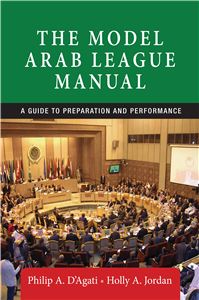
This textbook provides a comprehensive overview of the Model Arab League (MAL) programme for first time and returning students. Drawing on over fourteen years of combined experience in successfully leading award-winning MAL delegations, Philip D'Agati and Holly A. Jordan provide students with an introduction to being a delegate and tips on effective research techniques as well as simplifying the complex process of taking on the identity of a state and then representing it effectively in a MAL debate. ;


Der Fußball, heißt es, schreibt die unglaublichsten Geschichten. Höchste Zeit also für eine unglaublich gute Geschichte des Fußballs. Michael Cox erzählt sie ab dem Jahr 1992, als die Änderung der Rückpassregel und die Einführung der Champions League den Sport veränderten und einen weiteren Professionalisierungsschub auslösten. Cox zeichnet nach, wie die großen europäischen Fußballländer mit ihren Clubs und Nationalmannschaften jeweils eine Zeit lang dominierten, bis die Konkurrenz ihren Erfolgscode knackte und die Evolution weiter vorantrieb. José Mourinhos abgezockte Abwehrmaschinen, Pep Guardiolas Kurzpass-Tiki-Taka, das Gegenpressing und Umschaltspiel von Jürgen Klopp – Cox porträtiert die prägenden Figuren dieser knapp drei Jahrzehnte und erklärt ihre taktischen Neuerungen. Und er erinnert an legendäre Spiele, etwa an den Moment, als der portugiesische Nationaltorwart Ricardo im EM-Viertelfinale 2004 plötzlich seine Handschuhe auszog, den letzten Elfmeter der Engländer hielt und den entscheidenden selbst verwandelte.
 Trusted Partner
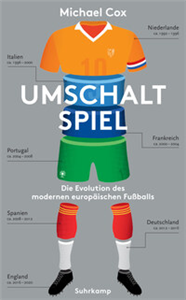
Der Fußball, heißt es, schreibt die unglaublichsten Geschichten. Höchste Zeit also für eine unglaublich gute Geschichte des Fußballs. Michael Cox erzählt sie ab dem Jahr 1992, als die Änderung der Rückpassregel und die Einführung der Champions League den Sport veränderten und einen weiteren Professionalisierungsschub auslösten. Cox zeichnet nach, wie die großen europäischen Fußballländer mit ihren Clubs und Nationalmannschaften jeweils eine Zeit lang dominierten, bis die Konkurrenz ihren Erfolgscode knackte und die Evolution weiter vorantrieb. José Mourinhos abgezockte Abwehrmaschinen, Pep Guardiolas Kurzpass-Tiki-Taka, das Gegenpressing und Umschaltspiel von Jürgen Klopp – Cox porträtiert die prägenden Figuren dieser knapp drei Jahrzehnte und erklärt ihre taktischen Neuerungen. Und er erinnert an legendäre Spiele, etwa an den Moment, als der portugiesische Nationaltorwart Ricardo im EM-Viertelfinale 2004 plötzlich seine Handschuhe auszog, den letzten Elfmeter der Engländer hielt und den entscheidenden selbst verwandelte.
Trusted Partner
 Trusted Partner

Stage rights! explores the work and legacy of the first feminist political theatre group of the twentieth century, the Actresses' Franchise League. Formed in 1908 to support the suffrage movement through theatre, the League and its membership opened up new roles for women on stage and off, challenged stereotypes of suffragists and actresses, created new work inspired by the movement and was an integral part of the performative propaganda of the campaign. Introducing new archival material to both suffrage and theatre histories, this book is the first to focus in detail on the Actresses' Franchise League, its membership and its work. The volume is formulated as a historiographically innovative critical biography of the organisation over the fifty years of its activities, and invites a total reassessment of the League within the accepted narratives of the development of political theatre in the UK.
Trusted Partner
Populism in Europe offers a detailed and systematic analysis of the ideology, electoral and governmental performances, organisational model, type of leadership and member activism of the Northern League under its founder, Umberto Bossi (1991-2012). Based on a wealth of original research, the book identifies the Northern League's consistent and coherent ideology, its strong leadership and its ability to create communities of loyal partisan activists as key ingredients of its success. Through their in-depth analysis, Albertazzi and Vampa show that the League has much to teach us about how populists can achieve durability and rootedness and how parties of all kinds can still benefit from a committed and dedicated membership today.
Trusted Partner

The amazing story of the home studio that helped launch some of Britain's most beloved bands. The Sheffield space age began in 1961, when local mechanic Ken Patten won a tape-recording competition by recreating the sound of a rocket launch using a pencil and a bicycle pump. In the decades that followed, the makeshift home studio he constructed became the launch pad for a group of young musicians who would shape the futuristic sound of 1980s pop. The Human League, Heaven 17, Pulp, ABC and others made their early recordings with Ken, whose DIY ethic was the perfect fit for a city facing industrial decline but teeming with ideas. Studio Electrophonique tells the story of a generation seeking new frontiers in music, using everything they could lay their hands on - from science fiction novels to glam rock, Dada art and cheap electronics - to get there. Drawing on original interviews with Jarvis Cocker, Martyn Ware, Mark White and others, it brings to light a world of humour, charm, creativity and unfounded yet undaunted self-belief.
Trusted Partner
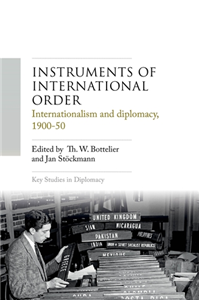
During the first half of the twentieth century, world politics was reshaped in pursuit of a new international order. The ideological foundations of the 'new diplomacy' (and its fate during the interwar period) are well known. This book instead examines the practices of internationalism and diplomacy from the First Hague Conference of 1899 to the aftermath of the Second World War. By focusing on these practices, such as disarmament regimes or public diplomacy, and their use as instruments to build international order(s), it emphasises the constructed, contested, and experimental character of what subsequently became a standard repertoire of international politics. Essays from a range of interdisciplinary scholars address well-established principles such as self-determination, and also less prominent practices such as small arms control or parliamentary inquiry. The book makes a major contribution to the growing historiography on twentieth-century internationalism.
Trusted Partner

During the first half of the twentieth century, world politics was reshaped in pursuit of a new international order. The ideological foundations of the 'new diplomacy' (and its fate during the interwar period) are well known. This book instead examines the practices of internationalism and diplomacy from the First Hague Conference of 1899 to the aftermath of the Second World War. By focusing on these practices, such as disarmament regimes or public diplomacy, and their use as instruments to build international order(s), it emphasises the constructed, contested, and experimental character of what subsequently became a standard repertoire of international politics. Essays from a range of interdisciplinary scholars address well-established principles such as self-determination, and also less prominent practices such as small arms control or parliamentary inquiry. The book makes a major contribution to the growing historiography on twentieth-century internationalism.
Trusted Partner
 Trusted Partner

 Trusted Partner
Trusted Partner
Trusted Partner
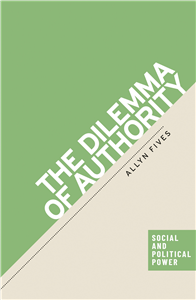
The moral problem of authority is the challenge of reconciling legitimate authority (the right to rule) with the demands of freedom and rationality. In this book, I argue that authority can have legitimacy, but when it does it generates a moral dilemma, where the obligation to obey comes at some cost to freedom and reason. Hence, not only do I depart from the views of those who insist that authority can never have legitimacy, but also those who maintain that insofar as authority is legitimate it simply satisfies the demands of freedom or rationality. My focus here will be on both what it is that justifies authority (in particular focusing on membership, and the goods of membership) as well what type of reason an authoritative directive is, how it can come into conflict with others reasons, and how those conflicts are resolved.
Trusted Partner
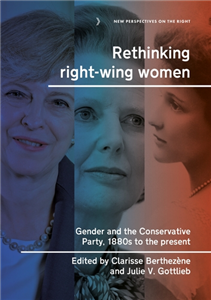
Rethinking Right-Wing Women explores the institutional structures for and the representations, mobilisation, and the political careers of women in the British Conservative Party since the late 19th century. From the Primrose League (est.1883) to Women2Win (est.2005), the party has exploited women's political commitment and their social power from the grass-roots to the heights of the establishment. Yet, although it is the party that extended the equal franchise, had the first woman MP to sit Parliament, and produced the first two women Prime Ministers, the UK Conservative Party has developed political roles for women that jar with feminist and progressive agendas. Conservative women have tended to be more concerned about the fulfilment of women's duties than the realisation of women's rights. This book tackles the ambivalences between women's politicisation and women's emancipation in the history of Britain's most electorally successful and hegemonic political party.
Trusted Partner

 Trusted Partner
 Trusted Partner
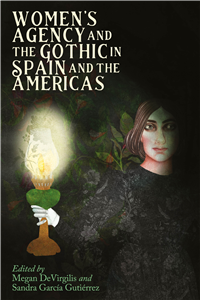
This volume has emerged to fulfill two main purposes: Primarily, to constitute the first collaborative work that traces the relationship between the Gothic and Women in Spain and the Americas, but also, to surpass the term 'Female Gothic,' coined by Ellen Moers, by transferring the focus towards women and their agency as writers, readers and characters. This volume functions as a manifesto per se to open new avenues into understanding how women have interacted with the Gothic between the nineteenth and twenty-first centuries in Spain and the Americas. The question, we determine, is not simply about identity, but rather about agency. We define women's agency as the total capacity of characters, authors and readers to act freely within a social framework in relation to gothic texts. In our exploration of authorship, we reject the claim that the Gothic is a simplistic literary genre, instead sustaining that the plasticity of the Gothic has enabled it to survive for centuries; by shifting from a genre to a mode, it has surpassed literary forms and invaded all kinds of media: from film to music and merchandise such as clothing and pop culture collectables, fostering an authentic goth fandom.
Trusted Partner
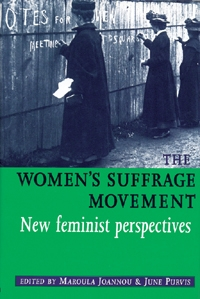
Available in paperback for the first time, this important collection of essays illustrates the complexity, richness and diversity of the suffrage movement. Combining historical reappraisal with lively accounts of the culture of the women's suffrage movement, this volume offers a unique focus. It includes studies of the fascinating, but neglected groups that participated in the campaign: the Women's Franchise League; the Women's Freedom League; the Women's Tax Resistance League and the United Suffragists. This is accompanied by feminist research on the poetry, fiction and drama that emerged from women's struggle for the vote. In addition there are reappraisals of two leading figures in the Pankhursts' Women's Social and Political Union, an illuminating analysis of the relationship between suffrage and sexuality, and a discussion of what happened away from the metropolis, as well as of the little known campaign to extend the vote after 1918. ;
Trusted Partner
Local government in the UK is in crisis. It is now neither local in terms of the geography and populations of its principle units, nor does it truly govern in these areas. As this book reveals, over the previous 200 years local government has moved from a system in which local interests held governance over localities to one in which central government and national and multi-national agencies such as corporate businesses hold governance over local and community decision-making. These changes seriously undermine the important role that local government can play in liberal democracy in the UK. The book explains the nature of local government today and asks if there is any possibility of change.
Trusted Partner
Since the mid-2000s, the harsh reality of call centre employment for a generation of young workers in Portugal has been impossible to ignore. With its endless rows of small cubicles, where human agents endure repetitive telephone conversations with abusive clients under invasive modes of technological surveillance, discipline and control, call centre work remains a striking symbol of labour precarity, a condition particularly associated with the neoliberal generational disenchantment that 'each generation does better than its predecessor'. This book describes the emergence of a regime of disciplined agency in the Portuguese call centre sector. Examining the ascendancy of call centres as icons of precarity in contemporary Portugal, this book argues that call centre labour constitutes a new form of commodification of the labouring subject. De Matos argues that call centres represent an advanced system of non-manual labour power exploitation, due to the underestimation of human creativity that lies at the centre of the regimented structures of call centre labour. Call centres can only guarantee profit maintenance, de Matos argues, through the commodification of the human agency arising from the operators' moral, relational and social embedded agentive linguistic interventions of creative improvisation, decision-making, problem-solving and ethical evaluation.

