
Thornapple Press
Publisher of bestselling and award-winning books including Polysecure, More Than Two and Love’s Not Color Blind.
View Rights Portal
Publisher of bestselling and award-winning books including Polysecure, More Than Two and Love’s Not Color Blind.
View Rights Portal


In one of the first monographs of its kind to focus on the aesthetic and emotional impact of lighting in cinema, Lara Thompson looks at the way light informs the cinematic experience, from constructing star identities, sculpting natural light and creating imaginary worlds, to the seductive power of darkness, fading representations of the past and arresting twilight encounters. This groundbreaking and accessible introductory study offers a unique insight into the way illumination has transcended its diffuse functional boundaries and been elevated to a position of narrative and emotional importance, transforming it from an unobtrusive element of film style to an expressive and essential component. It includes analyses of over fifty renowned international films, discussed in inventive and illuminating combinations, from cinema's earliest moments to its most recent digital manifestations, and is essential reading for all those who want to understand what film light means and how it makes us feel. ;
 Trusted Partner
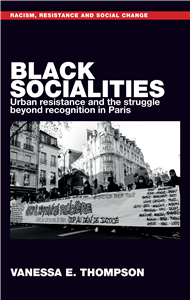
From author: This is a cutting-edge exploration of black urban politics in Parisian racialized working class and working poor districts, the formation of abolition geography, and the possibilities of new forms of political blackness. In Black Socialities. Urban resistance and the struggle beyond recognition in Paris, Vanessa E. Thompson argues that black urban politics in the French banlieues are multi-racial and spatially grounded towards abolition. Based on a close engagement with urban black activist practices against racial imagery in the city, policing and state racism, and housing insecurity, she shows how radical anti-racism goes beyond struggles for recognition and unfolds alongside new formations of political blackness that is based on urban conviviality. This form of black politics has much to teach us in this current conjuncture of liberal anti-racism and state recognition politics.
Trusted Partner
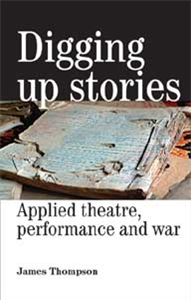
In 'Digging up stories', James Thompson explores the problems of theatre practice in communities affected by war and exclusion. Each chapter or 'story' is written in a lively and accessible style and draws on a range of contemporary performance theories. The chapters discuss: - participatory theatre in refugee camps - theatre workshop and stories of a massacre - traditional dance-dramas in an insurgent controlled village - 'Forum' theatre with the Mahabharata - ethical issues - the struggle to teach the author to dance 'Digging up stories' documents a range of theatre practice and includes project reports, ethnographic accounts, performance analysis and diary-style reflection. Taken from Thompson's research and practice in Sri Lanka, these diverse examples question the link between applied theatre, traditional performance and performances in everyday life. The book blurs lines between research and travel writing to create rich and provocative accounts of applying theatre in a troubled setting. ;
Trusted Partner
Trusted Partner
 Trusted Partner
Trusted Partner
Trusted Partner


Zweifellos ist es ein verlegerisches Wagnis, DʼArcy Thompsons legendäres Buch im Zeitalter des Quasi-Ausschließlichkeitsanspruchs von Biochemie und Molekularbiologie in einer Neuauflage und dazu in deutscher Sprache herauszubringen. Wer von den jungen Biologen verbindet heute noch mit Thompsons Namen einen Begriff? Wer war dieser Mann? Was macht sein Werk noch heute druckenswert? Man könnte vielleicht aphoristisch sagen: DʼArcy Thompson war einer jener Polyhistores, von denen man meinte, sie seien mit dem Verklingen des Barock ausgestorben und in späterer Zeit nicht einmal mehr denkbar. Mithin ein verspäteter Barock-Gelehrter? Keineswegs, sondern einer der Pioniere der modernsten Biologie! Er vereinigte in sich das Denkvermögen des Mathematikers und Physikers mit dem des Linguisten und des Biologen, und er verfügt über das Handwerkliche aller drei dieser – ach doch so verschiedenen – Wissensgebiete. Dieses Buch hat eine widersprüchliche Geschichte: 1917 erschien die erste Auflage – damals vollendete Ketzerei – mit 793 Seiten Umfang, 1942 eine Erweiterung auf 1116 Seiten. Die posthume Neuauflage von Bonner – sie liegt der Übersetzung zugrunde – knüpft an die erste Auflage an, läßt vieles aus (weil es nicht mehr aktuell ist) und bringt zahlreiche Kommentare des Herausgebers. Es handelt sich also bei der vorliegenden Ausgabe um eine »Klassikeredition in Auswahl und mit Kommentar versehen«. Dies ist bei einem Buch mit einer erst 55jährigen Geschichte bemerkenswert. Um es vorwegzunehmen: von Thompsons Konzeption ist nichts Wesentliches verlorengegangen, und die Kommentare machen die Orientierung für denjenigen, der die Literatur nicht selbst kennt, leichter. (So. J.H. Scharf, Halle, 1974 in seiner Besprechung der deutschen Erstausgabe.)
Trusted Partner
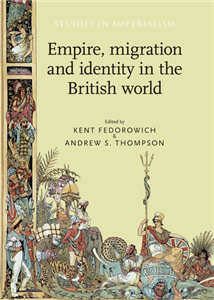
The essays in this volume have been written by leading experts in their respective fields and bring together established scholars with a new generation of migration and transnational historians. Their work weaves together the 'new' imperial and the 'new' migration histories, and is essential reading for scholars and students interested in the interplay of migration within and between the local, regional, imperial, and transnational arenas. Furthermore, these essays set an important analytical benchmark for more integrated and comparative analyses of the range of migratory processes - free and coerced - which together impacted on the dynamics of power, forms of cultural circulation and making of ethnicities across a British imperial world.
Trusted Partner
Trusted Partner
Trusted Partner
Trusted Partner
Trusted Partner
Trusted Partner
Trusted Partner
Trusted Partner
Trusted Partner
Trusted Partner
Trusted Partner





