
Troubador Publishing Ltd.
Troubador is an independent UK-based trade and academic publisher which also offers authors a high quality self-publishing services through its imprint Matador for fiction, non-fiction and communications.
View Rights Portal
Troubador is an independent UK-based trade and academic publisher which also offers authors a high quality self-publishing services through its imprint Matador for fiction, non-fiction and communications.
View Rights Portal Trusted Partner


Making home explores the figure of the orphan child in a broad selection of contemporary US novels by popular and critically acclaimed authors Barbara Kingsolver, Linda Hogan, Leslie Marmon Silko, Marilynne Robinson, Michael Cunningham, Jonathan Safran Foer, John Irving, Kaye Gibbons, Octavia Butler, Jewelle Gomez and Toni Morrison. The orphan child is a continuous presence in US literature, not only in children's books and nineteenth-century texts, but also in a variety of genres of contemporary fiction for adults. Making home examines the meanings of this figure in the contexts of American literary history, social history and ideologies of family, race and nation. It argues that contemporary orphan characters function as links to literary history and national mythologies, even as they may also serve to critique the limits of literary history, as well as the limits of familial and national belonging.
Trusted Partner
 Trusted Partner
Trusted Partner
Trusted Partner

Making home explores the figure of the orphan child in a broad selection of contemporary US novels by popular and critically acclaimed authors Barbara Kingsolver, Linda Hogan, Leslie Marmon Silko, Marilynne Robinson, Michael Cunningham, Jonathan Safran Foer, John Irving, Kaye Gibbons, Octavia Butler, Jewelle Gomez and Toni Morrison. The orphan child is a continuous presence in US literature, not only in children's books and nineteenth-century texts, but also in a variety of genres of contemporary fiction for adults. Making home examines the meanings of this figure in the contexts of American literary history, social history and ideologies of family, race and nation. It argues that contemporary orphan characters function as links to literary history and national mythologies, even as they may also serve to critique the limits of literary history, as well as the limits of familial and national belonging.
Trusted Partner

Nordic Gothic traces Gothic fiction in the Nordic region from its beginnings in the nineteenth century, with a main focus on the development of Gothic from the 1990s onwards in literature, film, TV and new media. The volume gives an overview of Nordic Gothic fiction in relation to transnational developments and provides a number of case studies and in-depth analyses of individual narratives. It creates an understanding of this under-researched cultural phenomenon by showing how the narratives make visible cultural anxieties haunting the Nordic countries, their welfare systems, identities and ideologies. Nordic Gothic examines how figures from Nordic folklore function as metaphorical expressions of Gothic themes and Nordic settings are explored from perspectives such as ecocriticism and postcolonialism. The book will be of interest to researchers and post- and- undergraduate students in various fields within the Humanities.
Trusted Partner
Trusted Partner
Trusted Partner
Trusted Partner
 Trusted Partner

 Trusted Partner

Making home explores the figure of the orphan child in a broad selection of contemporary US novels by popular and critically acclaimed authors Barbara Kingsolver, Linda Hogan, Leslie Marmon Silko, Marilynne Robinson, Michael Cunningham, Jonathan Safran Foer, John Irving, Kaye Gibbons, Octavia Butler, Jewelle Gomez and Toni Morrison. The orphan child is a continuous presence in US literature, not only in children's books and nineteenth-century texts, but also in a variety of genres of contemporary fiction for adults. Making home examines the meanings of this figure in the contexts of American literary history, social history and ideologies of family, race and nation. It argues that contemporary orphan characters function as links to literary history and national mythologies, even as they may also serve to critique the limits of literary history, as well as the limits of familial and national belonging.
Trusted Partner

In this study, Kathryn Walls challenges the standard identification of Una with the post-Reformation English Church, arguing that she is, rather, Augustine's City of God - the invisible Church, whose membership is known only to God. Una's story (its Tudor resonances notwithstanding) therefore embraces that of the Synagogue before the Incarnation as well as that of the Church in the time of Christ and thereafter. It also allegorises the redemptive process that sustains the true Church. Una is fallible in canto I. Subsequently, however, she comes to embody divine perfection. Her transformation depends upon the intervention of the lion as Christ. Convinced of the consistency and coherence of Spenser's allegory, Walls offers fresh interpretations of Abessa (as Synagoga), of the fauns and satyrs (the Gentiles), and of Una's dwarf (adiaphoric forms of worship). She also reinterprets Spenser's marriage metaphor, clarifying the significance of Red Cross as Una's spouse in the final canto.
Trusted Partner
 Trusted Partner
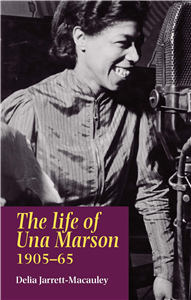
This is an original, full length biography of Britain's first twentieth-century black feminist - Una Marson - poet, playwright, and social activist and BBC broadcaster. Una Marson is recognised today as the first major woman poet of the Caribbean and as a significant forerunner of contemporary black writers; her story throws light on the problems facing politicised black artists. In challenging definitions of 'race' and 'gender' in her political and creative work, she forged a valiant path for later black feminists. Her enormous social and cultural contributions to the Caribbean and Britain have, until now, remained hidden in archives and memoirs around the world. Based on extensive research and oral testimony, this biography embraces postcolonial realities and promise, and is a major contribution to British cultural history. ;
Trusted Partner


"Die blühende Natur-Uhr" von Una Jacobs ist ein Sammelband, der Kinder auf eine lehrreiche Reise durch die Jahreszeiten führt, um die enge Verbundenheit zwischen Sonnenlicht, Pflanzen, Tieren und deren zyklischen Lebensweisen zu veranschaulichen. Der Band besteht aus drei Teilen: "Die Sonnen-Uhr", "Die Schmetterlings-Uhr" und "Die Blumen-Uhr". Jeder Teil beleuchtet, wie wesentlich Sonnenlicht für das Leben auf der Erde ist, die vielfältige Welt der Schmetterlinge und die symbiotischen Beziehungen zwischen Blüten und ihren tierischen Besuchern. Zielgruppengerecht erklärt dieses Werk die Wissenschaft hinter natürlichen Phänomenen mit einer Mischung aus genauen Beobachtungen und anschaulichen Illustrationen, die das Verständnis für Naturwissenschaften spielerisch fördern. Fachlich fundiert und kindgerecht aufbereitet: Ideal für junge Naturforscher*innen im Alter ab 5 Jahren, um Grundlagen der Ökologie und Biologie zu verstehen. Interaktives Lernerlebnis: Fördert die Neugier und das explorative Lernen durch anschauliche Beispiele und klare, verständliche Texte. Hochwertige Illustrationen: Unterstützt das Textverständnis durch detailreiche und farbenfrohe Bilder, die Kinder ansprechen. Dreiteiliger Sammelband: Bietet umfassende Einblicke in verschiedene Aspekte der Natur, von der Sonnenenergie über die Schmetterlingsvielfalt bis hin zur Blumenökologie. Nachhaltiges Interesse an der Naturwissenschaft: Ermutigt Kinder, ihre Umgebung bewusster wahrzunehmen und das Erlernte in der Natur zu erkunden.
Trusted Partner
Trusted Partner


In this book Tatjana van Strien, the author of the Dutch Eating Behavior Questionnaire (DEBQ), presents a scientific alternative for all the ‘miracle solutions’ to lose weight. Based on more than 25 years of scientific research, she offers a self-test-method which enables readers to explore what is the cause of their eating problem, what they can do about it, and ultimately lose weight and keep it off. Target Group: people who want to lose weight, dieticians, doctors, psychologists.
Trusted Partner

The West must wait presents a new perspective on the development of the Irish Free State. It extends the regional historical debate beyond the Irish revolution and raises a series of challenging questions about post-civil war society in Ireland. Through a detailed examination of key local themes - land, poverty, politics, emigration, the status of the Irish language, the influence of radical republicans and the authority of the Catholic Church - it offers a probing analysis of the socio-political realities of life in the new state. This book opens up a new dimension by providing a rural contrast to the Dublin-centred views of Irish politics. Significantly, it reveals the level of deprivation in local Free State society with which the government had to confront in the west. Rigorously researched, it explores the disconnect between the perceptions of what independence would deliver and what was achieved by the incumbent Cumann na nGaedheal administration.






