Your Search Results

      • American Academy of Pediatrics

        Leading global publisher in the field and practice of Pediatrics. AAP Publications are among the most respected and frequently referenced in the world, including journals, clinical and consumer books and eBooks, and continuing medical education.  Top title include Red Book, NRP, Pediatrics, PREP Self-Assessment, Pediatric Clinical Practice Guidelines, Caring for Your Baby and Building Resilience in Children.

        View Rights Portal
      • Trusted Partner
        Humanities & Social Sciences
        May 2026

        Sexual violence in racial capitalism

        by Alison Phipps

        Most texts on sexual violence treat capitalism as backdrop or afterthought. In contrast, political economy is the core of this book. Phipps explores the centrality of sexual violence to racial capitalist processes: the enclosure of bodies, the extraction of labour, the expropriation of land and resources, and the disposal of unwanted populations. Importantly, she argues that both sexual violence and sexual fear create social control and surplus value. Through a framework called the coloniality of sexual violence, Phipps conjoins acts of sexual violence and ideas of sexual threat in an analysis of gendered and raced property relations and the split colonial/modern psyche. She argues that fantasies of sexual danger represent the infolded violence of racial capitalism, which is why fear of revolution is often fear of rape. Revolution, however, is always imminent: violence is necessary because power is incomplete.

      • Trusted Partner
        The Arts
        January 2026

        David Simon's American City

        by Mikkel Jensen

        This book examines the television serials created by influential showrunner David Simon. The book argues that Simon's main theme is the state of the contemporary American city and that all of his serials (barring one about the Iraq War) explore different facets of the metropolis. Each series offers distinctly different visions of the American city, but taken together they represent a sustained and intricate exploration of urban problems in modern America. From deindustrialisation in The Wire and residential segregation in Show Me a Hero to post-Katrina New Orleans in Treme and the transformation of the urban core in The Deuce, David Simon's American city traces the urban through-line in Simon's body of work. Based on sustained analysis of these serials and their engagement with contemporary politics and culture, David Simon's American city offers a compelling examination of one of television's most arresting voices.

      • Trusted Partner
      • Trusted Partner
        Business, Economics & Law
        September 2010

        The US Economy Today

        by Edward Ashbee, Bill Jones

        The US Economy Today provides an invaluable introduction to American economic history since 1929. Its coverage includes the New Deal, the post-war boom, "stagflation" in the 1970s, "Reaganomics", the Clinton and Bush years, the 2008 - 2009 economic crisis and President Obama's first hundred days. In addition, this volume considers core contemporary economic policy debates and draws conclusions about the strengths and weaknesses of the US economic "model". It looks at the causes and consequences of inequality, the extent to which there is economic mobility, and the impact of globalization and foreign trade. This book will be essential reading for those studying or teaching American economics, economic history or politics and all those looking for a thorough and comprehensive introduction to this area. ;

      • Trusted Partner
        Business, Economics & Law
        March 2025

        Tadeusz Kowalik and Poland’s return from socialism to capitalism

        Full circle

        by Gavin Rae

        Tadeusz Kowalik lived through ten decades and three economic and political systems in Poland. He combined his academic study of economic ideas with his socialist ideals of building a fairer and more just society. This book covers the intellectual and political work of Kowalik, within the context of modern Polish history. Kowalik was part of a Polish School of critical left-wing political economists, that included Michal Kalecki and Oskar Lange. Kowalik contributed to the body of work produced by this group, which included his interpretation of their work. Kowalik participated in some of the most momentous events in post-war Polish history, helping to organise a group of intellectuals to advise the shipyard workers at the Gdansk shipyards in 1980. He became a vehement opponent of Poland's neoliberal form of capitalism and left a body of work that illuminates our understanding of capitalism and socialism today.

      • Trusted Partner
        Humanities & Social Sciences
        June 2026

        The political ecology of colonial capitalism

        by Bikrum Gill

      • Trusted Partner
      • Trusted Partner
        Humanities & Social Sciences
        March 2026

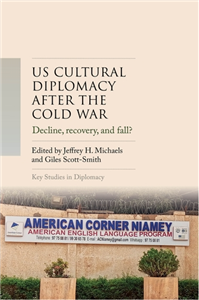
        US cultural diplomacy after the Cold War

        Decline, recovery, and fall

        by Jeffrey H. Michaels, Giles Scott-Smith

        In the decades following the USSR's collapse, the US has gone from unrivalled hegemon to a position of relative decline. With America 'triumphant' after 1991, its culture, like its diplomatic, military and economic power, remained unmatched. Such favourable circumstances seemed to undercut the need for cultural diplomacy. Why should the US government sell a product that was already selling so well? After 9/11, however, it was apparent the US image was less popular than previously assumed. To reverse this negative image, cultural diplomacy was revived. Despite being beset by internal and external challenges, US officials supported various cultural initiatives and partnerships to promote the American brand globally. Along the way, cultural diplomacy has made use of new forms of expression to promote American culture and build positive foreign relations. The arrival of the second Trump administration in 2025 has clearly signalled an end to using cultural diplomacy to further causes of empowerment and diversity, making the future uncertain for this field of activity.

      • Trusted Partner
        Humanities & Social Sciences
        November 2024

        US public diplomacy in socialist Yugoslavia, 1950–70

        Soft culture, cold partners

        by Carla Konta

        The first comprehensive account of the public and cultural diplomacy campaigns carried out by the US in Yugoslavia during the height of the Cold War, this book examines the political role of culture in US-Yugoslav bilateral relations and the fluid links between information and propaganda. Tito allowed the US Information Agency and the State Department's cultural programmes to enter Yugoslavia, liberated from Soviet control. The exchange of intellectual and political personnel helped foster the US-Yugoslav relationship, yet it posed severe ideological challenges for both sides. By providing new insights into porous borders between freedom and coercion in Tito's regime, this book shows how public diplomacy acted as an external input for Yugoslav liberalisation and dissident movements. Using extensive archival research and interviews, Konta analyses the links between information and propaganda, and the unintended effects of propaganda beyond the control of producers and receivers.

      • Trusted Partner
        Humanities & Social Sciences
        July 2016

        The American bomb in Britain

        by Ken Young

      • Trusted Partner
        Literature & Literary Studies
        June 2023

        The politics of male friendship in contemporary American fiction

        by Michael Kalisch

        How might our friendships shape our politics? This book examines how contemporary American fiction has rediscovered the concept of civic friendship and revived a long tradition of imagining male friendship as interlinked with the promises and paradoxes of democracy in the United States. Bringing into dialogue the work of a wide range of authors - including Philip Roth, Paul Auster, Michael Chabon, Jonathan Lethem, Dinaw Mengestu, and Teju Cole - this innovative study advances a compelling new account of the political and intellectual fabric of the American novel today.

      • Trusted Partner
        Humanities & Social Sciences
        April 2020

        US politics today

        by Edward Ashbee, Bill Jones

      • Trusted Partner
        Teaching, Language & Reference
        May 2025

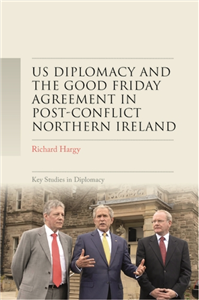
        US diplomacy and the Good Friday Agreement in post-conflict Northern Ireland

        by Richard Hargy

        Richard Haass and Mitchell Reiss, as autonomous diplomats in the George W. Bush State Department, were able to alter US intervention in Northern Ireland and play critical roles in the post-1998 peace process. Their contributions have not been fully appreciated or understood. The restoration of Northern Ireland's power-sharing government in 2007 was made possible by State Department-led intervention in the peace process. There are few references to Northern Ireland in work examining the foreign policy legacy of the George W. Bush presidency. Moreover, the ability to control US foreign policy towards the region brought one of George W. Bush's Northern Ireland special envoys into direct diplomatic conflict with the most senior actors inside the British government. This book will uncover the extent of this fall-out and provide original accounts on how diplomatic relations between these old allies became so fraught.

      • Trusted Partner
        Business, Economics & Law
        January 2026

        Capitalism in contemporary Iran

        by Kayhan Valadbaygi

      • Trusted Partner
        Literature & Literary Studies
        February 2025

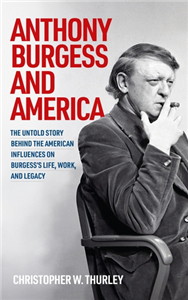
        Anthony Burgess and America

        The untold story behind the American influences on Burgess’s life, work and legacy

        by Christopher W Thurley

        Anthony Burgess and America is a biographical and critical analysis of Burgess's commentary on and relationship with the United States of America. Utilising Burgess's entire canon and newly discovered materials to assess Burgess's views on America, this book also evaluates the American inspirations in five Burgess novels. This essential addition to Burgess scholarship tells the story of a nearly unexplored area of Burgess's life. For the first time ever, Burgess's American experiences, work, and documented communication, lectures, interviews and public utterances are brought together to assess where these commentaries overlapped with his fiction. The result is a complex personal and public history about one of Britain's greatest twentieth century authors and their immersion into and interaction with American culture in the second half of the twentieth century.

      • Trusted Partner
        Humanities & Social Sciences
        December 2024

        Iran, Saudi Arabia and the United States

        Power, identity and strategy in the Persian Gulf triangle

        by Luíza Cerioli

        This book offers a nuanced snapshot of the complex geopolitical dynamics in the Persian Gulf, underlining the interaction between Iran, Saudi Arabia, and the US. Examining their interwoven relations since the 1970s, Luíza Cerioli's framework reveals how changes in US-Saudi ties have ripple effects on Iran-US and Iran-Saudi relations and vice versa. Using a historical lens, she explores how enduring US-Saudi connections hinge on order expectations, delves into the cognitive factors shaping US-Iran enmity and traces the source of oscillation in the Saudi-Iran ties. Employing Neoclassical Realism, the book investigates status-seeking, national identities and leadership preferences, offering a deeper understanding of the region's multipolar system. By combining International Relations and Middle East Studies, Cerioli's work contributes to both fields, unravelling the intricate interplay between international structures, regional nuances and agency in shaping Persian Gulf geopolitics.

      • Trusted Partner
        Humanities & Social Sciences
        October 2002

        American society today

        by Edward Ashbee, Bill Jones

        American society today provides a balanced introduction to the defining features of contemporary American society. Includes the ways in which the US can be considered 'exceptional' - the character of the 'American dream', the role of ethnicity and race, and the differences between the regions. Considers in depth a number of contemporary debates including the claim that the US economy has lost its capacity to generate wealth and stimulate mobility, that there has been a process of civic disengagement as voluntary organisations have lost members, and that the traditional family is in decline. Includes a thorough investigation of the effects of the terrorist attacks of September 11 and their aftermath. Looks at the arguments put forward by those who assert that a common American identity has given way to a multitude of conflicting identities structured around factors such as race, ethnicity, gender and sexuality. ;

      • Trusted Partner
        Business, Economics & Law
        January 2026

        Latin America and international investment law

        A mosaic of resistance

        by Sufyan Droubi, Cecilia Juliana Flores Elizondo

        Latin America has been a complex laboratory for the development of international investment law. While some governments and non-state actors have remained true to the Latin American tradition of resistance towards the international investment law regime, other governments and actors have sought to accommodate said regime in the region. Consequently, a profusion of theories and doctrines, too often embedded in clashing narratives, has emerged. In Latin America, the practice of international investment law is the vivid amalgamation of the practice of governments sometimes resisting and sometimes welcoming mainstream approaches; the practice of lawyers assisting foreign investors from outside and within the region; and the practice of civil society, indigenous peoples and other actors in their struggle for human rights and sustainable development. Latin America and international investment law describes the complex roles that governments have played vis-à-vis foreign investors and investments; the refreshing but clashing forces that international organizations, corporations, civil society, and indigenous peoples have brought to the field; and the contribution that Latin America has made to the development of the theory and practice of international investment law, notably in fields in which the Latin American experience has been traumatic: human rights and sustainable development. Latin American scholars have been contributing to the theory of international investment law for over a century; resting on the shoulders of true giants, this volume aims at pushing this contribution a little further.

      Subscribe to our

      newsletter