Your Search Results

      • Trusted Partner

        Bastei Lübbe AG

        Bastei Lübbe AG, based in Cologne, Germany, is a large, both traditional and modern company in the German publishing industry, specializing in the publication of books, audio books and eBooks with fiction and popular science content. The company's core business also includes periodically published novel books. The product range of the twelve imprints of the media company currently comprises a total of around 3,600 titles from the fiction, non-fiction, children's and youth book sectors. International and national bestselling authors such as Ken Follett, Dan Brown, Jeff Kinney, Rebecca Gablé, Petra Hülsmann, Andreas Eschbach, Timur Vermes and many more have published their books at the Cologne publishing house, some of them for decades. Die in Köln ansässige Bastei Lübbe AG ist ein großes, sowohl traditionsreiches wie auch modernes Unternehmen im deutschen Verlagswesen, das auf die Herausgabe von Büchern, Hörbüchern und eBooks mit belletristischen und populärwissenschaftlichen Inhalten spezialisiert ist. Zum Kerngeschäft des Unternehmens gehören auch die periodisch erscheinenden Romanhefte. Das Angebot der zwölf Verlage und Imprints des vor mehr als 60 Jahren gegründeten Medienhauses umfasst derzeit insgesamt rund 3.600 Titel aus den Bereichen Belletristik, Sach-, Kinder- und Jugendbuch. Internationale und nationale Bestsellerautoren wie Ken Follett, Dan Brown, Jeff Kinney, Rebecca Gablé, Petra Hülsmann, Andreas Eschbach, Timur Vermes und viele mehr veröffentlichen ihre Bücher zum Teil seit Jahrzehnten im Kölner Verlagshaus.

        View Rights Portal
      • Almatykitab Baspassy

        Almatykitap Baspassy was founded in 1999 and focuses on a wide range children’s books for ages between 2 and 18, including education and non-fiction titles. There are also a number of ethnographic titles on Kazakh culture, its traditions and nature.

        View Rights Portal
      • Trusted Partner
        Humanities & Social Sciences
        March 2021

        The end of populism

        by Marcel H. Van Herpen

      • Trusted Partner
        The Arts
        October 2023

        Windows for the world

        Nineteenth-century stained glass and the international exhibitions, 1851–1900

        by Jasmine Allen

        Windows for the world explores the display and reception of nineteenth-century British stained glass in a secular exhibition context. International in scope, the book focuses on the global development of stained glass in this period as showcased at, and influenced by, these exhibitions. It recognises those who made and exhibited stained glass and demonstrates the long-lasting impact of the classification and modes of display at these events. A number of exhibits are illustrated in colour and are analysed in relation to stylistic developments, techniques and material innovations, as well as the broader iconographies of nation and empire in the nineteenth century.

      • Trusted Partner
        Medicine
        February 2025

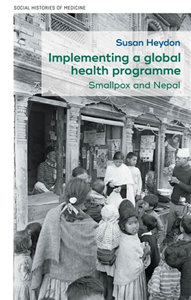
        Implementing a global health programme

        Smallpox and Nepal

        by Susan Heydon

        Worldwide eradication of the devastating viral disease of smallpox was devised as a distant global policy, but success depended on implementing a global vaccination programme within nation states. How this was achieved remains relevant and topical for responding to today's global communicable disease challenges. The small and poor Himalayan kingdom of Nepal faced enormous geographical and infrastructure challenges if it was going to succeed in a nationwide vaccination programme. This book acknowledges the key role of the WHO but disrupts the top-down, centre-led standard narrative. Against a background of widespread internal political and social change, Nepal's programme was expanded, effectively decentralised and a vaccination strategy introduced that aligned with people's beliefs. Few foreign personnel were involved.

      • Trusted Partner
        Humanities & Social Sciences
        April 2016

        University engagement and environmental sustainability

        by Michael Osborne, Patricia Inman, Diana Robinson

        Universities have a key role to play in contributing to environmental development and combating climate change. The chapters within this volume detail the challenges faced by higher education institutions in considering environmental sustainability, and provide both a broad view of university engagement and a detailed examination of various projects. As part of this series in association with the Place and Social Capital and Learning (PASCAL) International Observatory, the three key PASCAL themes of place management, lifelong learning and the development of social capital are considered throughout the book. While universities have historically generated knowledge outside of specific local contexts, this book argues that it is particularly important for them to engage with the local community and to consider diverse perspectives and assets when looking at issues within an ecological context. The chapters in this volume provide new perspectives and frames of reference for transforming universities by engaging in the development of resilient communities.

      • Trusted Partner
        Humanities & Social Sciences
        October 2021

        Higher education in a globalising world

        Community engagement and lifelong learning

        by Peter Mayo

        This book focuses on current policy discourse in Higher Education, with special reference to Europe. It discusses globalisation, Lifelong Learning, the EU's Higher Education discourse, this discourse's regional ramifications and alternative practices in Higher Education from both the minority and majority worlds with their different learning traditions and epistemologies. It argues that these alternative practices could well provide the germs for the shape of a public good oriented Higher Education for the future. It theoretically expounds on important elements to consider when engaging Higher Education and communities, discussing the nature of the term 'community' itself. Special reference is accorded to the difference that lies at the core of these ever-changing communities. It then provides an analysis of an 'on the ground project' in University community engagement, before suggesting signposts for further action at the level of policy and provision. This book is relevant to United Nations Sustainable Development Goal 4, Quality education

      • Trusted Partner

        Basic Stimulation in Nursing

        by Christel Bienstein

        This bestselling title is a practical handbook on the concept of basic stimulation in nursing and its application for patients suffering from perceptional deficits, developmental delays and mental handicaps. It enables nurses to develop, improve and stabilize physically and mentally handicapped people with impaired perceptional, communicative and motor skills.   Target Group: Nurses

      • Trusted Partner
        Humanities & Social Sciences
        February 2025

        Global counter-terrorism

        by Tahir Abbas, Sylvia I. Bergh, Sagnik Dutta

        This collection aims to inaugurate a new direction in research on counterterrorism by exploring global connections - both in terms of practices and discourses, as well as shared ideas and epistemes - that animate counterterrorism practices. The chapters - grouped under the themes of postcoloniality and coloniality, and entanglements of the transnational and the local, and counterterrorism and right-wing extremism - are attentive to global connections and are mindful of the complexities of global historical processes that constitute the politics of counterterrorism. This book aims to bring together scholars studying counterterrorism in the global North and the global South to explore convergence and divergence in how counterterrorism policies function in a range of national and local contexts.

      • Trusted Partner
      • Trusted Partner
        Humanities & Social Sciences
        January 2013

        Christian Dualist Heresies in the Byzantine World, c. 650-c. 1450

        by Janet Hamilton, Bernard Hamilton

        Christian dualism originated in the reign of Constans II (641-68). It was a popular religion, which shared with orthodoxy an acceptance of scriptual authority and apostolic tradition and held a sacramental doctrine of salvation, but understood all these in a radically different way to the Orthodox Church. One of the differences was the strong part demonology played in the belief system. This text traces, through original sources, the origins of dualist Christianity throughout the Byzantine Empire, focusing on the Paulician movement in Armenia and Bogomilism in Bulgaria. It presents not only the theological texts, but puts the movements into their social and political context.

      • Trusted Partner
        Humanities & Social Sciences
        July 2025

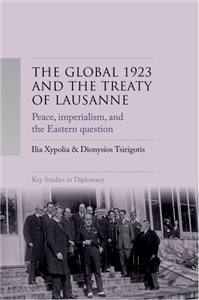
        The Global 1923 and the Treaty of Lausanne

        Peace, imperialism, and the Eastern question

        by Ilia Xypolia, Dionysis Tsirigotis

        This book is a cutting-edge analysis of how the peace treaty was achieved in Lausanne by placing it in the global context. The Treaty of Lausanne reconsidered explores events from the long great war to the conclusion of the Treaty of Lausanne, examining imperialism and divergent - among and within states - motives, actions and constraints that shaped the peace settlement. It shows that peace can only last if it is a product of negotiation and not imposition. In doing so, the book addresses the silences and the absences that eventually formed controversial aspects of the settlement. It highlights the degree to which the Eastern Question discourse and the western powers' concerns in light of the emerging Turco-Soviet alliance, shaped the proceedings in Lausanne. The Treaty of Lausanne reconsidered reveals how the entanglement and the contestation at Lausanne continues to inform our contemporary politics today.

      • Trusted Partner
        Humanities & Social Sciences
        March 2026

        Negotiating identity conflicts in a fragmenting world order

        by Paul Willem Meerts, Mark Anstey

        At every level of human interaction new levels of identity-based tension are in evidence. Contributors to this book explore facets of fragmentation processes within systems of state and interstate organisation, how they influence the use of negotiation, and how negotiation might be used to effect renewed coherence. Following Anstey's (Ch1) introductory chapter framing the nature and shape of fragmentation dynamics, Zartman (Ch 2) argues that the use of negotiation as a process of conflict resolution is deeply shaped by identity groups whose internal coherence is dependent on sustaining a negative identity of others. International relations are no longer solely the realm of experienced diplomats but are shaped as Meerts (Ch3) points out by politicians seeking to be responsive to voting publics rather than wider concerns. Anstey digs into problems of fragmentation (Ch. 4) and Troitskiy (Ch 5) points out how a reluctant acceptance of the power of 'the other' can lead to a form of strategic stability in relations. Anstey and Meerts (Ch 6) point out in their analysis of the Israeli-Palestinian case as an identity conflict turned very bad. Guggenbuhl (Ch 7 ) reveals how structures and processes have been designed within the EU to prevent, contain and regulate conflicts to limit risks of confrontation and fragmentation. Schuessler (Ch 8) to advocates a shift away from a template or roadmap approach to EU membership to a cohesion based on non-dominance. There is still a strong desire on the part of some states, like Northern Macedonia, to become EU members, as reflected in Manton's (Ch 9). Paula Garzon and Frans Schram explain the success of the Colombia Peace Negotiations (Ch 10), while Odigie and da Rocha (Ch 11) analyse the struggle faced by ECOWAS to influence coup leaders in Mali to return to constitutional government and changes of government by constitutional means. Liang (Ch12) discusses how the internet as the modern vehicle of inter-state, inter-group and interpersonal communication has become weaponised. In Ch 13 Anstey draws some lessons from contributions to the compilation.

      • Trusted Partner
        Humanities & Social Sciences
        September 2021

        Britain’s ‘brown babies’

        by Lucy Bland

      • Trusted Partner
        Humanities & Social Sciences
        September 2024

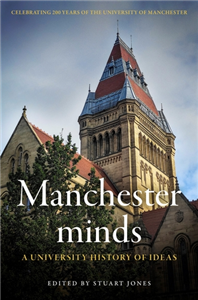
        Manchester minds

        A university history of ideas

        by Stuart Jones

        A bicentennial celebration of brilliant thinkers from The University of Manchester's history. The year 2024 marks two centuries since the establishment of The University of Manchester in its earliest form. The first of England's civic universities, Manchester has been home and host to a huge number of influential thinkers and generated world-changing ideas. This book presents a rich account of the remarkable contribution that people associated with The University of Manchester have made to human knowledge. A who's who of Manchester greats, it presents fascinating snapshots of pioneering artists, scholars and scientists, from the poet and activist Eva Gore-Booth to the economist Arthur Lewis, the computer scientist Alan Turing and the physicist Brian Cox.

      • Trusted Partner
        Humanities & Social Sciences
        March 2017

        Emigrant homecomings

        The return movement of emigrants, 1600–2000

        by Marjory Harper

        Emigrant Homecomings addresses the significant but neglected issue of return migration to Britain and Europe since 1600. While emigration studies have become prominent in both scholarly and popular circles in recent years, return migration has remained comparatively under-researched, despite evidence that in the nineteenth and twentieth centuries between a quarter and a third of all emigrants from many parts of Britain and Europe ultimately returned to their countries of origin. Emigrant Homecomings analyses the motives, experiences and impact of these returning migrants in a wide range of locations over four hundred years, as well as examining the mechanisms and technologies which enabled their return. The book examines the multiple identities that migrants adopted and the huge range and complexity of homecomers' motives and experiences. It also dissects migrants' perception of 'home' and the social, economic, cultural and political change that their return engendered.

      • Trusted Partner
        Humanities & Social Sciences

        Brazil in the world

        The international relations of a South American giant

        by Dr. Sean W. Burgess

        Brazil has suddenly become a country of interest to the West, playing a critical role in global economic talks at the G20 and WTO, brokering North-South relations through its new international economic geography, and stepping into regional and global security questions through its activities in Haiti, Paraguay and the nuclear question in Iran. This book explains why Brazil is taking an increasingly prominent international role, how it conducts and plans its regional and global interactions, and what the South American giant intends to do with its rising international influence. The book is written for the non-specialist, providing students and other interested readers with a well-organized, concise introduction to the fundamentals of the foreign policy of an emerging Twenty-First Century power.

      • Trusted Partner
        The Arts
        June 2022

        Transmodern

        An art history of contact, 1920–60

        by Christian Kravagna, Marsha Meskimmon, Amelia Jones,

        How can we reconfigure our picture of modern art after the postcolonial turn without simply adding regional art histories to the Eurocentric canon? Transmodern examines the global dimension of modern art by tracing the crossroads of different modernisms in Asia, Europe and the Americas. Featuring case studies in Indian modernism, the Harlem Renaissance and post-war abstraction, it demonstrates the significance of transcultural contacts between artists from both sides of the colonial divide. The book argues for the need to study non-western avant-gardes and Black avant-gardes within the west as transmodern counter-currents to mainstream modernism. It situates transcultural art practices from the 1920s to the 1960s within the framework of anti-colonial movements and in relation to contemporary transcultural thinking that challenged colonial concepts of race and culture with notions of syncretism and hybridity.

      • Trusted Partner
        The Arts
        June 2022

        Transmodern

        An art history of contact, 1920–60

        by Christian Kravagna, Marsha Meskimmon, Amelia Jones,

        How can we reconfigure our picture of modern art after the postcolonial turn without simply adding regional art histories to the Eurocentric canon? Transmodern examines the global dimension of modern art by tracing the crossroads of different modernisms in Asia, Europe and the Americas. Featuring case studies in Indian modernism, the Harlem Renaissance and post-war abstraction, it demonstrates the significance of transcultural contacts between artists from both sides of the colonial divide. The book argues for the need to study non-western avant-gardes and Black avant-gardes within the west as transmodern counter-currents to mainstream modernism. It situates transcultural art practices from the 1920s to the 1960s within the framework of anti-colonial movements and in relation to contemporary transcultural thinking that challenged colonial concepts of race and culture with notions of syncretism and hybridity.

      • Trusted Partner
        The Arts
        January 2024

        Transmodern

        An art history of contact, 1920–60

        by Christian Kravagna,

        How can we reconfigure our picture of modern art after the postcolonial turn without simply adding regional art histories to the Eurocentric canon? Transmodern examines the global dimension of modern art by tracing the crossroads of different modernisms in Asia, Europe and the Americas. Featuring case studies in Indian modernism, the Harlem Renaissance and post-war abstraction, it demonstrates the significance of transcultural contacts between artists from both sides of the colonial divide. The book argues for the need to study non-western avant-gardes and Black avant-gardes within the west as transmodern counter-currents to mainstream modernism. It situates transcultural art practices from the 1920s to the 1960s within the framework of anti-colonial movements and in relation to contemporary transcultural thinking that challenged colonial concepts of race and culture with notions of syncretism and hybridity.

      Subscribe to our

      newsletter