
Your Search Results


-
Promoted Content
-
Promoted Content

 November 2021
Poster Clemens J. Setz (A1)
plano, nicht gefaltet | Für Fans der Setz’schen Werke und seiner Person
by Clemens J. Setz
»Wer den Chor der Mäuse nicht hört, braucht nicht mit mir befreundet zu sein.« Clemens J. Setz ist der Autor bahnbrechender Romane wie Die Stunde zwischen Frau und Gitarre, aufregender Erzählungsbände wie Der Trost runder Dinge, von Gedichten, Theaterstücken, Drehbüchern, Nacherzählungen und Essays. Er ist Übersetzer, ein Freund der Plansprachen, des Obertongesanges, der Ziegen und der Hasen. Er ist Träger des Georg-Büchner-Preises, des Kleist-Preises, des Berliner Literaturpreises. Außerdem ist er ein Poet der Kurznachrichtendienste und noch einiges mehr. In seiner radikalen Vielfältigkeit und vielfältigen Radikalität ist er eine herausragende Figur der Gegenwartsliteratur. Für Fans der Setz’schen Werke und seiner Person ist dieses hochwertige Plakat mit einem Porträt des Dichters gedacht, aufgenommen vom Berliner Fotografen Max Zerrahn. Poster auf stabilem GalaxyArt-Papier im DIN-A1-Format
-
 Trusted Partner

 March 2021
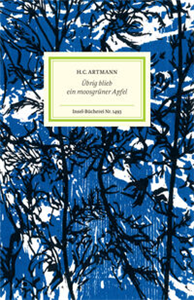
Übrig blieb ein moosgrüner Apfel
Gedichte und Prosa
by H. C. Artmann, Christian Thanhäuser, Clemens J. Setz
Magische Dinge geschehen in diesem Buch: Ein Schierling wird entgiftet, Küsse werden gegen Beeren getauscht, und der Farn redet mit Zungen. Und überall sprießen die Knospen, stehen die Blüten in voller Pracht und leuchten die Früchte. Es sind die schönsten Naturgedichte und Prosastücke H. C. Artmanns, die dieser Band versammelt. Und sie zeigen den österreichischen Dichter in seiner ganzen Poesie: als Sprachzauberer, der sich an den Traditionen bedient und aus fremden Sprachen und Dialekten schöpft, aber auch in klassischer, formvollendeter Sprache dichtet. Dass sein Zauber unvermindert fortwirkt, ist sich Clemens J. Setz beim Aufsagen der Verse und Zeilen sicher. Das zeigen aber auch die Holzschnitte von Christian Thanhäuser, die zu den Gedichten entstanden sind. Artmann, den Dichter, erleben wir hier als Artmann, den Botaniker.
-
Trusted Partner
 March 1964
In der Sache J. Robert Oppenheimer
Ein szenischer Bericht
by Heinar Kipphardt
Eine historische Begebenheit liegt diesem szenischen Bericht zu Grunde: der Fall Oppenheimer. Am 12. April 1954 begann in Washington die Untersuchung gegen den Physiker und langjährigen Leiter der amerikanischen Atomforschung J. Robert Oppenheimer. Der Untersuchungsausschuß, von der Atomenergiekommission der USA eingesetzt, sollte prüfen, ob sich der Wissenschaftler der Regierung seines Landes gegenüber loyal verhalten habe. Das drei Wochen währende Verhör, Beispiel und Ausdruck des Konflikts zwischen Individuum und Gesellschaft, Wissenschaft und Staat, zählt zu den denkwürdigen Ereignissen der Zeitgeschichte.
-
Trusted Partner
 March 2010
Onkel J.
Heimatkunde
by Andreas Maier
Seit seinem Debüterfolg mit dem Roman Wäldchestag im Jahr 2000 ist Andreas Maier häufig unterwegs, um aus seinen Romanen zu lesen. Nur daß er in den letzten ein, zwei Jahren meist, wenn er eingeladen war, auch immer wieder schon aus dem kommenden Onkel J. las. Jedesmal hatte er damit das Publikum im Handumdrehen auf seiner Seite. Umstandslos fand man sich angeschlossen an Maiers Welt aus Wetterau, Familie, Fußball, Apfelwein, aus Thomas Bernhard und dem Evangelium nach Matthäus, aus Ängsten, Kneipenfreuden und -nöten, eingepackt in absurde Vorkommnisse und komische Erlebnisse. Jede Kolumne beginnt mit einem »Neulich«-Satz, die erste so: »Neulich war ich in Berlin. Das wird jetzt niemand weiter ungewöhnlich finden, aber ich bin Hesse, und mir ging in Berlin ein Wunsch in Erfüllung.« Dennoch handelt es sich um alles andere als ein Kolumnenbuch. Vielmehr nimmt Onkel J. – im Übergang von den ersten vier Romanen zu Maiers Projekt »Ortsumgehung« – eine zentrale Stelle ein. »Alles gehört zusammen, und für alles ist das Kolumnenbuch der Kern.«
-
Trusted Partner
 November 1980
Res publica amissa
Eine Studie zu Verfassung und Geschichte der späten römischen Republik
by Christian Meier
-
Trusted Partner
-
Trusted Partner
-
Trusted Partner

 Literature & Literary StudiesApril 2026
The poetry of suicide
Lessons in grief from the lives and deaths of poets
by J. T. Welsch
A profound exploration of the connection between poetry and suicide. 'Suicides have a special language,' Anne Sexton wrote in her 1964 poem 'Wanting to Die'. But is it a language we can learn to read? In The poetry of suicide, J. T. Welsch interweaves stories of poets who took their own lives with the long history of suicide in his own family, searching for a new way of understanding these difficult deaths. Beginning with Hamlet's 'To be or not to be?', he delves into the work of Dante, Sylvia Plath, Vladimir Mayakovsky and others, asking what it can teach us about suicide's messy reality. Suicide is more like poetry than we realise, Welsch argues. Both are filled with ambiguities, contradictions and unknowable intentions. Both demand and resist interpretation. Recovering the personal dimension often lost in our medicalised public discourse, Welsch finds practical ways of confronting suicide's poem-like difficulties.
-
Trusted Partner
-
Trusted Partner


Kaspar Hauser’s Brothers and Sisters. In search of the wild man
by P. J. Blumenthal
What makes human beings human? Is it a life in society that makes us what we are? We often hear stories of persons who have survived in the wild without social contact or who were supposedly raised by wild animals. Kaspar Hauser is probably the most well-known example, but certainly not the only one. P. J. Blumenthal has taken up the hunt for the “wild man” Homo ferus on the boundary between man and animal.
-
Trusted Partner

 2025
2025Why Be a Christian Today?
by Elisabeth Zoll / Thomas Seiterich (eds.)
The exciting texts and reports by professing Christians offer a fresh perspective for all those who have cultivated a Christian spirituality for many years. However, the book also provides easy access for those who are newly interested in the Christian faith. There are probably as many professions of Christian faith as there are believers in the world. But what do Christians think and how have they been moulded? Elisabeth Zoll and Thomas Seiterich have compiled very personal ideas about the Christian faith in this book. When selecting the contributors, the editors deliberately chose not to include people with church offices or specialised theologians. Irrespective of church policy issues and church scandals, the contributors have provided insights into their path to faith.
-
Trusted Partner
-
Trusted Partner
 The ArtsDecember 2007
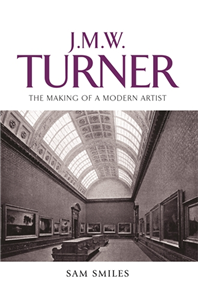
J. M. W. Turner
The making of a modern artist
by Sam Smiles, Alan Rutter
Alone of his contemporaries, J.M.W. Turner is commonly held to have prefigured modern painting, as signalled in the existence of The Turner Prize for contemporary art. Our celebration of his achievement is very different to what Victorian critics made of his art. This book shows how Turner was reinvented to become the artist we recognise today. On Turner's death in 1851 he was already known as an adventurous, even baffling, painter. But when the Court of Chancery decreed that the contents of his studio should be given to the nation, another side of his art was revealed that effected a wholescale change in his reputation. This book acts as a guide to the reactions of art writers and curators from the 1850s to the 1960s as they attempted to come to terms with his work. It documents how Turner was interpreted and how his work was displayed in Britain, in Europe and in North America, concentrating on the ways in which his artistic identity was manipulated by art writers, by curators at the Tate and by designers of exhibitions for the British Council and other bodies. ;
-
Trusted Partner
 June 2017
Die Korrespondenz
by J. D. Daniels, Frank Jakubzik
»Existenzielle Unbehaustheit« mag eine große alte Formel sein, aber sie beschreibt doch die Überforderungen, mit denen wir heute zu kämpfen haben: Vorgezeichnete Karrierewege waren einmal, Überlieferungen sind abgerissen, Rollenvorbilder funktionieren nicht mehr. Besonders zu leiden haben darunter oft Männer: Man spürt sich nicht, man grübelt zu viel, man hätte gern mehr Abenteuer – »toxische Männlichkeit«. In sechs essayistischen Briefen, verfasst aus unterschiedlichen Lebenssituationen heraus, erkundet J. D. Daniels die Dilemmata unserer Zeit – und (vermeintliche) Wege, ihnen zu entkommen: Kampfsport, Reisen, Gruppentherapie, die Flucht in Verschwörungstheorien. Daniels schreibt entwaffnend offen, mit scharfem Witz und knapper Brillanz. Seine Briefe fügen sich zu einem düster-ironischen Panorama, das »jeder lesen sollte, der sich für das moderne Leben interessiert« (John Jeremiah Sullivan).
-
Trusted Partner

 January 1996
J. A. D. Ingres: Das türkische Bad
Ein Klassizist auf dem Weg zur Moderne
by Fleckner, Uwe
-
Trusted Partner
 Humanities & Social SciencesJanuary 2013
Christian Dualist Heresies in the Byzantine World, c. 650-c. 1450
by Janet Hamilton, Bernard Hamilton
Christian dualism originated in the reign of Constans II (641-68). It was a popular religion, which shared with orthodoxy an acceptance of scriptual authority and apostolic tradition and held a sacramental doctrine of salvation, but understood all these in a radically different way to the Orthodox Church. One of the differences was the strong part demonology played in the belief system. This text traces, through original sources, the origins of dualist Christianity throughout the Byzantine Empire, focusing on the Paulician movement in Armenia and Bogomilism in Bulgaria. It presents not only the theological texts, but puts the movements into their social and political context.
-
Trusted Partner
-
Trusted Partner

 April 2000
X-TO + J-C. Christo und Jeanne-Claude
Eine Biografie
by Chernow, Burt / Beiträge von Volz, Wolfgang; Englisch Kusterer, Hermann
-
Trusted Partner
 Literature & Literary StudiesSeptember 2014
A concordance to the rhymes of The Faerie Queene
by Richard Brown, J. B. Lethbridge, J. B. Lethbridge
This book is the first ever concordance to the rhymes of Spenser's epic. It gives the reader unparalleled access to the formal nuts and bolts of this massive poem: the rhymes which he used to structure its intricate stanzas. As well as the main concordance to the rhymes, the volume features a wealth of ancillary materials, which will be of value to both professional Spenserians and students, including distribution lists and an alphabetical listing of all the words in The Faerie Queene. The volume breaks new ground by including two studies by Richard Danson Brown and J. B. Lethbridge, so that the reader is given provocative analyses alongside the raw data about Spenser as a rhymer. Brown considers the reception of rhyme, theoretical models and how Spenser's rhymes may be reading for meaning. Lethbridge in contrast discusses the formulaic and rhetorical character of the rhymes. ;





