Your Search Results
-

-

Editions Gibraltar
Editions Gibraltar is an independent publisher firmly committed to supporting writers whose lives and ideas have the power to improve the world.
View Rights Portal
-
Promoted Content

 Humanities & Social SciencesAugust 2021
Bulletin of the John Rylands Library 97/1
Religion in Britain, 1660–1900: Essays in Honour of Peter B. Nockles
by William Gibson, Geordan Hammond
This special issue of the Bulletin of the John Rylands Library is dedicated to Peter Nockles. An expert on the Oxford Movement and the religious history of the eighteenth and nineteenth centuries, Nockles was employed at the John Rylands Library from 1979 to 2016. During this time he extended his scholarly generosity and friendship to countless researchers. The issue features articles on a range of topics connected to Peter's scholarship and networks, including the Church of England (particularly High Churchmanship and the Oxford Movement), Catholicism, Methodism and Church-State conflict relating to the Church of Ireland.
-
Promoted Content
-
 Trusted Partner

 March 2002
Philosophie der Wahrnehmung
Modelle und Reflexionen
by Lambert Wiesing, René Descartes, John Locke, George Berkeley, Thomas Reid, Immanuel Kant, Georg Wilhelm Friedrich Hegel, John Stuart Mill, Hermann Helmholtz, Konrad Fiedler, Christian Ehrenfels, Charles Sanders Peirce, Edmund Husserl, George Edward Moore, Bertrand Russell, Alfred J. Ayer, Maurice Merleau-Ponty, Curt John Ducasse, Gilbert Ryle, David M. Armstrong, Fred I. Dretske, James J. Gibson, John R. Searle, Lambert Wiesing
Was ist Wahrnehmung? Die in diesem Band versammelten Texte geben einen überblick über die einflußreichsten Antworten der Wahrnehmungsphilosophie von Descartes bis zur Gegenwart.In der Philosophie der Wahrnehmung steht durchgehend ein Problem zur Diskussion: Welches Modell oder welche Beschreibung ist in der Lage, das Phänomen der sinnlichen Wahrnehmung als Ganzes in seiner Funktionsweise und Bedeutung zu erfassen?Dieser Band dokumentiert umfassend die entscheidenden wahrnehmungstheoretischen Modelle und ist damit ideal als Einführung wie auch als Seminarreader geeignet.
-
Trusted Partner

 February 1977
Der Fishersche Preiserwartungseffekt als Erklärungsansatz für das Gibson-Paradoxon.
Kritische Analyse und empirischer Test für die Bundesrepublik Deutschland.
by Badura, Jürgen R.
-
Trusted Partner
 Literature & Literary StudiesAugust 1998
Pulp
Reading popular fiction
by Scott McCracken
Pulp brings together in one volume chapters on the best seller, detective fiction, popular romance, science fiction and horror. It combines a lucid and accessible account of the cultural theories that have informed the study of popular fiction with detailed readings of Jackie Collins, Jilly Cooper, Colin Dexter, William Gibson, Stephen King, Iain Banks, Terry McMillan and Walter Mosley. Scott Mc Cracken argues that popular fiction serves a vital function: it provides us with the means to construct a workable sense of self in the face of the disorientating pressures of modernity. ;
-
Trusted Partner
-
Trusted Partner
-
Trusted Partner
-
Trusted Partner
 Humanities & Social SciencesMarch 2026
The cultural politics of food in South Africa
Media, nourishment, inequality
by Mehita Iqani, Sarah Gibson
Food is both a material system of nourishment, necessary for human survival, and a communicative system that signifies multiple meanings across human cultures. This book explores the cultural politics of food in the South African context, bringing together a range of disciplinary perspectives on the links between media, nourishment, and inequality. The chapters all highlight the multiplicity of meanings that food has in South African society. These include historical perspectives on the impact of colonialism, migration and apartheid had on food and foodways in South Africa; sociological interventions on food and society; aesthetic practices in relation to food; and mediated food cultures in South Africa. Taken together, the book critically explores the multiple ways in which food is never just food, and always linked to complex and shifting modalities of meaning and knowledge in the South African context.
-
Trusted Partner
-
Trusted Partner
-
Trusted Partner
-
Trusted Partner
 HistoriographyJune 2004
Reconsidering Gallipoli
by Jenny Macleod
The British cultural history of the Gallipoli campaign has been overlooked until now - this is a significant book as it offers the first real opportunity for this important campaign to be included in undergraduate courses on WWI. The commemoration of war is a particularly vibrant area of study - Anzac Day, commemorating the landings that began the Gallipoli campaign, is central to Australian national consciousness and this book examines why. A crucial argument in the cultural history of the First World War was sparked by Paul Fussell's contention that the war signified a profound cultural rupture; in widening the debate from the Western Front, this book supports the counter argument that romantic modes of expression retained resonance and utility. In Australia, the renewal of the story of Gallipoli by historians and film-makers (notably Peter Weir's 1981 film starring Mel Gibson) has profoundly altered the national sense of identity and society's perceptions of the armed forces; the authors explains how the writing of this particular event has developed and achieved this central position. An essential volume for those interested in British military and Australian history, postcolonialism and nation building, from academics and students through to the general reader.
-
Trusted Partner
 Humanities & Social SciencesJuly 2021
Post-everything
An intellectual history of post-concepts
by Herman Paul, Adriaan van Veldhuizen
Postmodern, postcolonial and post-truth are broadly used terms. But where do they come from? When and why did the habit of interpreting the world in post-terms emerge? And who exactly were the 'post boys' responsible for this? Post-everything examines why post-Christian, post-industrial and post-bourgeois were terms that resonated, not only among academics, but also in the popular press. It delves into the historical roots of postmodern and poststructuralist, while also subjecting more recent post-constructions (posthumanist, postfeminist) to critical scrutiny. This study is the first to offer a comprehensive history of post-concepts. In tracing how these concepts found their way into a broad range of genres and disciplines, Post-everything contributes to a rapprochement between the history of the humanities and the history of the social sciences.
-
Trusted Partner
 The ArtsSeptember 2024
The renewal of post-war Manchester
Planning, architecture and the state
by Richard Brook
A compelling account of the project to transform post-war Manchester, revealing the clash between utopian vision and compromised reality. Urban renewal in Britain was thrilling in its vision, yet partial and incomplete in its implementation. For the first time, this deep study of a renewal city reveals the complex networks of actors behind physical change and stagnation in post-war Britain. Using the nested scales of region, city and case-study sites, the book explores the relationships between Whitehall legislation, its interpretation by local government planning officers and the on-the-ground impact through urban architectural projects. Each chapter highlights the connections between policy goals, global narratives and the design and construction of cities. The Cold War, decolonialisation, rising consumerism and the oil crisis all feature in a richly illustrated account of architecture and planning in post-war Manchester.
-
Trusted Partner

 July 2023
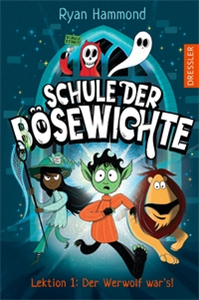
Schule der Bösewichte 1. Lektion 1: Der Werwolf war's!
by Ryan Hammond, Ryan Hammond, Ulrich Thiele, Kerstin Schürmann
Endlich! Der Werwolf Bram hat es auf die Schule der Bösewichte geschafft. Jetzt kann er seine Familie stolz machen und lernen, ein richtiger Schurke zu sein. Blöd nur, dass Bram eigentlich ganz gern Bitte und Danke sagt und seine Hausaufgaben macht. Als die neue Klasse in Gruppen eingeteilt wird, die im großen Wettkampf um den Titel Bösewicht der Woche gegeneinander antreten müssen, ist Bram hilflos. Was bedeutet es überhaupt, ein Bösewicht zu sein? Und dürfen Bösewichte eigentlich Freund*innen finden? Böse zu sein, war noch nie so gut! Eine Schule, ein Ziel: endlich Bösewicht zu werden. Doch gibt es böse ohne gut? Lerne die Welt der Schurken-Lehrlinge kennen und erlebe gemeinsam mit Werwölfen, Geistern, Hexen und Skeletten den Schulalltag. Eine schaurig schöne Geschichte über Teamarbeit, Freundschaft und die Frage: Wer will ich sein? Der erste Band aus der Debüt-Reihe „Schule der Bösewichte“ von Ryan Hammond. Untermalt mit lustigen Schwarz-Weiß-Illustrationen für noch mehr Spaß beim Lesen.
-
Trusted Partner
 Literature & Literary StudiesApril 2020
Interweaving myths in Shakespeare and his contemporaries
by Janice Valls-Russell, Agnès Lafont, Charlotte Coffin
This volume proposes new insights into the uses of classical mythology by Shakespeare and his contemporaries, focusing on interweaving processes in early modern appropriations of myth. Its 11 essays show how early modern writing intertwines diverse myths and plays with variant versions of individual myths that derive from multiple classical sources, as well as medieval, Tudor and early modern retellings and translations. Works discussed include poems and plays by William Shakespeare, Christopher Marlowe and others. Essays concentrate on specific plays including The Merchant of Venice and Dido Queen of Carthage, tracing interactions between myths, chronicles, the Bible and contemporary genres. Mythological figures are considered to demonstrate how the weaving together of sources deconstructs gendered representations. New meanings emerge from these readings, which open up methodological perspectives on multi-textuality, artistic appropriation and cultural hybridity.
-
Trusted Partner

 May 2023
Schule der Bösewichte 1. Lektion 1: Der Werwolf war's!
by Ryan Hammond, Simon Jäger, Ulrich Thiele, Ryan Hammond, Kerstin Schürmann
Endlich! Der Werwolf Bram hat es auf die Schule der Bösewichte geschafft. Jetzt kann er seine Familie stolz machen und lernen, ein richtiger Schurke zu sein. Blöd nur, dass Bram eigentlich ganz gern Bitte und Danke sagt und seine Hausaufgaben macht. Als die neue Klasse in Gruppen eingeteilt wird, die im großen Wettkampf um den Titel Bösewicht der Woche gegeneinander antreten müssen, ist Bram hilflos. Was bedeutet es überhaupt, ein Bösewicht zu sein? Und dürfen Bösewichte eigentlich Freund*innen finden? Böse zu sein, war noch nie so gut! - Eine Schule, ein Ziel: endlich Bösewicht zu werden. Doch gibt es böse ohne gut? - Lerne in die Welt der Schurken-Lehrlinge kennen und erlebe gemeinsam mit Werwölfen, Geistern, Hexen und Skeletten den Schulalltag. - Eine außergewöhnliche Geschichte über Teamarbeit, Freundschaft und die Frage: Wer will ich sein? - Der erste Teil aus der Debüt-Reihe "Schule der Bösewichte" von Ryan Hammond. - Schaurig schön gelesen von Simon Jäger
-
Trusted Partner
-
Trusted Partner
 Literature & Literary StudiesApril 2023
Charles Dickens and Georgina Hogarth
A curious and enduring relationship
by Christine Skelton
Charles Dickens called his sister-in-law Georgina Hogarth his 'best and truest friend'. Georgina saw Dickens as much more than a friend. They lived together for twenty-eight years, during which time their relationship constantly changed. The sister of his wife Catherine, the sharp and witty Georgina moved into the Dickens home aged fifteen. What began as a father-daughter relationship blossomed into a genuine rapport, but their easy relations were fractured when Dickens had a mid-life crisis and determined to rid himself of Catherine. Georgina's refusal to leave Dickens and his desire for her to remain in his household led to rumours of an affair and even illegitimate children. He left her the equivalent of almost £1 million and all his personal papers in his will. Georgina's commitment to Dickens was unwavering but it is far from clear what he did to deserve such loyalty. There were several occasions when he misused her in order to protect his public reputation. Why did Georgina betray her once much-loved sister? Why did she fall out with her family and risk her reputation in order to stay with Dickens? And why did the Dickenses' daughter Katey say it was 'the greatest mistake ever' to invite a sister-in-law to live with a family?