
Good values
Picture books on values and social issues. (Kidible imprint)
View Rights Portal


Valerian war eine britische Rock-Ikone der 1960er Jahre, die Leadsängerin der gleichnamigen Band Valerian. Sie hatte sich damals unter tragischen Umständen das Leben genommen, ihr Kind war verschwunden, entführt und getötet, wie viele Leute mutmaßen. Und jetzt steht plötzlich ein mysteriöser Klient, »the Colonel«, auf der Matte und beauftragt den Vinyl-Detective, das Kind zu finden. Eigentlich nicht sein Job, aber im Hintergrund gibt es eine wertvolle LP als Lockmittel.Zusammen mit seiner Crew – seiner Freundin Nevada, Kumpel Tinkler und der unwahrscheinlichen Taxifahrerin Clean Head – macht er sich an die Arbeit und gräbt sich tief in die Popgeschichte der Sixties, trifft einen Ex-Gitarristen von Frank Zappa und andere wunderliche Menschen aus der großen Ära des Rocks.Drogen sind natürlich auch im Spiel, damals wie heute. Das macht die Sache entschieden ungemütlich. Hinzu kommt, dass an dem Schicksal des verschwundenen Kindes nicht nur nette Menschen interessiert sind …
 Trusted Partner
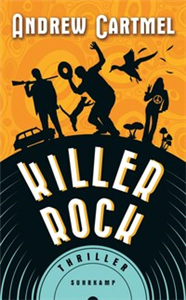
Valerian war eine britische Rock-Ikone der 1960er Jahre, die Leadsängerin der gleichnamigen Band Valerian. Sie hatte sich damals unter tragischen Umständen das Leben genommen, ihr Kind war verschwunden, entführt und getötet, wie viele Leute mutmaßen. Und jetzt steht plötzlich ein mysteriöser Klient, »the Colonel«, auf der Matte und beauftragt den Vinyl-Detective, das Kind zu finden. Eigentlich nicht sein Job, aber im Hintergrund gibt es eine wertvolle LP als Lockmittel.Zusammen mit seiner Crew – seiner Freundin Nevada, Kumpel Tinkler und der unwahrscheinlichen Taxifahrerin Clean Head – macht er sich an die Arbeit und gräbt sich tief in die Popgeschichte der Sixties, trifft einen Ex-Gitarristen von Frank Zappa und andere wunderliche Menschen aus der großen Ära des Rocks.Drogen sind natürlich auch im Spiel, damals wie heute. Das macht die Sache entschieden ungemütlich. Hinzu kommt, dass an dem Schicksal des verschwundenen Kindes nicht nur nette Menschen interessiert sind …
Trusted Partner

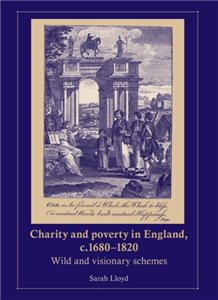
This book explores responses to poverty in eighteenth-century England, with an eye to some of the odder manifestations of charity and poor relief. Whether discussing proposals for vast inland colonies or cosy firesides, men and women demonstrated that imagination, excitement and experiment were as important as systematic argument in making early-modern social policy. Ceremonies and material objects encapsulated ideas and attracted supporters; energy poured into realising imagined prospects in buildings, streetscapes and landscapes across England and beyond. Charity and Poverty in England aims to shed fresh light on ideas and lived experience, on cultural worlds in which social relations were unevenly worked out. It analyses the settings in which gentlemen, magistrates, officials, pamphleteers, ladies and neighbours reacted to the poverty of others, and poor people asserted their own beliefs and experiences. The book will be of interest to researchers in the fields of eighteenth-century cultural history and the history of social policy. ;
Trusted Partner
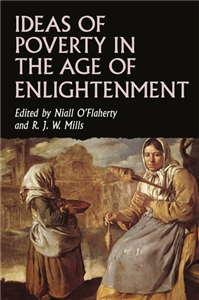
This collection of essays examines the ways in which poverty was conceptualised in the social, political, and religious discourses of eighteenth-century Europe. It brings together experts with a wide range of expertise to offer pathbreaking discussions of how eighteenth-century thinkers thought about the poor. Because the theme of poverty played important roles in many critical issues in European history, it was central to some of the key debates in Enlightenment political thought throughout the period, including the controversies about sovereignty and representation, public and private charity, as well as questions relating to crime and punishment. The book examines some of the most important contributions to these debates, while also ranging beyond the canonical Enlightenment thinkers, to investigate how poverty was conceptualised in the wider intellectual culture, as politicians, administrators and pamphlet writers grappled with the issue.
Trusted Partner
Trusted Partner

 Trusted Partner
 Trusted Partner
Trusted Partner
Trusted Partner

This book is available as an open access ebook under a CC-BY-NC-ND licence. At a time when payment is claiming a greater place than ever before within the NHS, this book provides the first in-depth investigation of the workings, scale and meaning of payment in British hospitals before the NHS. There were only three decades in British history when it was the norm for patients to pay the hospital; those between the end of the First World War and the establishment of the National Health Service in 1948. Payment played an important part in redefining rather than abandoning medical philanthropy, based on class divisions and the notion of financial contribution as a civic duty. With new insights on the scope of private medicine and the workings of the means test in the hospital, as well as the civic, consumer and charitable meanings associated with paying the hospital, Gosling offers a fresh perspective on healthcare before the NHS and welfare before the welfare state.
Trusted Partner

The Protestant Orphan Society, founded in Dublin in 1828, managed a carefully-regulated boarding-out and apprenticeship scheme. This book examines its origins, its forward-thinking policies, and particularly its investment in children's health, the part women played in the charity, opposition to its work and the development of local Protestant Orphan Societies. It argues that by the 1860s the parent body in Dublin had become one of the most well-respected nineteenth-century Protestant charities and an authority in the field of boarding out. The author uses individual case histories to explore the ways in which the charity shaped the orphans' lives and assisted widows, including the sister of Sean O'Casey, the renowned playwright, and identifies the prominent figures who supported its work such as Douglas Hyde, the first President of Ireland. This book makes valuable contributions to the history of child welfare, foster care, the family and the study of Irish Protestantism. ;
Trusted Partner
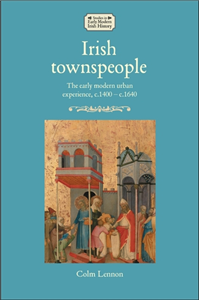
Through a series of innovative perspectives, this book examines how early modern Irish townspeople experienced the urban world through a range of family and associational ties. Migrants inducted through town citizenship and marriage bonded more closely as sisters or brothers of confraternities and guilds, consolidating parish membership. Civic religion saw the integration of religion with town politics and councils, and monastic charity of the friars' hospitals preceded the era of modern municipal welfare. In circumstances of the alienation of the long-settled Catholic townspeople from the state's religious and political Reformation in the seventeenth century, they drew sustenance from the continuity of institutions such as colleges, fraternities and hospitals and forms of coexistence with Protestant fellow-citizens.
Trusted Partner

The politics of Middle English parables examines the dynamic intersection of fiction, theology and social practice in late-medieval England. Parables occupy a prominent place in Middle English literature, appearing in dream visions and story collections as well as in lives of Christ and devotional treatises. While most scholarship approaches the translated stories as stable vehicles of Christian teaching, this book highlights the many variations and points of conflict across Middle English renditions of the same story. In parables related to labour, social inequality, charity and penance, the book locates a creative theological discourse through which writers attempted to re-construct Christian belief and practice. Analysis of these diverse retellings reveals not what a given parable meant in a definitive sense but rather how Middle English parables inscribe the ideologies, power structures and cultural debates of late-medieval Christianity.
Trusted Partner

Molière et son premier Tartuffe sheds light on one of the most enduring mysteries in world theatre: the nature, structure and purpose of the first and no longer extant version of his most controversial play, Le Tartuffe. The study provides a succinct overview of the problem and a close analysis of events leading up to the original performance at Versailles. A careful reading of Molière's own defence of this version situates its overriding inspiration in his wish to satirise specific religious groupings, whilst hoping vainly to avoid censure from the religious establishment of his day. There are three appendices: the first evaluates the hypotheses of a complete or incomplete play; the second analyses the claims that Molière took certain people as models for Tartuffe, and the final appendix seeks to reopen the question of Molière's stance towards religion. The conclusion is that Le Tartuffe should not be seen as inherently hostile to religion, but rather as constituting a plea for tolerance, charity and transparency in its practice, none of which runs counter to the spirit and tenets of historic Christianity. This will appeal to lecturers and students of French Studies and Theatre Studies. ;
Trusted Partner

This book makes a critical and historical analysis of the public information poster and its graphic derivatives in Britain and Europe during the First World War. Governments need public support in time of war. The First World War was the first international conflict to see the launch of major publicity campaigns designed to maintain public support for national needs and government policies. What we now know as spin has its origins in the phenomenon. Then, as now, the press, photography and film played an important role, but in the early 20th century there was no radio, television or internet and the most publicly visible advertising medium was the poster. Considering the museological and memorialising imperatives behind the formation of the war publicity collection at the Imperial War Museum, this fascinating book goes on to provide constitutional and iconographical analyses of the British Government recruiting, War Loan and charity campaigns; the effect of the inroads of the poster into important public and symbolic spaces; a comparative analysis of European poster design and the visual contribution of the poster through style and iconography to languages of 'imagined communities'; and the construction of the individual subject. The book will be of interest to design historians, historians and readers involved with the study of communication arts, publicity, advertising and visual culture at every level. ;
Trusted Partner
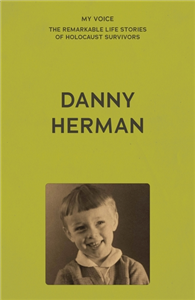
Danny Herman was born in 1935 in Königsberg in East Prussia. As the Nazis were rounding up Jews, Danny's father managed to escape to England in July 1939. He travelled to the Kitchener Camp in Kent, which helped refugees secure visas for safer places. Danny and his mother arrived in England just three days before war was declared in 1939, and his father was later sent to an internment camp on the Isle of Man. Danny went on to become a successful runner, competing in many international athletics events and volunteering in many roles, including at the 2002 Commonwealth Games. Danny's detailed memories of arriving in England, initially at the seaside in Kent and then moving to Manchester, create a vivid picture of life-changing events as experienced by a young child. Danny's book is part of the My Voice book collection, a stand-alone project of The Fed, the leading Jewish social care charity in Manchester, dedicated to preserving the life stories of Holocaust survivors and refugees from Nazi persecution who settled in the UK. The oral history, which is recorded and transcribed, captures their entire lives from before, during and after the war years. The books are written in the words of the survivor so that future generations can always hear their voice. The My Voice book collection is a valuable resource for Holocaust awareness and education.
Trusted Partner


— Philosophy for beginners — For philosophy enthusiasts — A pleasant read This truly brilliant book tells of the sometimes sublime, sometimes exhilarating efforts of philosophers to maintain their attitude in everyday life without forgetting the meaning of their own words – and how they ultimately failed to do so. The minor, sometimes bizarre events in the lives of the great philosophers fit so aptly in the picture of the respective philosophy that one has to assume they could have been conceived to keep the associated intellectual giant in a strange and memorable mood. A book of cheerful science, full of wit, narrative and linguistic eloquence.
Trusted Partner

There he stands, the man the whole of Spain cheered, before whom the most catholic regents Isabella and Ferdinand rose to their feet, his eyes on his ship Capitana, devoured by shipworm, stranded off Jamaica. Some of the crew mutiny, the locals can no longer be fobbed off with glass beads, the Spanish on the nearby island of Hispaniola do not help, the world doesn‘t want anything to do with him, the demanding whinger. He, Christopher Columbus, is a John Lackland, a king without land, a conqueror without conquest. Between fiction and historical truth, Wolfgang Wissler recounts the legendary sailor‘s last expedition in an entirely new way – and what a story it is!
Trusted Partner


Can You Believe Your Eyes? Dorian has been living on the streets since running away from home, and has always managed to fend for himself pretty well. But when he wakes up one morning beside a dead homeless man who has evidently been murdered, Dorian panics – he can’t remember anything of what happened the previous night. Is he responsible for the man’s murder? Then a stranger appears with an unexpected offer of help, and Dorian seizes the opportunity with both hands – this is his chance to hide from the police. The stranger works with young people in need, and he takes Dorian to a villa where he is given food, new clothes and even schooling.But Dorian soon learns that you get nothing for free in this life. In return for being looked after at the villa, Dorian is expected to distribute mysterious free gifts – gifts which are very carefully sealed. And when an unexpected turn of events results in him keeping one of the gifts, he finds himself being hunted by merciless pursuers. After the international YA-bestseller Erebos, Saeculum and The Eleria-Trilogy Ursula Poznanski now presents her new thriller: Layers Awarded with the Hans-Jörg-Martin Prize 2016 for the best YA-Thriller! More information also available under: www.layers-buch.de



