
Animals
Animals
View Rights Portal

Textbooks, research and professional titles in Veterinary and Animal Sciences
View Rights Portal

Critical theory and Independent Living explores intersections between contemporary critical theory and disabled people's struggle for self-determination. The book highlights the affinities between the Independent Living movement and studies of epistemic injustice, biopower, and psychopower. It discusses in depth the activists' critical engagement with welfare-state paternalism, neoliberal marketisation, and familialism. This helps develop a pioneering comparison between various welfare regimes grounded in Independent Living advocacy. The book draws on the activism of disabled people from the European Network on Independent Living (ENIL) by developing case studies of the ENIL's campaigning for deinstitutionalisation and personal assistance. It is argued that this work helps rethink independence as a form of interdependence, and that this reframing is pivotal for critical theorising in the twenty-first century.
 Trusted Partner

Do dogs belong with humans? Scientific accounts of dogs' 'species story,' in which contemporary dog-human relations are naturalised with reference to dogs' evolutionary becoming, suggest that they do. Dog politics dissects this story. This book offers a rich empirical analysis and critique of the development and consolidation of dogs' species story in science, asking what evidence exists to support it, and what practical consequences, for dogs, follow from it. It explores how this story is woven into broader scientific shifts in understandings of species, animals, and animal behaviours, and how such shifts were informed by and informed transformative political events, including slavery and colonialism, the Second World War and its aftermath, and the emergence of anti-racist movements in the twentieth and twenty-first centuries. The book pays particular attention to how species-thinking bears on 'race,' racism, and individuals.
Trusted Partner


Alternatives or supplements to conventional medicine for cats and dogs? Yes, homoeopathy provides holistic therapeutic approaches for our four-legged friends too! Whether they are suffering from anxiety, conjunctivitis, or a tick bite, this book describes the appropriate homoeopathic remedies. The author draws on her many years of experience as an animal healer and presents the most important symptoms and their treatment using homoeopathy.This handy paperback fits into a lab coat pocket and provides:- Basic information on homoeopathy for dogs and cats- Symptoms from A to Z- Characteristics of the most important single-remedy homoeopathic preparations
Trusted Partner

Living with water brings together sociologists, geographers, artists, writers and poets to explore the ways in which water binds, immerses and supports us. Drawing from international research on river crossings, boat dwelling, wild swimming, sea fishing, and drought impacts, and navigating urban waters, glacial lagoons, barrier reefs and disappearing tarns, the collection illuminates the ways that we live with and without water, and explores how we can think and write with water on land. Water offers a way of attending to emerging and enduring social and ecological concerns and making sense of them in lively and creative ways. By approaching Living with water from different disciplinary and methodological perspectives, and drawing on research from around the world, this collection opens up discussions that reinvigorate and renew previously landlocked debates. This book is relevant to United Nations Sustainable Development Goal 6, Clean water and sanitation
Trusted Partner


From insects to fish as well as birds and primates: the use of tools is amazingly widespread in the animal kingdom. It’s a misnomer to presume that humans are distinguished by tool use and conscious capacity. So where is culture initiated? The biologist Peter-René Becker has evaluated numerous studies and cites plenty of evidence for the use of the hammer and anvil, lances, bait or sponges. Animals also use “tools as social implements”. Ultimately, the depth of man’s conscience singles him out from other animals.
Trusted Partner
In the company of wolves presents further research from the Open Graves, Open Minds Project. It connects together innovative research from a variety of perspectives on the cultural significance of wolves, wild children and werewolves as portrayed in different media and genres. We begin with the wolf itself as it has been interpreted as a cultural symbol and how it figures in contemporary debates about wilderness and nature. Alongside this, we consider eighteenth-century debates about wild children - often thought to have been raised by wolves and other animals - and their role in key questions about the origins of language and society. The collection continues with essays on werewolves and other shapeshifters as depicted in folk tales, literature, film and TV, concluding with the transition from animal to human in contemporary art, poetry and fashion.
Trusted Partner
Trusted Partner

We moderns were the inhabitants of an age of impetuous forward movement and voracious discontent. Our main virtue was to increase our reach. Increasing our having and accelerating our being were the signposts towards the future. We just could not get enough. Using the blinkers of ignorance and self-anaesthesia, however, we managed to forget the tremendous costs incurred by this intoxication. Now disillusionment has set in. We look to the future with anxiety. We know that we have long since crossed a line and that a revision of our lifestyle is imminent. We have a bad feeling, and doubts about progress often give way to anger and rebellion. Which stocks of the modern narrative should we defend; which would we do better to let go? How will we even "be able to stop"? The path to a different society needs an attractive goal, because without the prospect of a different, better life, we will not move forward. We should start practising immediately. There is no time to lose.
Trusted Partner


Do you struggle with thoughts and feelings that make life difficult? Have you tried all sorts of ways of dealing with this without getting anywhere? Do you feel that life is passing you by? Acceptance and commitment therapy (ACT), which this book describes in a clear and entertaining way, provides new and very enlightening insights into the causes of human suffering. At the same time, ACT shows how we can improve the way we handle the difficult aspects of being human, while also developing our abilities and strengths. This title shows how using the described simple but effective methods can lead you to a happier, better life. Target Group: people who want to utilize their potential more fully, people interested in acceptance and commitment therapy, people practicing or interested in psychotherapy (psychologists, doctors, coaches, social workers)
Trusted Partner
Trusted Partner
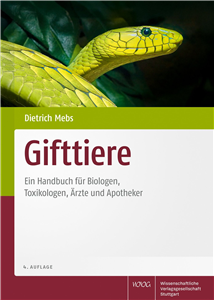
From slithering snakes and creepy-crawly spiders to glowing jellyfish – venomous creatures evoke both fear and fascina- tion. Over millions of years, they have evolved remarkable defence mechanisms and lethal cocktails. Their poisons are used to capture and break down their prey. However, due to improper handling or lack of awareness, they can also pose a threat to humans. This book explores the fascinating world of venomous creatures on land and in the sea – and uncovers their secrets: • Where do bites, stings and poisonings pose a risk? • What substances do animal venoms contain and how do they act? • How should first aid be administered and how are poisonings treated? The 4th edition has been expanded to include additional venomous species, along with fascinating new case studies and illustrations. Discover the captivating world of nature’s poisonous creatures – well worth the risk! Target group: Biologists, toxicologists, pharmacists, physicians, travellers (also off the beaten track), scuba divers, nature lovers, interested laymen
Trusted Partner
 Trusted Partner
Trusted Partner
Trusted Partner

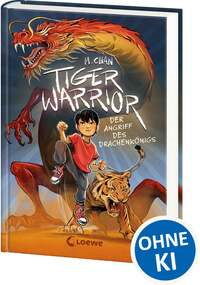
Jack ist der neue Tigerkrieger und muss das Jadekönigreich beschützen. Doch er ist nicht allein: An seiner Seite stehen die Tiere der chinesischen Sternzeichen. Jack landet vollkommen unvorbereitet als der neue Tigerkrieger im Jadekönigreich. Eigentlich sollte es dort friedlich sein, doch der Jadekaiser ist verschwunden und der böse Drachenkönig hat die Macht an sich gerissen. Gemeinsam mit Prinzessin Li, in der ebenfalls magische Fähigkeiten schlummern, setzt er alles daran, das Königreich zu retten. Aber wie besiegt man einen Drachenkönig, wenn man nicht einmal weiß, wie man seine Kräfte richtig einsetzt? Der Auftakt einer actionreichen Fantasy-Reihe Eine packende und actionreiche Fantasy-Reihe für Kinder ab 8 Jahren mit chinesischer Mythologie . Für alle Fans von Beast Quest ! Besonders gut geeignet für Wenig- und Leseanfänger*innen : geringer Umfang, große Schrift und coole Illustrationen. Mitreißend und voller Action : Kämpfe gemeinsam mit Jack gegen die Gefahren, die das Jadekönigreich bedrohen! Chinesische Mythologie : Durch die Jademünze seines Großvaters stehen Jack alle Tiere der chinesischen Sternzeichen zur Seite. Jedes hat besondere Fähigkeiten, die ihm beim Schutz des Königreichs helfen. Eine faszinierende Welt : Ein Portal ins Jadereich führt dich gemeinsam mit Jack in eine fantastische Welt voller Magie und fantastischer Wesen! Leseförderung durch Antolin : Der Titel ist bei Antolin gelistet und fördert spielerisch die Lesekompetenz.
Trusted Partner
Trusted Partner


»Post, Post, Post«. Dieser Stoßseufzer, notiert im Kalender unter dem Datum vom Sonntag, dem 4. März 1990, kommt nicht von ungefähr: Christa Wolf war eine ungeheuer produktive Korrespondentin. Ihre Briefe an Verwandte und Freunde, Kollegen, Lektoren, Politiker, Journalisten geben faszinierende Einblicke in ihre Gedankenwelt, ihre Schreibwerkstatt, ihr gesellschaftliches Engagement. Ob sie an Günter Grass oder Max Frisch schreibt, von Joachim Gauck Einsicht in ihre Stasi-Akte fordert oder sich mit Freundinnen wie Sarah Kirsch und Maxie Wander austauscht, wir sind Zeuge von Freundschaften und Zerwürfnissen, Auseinandersetzungen und Bestätigung, von der Selbstfindung einer der wichtigsten Autorinnen des 20. Jahrhunderts. Nicht zuletzt beeindruckt ihr Umgang mit der Flut von Leserbriefen, die sie mit zunehmendem schriftstellerischen Erfolg erreicht und auf die sie geduldig und kundig – und manchmal auch mit der gebotenen Direktheit – eingeht.
Trusted Partner
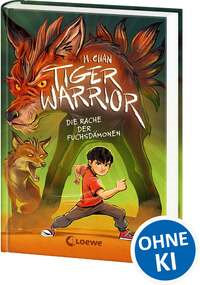
Jack ist der neue Tigerkrieger und muss das Jadekönigreich beschützen. Doch er ist nicht allein: An seiner Seite stehen die Tiere der chinesischen Sternzeichen. Jack kehrt zur Hochzeit des Kaisers ins Jadereich zurück. Die zukünftige Kaiserin verhält sich jedoch verdächtig. Führt sie etwas im Schilde? Als Jack dem Verdacht gemeinsam mit Prinzessin Li auf die Spur geht, stoßen sie auf eine listige Armee von Fuchsdämonen. Diese bedrohen nicht nur das Königreich, sondern wollen auch eine uralte dunkle Macht heraufbeschwören, die das Ende für das Jadereich bedeuten könnte ... Band 2 der actionreichen Fantasy-Reihe Eine packende und actionreiche Fantasy-Reihe für Kinder ab 8 Jahren mit chinesischer Mythologie. Für alle Fans von Beast Quest! Mitreißend und voller Action: Kämpfe gemeinsam mit Jack gegen die Gefahren, die das Jadekönigreich bedrohen! Chinesische Mythologie: Durch die Jademünze seines Großvaters stehen Jack alle Tiere der chinesischen Sternzeichen zur Seite. Jedes hat besondere Fähigkeiten, die ihm beim Schutz des Königreichs helfen. Eine faszinierende Welt: Ein Portal ins Jadereich führt dich gemeinsam mit Jack in eine fantastische Welt voller Magie und fantastischer Wesen! Leseförderung durch Antolin: Der Titel ist bei Antolin gelistet und fördert spielerisch die Lesekompetenz.
Trusted Partner
Trusted Partner

In the middle of our lives, the cards are reshuffled: marriages are divorced, careers are questioned, friendships are ended, questions of meaning are asked, bodies change - and not just hormonally. At the same time, children leave home and parents become carers. From the age of 45, the majority of our population is at the centre of a second upheaval that affects all facets of our lives and leaves us at a loss in many ways. Not only in our daily lives, but also when it comes to planning for our own old age. This guide is designed to help us find our way. It presents the most important information from all areas relevant to a good life after 45. Leading experts from the fields of medicine, nutrition, philosophy, theology, psychology, care, law and finance give recommendations on what to look out for and what tools are needed to get through these challenging years unscathed. Useful checklists round off the articles. The book shows us the unique opportunity to see these challenges not as a crisis but as a source of strength. Not only can we come through this period of our lives healthy and happy, but we can also shape it so that the next age threshold is no longer frightening. During the second phase of adolescence, we lay the foundations for whether and how we will grow older. Be it in terms of health or living together with family and friends. With contributions from: Prof. Dr. Martin Gessmann (philosophy), Dipl. Psych. Claudia Kühner (psychology), Dr Suso Lederle (medicine), Dr Petra Forster (nutrition), Christian Hald, Anja Heine (law), Prof Dr Philipp Schreiber (finance), Prof Dr Thomas Klie (nursing care insurance), Georg Eberhardt (religion).



