
EDGE Science Fiction and Fantasy Publishing
Livres Canada Books
View Rights Portal
 Trusted Partner
Chile is Guest of Honour at Frankfurter Buchmesse 2027. At the Chilean organiser’s invitation, an open call was conducted among Chilean publishers to find out which titles they would recommend for translation. This is the result. The Chilean Ministry of Foreign Affairs supports the translation and production of Chilean books through the programmeTranslating Chile. Next call for all languages 2026-2027: November 2025 More information:https://www.dirac.gob.cl/open-call-2026-for-translating-chilean-literature
View Rights Portal

Any reader who has ever visited Asia knows that the great bulk of Western-language fiction about Asian cultures turns on stereotypes. This book, a collection of essays, explores the problem of entering Asian societies through Western fiction, since this is the major port of entry for most school children, university students and most adults. In the thirteenth century, serious attempts were made to understand Asian literature for its own sake. Hau Kioou Choaan, a typical Chinese novel, was quite different from the wild and magical pseudo-Oriental tales. European perceptions of the Muslim world are centuries old, originating in medieval Christendom's encounter with Islam in the age of the Crusades. There is explicit and sustained criticism of medieval mores and values in Scott's novels set in the Middle Ages, and this is to be true of much English-language historical fiction of the nineteenth and early twentieth centuries. Even mediocre novels take on momentary importance because of the pervasive power of India. The awesome, remote and inaccessible Himalayas inevitably became for Western writers an idealised setting for novels of magic, romance and high adventure, and for travellers' tales that read like fiction. Chinese fictions flourish in many guises. Most contemporary Hong Kong fiction reinforced corrupt mandarins, barbaric punishments and heathens. Of the novels about Japan published after 1945, two may serve to frame a discussion of Japanese behaviour as it could be observed (or imagined) by prisoners of war: Black Fountains and Three Bamboos.
Trusted Partner
Penny politics offers a new way to read early Victorian popular fiction such as Jack Sheppard, Sweeney Todd, and The Mysteries of London. It locates forms of radical discourse in the popular literature that emerged simultaneously with Brittan's longest and most significant people's movement. It listens for echoes of Chartist fiction in popular fiction. The book rethinks the relationship between the popular and political, understanding that radical politics had popular appeal and that the lines separating a genuine radicalism from commercial success are complicated and never absolute. With archival work into Newgate calendars and Chartist periodicals, as well as media history and culture, it brings together histories of the popular and political so as to rewrite the radical canon.
Trusted Partner
Trusted Partner


Marcus Hammerschmitt schreibt Science-fiction-Erzählungen, die technologische Phantasie, psychologische Einsicht, Lust am gedanklichen Experiment und poetische Erfindungskraft vereinen. Wie Herbert W. Franke oder Peter Schattschneider basiert er seine Geschichten auf einer soliden Grundlage, entwickelt seine Szenarios und Fabeln spielerisch, verknüpft sie aber dramatisch mit den größeren Problemen von Ökologie einerseits und den Zweifeln und inneren Konflikten des einzelnen andererseits.
Trusted Partner
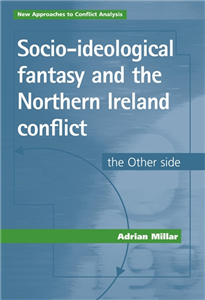
Conducting a Lacanian-inspired psychoanalysis of some of the most candid interview materials ever gathered from former IRA members and loyalists, the author demonstrates through a careful examination of their slips of the tongue, jokes, rationalisations and contradictions, that it is the unconscious dynamics of socio-ideological fantasy, i.e. the unconscious pleasure people find in suffering, domination, submission, ignorance, failure and rivalry over jouissance, that lead to the reproduction of antagonism between the Catholic and Protestant communities in Northern Ireland. In the light of this, he concludes that traditional approaches to conflict resolution which overlook the unconscious are doomed to failure and that a Lacanian psychoanalytic understanding of socio-ideological fantasy has great potential for informing the way we understand and study all inter-religious and ethnic conflicts. Whether you find yourself agreeing with the arguments in this book or not, you are sure to find it a welcome change from both the existing, mainly conservative, analyses of the Northern Ireland conflict and traditional approaches to conflict resolution.
Trusted Partner

Through the Fiction of Phebe Gibbes places this prolific, newly recovered English writer at the centre of the revolutionary period. Gibbes's novels mark the struggles of women for agency in an expanding British empire, from the Seven Years' War to revolutions in American, Haiti and France. With Gibbes as a nexus in a lineage of women writers from Aphra Behn to Jane Austen, Kathryn S. Freeman offers a valuable perspective on the 'long eighteenth century', with Gibbes' own evolution mirroring that of the larger period. The study traces the development of Gibbes' authorial voice from satire to irony through a range of female characters subverting patriarchal oppression. Freeman guides the reader through patterns of narrative voice, concerns with gender and sexuality, and elements of wordplay through detailed discussion of five novels representing Gibbes' evolving representation of a subversive female subjectivity.
Trusted Partner
Trusted Partner

The short fiction that flourished in nineteenth-century France has attracted relatively little critical attention compared with the novel. This study focuses on some key stories by major authors of contes and nouvelles from the late 1820s to the 1890s, taking as a starting-point, aspects of narrative technique as a way of exploring not just characteristic strategies of short fiction, but also the ends to which they were put: recurrent themes, and the vision of mankind. Each chapter looks in some detail at three or four stories, referring briefly to other tales for illustration. The underlying point that emerges from this study is that the interest of a tale lies in the telling, not the events. ;
Trusted Partner
 Trusted Partner

The turn of the twenty-first century has witnessed the striking advance of pornography into the Western cultural mainstream. Symptomatic of this development has been the use by writers, artists, and film-makers of the imagery and aesthetics of pornography, in works which have, often on this basis, achieved considerable international success. Amongst these artists are a number of French authors and directors - such as Michel Houellebecq, Catherine Breillat, Virginie Despentes, or Catherine Millet - whose work has often been dismissed as trashy or exploitative, but whose use of pornographic material may in fact be indicative of important contemporary concerns. In this, the first study of this significant trend, the authors explore how the reference to pornography encodes diverse political, cultural, and existential questions, including relations between the sexes, the collapse of avant-garde politics, gay sexualities in the time of AIDS, the anti-feminist backlash, the relation to the body and illness, the place of fantasy, and the sexualisation of children. It will be of interest to undergraduates, graduates, and researchers in the fields of French culture, gender, film and media studies.
Trusted Partner

The turn of the twenty-first century has witnessed the striking advance of pornography into the Western cultural mainstream. Symptomatic of this development has been the use by writers, artists, and film-makers of the imagery and aesthetics of pornography, in works which have, often on this basis, achieved considerable international success. Amongst these artists are a number of French authors and directors - such as Michel Houellebecq, Catherine Breillat, Virginie Despentes, or Catherine Millet - whose work has often been dismissed as trashy or exploitative, but whose use of pornographic material may in fact be indicative of important contemporary concerns. In this study of a very significant trend, the authors explore how the reference to pornography encodes diverse political, cultural, and existential questions, including relations between the sexes, the collapse of avant-garde politics, gay sexualities in the time of AIDS, the anti-feminist backlash, the relation to the body and illness, the place of fantasy, and the sexualisation of children. It will be of interest to undergraduates, graduates, and researchers in the fields of French culture, gender, film and media studies.
Trusted Partner

Terry Gilliam presents a sustained examination of one of cinema's most challenging and lauded auteurs, proposing fresh ways of seeing Gilliam that go beyond reductive readings of him as a gifted but manic fantasist. Analysing Gilliam's work over nearly four decades, from the brilliant anarchy of his Monty Python animations through the nightmarish masterpiece Brazil to the provocative Gothic horror of Tideland, it critically examines the variety and richness of Gilliam's sometimes troubled but always provocative output. The book situates Gilliam within the competing cultural contexts of the British, European and American film industries, examining his regular struggles against aesthetic and commercial pressures. He emerges as a passionate, immensely creative director, whose work encompasses a dizzying array of material: anarchic satire, childhood and adult fantasy, dystopia, romantic comedy, surrealism, road movie, fairy tale and the Gothic. The book charts how Gilliam interweaves these genres and forms to create magical interfaces between reality and the illuminating, frightening but liberating worlds of the imagination. Scrutinising the neglected importance of literature and adaptation in Gilliam's career, this study also observes him through the lenses of auteurism, genre, performance, design and national culture, explaining how someone born in Minnesota and raised in California came to be one of British television and film's most compelling figures.
Trusted Partner

Invasions is an ambitious, new and authoritative study of one of the defining cultural products of the Victorian and Edwardian eras. By the outbreak of war in 1914 invasion-scare fiction had profoundly changed British society, becoming not just a vibrant part of popular culture, but a reference point among military planners, advertisers, and politicians. This intersection between politics and culture, between entertainment and war planning, sets invasion-scare stories apart as one of the most versatile and interesting fictional products in modern British history. Building on recent work in both history and literature studies, Invasions is the first study of invasion-scare fiction to examine both the form (that is, fiction) and the function (the political argument) of the genre.
Trusted Partner
Trusted Partner

Sara Paretsky is known for her influential V.I. Warshawski series, which transformed the masculine hard-boiled detective formula into a vehicle for feminist values. But Paretsky does more than this. Her novels also illustrate the extent to which detective fiction acts as a literature of trauma, allowing Paretsky to address the politics of agency in ways that go beyond the personal, for trauma always has a social and a political dimension. Paretsky's work also exploits the way detective fiction mirrors the writing of history. Here, Paretsky uses the form to expose the partiality of historical accounts - whether they be personal, institutional, or national - that authorise 'forgetting' of a particularly insidious kind. Significantly, all these issues are explored within the framework of the traditional hard-boiled detective novel. As a result, Paretsky's achievement forces us to acknowledge the deeply subversive potential of detective fiction.
Trusted Partner
How might our friendships shape our politics? This book examines how contemporary American fiction has rediscovered the concept of civic friendship and revived a long tradition of imagining male friendship as interlinked with the promises and paradoxes of democracy in the United States. Bringing into dialogue the work of a wide range of authors - including Philip Roth, Paul Auster, Michael Chabon, Jonathan Lethem, Dinaw Mengestu, and Teju Cole - this innovative study advances a compelling new account of the political and intellectual fabric of the American novel today.
Trusted Partner


Death lurks in the shadows Who are you? Hamburg Criminal Psychologist Dr. Evelin Wolf wonders as she examines the severely disturbed homeless man with the conspicuous scar across his face. The extremely aggressive man with no memory or identity is alleged to have committed a brutal murder. But Evelin and Assistant District Attorney Alex Gutenberg doubt his guilt and suspect there is something more behind the supposedly crystal-clear case. Shortly thereafter, Hamburg is shaken by a series of murders unparalleled in cruelty and sadism. The perverted killer draws a bloody trail across the Hanseatic city and links it with a clear message to Alex and Evelin: Revenge. Alex and Evelin work feverishly to solve both cases. In the process, they make a fatal mistake. And the killer exploits it mercilessly…
Trusted Partner

This book is the first full-length study of contemporary American fiction of passing. Its takes as its point of departure the return of racial and gender passing in the 1990s in order to make claims about wider trends in contemporary American fiction. The book accounts for the return of tropes of passing in fiction by Phillip Roth, Percival Everett, Louise Erdrich, Danzy Senna, Jeffrey Eugenides and Paul Beatty, by arguing meta-critical and meta-fictional tool. These writers are attracted to the trope of passing because passing narratives have always foregrounded the notion of textuality in relation to the (il)legibility of "black" subjects passing as white. The central argument of this book, then, is that contemporary narratives of passing are concerned with articulating and unpacking an analogy between passing and authorship. The title promises to inaugurate dialogue on the relationships between passing, postmodernism and authorship in contemporary American fiction.
Trusted Partner
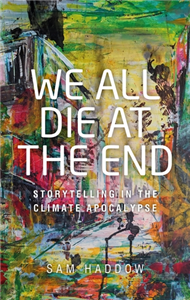
We all die at the end offers a survey of contemporary end-of-the-world fiction, spanning literature, children's fiction, video games, theatre and film. It draws on eco-critical philosophy and narrative theory to show ways in which the climate crisis is reorienting storytelling in the face of foreseeable human extinction. In the process, it argues that such stories have a role to play in helping us come to terms with the severity and scale of the crisis that we face.



