
Beyond Words Publishing, Inc.
Many of our books are translated in up to 35 languages
View Rights Portal
Many of our books are translated in up to 35 languages
View Rights Portal
The part of Helion Publishing Group aimed at Young Adult and New Adult readers. The imprint was created to build a community of young book enthusiasts.
View Rights Portal

Knowing COVID-19 demonstrates how researchers in the humanities shone a light on some of the many hidden problems of COVID-19, in the very depths of the pandemic crisis. Drawing on eight COVID-19 research projects, the volume shows how humanities researchers, alongside colleagues in the clinical and life sciences, addressed some of the major critical unknowns about this new infectious disease - from the effects of racism to the risks of deploying shame; from how to design an effective instructional leaflet to how to communicate effectively to bus passengers. Across eight novel case studies, the book showcases how humanities research during a pandemic is not only about interpreting the crisis when it has safely passed, but how it can play a vital, collaborative and instrumental role as events are still unfolding.


The new SARS-CoV-2 virus appeared in December 2019. It caused a pandemic, whose consequences will certainly continue for a long time to come. The vaccines, developed in record time, proved the most effective tool in alleviating the acute, hazardous situation. Since the beginning of 2022, pharmacies have also been able to offer COVID-19 vaccinations and contribute to the collective protection strategy. With this guide, everything is ready for COVID-19 vaccination in the pharmacy.
 Trusted Partner

This book is a powerful addition to a developing literature informed by arts and humanities research carried out during the COVID-19 pandemic. Investigating the impacts of crisis governance and decision-making on people and populations, the book brings together microbial organisms and humans, children and data, decision-making and infection prevention, publics and process, global vaccine distribution and citizens' juries. Through its eight chapters, the book stimulates broadly-drawn discussions about exceptional executive powers in an emergency, the role of trust, and the importance of the principles of good governance - such as selflessness, ethics, integrity, accountability and honesty in leadership. The lessons drawn out in this book will support future decision-makers in both ordinary times and extra-ordinary emergencies.
Trusted Partner

This book offers insights into some of the digital innovations, structural adaptations and analogue solutions that enabled live performance in the UK to survive through the COVID-19 pandemic. It provides evidence of values-led policies and practices that have improved the wellbeing of the creative workforce and have increased access to live performance. Through sections that address digital innovations, workforce resilience and programming live performances outdoors and in community settings, this book provides practical insights into the challenges live performance faced during the pandemic. It shows how, in order to survive, individuals and companies within the sector drew on the creativity and resourcefulness of its workforce, and on new and existing networks. In these accounts, the pandemic functioned as catalyst for technological innovations, stock-taking regarding exploitative industry structures, and a re-valuing of the role of live performance for community-building.
Trusted Partner
The first book-length analysis of EU health policy since the COVID-19 pandemic, encompassing the creation of the European Health Union and the Recovery and Resilience Facility, this volume offers a timely and accessible analysis of the EU's health policy, institutions and governance. Focusing on the EU's health objectives and how they are pursued, it offers a detailed overview of the development of EU health policy, and five in-depth case studies of specific policy fields. The book will appeal to academic and policy audiences interested in the EU's health objectives and how it pursues them.
Trusted Partner

A compilation of case studies illustrating the use of arts, culture and other community assets individuals and communities used to cope and develop resilience during the Covid-19 pandemic, demonstrating valuable lessons that might help us develop resilience in similar future crises.
Trusted Partner
Trusted Partner
Reporting from the front lines of the pandemic, celebrated BBC journalist Hugh Pym takes readers on a gripping journey to the heart of the UK's COVID-19 crisis. He unearths shocking revelations about the failings of the British state and the Whitehall machine, shedding light on the consequences of woeful unpreparedness and misguided policies. This hard-hitting exposé draws on untold stories from the corridors of power, providing an insider's perspective on the drama, personalities and critical decision-making processes. Going beyond individual accounts, it presents a comprehensive assessment of the UK's preparedness, lockdown measures and response strategies. A tale of resilience and devastating consequences, Unfit challenges the very foundations of the UK's response to the pandemic, leaving no stone unturned in its quest for truth. Finally, it looks ahead to ask what is in store for the future of the NHS.
Trusted Partner


Many patients are confused in the coronavirus crisis and ask what they can do to prevent themselves and their family from contracting the SARS-Cov-2 virus. There are now several studies that prove the influence of micronutrients such as zinc, selenium and various vitamins on the immune system and specifically on the course of viral diseases. In this brochure, successful author Uwe Gröber, pharmacist and head of the Academy for Micronutrient Medicine in Essen, has compiled his recommendations for strengthening the immune system. Here you can learn -why micronutrients may be considered for combatting the coronavirus, -how the micronutrients are dosed and applied, and -what effects micronutrients have on the immune system. This strengthens the immune system in the fight against the coronavirus!
Trusted Partner
Trusted Partner

Die Covid-19-Pandemie hat zu einer moralischen und rechtlichen Kontroverse über das Verhältnis von Freiheit und Leben geführt, wie es sie in dieser Schärfe bisher nicht gegeben hat. In den beiden zentralen Fragen ist dabei bis heute keine Einigkeit erzielt worden: Kommt dem Leben ein prinzipieller Vorrang gegenüber der Freiheit zu? Und: Wie tief darf der Staat zum Schutz des Lebens in individuelle Freiheiten eingreifen? Bei der Bewältigung des Klimawandels – so zeichnet sich bereits ab – werden sich diese Fragen erneut stellen. Der vorliegende Band diskutiert mögliche Leitvorstellungen aus den Perspektiven von Rechtswissenschaft, Philosophie und Soziologie. Eingeleitet wird er durch einen Essay von Jürgen Habermas.
Trusted Partner

The research of pandemics, epidemics, and pathogens like COVID-19 reaches far beyond the scope of biomedicine. It is not only an objective for the health, political and social sciences, but epidemics and pandemics are a matter of geography: foci and vectors of communicable diseases continue to test the efficacy of medical control at state borders. This volume illuminates these issues from various disciplinary viewpoints. It starts by exploring historical models of quarantine, spatial isolation and detention as precautionary means against the dissemination of disease and contagion by border crossers, migrants and refugees. Besides the patterns of prejudice with which these groups are confronted, the book also deals with various kinds of fear of contamination from outside of the nation state. The contributors address the implementation of medical techniques at state borders in the twentieth and early twenty-first centuries, as well as the presently practiced measures of medical and biometric screening of migrants and refugees. Uniquely, this volume shows that the current border security regimes of Western states exhibit a high share of medicalised techniques of power, which originate both in European modernity and in the medical and biological disciplines developed during the last quarter of the millennium. Drawing on the collective expertise of a network of international researchers, this interdisciplinary volume is essential reading for those wishing to understand the medicalisation of borders across the globe, from the early eighteenth century up to the present day.
Trusted Partner
Hannelore Schlaffers Studie verfolgt den Bewußtseinswandel der Frauen in bezug auf die Mode vom Beginn der 19. Jahrhunderts bis heute: von dem aufwendigen Spiel mit der Kleidung, das nur bestimmten Gesellschaftsschichten vorbehalten war, und dem männlichen Spott darüber bis zum selbstverständlichen Umgang mit der Mode und ihrem Einzug in die Alltagskultur. Bis ins 19. Jahrhundert ist die Mode für Frauen das wichtigste Mittel, sich öffentlich zu artikulieren. Was sie denken, wünschen, was sie sein und vorstellen wollen – all das drücken sie durch ihre Kleidung aus. Immer mehr übernehmen die Frauen den praktischen Stil der männlichen Mode. So dient sie heute einerseits der sozialen Anpassung, andererseits hat sie als Haute Couture an gesellschaftlicher Relevanz verloren. Dieses Buch ist Teil der Reihe Die Bibliothek der Lebenskunst .
Trusted Partner

 Trusted Partner


How Environmental Destruction Caused the Corona Pandemic and Why Ecological Medicine Can Save Us The corona crisis can repeat itself at any time. A book about the disease-causing mechanisms of environmental pollution, and an innovative guide out of the health crisis Clemens Arvay is an expert in the field of medical ecology. In WE CAN DO BETTER, he takes the current corona crisis as an opportunity to look far beyond and work out exactly why negative environmental factors are responsible for an increasing deterioration of public health. Yet the author also points the way out of the calamity, explaining how we ourselves and future generations can improve our health through a different approach to nature.It was only because of environmental factors that COVID-19 was able to become a pandemic. Thus, for Clemens Arvay the corona crisis represents a symptom of a much larger problem, namely, a natural habitat that is making humans sick. It is already known today that fine particulate matter intensifies not only corona but also influenza infections, thereby killing hundreds of thousands of people worldwide every year. Light pollution leads to a rapid increase in cancer, and even the abrasion of automobile tires inhibits our immune system. Clemens Arvay makes himself clear: this is our last chance to take control of the situation. After the corona crisis, we must never allow things to return to the way they were before. Arvay therefore calls for nothing less than an eco-medical revolution in healthcare; a different, less global and industrialized lifestyle. And he shows each and every one of us how we can utilize factors in our environment to protect our health, strengthen our immune system, and stay well. For readers of shinrin-yoku by Annette Lavrijsen
Trusted Partner
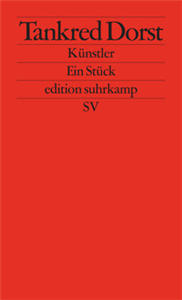
Worpswede am Ende des 19. Jahrhunderts. In der Künstlerkolonie lebt eine Gruppe von Malern und Dichtern um Heinrich Vogeler, Paula Modersohn-Becker und Rainer Maria Rilke. Die Atmosphäre der Kreativität wird bald gestört, die Künstler gehen ihre eigenen Wege. In seinem neuen Stück, das im Februar 2008 in Bremen uraufgeführt wird, verfolgt Tankred Dorst das Schicksal des bekennenden Kommunisten Vogeler. Dabei nimmt er eines seiner großen Themen wieder auf: Ist es für den Menschen wichtiger, über die eigene Grenze hinauszustreben, oder soll er alles Bemühen darauf richten, bei sich selbst zu bleiben?
Trusted Partner

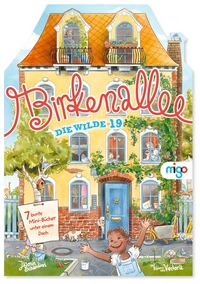
Sieben spaßige und abwechslungsreiche Geschichten aus einem Mehrfamilienhaus mit seinen vielfältigen Bewohner*innen und ihren unterschiedlichen Lebenssituationen, Familienkonstellationen und Rollenmodellen – zum Herausnehmen, Lesen, Schmunzeln, Freuen und Wieder-ins-Haus-stecken. Denn so bunt und schön ist es nur in der Birkenallee Nr. 19: Oskar besucht seine Nachbarinnen Wanda und Sontje und sie spielen gemeinsam »BSBS – Birkenallee sucht die besten Sänger«. Hille und Coco basteln im zweiten Stock Schutzengel, bis sie sich selbst als Engel verkleiden. Hund Schröder büxt aus und zerkaut auf einer Fußmatte genüsslich Okes Schuh. Die Kinder beschließen, ein Fröhlichkeitspicknick im Waschkeller zu veranstalten, eine Überraschung für die Erwachsenen! Dekoriert wird alles mit den bunten Regenschirmen aus dem Treppenhaus. Was für ein wildes Abenteuer! Ausgezeichnet mit dem Award of Excellence im Rahmen des 13. ICMA-Award in der Kategorie »Innovative Buchideen«.
Trusted Partner

Die hier gesammelten Studien von Wolfgang Abendroth behandeln exemplarisch den Aufstieg der deutschen Arbeiterbewegung im 19. Und beginnenden 20. Jahrhundert, ihre Rolle in der Weimarer Republik, im Widerstand gegen die Diktatur des Dritten Reiches und ihren Neubeginn nach 1945. Komplementär zu den historischen Analysen verstehen sich die Porträts von Theoretikern gesellschaftlicher Emanzipation (Lukács, Bloch, Adorno, Marcuse). Durch Abendroths historisch-konkrete Zugangsweise wird die widerspruchsreiche Fülle seines Gegenstands lebendig, die sich jedem Dogmatismus entzieht. Die geschichtliche Analyse bestimmter Richtungen der Arbeiterbewegung orientiert sich daran, wie weit ihre Praxis auf gesellschaftliche Selbstbestimmung gerichtet ist. Abendroths Untersuchungen wenden also den Blick in die Vergangenheit, um strategische Erfahrungen der Arbeiterbewegung und Erkenntnisse der Marxschen Theorie für die Gegenwart fruchtbar zu machen – für Perspektiven einer freien Gesellschaft.
Trusted Partner

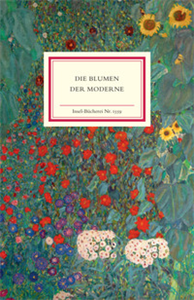
Seit Jahrhunderten lassen sich Künstlerinnen und Künstler von der Schönheit und Vergänglichkeit sowie der Farben- und Formenvielfalt der Blumen faszinieren. Spätestens seit der Mitte des 19. Jahrhunderts stehen dabei nicht mehr symbolische Bedeutungen im Vordergrund, sondern fordern Farbkraft, Sinnlichkeit und Schönheit der Blumen immer wieder zu neuen künstlerischen Gestaltungen heraus. Heimische, aber auch exotische Blüten boten reizvolle Möglichkeiten, Grenzen von Farbigkeit und Gestaltung zu sprengen, ob als impressionistische Schilderung, expressionistischer Farbenrausch, in kühl-detaillierter Wiedergabe der Neuen Sachlichkeit oder der Stilisierung im Zeichen der PopArt.Zudem ließen sich Blumen vielerorts finden und arrangieren: im eigenen Garten oder als Solitär in der Vase, in Einzelansicht oder üppigen Gebinden. Der vorliegende Band lädt zu einer kunsthistorischen Reise ein, die schönsten Blumenbilder der Moderne zu entdecken.
Trusted Partner
Die Wirkungsgeschichte von Norbert Elias setzte erst spät, dafür um so nachhaltiger ein. Sein Hauptwerk Über den Prozeß der Zivilisation, entstanden in den dreißiger Jahren, wurde erst nach der Neuauflage von 1969 in seiner Bedeutung wahrgenommen und avancierte schließlich zu einem der meistgelesenen soziologischen Bücher der Gegenwart. Studien wie Die höfische Gesellschaft gehören zu den Klassikern ihres Genres. Die Ausgabe der Gesammelten Schriften vereinigt nicht nur die zu Lebzeiten erschienenen Monographien und Aufsätze, sondern präsentiert zudem eine Vielzahl bisher unbekannter und hier erstmals edierter oder übersetzter Schriften. Sämtliche bereits zuvor publizierte Texte wurden erneut durchgesehen und korrigiert. Jeder Band enthält ein ausführliches Register und eine editorische Notiz. Mit dem Gesamtregisterband findet die Ausgabe ihren Abschluß und ist nun vollständig in 19 Bänden lieferbar.



