Groundwood Books
Livres Canada Books
View Rights Portal

Oracle Cards & Tarot Made in Italy and Ecofriendly
View Rights Portal
The Love of Books examines the affective bond between people and books in the UK. In the context of the unprecedented abundance of media offering information, storytelling and entertainment, it investigates the attachment to print and digital books amongst readers from a range of backgrounds who read for pleasure, wish to be surrounded by print copies of books, and have trouble discarding books. Unlike existing research, which focuses on prestige, social status, and cultural capital, this study centres on meaning, materiality and emotion. Drawing on interviews and archive material, it shows how attachment emerges from the practical fusion of three elements that have so far been examined separately: the material, surface properties of books, the act of reading, and books' symbolic power.

 Trusted Partner
In the 1970s, Nestlé became a lightning rod for criticism against the food industry's negative impacts on humans and their environment, especially in the Global South. But what has so far eluded historical scrutiny is that the picture was more nuanced. This book tells the exclusive story of how the Swiss food giant, and more broadly corporate capitalism, have shaped the aid industry since the late nineteenth century. It follows Nestlé's bid for a share of the humanitarian market brokered by the Red Cross in wartime Europe, of its clinical trials in Swiss and Senegalese maternities, and of its agricultural modernisation schemes in Mexico, India, and the Ivory Coast. Based on extensive research in the firm's own historical archives and the records of national and international aid agencies, the volume interrogates the legacies of this long history for international development today.
Trusted Partner

Egypt and the rise of fluid authoritarianism focuses on the struggle of the post-2013 political authorities for internal political legitimacy after the crisis following the 2013 coup d'état. It explores the microstructural and macro-systemic dynamics of leadership, power, protests and the authority-making process in political systems. These cannot simply be defined as structural, political, social and economic projections of the authoritarianism of the past, but rather as a rupture with that past. The book offers a complex, ground-breaking socio-political and economic analysis into how the forging of an internal political legitimacy claim has eventually modified the regime in Egypt along the authoritarian spectrum, turning into a fluid autocracy closer to a non-exclusivist personalist regime. This shift had implications that resonated both politically and economically.
Trusted Partner

Offering a complete reading of English Literature throughout 1558-1689, this book demonstrates the continuity of Roman Catholicism in English Literature from the accession of Elizabeth I to the deposing of James II. Rist shows that poetry and plays promoted Roman Catholic ideas in a Biblicist age which established the Church of England through the Book of Common Prayer. From the very idea of literary works to chapters on the Eucharist, Purgatory, Christian worship and the Virgin Mary, Rist joins together major and minor authors of the era to present English Literature afresh. Important literary figures include William Shakespeare, Ben Jonson, Thomas Middleton, Queen Henrietta Maria, John Donne, John Dryden, Robert Herrick, Margaret Cavendish and Aphra Behn.
Trusted Partner

This is the first book to situate the territories and collective identities of former Yugoslavia within the politics of race - not just ethnicity - and the history of how ideas of racialised difference have been translated globally. The book connects critical race scholarship, global historical sociologies of 'race in translation' and south-east European cultural critique to show that the Yugoslav region is deeply embedded in global formations of race. In doing this, it considers the everyday geopolitical imagination of popular culture; the history of ethnicity, nationhood and migration; transnational formations of race before and during state socialism, including the Non-Aligned Movement; and post-Yugoslav discourses of security, migration, terrorism and international intervention, including the War on Terror and the present refugee crisis.
Trusted Partner

The essential message of the 'two regimes' model is that the social politics of fatherhood have taken on a global significance and that the USA and Sweden represent two ends of an international continuum of ways of thinking about fatherhood. The key selling points of the two regimes model are its topicality, originality, its global appeal, and its particularised appeal to readers in the USA, the Nordic countries, Great Britain, Ireland, the European Union, Japan and China. The book offers students a comparative analytical framework and new insights into why some welfare states have 'father-friendly' social policies and others do not. The book makes an original contribution to the growing fields of welfare regime and gender studies by linking the epochal decline of patriarchal fatherhood to welfare state expansion over the course of the twentieth century and it raises new questions about the legitimacy of religiously inspired neo-patriarchy.
Trusted Partner
Trusted Partner

“There is no Planet B!” More and more young people are worried about the future of Planet Earth. Climate change is heating not only the planet but also people’s emotions. But what exactly is climate? And why are the changes threatening the lives of both polar bears and us humans. In simple language but with solid science, the authors explain the most important aspects of climate, from the greenhouse effect to the Gulf Stream. Current developments are described as well, and the scientific background is supplemented by gripping reports. The book also offers a glimpse of the future: what will happen if we go on in the same way as now? How can climate change be halted? This makes for riveting reading – and not just for young activists.
Trusted Partner
 Trusted Partner
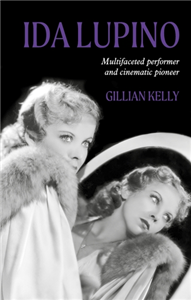
This book contributes to a welcome new wave focusing on the importance of female filmmakers, providing a reappraisal of Ida Lupino, a cinematic figure of significant importance. Given her ability to move between popular and independent cinemas and her status as both a Hollywood star and director/writer/producer of socially relevant films overlooked by the mainstream, Lupino is a particularly interesting case study. Employing a range of critical approaches, including feminist theory, auteur theory and critical theory, this book investigates key themes and motifs that developed across Lupino's unusual and unique career as one of the most significant female players in film history. Investigating her oeuvre as actress, director, writer and producer, it discusses Lupino as a complex and important filmmaker whose career, on both sides of the camera, requires substantially more critical attention than it has been awarded thus far.
Trusted Partner
Trusted Partner

Comic empires is a unique collection of new research exploring the relationship between imperialism and political cartoons, caricature, and satirical art. Edited by leading scholars across both fields (and with contributions from contexts as diverse as Egypt, Australia, the United States, and China, as well as Europe) the volume provides new perspectives on well-known events, and illuminates little-known players in the 'great game' of empire in modern times. Some of the finest comic art of the period is deployed as evidence, and examined seriously, in its own right, for the first time. Accessible to students of history at all levels, Comic empires is a major addition to the world-leading 'Studies in Imperialism' series, as well as standing alone as an innovative and significant contribution to the ever-growing international field of comics studies.
Trusted Partner
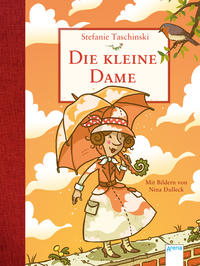
The Little Lady makes all hearts sing! When Lilly and her family move into the old house with the golden pretzel, she has no idea that a magic neighbour lives in the mysterious backyard. The Little Lady keeps a chameleon that is 1000 years old; she can make herself invisible and masters all kinds of magic tricks – but most of all she loves to play pranks on others! So a summer filled with wonderful adventures begins for Lilly. Poetic, full of imagination and humour, the Little Lady is delighted by her ever-growing community of fans and enjoys huge success with young and old alike. A fantastically beautiful story to read aloud or alone, exquisitely illustrated by Nina Dulleck.
Trusted Partner
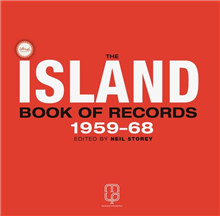
The Island Book of Records brings the early years of this iconic record label to life. A fifteen-year labour of love, the volumes will fully document the analogue era of Island. Offering a comprehensive archive of album cover design and photography, together with the voices of the musicians, designers, photographers, producers, studio engineers and record company personnel that worked on each project, the volumes show in unique depth the workings of the label, covering every LP. Featuring material from recent interviews and from media interviews of the time, and each including a comprehensive discography of 45s, the books are lavishly illustrated with gig adverts (very many at venues which no longer exist), concert tickets, flyers, international LP variants, labels, LP and 45 adverts and other ephemera. These LP-sized editions are a collector's dream, offering a truly unparalleled resource for those interested in music history and a perfect gift for any music lover.
Trusted Partner

The fall and rise of the English upper class explores the role traditionalist worldviews, articulated by members of the historic upper-class, have played in British society in the shadow of her imperial and economic decline in the twentieth century. Situating these traditionalist visions alongside Britain's post-Brexit fantasies of global economic resurgence and a socio-cultural return to a green and pleasant land, Smith examines Britain's Establishment institutions, the estates of her landed gentry and aristocracy, through to an appetite for nostalgic products represented with pastoral or pre-modern symbolism. It is demonstrated that these institutions and pursuits play a central role in situating social, cultural and political belonging. Crucially these institutions and pursuits rely upon a form of membership which is grounded in a kinship idiom centred upon inheritance and descent: who inherits the houses of privilege, inherits England.
Trusted Partner
Trusted Partner
 Trusted Partner
 Trusted Partner