
Brush Education
Livres Canada Books
View Rights Portal
 Trusted Partner

Publishing House Kiepenheuer & Witsch GmbH & Co. KG with its Imprint Galiani Berlin
View Rights Portal
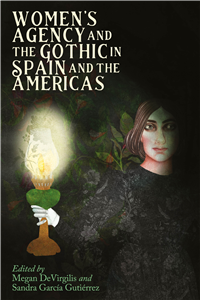
This volume has emerged to fulfill two main purposes: Primarily, to constitute the first collaborative work that traces the relationship between the Gothic and Women in Spain and the Americas, but also, to surpass the term 'Female Gothic,' coined by Ellen Moers, by transferring the focus towards women and their agency as writers, readers and characters. This volume functions as a manifesto per se to open new avenues into understanding how women have interacted with the Gothic between the nineteenth and twenty-first centuries in Spain and the Americas. The question, we determine, is not simply about identity, but rather about agency. We define women's agency as the total capacity of characters, authors and readers to act freely within a social framework in relation to gothic texts. In our exploration of authorship, we reject the claim that the Gothic is a simplistic literary genre, instead sustaining that the plasticity of the Gothic has enabled it to survive for centuries; by shifting from a genre to a mode, it has surpassed literary forms and invaded all kinds of media: from film to music and merchandise such as clothing and pop culture collectables, fostering an authentic goth fandom.
For Jacobean society, witchcraft was a potent and very real force, an area of sharp controversy in which King James I himself participated and a phenomenon that attracted many dramatists and writers. The three plays in this volume reflect the variety of belief in witches and practice of witchcraft in the Jacobean period. Jacobean understanding of witchcraft is illuminated by the close study of these contrasting texts in relation to each other, and to other contemporary works: "The Masque of Queenes", "Dr Faustus", "Macbeth, and "The Tempest". The introduction and commentaries explore the theatrical potential of plays which, with the exception of "The Witch of Edmonton", have been hitherto lost to the dramatic repertory. ;
Trusted Partner

Looks at why witch-trials failed to gain momentum and escalate into 'witch-crazes' in certain parts of early modern Europe. Exames the rich legal records of the German city of Rothenburg ob der Tauber, a city which experienced a very restrained pattern of witch-trials and just one execution for witchcraft between 1561 and 1652. Explores the social and psychological conflicts that lay behind the making of accusations and confessions of witchcraft. Offers insights into other areas of early modern life, such as experiences of and beliefs about communal conflict, magic, motherhood, childhood and illness. Offers a critique of existing explanations for the gender bias of witch-trials, and a new explanation as to why most witches were women.
Trusted Partner
Trusted Partner
Trusted Partner

Middle English literature is intimately concerned with sleep and the spaces in which it takes place. In the medieval English imagination, sleep is an embodied and culturally determined act. It is both performed and interpreted by characters and contemporaries, subject to a particular habitus and understood through particular hermeneutic lenses. While illuminating the intersecting medical and moral discourses by which it is shaped, sleep also sheds light on subjects in favour of which it has hitherto been overlooked: what sleep can enable (dreams and dream poetry) or what it can stand in for or supersede (desire and sex). This book argues that sleep mediates thematic concerns and questions in ways that have ethical, affective and oneiric implications. At the same time, it offers important contributions to understanding different Middle English genres: romance, dream vision, drama and fabliau.
Trusted Partner


This bestselling title is a practical handbook on the concept of basic stimulation in nursing and its application for patients suffering from perceptional deficits, developmental delays and mental handicaps. It enables nurses to develop, improve and stabilize physically and mentally handicapped people with impaired perceptional, communicative and motor skills. Target Group: Nurses
Trusted Partner
This volume of essays is the first to be dedicated to the subject of intertextuality in modern Arabic literature. Beginning with a general overview of the topic by Roger Allen, it brings together essays on a range of writers from all parts of the Arab world, including, among others, Edwar al-Kharrat, Sa'd Allah Wannus, Najib Mahfuz, Rabi' Jabir, Salim Matar and the recently deceased Sudanese writer al-Tayyib Salih, whose seminal work Season of Migration to the North heralded a new phase in the modern Arabic literary tradition. The volume, which also includes two essays on aspects of intertextuality in Gulf literature, also discusses transformations of popular medieval literature such as the Alf Layla wa-Layla (the Thousand and One Nights) in modern Arabic literature. ;
Trusted Partner
 Trusted Partner
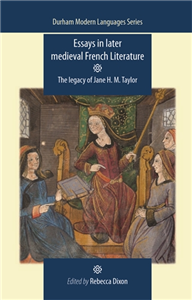
Over the course of a career spanning five decades, Jane Taylor has shown a commitment to the rehabilitation of the more neglected aspects of later medieval French literature. This volume brings together original contributions from scholars who have worked alongside Taylor and directly or indirectly benefitted from her example. The chapters demonstrate their authors' link to this legacy, and concomitantly underline the vibrancy and breadth of approach which is the hallmark of current later medieval studies. The essays in the collection centre on a number of key issues in the field: notions of literary self-consciousness and what it means to come after an avatar; issues of intertextuality and the appeal to past models in the creation of a new literary aesthetic (or a new literary criticism); and interdisciplinary questions of translation, reworking, and continuation. Essays in later medieval French literature seeks not only to illustrate the buoyant state of later medieval French literary studies but also, in so doing, to show how in broader terms responding to the legacy of an illustrious predecessor has not pejorative but positive consequences. ;
Trusted Partner
Trusted Partner
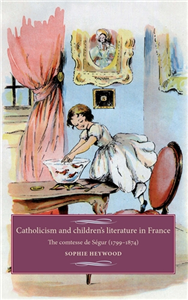
This is the first book-length history of the classic French children's author, the comtesse de Ségur. Virtually unknown in the English-speaking world, in France Ségur is a national icon and a cultural phenomenon. Generations of children have grown up reading her stories. This book combines a discussion of her life, her works, and their reception with a broader analysis of the cultural context of the mid-nineteenth century. It offers a unique insight into the political engagement of Catholic women through the medium of children's literature and education, and brings out new aspects of the history of publishing aimed at children, with particular reference to the market for books for girls. With its lively subject matter and accessible style, this book will appeal not only to scholars of nineteenth-century France, but also to specialists and students interested in the fields of children's literature, gender studies, and religious history. ;
Trusted Partner
 Trusted Partner
Trusted Partner
Trusted Partner
 Trusted Partner
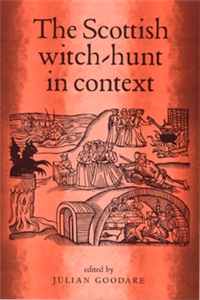
A collection of essays on Scottish witchcraft and witch-hunting, which covers the whole period of the Scottish witch-hunt, from the mid-sixteenth century to the early eighteenth. Includes studies of particular witchcraft panics such as a reassessment of the role of King James VI. Covers a wide range of topics concerned with Scottish witch-hunting and places it in the context of other topics such as gender relations, folklore, magic and healing, and moral regulation by the church and state. Provides a comparative dimension of witch-hunting beyond Scotland - one on the global context, and one comparing Scotland with England. It is a showcase for the latest thinking on the subject and will be of interest to all scholars studying witchcraft in early modern Europe, as well as the general reader wanting to move beyond shallow and sensational accounts of a subject of compelling in. ;
Trusted Partner

A shocking glimpse into the mind of a medieval witch hunter. In 1487, the zealous Dominican inquisitor Heinrich Kramer wrote a treatise that would have a remarkable influence on European history. Blaming women for his own lust, and frustrated by official complacency before what he saw as a monstrous spiritual menace, Kramer penned a practical guide to aid law officers in the identification and prosecution of witches. Fusing theology, lurid anecdotes and advice for those engaged in combating sorcery, The Malleus Maleficarum transports the reader into the dark heart of medieval belief - where fear of the supernatural provokes a gripping struggle for understanding and control. Kramer's book led to the burning of numerous innocents and had a lasting impact on the popular image of witchcraft. It remains a sinister symbol of fanaticism and cruelty to this day.
Trusted Partner
 Trusted Partner

Although the importance of ethics is often stressed, it remains sidelined in training. Marianne Rabe makes ethics and ethical reflection the focus of nursing practice and training. Her study - presents the theoretical principles of formative learning and explores how it can be put into practice - puts forward practical curriculum suggestions for incorporating ethics into nurse training - shows how to address the ethical principles of dignity, autonomy, care, justice, responsibility, and dialogue within the framework of a teaching concept - presents Rabe’s own model of ethical reflection based on her personal experience. Target Group: Nursing trainers, lecturers
Trusted Partner


