Your Search Results

      • Cinosargo

        Cinosargo Editions is a Chilean publishing label based in Mexico. We are a cross-border project with a catalog of one hundred titles by Latin American authors. Cinosargo is a multimedia project that was born on the northern border of Chile (Arica), bordering Peru and Bolivia in 2003. Since 2010 we have become one of the Chilean independent publishers with the greatest projection and continuity.Cinosargo covers the digital dissemination of art through its magazine, and the production and distribution of the printed book thanks to our publishing house and the organization of Fairs, Festivals and Congresses. You can visit our sites www.cinosargo.cl and www.cinosargoediciones.comOur editorial team is led by Daniel Rojas Pachas, Milvia Alata and Gonzalo Geraldo.

        View Rights Portal
      • Studies in Photography

        Publishing, books, journals and photographic prints

        View Rights Portal
      • Trusted Partner
        The Arts
        June 2025

        Toronto New Wave cinema and the anarchist-apocalypse

        by David Christopher

        The Toronto New Wave (TNW) comprises a group of avant-garde filmmakers working in Canada from the 1980s and into the new millennium whose innovative film works share significant affinities with anarchist themes and aesthetics. Several of the TNW filmmakers openly identify as anarchists and/or acknowledge a debt to anarchism in their production of highly apocalyptic narratives as part of their cinematic political projects. However, recognition of anarchism's progressive apocalyptic theoretical relevance has yet to be substantially taken up by scholarship in cinema analysis. This analysis introduces an anarchist-inflected analytical methodology to understand the apocalyptic-revelatory political work these films attempt to accomplish in the perceptual space between the filmic texts and both their auteurs and potential viewers, and to re-locate the TNW within cinema history as an ongoing phenomenon with new significance in an apocalyptic era of digital distribution.

      • Trusted Partner
        The Arts
        January 2019

        Spanish cinema 1973–2010

        Auteurism, politics, landscape and memory

        by Maria M. Delgado, Robin Fiddian

        This collection offers a new lens through which to examine Spain's cinema production following the isolation imposed by the Franco regime. The seventeen key films analysed in the volume span a period of 35 years that have been crucial in the development of Spain, Spanish democracy and Spanish cinema. They encompass different genres (horror, thriller, melodrama, social realism, documentary), both popular (Los abrazos rotos/Broken Embraces, Vicky Cristina Barcelona) and more select art house fare (En la ciudad de Sylvia/In the City of Sylvia, El espíritu de la colmena/Spirit of the Beehive) and are made in English (as both first and second language), Basque, Castilian, Catalan and French. Offering an expanded understanding of 'national' cinemas, the volume explores key works by Guillermo del Toro and Lucrecia Martel alongside an examination of the ways in which established auteurs (Almodóvar, José Garci, Carlos Saura) and younger generations of filmmakers (Cesc Gay, Amenábar, Bollaín) have harnessed cinematic language towards a commentary on the nation-state. The result is a bold new study of the ways in which film has created new prisms that have determined how Spain is positioned in the global marketplace.

      • Trusted Partner
        Film theory & criticism
        December 2014

        Cinematic countrysides

        by Edited by Robert Fish

        Recent years have witnessed an explosion of interest in the 'spatialities of cinema' across the social sciences and humanities, yet to date critical inquiry has tended to explore this issue as a question of the 'city' and the 'urban'. For the first time, leading scholars in geography, film and cultural studies have been drawn together to explore the multiple ways in ideas of cinema and countryside are co-produced: how 'film makes rural' and 'rural makes film'. From the expanse of the American great west to the mountainous landscapes of North Korea, Cinematic countrysides draws on a range of popular and alternative film genres to demonstrate how film texts come to prefigure expectations of rural social space, and how these representations come to shape, and be shaped by, the material and embodied circumstances of 'lived' rural experience. At the heart of this volume's varied apprehensions of the 'cinematic countryside' is a concern to argue that ideas of rurality in film are central to wider questions of 'modernity' and 'tradition', 'self' and 'other', 'nationhood' and 'globalisation', and crucially, ones that are central to an account of the 'cinematic city'.

      • Trusted Partner
        The Arts
        June 2021

        Contemporary Spanish cinema and genre

        by Jay Beck, Vicente Rodríguez Ortega

        This volume is the first English-language collection exclusively dedicated to the study of genre in relation to Spanish cinema. Providing a variety of critical perspectives, the collection gives the reader a thorough account of the relationship between Spanish cinema and genre, drawing on case studies of several of the most remarkable Spanish films in recent years. The book analyses the significant changes in the aesthetics, production and reception of Spanish film from 1990 onwards. It brings together European and North American scholars to establish a critical dialogue on the topics under discussion, while providing multiple perspectives on the concepts of national cinemas and genre theory. In recent years film scholarship has attempted to negotiate the tension between the nationally specific and the internationally ubiquitous, discussing how globalisation has influenced film making and surrounding cultural practice. These broader social concerns have prompted scholars to emphasise a redefinition of national cinemas beyond strict national boundaries and to pay attention to the transnational character of any national site of film production and reception. This collection provides a thorough investigation of contemporary Spanish cinema within a transnational framework, by positing cinematic genres as the meeting spaces between a variety of diverse forces that necessarily operate within but also across territorial spaces. Paying close attention to the specifics of the Spanish cinematic and social panorama, the essays investigate the transnational economic, cultural and aesthetic forces at play in shaping Spanish film genres today.

      • Trusted Partner
        The Arts
        January 2019

        Contemporary Spanish cinema and genre

        by Jay Beck, Vicente Rodríguez Ortega

        This volume is the first English-language collection exclusively dedicated to the study of genre in relation to Spanish cinema. Providing a variety of critical perspectives, the collection gives the reader a thorough account of the relationship between Spanish cinema and genre, drawing on case studies of several of the most remarkable Spanish films in recent years. The book analyses the significant changes in the aesthetics, production and reception of Spanish film from 1990 onwards. It brings together European and North American scholars to establish a critical dialogue on the topics under discussion, while providing multiple perspectives on the concepts of national cinemas and genre theory. In recent years film scholarship has attempted to negotiate the tension between the nationally specific and the internationally ubiquitous, discussing how globalisation has influenced film making and surrounding cultural practice. These broader social concerns have prompted scholars to emphasise a redefinition of national cinemas beyond strict national boundaries and to pay attention to the transnational character of any national site of film production and reception. This collection provides a thorough investigation of contemporary Spanish cinema within a transnational framework, by positing cinematic genres as the meeting spaces between a variety of diverse forces that necessarily operate within but also across territorial spaces. Paying close attention to the specifics of the Spanish cinematic and social panorama, the essays investigate the transnational economic, cultural and aesthetic forces at play in shaping Spanish film genres today.

      • Trusted Partner
        The Arts
        June 2021

        Medieval film

        by Anke Bernau, Bettina Bildhauer

        Medieval film explores theoretical questions about the ideological, artistic, emotional and financial investments inhering in cinematic renditions of the medieval period. What does it mean to create and watch a 'medieval film'? What is a medieval film and why are they successful? This is the first work that attempts to answer these questions, drawing, for instance, on film theory, postcolonial theory, cultural studies and the growing body of work on medievalism. Contributors investigate British, German, Italian, Australian, French, Swedish and American film, exploring topics such translation, temporality, film noir, framing and period film - and find the medieval lurking in inexpected corners. In addition it provides in-depth studies of individual films from different countries including The Birth of a Nation to Nosferatu, and Robin Hood: Prince of Thieves. Medieval Film will be of interest to medievalists working in disciplines including literature, history, to scholars working on film and in cultural studies. It will also be of interest to undergraduates, postgraduates and to an informed enthusiast in film or/and medieval culture.

      • Trusted Partner
        The Arts
        January 2019

        Medieval film

        by Anke Bernau, Bettina Bildhauer

        Medieval film explores theoretical questions about the ideological, artistic, emotional and financial investments inhering in cinematic renditions of the medieval period. What does it mean to create and watch a 'medieval film'? What is a medieval film and why are they successful? This is the first work that attempts to answer these questions, drawing, for instance, on film theory, postcolonial theory, cultural studies and the growing body of work on medievalism. Contributors investigate British, German, Italian, Australian, French, Swedish and American film, exploring topics such translation, temporality, film noir, framing and period film - and find the medieval lurking in unexpected corners. In addition it provides in-depth studies of individual films from different countries including The Birth of a Nation to Nosferatu, and Robin Hood: Prince of Thieves. Medieval film will be of interest to medievalists working in disciplines including literature, history, art history, to scholars working on film and in cultural studies. It will also be of interest to undergraduates, postgraduates and to an informed enthusiast in film or/and medieval culture.

      • Trusted Partner
      • Trusted Partner
        The Arts
        July 2025

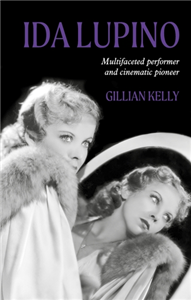
        Ida Lupino

        Multifaceted performer and cinematic pioneer

        by Gillian Kelly

        This book contributes to a welcome new wave focusing on the importance of female filmmakers, providing a reappraisal of Ida Lupino, a cinematic figure of significant importance. Given her ability to move between popular and independent cinemas and her status as both a Hollywood star and director/writer/producer of socially relevant films overlooked by the mainstream, Lupino is a particularly interesting case study. Employing a range of critical approaches, including feminist theory, auteur theory and critical theory, this book investigates key themes and motifs that developed across Lupino's unusual and unique career as one of the most significant female players in film history. Investigating her oeuvre as actress, director, writer and producer, it discusses Lupino as a complex and important filmmaker whose career, on both sides of the camera, requires substantially more critical attention than it has been awarded thus far.

      • Trusted Partner
        Humanities & Social Sciences
        June 2026

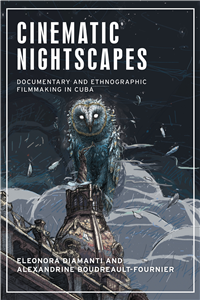
        Cinematic nightscapes

        Documentary and ethnographic filmmaking in Cuba

        by Eleonora Diamanti, Alexandrine Boudreault-Fournier

        Cinematic Nightscapes explores how the darkness of night in contemporary Cuba becomes a powerful site for political expression, cultural imagination and artistic experimentation. As the rhythms of the day give way to night, a different Cuba emerges, one where protests take shape, marginalized voices reclaim space, and filmmakers reimagine ethnographic and documentary storytelling. This book offers a sensorial and creative journey through Cuban documentary films that engage with the night not just as backdrop, but as a central character-shaping emotions, aesthetics and socio-political discourse. Blending theory with rich visual analysis, Cinematic Nightscapes asks: How does the night alter ethnographic practice? How do Cuban filmmakers use the night to imagine new futures? Through a reflexive, multimodal approach, the book invites readers to experience the complexities of nocturnal life in Cuba, where darkness illuminates new possibilities.

      • Trusted Partner
        The Arts
        June 2021

        Lukácsian film theory and cinema

        A study of Georg Lukács' writing on film 1913–1971

        by Ian Aitken

        Lukácsian film theory and cinema explores Georg Lukács' writings on film. The Hungarian Marxist critic Georg Lukács is primarily known as a literary theorist, but he also wrote extensively on the cinema. These writings have remained little known in the English-speaking world because the great majority of them have never actually been translated into English - until now. Aitken has gathered together the most important essays and the translations appear here, often for the first time. This book thus makes a decisive contribution to understandings of Lukács within the field of film studies, and, in doing so, also challenges many existing preconceptions concerning his theoretical position. For example, whilst Lukács' literary theory is well known for its repudiation of naturalism, in his writings on film Lukács appears to advance a theory and practice of film that can best be described as naturalist. Lukácsian film theory and cinema is divided into two parts. In part one, Lukács' writings on film are explored, and placed within relevant historical and intellectual contexts, whilst part two consists of the essays themselves. This book will be of considerable interest to scholars and students working within the fields of film studies, literary studies, intellectual history, media and cultural studies. It is also intended to be the final volume in a trilogy of works on cinematic realism, which includes the author's earlier European film theory and cinema (2001), and Realist film theory and cinema (2006).

      • Trusted Partner
        The Arts
        February 2019

        Contemporary Korean cinema

        Culture, identity and politics

        by Hyangjin Lee

        The first in-depth, comprehensive study of Korean cinema offering original insight into the relationships between ideology and the art of cinema from East Asian perspectives. Combines issues of contemporary Korean culture and cinematic representation of the society and people in both North and South Korea. Covers the introduction of motion pictures in 1903, Korean cinema during the Japanese colonial period (1910-45) and the development of North and South Korean cinema up to the 1990s. Introduces the works of Korea's major directors, and analyses the Korean film industry in terms of film production, distribution and reception. Based on this historical analysis, the study investigates ideological constructs in seventeen films, eight from North Korea and nine from South Korea.

      • Trusted Partner
        The Arts
        June 2002

        American film and politics from Reagan to Bush Jr

        by Philip Davies, Paul Wells

        Covers a crucial two decades in American history, when the links between Hollywood and Washington DC were at their strongest.. The period is 'book-ended' by the mighty political and cinematic figures of Reagan and Clinton.. Covers a period in which movies have become targets of political rhetoric of 'family values'.. Essays examine cinematic views of key American political institutions - the presidency and electoral process, politically significant places such as New York City and the American South, the promotion of major issues like gender, family and race. This is a subject which has gained new significance in the wake of recent terrorist attacks in New York and Washington DC, which have changed both the political climate, and the priorities of the movie industry. ;

      • Trusted Partner
        The Arts
        March 2013

        Space and being in contemporary French cinema

        by James S. Williams

        This book brings together for the first time five French directors who have established themselves as among the most exciting and significant working today: Bruno Dumont, Robert Guédiguian, Laurent Cantet, Abdellatif Kechiche, and Claire Denis. Whatever their chosen habitats or shifting terrains, each of these highly distinctive auteurs has developed unique strategies of representation and framing that reflect a profound investment in the geophysical world. The book proposes that we think about cinematographic space in its many different forms simultaneously (screenspace, landscape, narrative space, soundscape, spectatorial space). Through a series of close and original readings of selected films, it posits a new 'space of the cinematic subject'. Accessible and wide-ranging, this volume opens up new areas of critical enquiry in the expanding interdisciplinary field of space studies. It will be of immediate interest to students and researchers working not only in film studies and film philosophy, but also in French/Francophone studies, postcolonial studies, gender and cultural studies. Listen to James S. Williams speaking about his book http://bit.ly/13xCGZN. (Copy and paste the link into your browser) ;

      • Trusted Partner
        The Arts
        December 2011

        Bertrand Tavernier

        by Lynn Anthony Higgins, Diana Holmes, Robert Ingram

        Bertrand Tavernier is widely recognized as the leading French filmmaker of his generation. Both a consummate artist and a controversial public figure, he is a passionate advocate for social causes and also a tireless defender of world cinema in general and the French cinematic heritage in particular. Lynn Higgins' book offers a guided tour through Tavernier's oeuvre, taking into account both its prodigious diversity and its unifying themes. It explores his use of genre and adaptation, his work with actors and his affection for characters, his treatment of France's colonial history, his explorations of the powers of art and the complexities of intergenerational relations, both among fictional characters and within French cinema history. This is the most comprehensive and up-to-date scholarly book about Tavernier. Original and lively, sophisticated and engaging, the book will appeal to anyone interested in film studies, gender studies, and French cultural studies including academics, students, cinema enthusiasts, and Tavernier fans. ;

      • Trusted Partner
        The Arts
        February 2019

        Bertrand Tavernier

        by Lynn Anthony Higgins

        Bertrand Tavernier is widely recognized as the leading French filmmaker of his generation. Both a consummate artist and a controversial public figure, he is a passionate advocate for social causes and also a tireless defender of world cinema in general and the French cinematic heritage in particular. Lynn Higgins' book offers a guided tour through Tavernier's oeuvre, taking into account both its prodigious diversity and its unifying themes. It explores his use of genre and adaptation, his work with actors and his affection for characters, his treatment of France's colonial history, his explorations of the powers of art and the complexities of intergenerational relations, both among fictional characters and within French cinema history. This is the most comprehensive and up-to-date scholarly book about Tavernier. Original and lively, sophisticated and engaging, the book will appeal to anyone interested in film studies, gender studies, and French cultural studies including academics, students, cinema enthusiasts, and Tavernier fans.

      • Trusted Partner
        Humanities & Social Sciences
        January 2021

        Women of war

        Gender, modernity and the First Aid Nursing Yeomanry

        by Juliette Pattinson

        Women of war is an examination of gender modernity using the world's longest established women's military organisation, the First Aid Nursing Yeomanry. These New Women's adoption of martial uniform and military-style training, their inhabiting of public space, their deployment of innovative new technologies such as the motor car, the illustrated press, advertisements and cinematic film and their proactive involvement in the First World War illustrate why the Corps and its socially elite members are a particularly revealing case study of gender modernity. Bringing into dialogue both public and personal representations, it makes a major contribution to the social and cultural history of Britain in the early twentieth century and will appeal to undergraduates, postgraduates and scholars working in the fields of military history, animal studies, trans studies, dress history, sociology of the professions, nursing history and transport history.

      • Trusted Partner
        The Arts
        June 2021

        Genre and performance: film and television

        by Christine Cornea

        Looking at contemporary film and television, this book explores how popular genres frame our understanding of on-screen performance. Previous studies of screen performance have tended to fix upon star actors, directors, or programme makers, or they have concentrated upon particular training and acting styles. Moving outside of these confines, this book provides a truly interdisciplinary account of performance in film and television and examines a much neglected area in our understanding of how popular genres and performance intersect on screen. Each chapter concentrates upon a particular genre or draws upon generic case studies in examining the significance of screen performance. Individual chapters examine contemporary film noir, horror, the biopic, drama-documentary, the western, science fiction, comedy performance in 'spoof news' programmes and the television 'sit com' and popular Bollywood films.

      Subscribe to our

      newsletter