Your Search Results

      • Chemical Industry Press Co. Ltd.

        Chemical Industry Press( hereinafter called “CIP”) was established in 1953, and is one of the most distinguished state-owned publishers in China. As one of “top 100 publishers in China”, CIP has been seen as a well-known and trusted brand in China. For years, CIP is one of the most impressive Chinese publisher with powerful overseas libraries’ collection influence. Key subjects: Chemistry, Materials, Environment, Energy, Engineering, Machine, Automotive, Electric & Electrical, Architecture, Biology, Pharmacy, Medicine, Healthcare, Business & Management, Humanities, Lifestyle, Photography, Self-help, Baby & Parenting, Language learning, Literature&Arts,etc.

        View Rights Portal
      • Le Cheval d'août

        Le Cheval d'août is an independent publishing company located in Montréal (Québec, Canada) that specializes in fictional contemporary literature, from the novel to non-fictional genres. Passionate about new voices, original and pertinent forms, its catalog has quickly acquired a name for itself and has won the favors of critics and readers. Its authors have earned several distinctions, are translated in Canada and in Europe, and have seen their books enjoy a second life through various adaptations.

        View Rights Portal
      • Trusted Partner
        2022

        A Workbook of Chemistry for Students of Medicine and Biology

        Introduction to the material covered in standard examinations

        by Dirk Röbke and Udo Wolfgramm

        Rote learning is one way to pass examinations, but really understanding the subject is even better. Most textbooks are limited to presenting facts without helping the reader review and practice. This workbook fills the gap with more than 1,000 sample examination questions from general, inorganic and organic chemistry. With it, students can practice and deepen what they have learned from textbooks. The problems can be solved without aids, and solutions are provided with detailed explanations. The workbook enjoys great popularity after helping countless students study successfully. From the contents: atomic structure and chemical bonds: noble gas configuration, electronegativity, hybridization, intermolecular interactions | nomenclature and structural formulas of inorganic and organic compounds | chemical equations: double transformations, acid-base reactions, complexes | quantities and concentrations of substance: gravimetry, titrations, percent by mass and by volume | law of mass action | acids, bases and salts: calculating pH value, titration curves, buffers, solubility product | redox reactions and oxidation numbers, Nernst equation | complex compounds | configurational and conformational isomerism | inductive and mesomeric effects | substitution, addition, elimination | aromatic compounds: reactions and second substitution | natural products: carbohydrates, lipids, amino acids, peptides | carbonyl reactions: carboxylic acids, aldehydes, ketones

      • Trusted Partner
        2023

        Chemistry Workbook

        by Marion Romer, Silke Dittmar, Dr. DorotheeFamulla-Weber and Claudia Huppertz

        We all have been there: you understand everything in the textbook, but then face a total blackout during the exam. But that’s over now! In more than 600 exam-proven crossword, syllable or picture puzzles, word search games, gap texts or riddles on inorganic and organic chemistry, the authors bundle what you have learned in order to apply it to new problems. And they do so in a highly entertaining way: variety is guaranteed due to the diversity of tasks! The section „Well connected, safely remembered“ helps to link knowledge. „Now it is getting tricky“ encourages you to deal with the subject matter even more intensively, and „Playfully repeated“ offers tips and suggestions for learning in a group. With this workbook, you can check your knowledge, consolidate the contents, and find the gaps in your knowledge well before the exam. This way you‘ll be one hundred percent fit when it counts. The workbook is suitable for accompanying consolidation of the contents of the authors‘ textbook „Chemistry for Pharmaceutical Technicians“, but is also ideally suited for independent study. Includes solutions to download

      • Trusted Partner
        2020

        Chemistry I: Examination Questions

        Original annotated questions through autumn 2017. General and inorganic chemistry for pharmacists

        by Prof. Dr. Eberhard Ehlers

        This catalogue of examination question is the ideal companion to the Short Textbook on Chemistry I. Together, both volumes help you prepare effectively for semester finals and for the first section of the German pharmaceutical licensing examination. ■ 1788 original IMPP questions from the years 1979–2017 ■ With annotated solutions ■ Covers Pharmacy I, or arranged by examination ■ Comments use the same chapter numbering as the Short Textbook on Chemistry I ■ Highlighting marks questions which have appeared more than once in the same wording.   Ace your exams with Ehlers!

      • Trusted Partner
        September 2025

        Chemistry for Pharmaceutical Technicians

        by Marion Romer, Silke Dittmar, Dorothee Famulla-Weber, Claudia Huppertz, Doris Grimm

        Chemistry is all about smells and explosions – but real understanding often gets left behind. This textbook keeps you on track by reviewing the fundamentals, strengthening chemical understanding and guiding students towards independent learning. Thanks to the pharmaceutical context, chemistry is understood as the foundation of medicinal substances. Practical examples, mnemonics and summaries enhance the structure and make the content easier to digest. The book sparks pharmaceutical technicians’ interest in medicinal substances – an ideal foundation for mastering everyday chemistry in both study and practice. Target group: Pharmaceutical technicians in training and on the job, teachers at pharmaceutical technician schools, students of pharmacy

      • Trusted Partner
        2024

        Reading Clinical Studies Critically

        Clinical trials, reviews, guidelines

        by Dr. Iris Hinneburg

        Make or break? Advertisements repeatedly praise „plant-based“ products or promise new mobility through ointments and dietary supplements. The tools of evidence-based pharmacy help to answer the question „Does this really help?“ This practical guide offers tips and explanations on how to be confident of finding the relevant scientific literature, critically evaluate clinical studies, and interpret therapeutic results. The book provides guidance on how to classify the quality of reviews and meta-analyses and assess the reliability of guidelines in everyday healthcare practice. Practical examples help to avoid pitfalls in evaluation and to understand the statistical details. An extensive appendix with technical terms, checklists, important institutions of evidence-based medicine and further sources completes the book.

      • Trusted Partner
        2020

        Lighthouses

        Successful Pharmacologists in the 20th Century

        by Ernst Mutschler, Christoph Friedrich

        Antibiotics, insulin, cortisone: countless medicines, which are now lifesavers, were still undiscovered in 1900. Since then, there have been impressive advances in pharmaceutical research. This book is dedicated to all those whom we have to thank for this. While today research is conducted by university teams and working groups in industry, during the early decades of the 20th century it was primarily individual researchers whose ingenuity led to the development of new agents. An introduction to these ‘lighthouses’ in the fields of chemistry, biology, pharmacy and medicine, and to their successes.

      • Trusted Partner
        2024

        High-functioning Depression

        The overlooked condition. An educational book

        by Michelle Hildebrandt

        The image many people have of depression is devastating - a chronic condition that leaves not only the sufferer but also their loved ones at a loss. Unfortunately, psychotherapies often focus on deficits rather than individual strengths and resources. Although this makes patients feel understood, there is a risk that they will become stuck in the role of victim. But what about those who seem to be functioning normally, those who masterfully hide their depression behind a smile? High-functioning depression" is often overlooked because people affected by it have good coping strategies to deal with everyday life. In this groundbreaking book, Dr Michelle Hildebrandt, a specialist in psychiatry and psychotherapy, shows how high-functioning depression can be recognised and how resource-oriented therapy can help not only those affected, but also other people with depression and their relatives. This book broadens the picture of depression and creates a space of hope.

      • Trusted Partner
        2024

        Intoxicating Drugs

        Known and new psychoactive substances

        by Prof. Dr. Niels Eckstein

        Intoxicating? Intoxicating drugs are as old as mankind itself. Whether herbal or produced synthetically in a laboratory, their variety is almost limitless. And every year, more substances are added to the list. Niels Eckstein, who is a Professor of Drug Regulatory Affairs and Pharmacology and a long-standing expert in the narcotics scene, explores the abysses of the darknet and dealer hell, provides insider information, conducts interviews with dealers and producers, and offers profound insights into the bizarre, parallel world of intoxicating substances. At the same time, the author takes a thorough look at the chemistry of the different substance classes and the neurobiological basis of addiction. He also covers production and assesses the danger and addiction potential of designer drugs, BTM, NPS, medicinal drugs and doping substances. This book outlines the political and sociopolitical dimensions of the use of psychoactive substances, classifies them legally, describes risks, approaches, and help strategies, highlights routes out of drug problems and alternatives to drug prohibition, and comments on the opioid crisis in the United States and the „war on drugs.“ “I don‘t care how it‘s regulated: if he wants it and can pay for it, he gets it. If I get caught, I‘ll go to jail for a few years, whether it‘s for a kilo of coke, meph or testo, it doesn‘t matter.“ – In an interview with a dealer

      • Trusted Partner
        Medicine

        Episodic Depression

        Successful and Effective Treatment in Practice

        by Ulrich Leutgeb

        With medical help, the troublesome symptoms of episodic depression (e.g., insomnia, agitation) can be alleviated right at the start of a treatment program. Drawing on his extensive practical experience, the author describes the details of treatment, the effects of commonly used drugs, the role of psychotherapy, and the latest research findings in layman’s terms. This can help those suffering from episodic depression and their family members understand the disorder and prepare for therapy.   Target Group: Anyone affected by episodic depression and their relatives; psychiatrists and psychotherapists; physicians treating patients with depression.

      • Trusted Partner
        Health & Personal Development

        Clinical Handbook of Psychotropic Drugs for Children and Adolescents

        by Dean Elbe, Kalyna Z. Bezchlibnyk-Butler, Adil S. Virani

        Quick and comprehensive information on psychotropic drugs for children and adolescents. The “Clinical Handbook of Psychotropic Drugs for Children and Adolescents” is a unique resource to help you make the right choices about psychotropic medications for younger patients. The ffth edition of this widely acclaimed reference has been fully updated and expanded. • Updated information on psychiatric disorders in children and adolescents • U nique comparison charts (dosages, side effects, pharmacokinetics, interactions …) that allow you to see at a glance which medication is the most suitable for each patient • Instantly recognizable icons in full color throughout, a llowing you to quickly fnd all the information you seek • G eneral information on medications, availability, and indications • D rug action, dosing, pharmacokinetics, and related areas• Warnings and precautions • P atient­related information, such as lab monitoring recommendations, nursing implications, and patient advice• Clearly written patient and caregiver information sheets as printable PDF fles

      • Trusted Partner
        October 2025

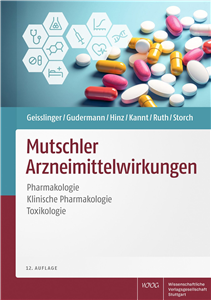
        Mutschler’s Drug Actions

        Pharmacology – clinical pharmacology – toxicology

        by Gerd Geisslinger, Thomas Gudermann, Burkhard Hinz, Aimo Kannt, Peter Ruth, Ursula Storch

        For over 50 years, the ‘Mutschler’ has served students and professionals as a well-founded standard in pharmacology, clinical pharmacology and toxicology. As customary, the 12th edition is clear, practical and evidence-based – featuring new active substances, biologics, drug classes and current guide- lines. The indication-based organisation, concise chapter structure and over 1,400 structural formulas furthermore enable a deep understanding of mechanisms of action at the cellular and molecular levels. The basics of anatomy, physiology, pathophysiology and drug effects are clearly explained within the relevant chapters. The critical evaluation of each substance’s therapeutic benefit and side-effect profile supports a well-informed and differen- tiated approach to the use of medicine. Didactically well-conceived and supported by numerous illustrations and tables, this work offers a reliable foundation for clinical practice, professional training and study – with comprehensive coverage of the examination material for the medical and pharmaceutical state examinations. The ‘Mutschler’ is for anyone who not only uses medicines, but also seeks to understand them. Target group: Students of medicine, pharmacy, dentistry, biology, biochemistry, chemistry, molecular medicine, medical computing and psychology as well as physicians, particularly in general practice and internal medicine, pharmacists, dentists, biologists, biochemists and chemists

      • Trusted Partner
        November 2024

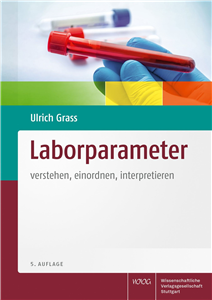
        Laboratory Parameters

        Understand, classify, interpret

        by Ulrich Grass

        Medicine | Pharmacy Laboratory parameters often evoke strong emotions. Many people are familiar with the anxiety of awaiting blood test results or the pride of showcasing perfect results from their last check-up. However, laboratory parameters are just puzzle pieces in diagnosis and therapy. The most critical factor is accurately interpreting them within the clinical context. The necessary know-how can be found here: • practical, concise schematic diagram for the evaluation of laboratory values • systematic grouping into diagnostic fields • details on function and standard values • references to disruptive factors and practical tips New in the 5th edition: Information on laboratory pathways from the National Association of Statutory Health Insurance Physicians (KBV), Alzheimer’s diagnostics, blood tests for early cancer detection, molecular pathological biomarkers and other current topics. This book offers a solid knowledge base for all healthcare professionals – ensuring excellent advice and patient care! Target group: Pharmacists, pharmaceutical technicians, nursing staff/students, physicians, medical technicians

      • Trusted Partner
        April 2024

        Depression Is not SomethingThat Just Happens

        10 self-empowerment conceptsfor burnout, depression and trauma

        by Barbara Günther-Haug

        A crisis does not make a disease. It only becomes dangerous when we get stuck – in the ways of thinking and acting that are rooted in our fears and desires, but not in reality. That way, we wear ourselves out for nothing; exhaustion and frustration increase, and may even end in depression. This book sheds a light on ten main stress situations that may be the reason for depression. It goes far beyond the usual explanations of the symptoms of depression or individual stories, and is a treasure trove for people who want to understand what has caused them to wear themselves out mentally and how they can lift themselves out of this low.

      • Trusted Partner
        Medicine
        January 2026

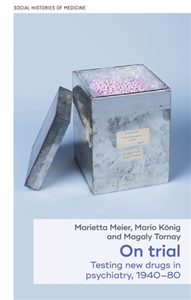
        On trial

        Testing new drugs in psychiatry, 1940–1980

        by Marietta Meier, Mario König, Magaly Tornay

        The heroic story of the invention of antidepressants is a key part of the psychopharmaceutical turn. On Trial revolves around one of its pioneers, psychiatrist Roland Kuhn, who practiced in Münsterlingen, a state-run psychiatric hospital in Switzerland. Kuhn became famous for the 'discovery' of the first antidepressant, Tofranil, and more recently notorious for his numerous trials on often unsuspecting patients. Largely based on the extensive and previously inaccessible sources of Kuhn's private archive, the book delves into the early days of industry-sponsored clinical research in psychiatry. It examines how the clinic, patients, doctors, nursing staff, corporations, and authorities interacted in the trials. Conducted from the 1940s to 1980s, the Münsterlingen drug trials are historicised and situated in the period's evolving landscape of experimentation.

      • Trusted Partner
        Medicine
        July 2024

        On trial

        Testing new drugs in psychiatry, 1940–1980

        by Marietta Meier, Magaly Tornay, Mario König

        The heroic story of the invention of antidepressants is a key part of the psychopharmaceutical turn. On Trial revolves around one of its pioneers, psychiatrist Roland Kuhn, who practiced in Münsterlingen, a state-run psychiatric hospital in Switzerland. Kuhn became famous for the 'discovery' of the first antidepressant, Tofranil, and more recently notorious for his numerous trials on often unsuspecting patients. Largely based on the extensive and previously inaccessible sources of Kuhn's private archive, the book delves into the early days of industry-sponsored clinical research in psychiatry. It examines how the clinic, patients, doctors, nursing staff, corporations, and authorities interacted in the trials. Conducted from the 1940s to 1980s, the Münsterlingen drug trials are historicised and situated in the period's evolving landscape of experimentation.

      • Trusted Partner
        Medicine

        Clinical Handbook of Psychotropic Drugs

        by Ric M. Procyshyn, Kalyna Z. Bezchlibnyk-­Butler, David D. Kim (Eds.)

        Quick and comprehensive information on psychotropic drugs for adults. The “Clinical Handbook of Psychotropic Drugs” has become a standard reference and working tool for psychiatrists, psy­chologists, physicians, pharmacists, nurses, and other men­tal health professionals Independent, unbiased, up­to­date Packed with unique, easy­-to-­read comparison charts and tables (dosages, side effects, pharmacokinetics, interac­tions …) for a quick overview of treatment options Succinct, bulleted information on all classes of medica­tion: on-­ and off-­label indications, (US FDA, Health Canada), recommended dosages, US and Canadian trade names, side effects, interactions, pharmacodynamics, precautions in the young, the elderly, and pregnancy, nursing implications, and much more – all you need to know for each class of drug Potential interactions and side effects summarized in comparison charts With instantly recognizable icons and in full color throughout, allowing you to fnd at a glance all the information you seek Clearly written patient information sheets available for download as printable PDF files

      • Trusted Partner
        Humanities & Social Sciences
        July 2018

        Syria and the chemical weapons taboo

        Exploiting the forbidden

        by Michelle Bentley

        This book analyses the Syria crisis and the role of chemical weapons in relation to US foreign policy. The Syrian government's use of such weapons and their subsequent elimination has dominated the US response to the conflict, where these are viewed as particularly horrific arms - a repulsion known as the chemical taboo. On the surface, this would seem to be an appropriate reaction: these are nasty weapons and eradicating them would ostensibly comprise a 'good' move. But this book reveals two new aspects of the taboo that challenge this prevailing view. First, actors use the taboo strategically to advance their own self-interested policy objectives. Second, that applying the taboo to Syria has actually exacerbated the crisis. As such, this book not only provides a timely analysis of Syria, but also a major and original rethink of the chemical taboo, as well as international norms more widely.

      • Trusted Partner
        2020

        Mutschler’s Drug Actions

        Pharmacology – Clinical Pharmacology – Toxicology

        by Prof. Dr. Dr. Gerd Geisslinger, Dr. Sabine Menzel, Prof. Dr. Thomas Gudermann, Prof. Dr. Burkhard Hinz and Prof. Dr. Peter Ruth. Founded by Prof. Dr. Dr. Dres. h.c. Ernst Mutschler

        For half a century, “Mutschler” has been the standard reference work on pharmacology and toxicology – always forward-looking and at the cutting edge. The 11th edition continues this approach: ■ Up-to-the-minute: new drugs, including biologicals, relevant guidelines in the context of evidence-based medicine ■ Clearly structured: completely new layout with the focus on indication-related pharmacotherapy; uniformly constructed concise chapters ■ Well-illustrated: with many figures and tables, completely revised ■ Easy to remember: readily understandable explanations – even of complex issues ■ Critical: objective, independent assessment of the clinical value of drugs and drug groups ■ Comprehensive: with short introductions into the principles of anatomy, physiology and pathophysiology in the individual chapters ■ Reliable: full coverage of the subjects usually tested in the medical and pharmaceutical state examinations   The proven source for complete knowledge about the actions of drugs: for students and practitioners.

      Subscribe to our

      newsletter