Your Search Results

      • Fondo de Cultura Económica

        With 86 years publishing books covering a broad range of subject areas, Fondo de Cultura Económica is one of the leading publishing houses in Latin America. Over the course of the last twenty-nine years, the ten series of books for children and young adults published by our Children’s book division have included titles of the highest literary and visual quality, aimed at a critical and demanding readership. Our most innovative books have received important awards such as the New Horizons Award, and some of our titles have been listed in the White Ravens Catalogue and in the AIGA (American Institute of Graphic Arts) 50 Books/50 Covers. Several of our books for children and young adults have been translated into Chinese, Dutch, English, French, Galician, Czech, Slovenian, German, Hindi, Italian, Korean, Swedish, Romanian, Norwegian, Portuguese, Japanese, Arabic, Greek and Turkish.

        View Rights Portal
      • Guangdong Economy Publishing House Co., Ltd.

        Guangdong Economics Publishing House Co., Ltd. is a leading professional publisher in China who aims at deliver engaging and adaptive solutions to readers in the fields of business management, investment, marketing & advertising, personal finance,military and scholarly monography in print and electrically.       Located in Guangzhou, the capital city of Guangdong Province, the publishing house takes editing, publishing and distributing books, magazines, digital publication as well as copyright trading as its major business.Founded in 1995, we now publish over 500 books annually and provide our diversified products to readers all over China as well as overseas customers in Asia and Europe,.  We joined the Guangdong Publishing Group in 1999 and now as a member of the Southern Publishing and Media Company Ltd., which went to the market in 2016, we look to a brighter future and greater marker globally.

        View Rights Portal
      • Trusted Partner
        October 2020

        The Eco-Balance on the Plate

        How What We Eat Can Protect the Climate

        by Dr. Malte Rubach

        How much CO₂ is emitted by one serving of spaghetti bolognese? About 1.5 kilograms! This example shows what the meat industry and food logistics mean for the eco-balance of our food. But is it enough to switch to meat-free and dairy-free alternatives or local specialities? Dr. Malte Rubach takes a closer look and reviews our food regime and its impact on our climate. We live in a society influenced by technology and the rising consumption of resources. Rubach argues for a sensible attitude to food and shows what we can still eat with a clear conscience.

      • Trusted Partner
      • Trusted Partner
        August 1977

        Zeichen

        Einführung in einen Begriff und seine Geschichte

        by Umberto Eco, Günter Memmert

        Indem Eco den Bedeutungswandel des »Zeichen«-Begriffs darstellt, seine Wendepunkte in der Abfolge und in der Wechselbeziehung der Theorien und »Disziplinen« (der Philosophie, der Mathematik, der Ästhetik, der Linguistik etc.) erkundet, beschreibt er einen Hauptstrang der Denk- und Wissenschaftsgeschichte.

      • Trusted Partner
        March 2022

        Plundering the Planet

        Things We Must Do Now

        by Franz Alt, Ernst Ulrich von Weizsäcker

        “The Limits to Growth” was published by the Club of Rome in 1972 when the term “eco” was more defamatory than a real trend. That never worried Franz Alt and Ernst Ulrich von Weizsäcker, a long-standing co-chairman of the Club of Rome. The two committed and renowned environmental experts have campaigned for decades for a change of heart in how we treat our planet. Their book delivers a stark diagnosis about the state of the Earth – though without giving up hope. They search from various angles for a way out of the global crisis: what is the blueprint for a democracy that addresses humanity’s needs and for a sustainable economy? Are we ready to learn from nature and to make not just human beings, but all living creatures our priority? Alt and von Weizsäcker offer courage, and their numerous examples set out a vision for the future that respects the planet’s eco-systems.

      • Trusted Partner
        October 2008

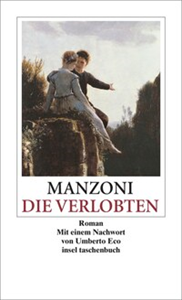
        Die Verlobten

        Eine mailändische Geschichte aus dem siebzehnten Jahrhundert

        by Alessandro Manzoni, Ernst Wiegand Junker, Ernst Wiegand Junker, Umberto Eco

        »Ich habe Ihnen zu verkünden, daß Manzonis Roman alles überflügelt, was wir in dieser Art kennen … « (Goethe) Vor dem Hintergrund einer politisch bewegten Zeit erzählt Alessandro Manzoni die dramatische Geschichte des Liebespaares Renzo und Lucia, deren Heirat durch Intrigen, Kriege, Aufstände und Pest über Jahre verhindert wird. Die Verlobten ist der bedeutendste Roman der italienischen Literatur. Erschienen 1827 machte er in ganz Europa Furore und begründete den bis heute währenden Ruhm Manzonis. »Ein spannender, ja faszinierender Roman, dabei immer wieder durchzogen von einem feinen Humor.« Umberto Eco

      • Trusted Partner
        Humanities & Social Sciences
        September 2024

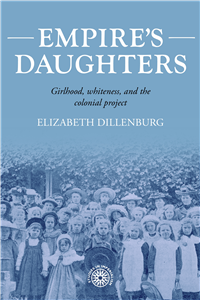
        Empire's daughters

        Girlhood, whiteness and the colonial project

        by Elizabeth Dillenburg

        Girlhood and whiteness in the British empire traces the interconnected histories of girlhood, whiteness, and British colonialism in the late nineteenth and early twentieth centuries through the study of the Girls' Friendly Society. The society functioned as both a youth organisation and emigration society, making it especially valuable in examining girls' multifaceted participation with the empire. The book charts the emergence of the organisation during the late Victorian era through its height in the first decade of the twentieth century to its decline in the interwar years. Employing a multi-sited approach and using a range of sources-including correspondences, newsletters, and scrapbooks-the book uncovers the ways in which girls participated in the empire as migrants, settlers, laborers, and creators of colonial knowledge and also how they resisted these prescribed roles and challenged systems of colonial power.

      • Trusted Partner
        September 2009

        Tristano

        by Nanni Balestrini, Peter O. Chotjewitz, Peter O. Chotjewitz, Umberto Eco

        »Tape Mark I« (1961) von Nanni Balestrini gilt als erstes Gedicht, das je auf einem Computer geschrieben wurde. Der Autor verfolgte jedoch einen radikaleren Plan: Er wollte am Rechner einen Liebesroman verfassen, in seine Bestandteile zerlegen und diese willkürlich kombinieren. 1966 erschien sein Tristano bei Feltrinelli – als »normales« Buch mit 10 Kapiteln zu jeweils 30 Abschnitten in einer festgelegten Reihenfolge. Vier Jahrzehnte später erlauben es die Fortschritte der digitalen Drucktechnik, das Buch so zu veröffentlichen, wie der Autor es ursprünglich geplante hatte: Per Computer werden aus den 30 Abschnitten der 10 Kapitel jeweils 20 ausgewählt und in eine neue, zufällige Reihenfolge gebracht. Somit ist jedes der 2.000 Exemplare dieser deutschen Originalausgabe ein Unikat. Alle Bände sind auf dem Umschlag fortlaufend nummeriert. Die ersten 5.999 Tristano-Romane sind in italienischer Sprache bei Derive Approdi (Rom) erschienen. Die deutsche Ausgabe beginnt mit der Nummer 6.000 und endet mit der Nummer 7.999. Im Anschluß sind englische und französische Ausgaben geplant. Mit einem Vorwort von Umberto Eco und einem Nachwort von Peter O. Chotjewitz.

      • Trusted Partner
      • Trusted Partner
        Humanities & Social Sciences
        March 2020

        Knowledge, mediation and empire

        James Tod's journeys among the Rajputs

        by Florence D'Souza, Andrew Thompson, John M. MacKenzie

        This study of the British colonial administrator James Tod (1782-1835), who spent five years in north-western India (1818-22) collecting every conceivable type of material of historical or cultural interest on the Rajputs and the Gujaratis, gives special attention to his role as a mediator of knowledge about this little-known region of the British Empire in the early nineteenth century to British and European audiences. The book aims to illustrate that British officers did not spend all their time oppressing and inferiorising the indigenous peoples under their colonial authority, but also contributed to propagating cultural and scientific information about them, and that they did not react only negatively to the various types of human difference they encountered in the field.

      • Trusted Partner
      • Trusted Partner
        Literature & Literary Studies
        June 2023

        Cormac McCarthy

        A complexity theory of literature

        by Lydia R. Cooper

        Combining the fields of evolutionary economics and the humanities, this book examines McCarthy's literary works as a significant case study demonstrating our need to recognise the interrelated complexities of economic policies, environmental crises, and how public policy and rhetoric shapes our value systems. In a world recovering from global economic crisis and poised on the brink of another, studying the methods by which literature interrogates narratives of inevitability around global economic inequality and eco-disaster is ever more relevant.

      • Trusted Partner
      • Trusted Partner
        Humanities & Social Sciences
        September 2021

        Border porosities

        by Rozita Dimova

      • Trusted Partner
      • Trusted Partner
        Humanities & Social Sciences
        January 2019

        Alternative countrysides

        Anthropological approaches to rural Western Europe today

        by Jeremy Macclancy

        A fresh anthropological look at a central but neglected topic: the profound changes in rural life throughout Western Europe today. As locals leave for jobs in cities they are replaced by neo-hippies, lifestyle-seekers, eco-activists, and labour migrants from beyond the EU. With detailed ethnographic examples, contributors analyse new modes of living rurally and emerging forms of social organisation. As incomers' dreams come up against residents' realities, they detail the clashes and the cooperations between old and new residents. They make us rethink the rural/urban divide, investigate regionalists' politicisation of rural life and heritage, and reveal how locals use EU monies to prop up or challenge existing hierarchies. They expose the consequences of and reactions to grand EU-restructuring policies, which at times threaten to turn the countryside into a manicured playground for escapee urbanites. This book will appeal to anyone seriously interested in the realities of rural life today.

      • Trusted Partner
        2019

        History of the Throw-Away Society

        The drawback of consumption

        by Wolfgang König

        Sooner or later everything is thrown away. In the consumer society, however, usable and serviceable products that may be as good as new are also thrown away. Such behaviour is the result of a long-term process that has developed over a period of one-and-a-half centuries. The change was led by the USA, and the Federal Republic of Germany followed. It started at the turn of the last century with personal hygiene: articles such as toilet paper, sanitary towels, nappies and paper handkerchiefs. After the Second World War, a large number of other disposable articles were soon added, such as paper cups and plastic dishes, nylon stockings and pens, razor blades, beverage cans and much more besides. Wolfgang König shows how business and consumers have together made throwing things away perfectly normal – and discusses how the throwaway society may be overcome.

      • Trusted Partner
        2020

        OTC Questions: Contraception

        Pill, ring, condoms and more

        by Cornelia Schweizer

        Does the coil interfere with MRI? Is a latex allergy the reason for condom intolerance? Does the contraceptive patch stay on whilst swimming? The subject of contraception raises far more questions in the pharmacy than those about the price of a particular contraceptive pill. This book brings together questions from customers about the basic principles, problems and risks of the different methods of contraception: ■ Natural family planning ■ Barrier methods ■ Intrauterine devices (IUD) ■ Hormonal contraceptives ■ Morning after pill (emergency pill) With the aid of patient- and customer-friendly formulated answers and a clarification of the pharmacological and medical background, all questions about the pill, ring, condoms and more can be faced without any problems!

      • Trusted Partner

      Subscribe to our

      newsletter