
Your Search Results
-

-

Rabea Blue - Fantasyautorin
Rabea Blue is an author, writing fantasy, science-fiction and romance. She alreasy published short stories & novels.
View Rights Portal
-
Promoted Content

 Film theory & criticismAugust 2003
Defining cult movies
The cultural politics of oppositional taste
by Susan Wiliams
Concentrates on the analysis of cult movies, how they are defined, who defines them and the cultural politics of these definitions. Raises issues about the perception of it as an oppositional form of cinema, and of its strained relationships to mainstream cinema and the processes of institutionalisation and classification. Claims that the history of academic film studies and that of cult movie fandom are inextricably intertwined and raises fundamental questions about both cult movies themselves, and film studies as a discipline. Updates work on cult movies at a time when cult films and TV have become a central part of contemporary culture. Ranges over the full and entertaining gamut of cult films from Dario Argento, Spanish horror and Peter Jackson's New Zealand gorefests to sexploitation, kung fu and sci fi flicks, as well investigations of Sharon Stone, 'underground' and trivia.
-
Promoted Content
 Literature & Literary StudiesMay 2026
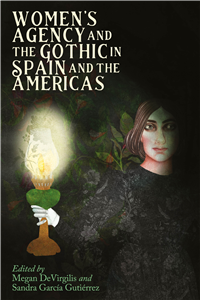
Women’s Agency and the Gothic in Spain and the Americas
by Megan DeVirgilis, Sandra García Gutiérrez
This volume has emerged to fulfill two main purposes: Primarily, to constitute the first collaborative work that traces the relationship between the Gothic and Women in Spain and the Americas, but also, to surpass the term 'Female Gothic,' coined by Ellen Moers, by transferring the focus towards women and their agency as writers, readers and characters. This volume functions as a manifesto per se to open new avenues into understanding how women have interacted with the Gothic between the nineteenth and twenty-first centuries in Spain and the Americas. The question, we determine, is not simply about identity, but rather about agency. We define women's agency as the total capacity of characters, authors and readers to act freely within a social framework in relation to gothic texts. In our exploration of authorship, we reject the claim that the Gothic is a simplistic literary genre, instead sustaining that the plasticity of the Gothic has enabled it to survive for centuries; by shifting from a genre to a mode, it has surpassed literary forms and invaded all kinds of media: from film to music and merchandise such as clothing and pop culture collectables, fostering an authentic goth fandom.
-
 Trusted Partner
 Theory of music & musicologyJanuary 2013
Why Pamper Life's Complexities?
Essays on The Smiths
by Edited by Sean Campbell and Colin Coulter
For five short years in the 1980s, a four-piece Manchester band released a collection of records that had undeniably profound effects on the landscape of popular music and beyond. Today, public and critical appreciation of The Smiths is at its height, yet the most important British band after The Beatles have rarely been subject to sustained academic scrutiny. Why pamper life's complexities?: Essays on The Smiths seeks to remedy this by bringing together diverse research disciplines to place the band in a series of enlightening social, cultural and political contexts as never before. Topics covered by the essays range from class, sexuality, Catholicism, Thatcherism, regional and national identities, to cinema, musical poetics, suicide and fandom. Lyrics, interviews, the city of Manchester, cultural iconography and the cult of Morrissey are all considered anew. The essays breach the standard confines of music history, rock biography and pop culture studies to give a sustained critical analysis of the band that is timely and illuminating. This book will be of interest to scholars and students in the fields of sociology, literature, geography, cultural and media studies. It is also intended for a wider audience of those interested in the enduring appeal of one of the most complex and controversial bands. Accessible and original, these essays will help to contextualise the lasting cultural legacy of The Smiths.

