
Daniel Goleman - Foreign Audio
Please contact anaban@gmail.com for information
View Rights Portal

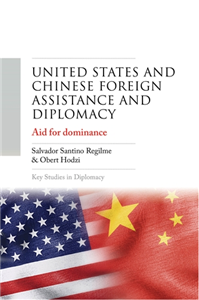
Aid for Dominance addresses the analytic weaknesses of mainstream analysis of foreign aid, which often focuses on its material dimensions. The book underscores the constitutive relationship between foreign aid as a material resource and the diplomatic discourses and practices that constitute complex bilateral relations between donor and recipient states. Written by two leading scholars of contemporary United States and Chinese foreign policies in the Global South, Aid for Dominance offers a pioneering, theoretically conscious, and empirically rich account of the two great powers' grand strategies in the global development sector. By deploying a multidisciplinary and comparative analysis, this book draws from a wide range of evidentiary materials from primary sources, including data from fieldwork interviews, government documents, local and international newspapers, speeches by high-ranking government officials and diplomats, and secondary data from scholarly publications and policy papers.

 Trusted Partner
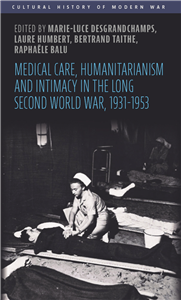
This book offers a micro-global history of humanitarianism and medical care during the 'long' Second World War, which challenges the traditional and Eurocentric chronological boundaries of 1939/1945. It takes as its starting point the Japanese invasion of Manchuria in 1931, which led to the progressive dislocation of the League of Nations, with the Japanese, German and Soviet departures in the 1930s. It ends with the termination of the Korean War in 1953, and the subsequent dismantlement of the first United Coalition and UN Peace enforcement operation. It considers the slow, messy and ambivalent transformation of humanitarian actors' relations to the suffering of distant others through a study of humanitarian encounters, practices, spaces and affects. Paying close attention to a variety of actors, such as French colonial doctors, Swiss ICRC delegates, Egyptian relief workers, Chinese-style physicians, Peruvian and Ecuadorian nurses or American member of the Unitarian Service Committee, the book provides a more holistic story of humanitarianism.
Trusted Partner
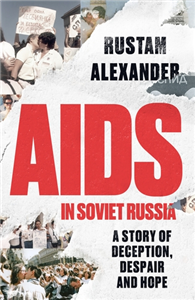
The first book to tell the shocking story of the AIDS crisis in Soviet Russia. Throughout the 1980s, as the world was grappling with the escalating crisis of AIDS, Soviet Russia continued to deny there was a problem. Arguing that the disease was limited to foreigners and 'immoral' groups, the government failed to take meaningful action, long past the point other countries had begun to recognise the full scale of the threat. In this ground-breaking book, Rustam Alexander tells the story of AIDS in Soviet Russia. Fixated on disinformation, censorship and the persecution of marginalised communities, the Soviet authorities wasted precious time, allowing the epidemic to strike at the very heart of the nation: its children. Yet, despite the government's failure, a number of brave journalists, doctors and nascent gay groups decided to take matters into their own hands and engage in full-fledged AIDS activism. Tracing the political and social response to AIDS in the final years of the Soviet era, Alexander sheds light on the devastating consequences of government inaction. He draws on personal stories, media reports and archival materials to provide a riveting account of the Russian people's fight against AIDS amid the tumultuous transformations of Gorbachev's perestroika.
Trusted Partner
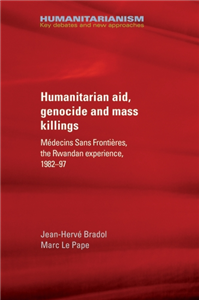
Throughout the 1990s, Médecins Sans Frontières (MSF) was forced to face the challenges posed by the genocide of Rwandan Tutsis and a succession of outbreaks of political violence in Rwanda and its neighbouring countries. Humanitarian workers were confronted with the execution of almost one million people, tens of thousands of casualties pouring into health centres, the flight of millions of people who had sought refuge in camps and a series of deadly epidemics. Drawing on various hitherto unpublished private and public archives, this book recounts the experiences of the MSF teams working in the field. It is intended for humanitarian aid practitioners, students, journalists and researchers with an interest in genocide and humanitarian studies and the political sociology of international organisations.
Trusted Partner

This book represents the first ever comprehensive study of the EU's foreign and security policy in Bosnia. Drawing on a wealth of fresh empirical material, it demonstrates that institutions are a key variable in explaining levels of common foreign security policy (CFSP) coherence and effectiveness over time. In doing so, it also sheds new light on the role that intergovernmental, bureaucratic and local political contestation have played in the formulation and implementation of a European foreign policy. The study concludes that the EU's involvement in Bosnia has not only had a significant impact on this Balkan country in its path from stabilisation to integration, but has also transformed the EU, its foreign and security policy and shaped the development of the EU's international identity along the way. The book will be of great interest to researchers and students of EU politics, International Relations and Bosnian politics. ;
Trusted Partner
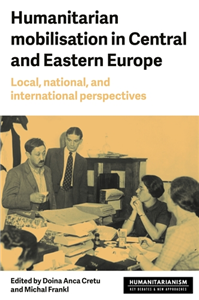
By focusing on aid Central and Eastern Europe, the volume adds to the existent scholarly explorations of modern humanitarianism, its actors and practices. In the twentieth century, aid workers assisted victims of war and earthquakes, delivered food, supported health care, provided childcare, or sheltered refugees. The contributors not only reconstruct these diverse histories and their protagonists, but also bring international, national, and local actors together: from grassroots activists to private associations to state-driven "socialist humanitarians" to large Western aid organizations. In doing so, they challenge the often unidirectional, from West-to-East, and asymmetrical perspective on donor-recipient relationships in humanitarian processes.
Trusted Partner


The assessment of nursing and care needs and the organisation and quality assurance of nursing care are key tasks performed by nursing staff. This also includes administering medication, something which requires sound organisation, control, implementation and documentation. Nurses observe whether medication is taken consistently, has the desired effect, and whether undesirable side effects occur. The drug product as a „special commodity“ – whether in inpatient long-term care, in outpatient care, or in hospital – requires special knowledge concerning - correct storage, - the pharmacological effect, and - appropriate application. This book is geared towards the diseases and symptoms of people requiring nursing or care. All the important facts concerning the use of medicines are presented here in an understandable manner, focusing on the essentials. Numerous illustrations and practical tips provide the link to everyday nursing care. It is the ideal textbook and reference work for nursing and care assistants as well as nursing professionals.
Trusted Partner


People with dementia experience their condition as a big change in which, for example, new events are not linked to existing experiences and wishes, thoughts, and actions can no longer be connected to each other. This kind of experience of the self, due to the intergative function of the brainbeing temporarily or permanently lost, is called dissociative self-experience. Based on this understanding of dementia, the author develops an approach to effectively understand and support people with dementia in everyday activities. Typical everyday situations and behaviours are presented and reflected on in a practical context.
Trusted Partner
Trusted Partner


In the pharmacy, the staff communicate with customers, colleagues, the medical profession, sales representatives and nursing home staff. Pharmacy employees produce written information based on well-chosen sources and represent the pharmacy to the outside world through presentations, on social media, or with the help of flyers, posters and other promotional materials. All this presupposes the confident use of language, and is best trained in advance. Part A of this work provides assistance for the most diverse communicative requirements in the pharmacy. A short theoretical explanation is always followed by several tasks so that you can immediately put what you have learned into practice and try it out. The „Brief overview of grammar and language knowledge“ boxes point out linguistic stumbling blocks. Those who are not yet sure of the technical terms can make themselves fit in Part B. Here one learns how to conduct a good counselling interview according to the BAC guideline. Extensive lists of technical terms and their explanations suitable for everyday use – all arranged according to organ systems – contain the most important vocabulary for everyday pharmacy work. A totally practical German lesson!
Trusted Partner

In emergency situations, a pharmacy assumes a special importance. Being an easily accessible point of contact, it is called upon to provide help in confused situations and also in those where there is a clear need for first aid. In such serious cases, it is essential to respond quickly and adequately. - How does one recognise an emergency? - How does one proceed? - What is one allowed to do, what must one do? The book provides clear answers to all these questions about emergency scenarios that can occur at a pharmacy. Whether it is an attack of asthma, a heart attack, burns or poisoning – in future, one will know what to do. In addition, the book provides information about the actions of the emergency physician and the common drugs used in emergencies.
Trusted Partner
Trusted Partner
Interventions on behalf of Armenia and Armenians have come to be identified by scholars and practitioners alike as defining moments in the history of humanitarianism. This book reassesses these claims, critically examining a range of interventions by governments, international and diasporic organizations, and individuals that aimed to 'save Armenians'. Drawing on multidisciplinary perspectives, it traces the evolution of these interventions from the late-nineteenth century to the present day, paying particular attention to the aftermaths of the genocide and the upheavals of the post-Soviet period. The contributions connect diverse places (the Caucasus, Russia, the Middle East, Europe, North America, South America, and Australia) to reveal shifting transnational networks of aid and intervention. Aid to Armenia explores this history, and engages critically with contemporary humanitarian questions facing Armenia, the South Caucasus region and the wider diaspora.
Trusted Partner
Trusted Partner
Trusted Partner
 Trusted Partner

This book analyses the Syria crisis and the role of chemical weapons in relation to US foreign policy. The Syrian government's use of such weapons and their subsequent elimination has dominated the US response to the conflict, where these are viewed as particularly horrific arms - a repulsion known as the chemical taboo. On the surface, this would seem to be an appropriate reaction: these are nasty weapons and eradicating them would ostensibly comprise a 'good' move. But this book reveals two new aspects of the taboo that challenge this prevailing view. First, actors use the taboo strategically to advance their own self-interested policy objectives. Second, that applying the taboo to Syria has actually exacerbated the crisis. As such, this book not only provides a timely analysis of Syria, but also a major and original rethink of the chemical taboo, as well as international norms more widely.
Trusted Partner
 Trusted Partner



