
House of Anansi Press
Livres Canada Books
View Rights Portal

Provided with a remarkable collection, Mercure de France follows an exacting editorial policy: French and foreign literature, poetry, history, anthologies... Awarded many times, the publishing house is associated with prestigious names: Romain Gary, Colette, Ionesco , André Gide, André du Bouchet, Henri Michaux, Adonis, Yves Bonnefoy, Andréï Makine, Gilles Leroy, Anne Serre, Gwenaëlle Aubry, Julian Barnes...
View Rights Portal

 Trusted Partner


A smart, incisive toolkit for understanding how the framing of information influences the way we think about it. In today's chaotic media landscape, working out who and what to believe is a daunting task. Lies and misinformation are only part of the problem - often the way a story is presented has just as much effect on us as what the story is. In Framing, sociologist Mikael Klintman offers a cutting-edge toolkit for exposing and analysing the rhetoric that saturates our everyday lives. Combining insights from the social sciences, economics and evolutionary biology, he lays out a four-part approach to understanding how information is 'framed' for us, built around the key elements of texture, temperature, position and size. Demonstrating this approach through an array of real-world examples, from climate change denial to the subtle messaging of caviar ads, Klintman reveals how canny communicators mislead us without relying on overt deception. At the same time, he probes the deeper evolutionary and cultural roots of our susceptibility to frames.
Trusted Partner
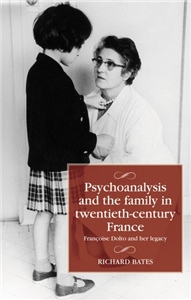
In the last quarter of the twentieth century, if French people had a parenting problem or dilemma there was one person they consulted above all: Françoise Dolto (1908-88). But who was Dolto? How did she achieve a position of such influence? What ideas did she communicate to the French public? This book connects the story of Dolto's rise to two broader histories: the dramatic growth of psychoanalysis in postwar France and the long-running debate over the family and the proper role of women in society. It shows that Dolto's continued reputation in France as a liberal and enlightened educational thinker is at best only partially deserved and that conservative and anti-feminist ideas often underpinned her prominent public interventions. While Dolto retains the status of a national treasure, her career has had far-reaching and sometimes harmful repercussions for French society, particularly in the treatment of autism.
Trusted Partner

One of the few books which systematically brings post-structuralist theory to bear on substantive political analysis. Offers accessible accounts of different strands of discourse theory such as deconstruction, psychoanalysis and genealogy, which are applied to the analysis of specific cases such as Northern Ireland and contemporary East European politics. Each chapter addresses a key theme and issue in contemporary politics. Draws on inspiration from Ernesto Laclau, Jacques Derrida, Michel Foucault and Jacques Lacan. Contains a clear introductory statement of the theoretical approach used and concludes with an assessment of the future directions of discourse theory in the social sciences. ;
Trusted Partner
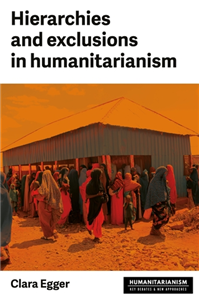
While humanitarians generally present themselves as 'do-gooders' and use this image to gather support and funding, this edited volume addresses hierarchies and exclusions in humanitarianism - an issue that has gained increased attention. Contributions analyse how hierarchies, power asymmetries and exclusion emerge, are maintained and can ultimately be challenged in humanitarian governance. Leading scholars on humanitarianism coming from a variety of disciplinary fields such as international relations, philosophy, organisational science and management, and sociology analyse exclusion dynamics at the individual, organisational and structural levels. Authors thereby combine data from a diverse range of methods, including ethnography, survey and statistical analysis. The volume informs current efforts to increase inclusiveness and equity in humanitarian practice.
Trusted Partner
 Trusted Partner
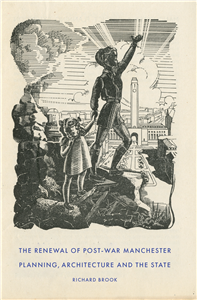
A compelling account of the project to transform post-war Manchester, revealing the clash between utopian vision and compromised reality. Urban renewal in Britain was thrilling in its vision, yet partial and incomplete in its implementation. For the first time, this deep study of a renewal city reveals the complex networks of actors behind physical change and stagnation in post-war Britain. Using the nested scales of region, city and case-study sites, the book explores the relationships between Whitehall legislation, its interpretation by local government planning officers and the on-the-ground impact through urban architectural projects. Each chapter highlights the connections between policy goals, global narratives and the design and construction of cities. The Cold War, decolonialisation, rising consumerism and the oil crisis all feature in a richly illustrated account of architecture and planning in post-war Manchester.
Trusted Partner

Passages: On geo-analysis and the aesthetics of precarity is a multi-genre and transdisciplinary text addressing themes such as colonialism, nuclear zones of abandonment, migration control regimes, transnational domestic work, the biocolonial hostilities of the hospitality industry, legal precarities behind the international criminal justice regime, the shadow-worlds of the African soccerscape, and immunity regimes related to the COVID-19 pandemic. This book invites inquiry into today's apocalyptic narratives, humanitarian reason, and international criminal justice regimes, as well as the precarity generated by citizen time and 'consulate time'. The aesthetic breaks emerging from the book's image-text montage draw attention to the ethics of encounter and passage that challenges colonial, domestic, and nation-statist sovereignty regimes of inattention.
Trusted Partner
Trusted Partner


Several different pills prescribed by many different physicians: pharmacists encounter patients in this situation every day! What at first seems quite normal can, on closer inspection, be fraught with considerable risks of drug-related problems. Using this analysis as a core component of medication management, pharmacies have the key risk minimisation tool at their disposal. The authors guide their readers step by step through the discussions with the patient, the stages of the analysis, and the clear documentation. Case examples reflect on the content and illustrate implementation. The launch of pharmaceutical services enables an improvement in the safety and efficacy of customers‘ drug therapy in the pharmacy by means of the service „Extended medication counselling for polymedication“. Everything pharmacists need to know for the necessary medication analysis can be found in this book. This completely revised 2nd edition includes: - Important information on pharmaceutical services - Illustrative case examples on many indications - QR codes that lead to additional digital material Whether it is a detailed adjustment or a major change to medication: every patient benefits from the intervention.
Trusted Partner
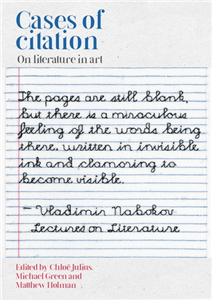
Cases of citation presents a history of artists who incorporated literary references into their work from the 1960s onwards. Through a series of object-focused chapters that each take up a singular 'case of citation', the collection considers how literary citation emerged as a viable and urgent strategy for artists during this period. It surveys eleven artworks by a diverse group of artists - including David Wojnarowicz, Lis Rhodes, Romare Bearden and Silvia Kolbowski - whose citations draw on works as varied as Karl Marx's Das Kapital and Mary Shelley's Frankenstein. The book also features an interview with pioneering feminist artist Elaine Reichek that discusses her career-long commitment to working with text. Together, the artworks and cited texts are approached from various critical angles, with each author questioning and complicating the ways in which we can 'read' textual citations in art.
Trusted Partner

Cases of citation presents a history of artists who incorporated literary references into their work from the 1960s onwards. Through a series of object-focused chapters that each take up a singular 'case of citation', the collection considers how literary citation emerged as a viable and urgent strategy for artists during this period. It surveys nine artworks by a diverse group of artists - including David Wojnarowicz, Lis Rhodes, Romare Bearden and Silvia Kolbowski - whose citations draw on literary works with authors ranging from Gertrude Stein to Jean Genet. The book also features an interview with pioneering feminist artist Elaine Reichek that discusses her career-long commitment to working with text. Together, the artworks and cited texts are approached from various critical angles, with each author questioning and complicating the ways in which we can 'read' textual citations in art.
Trusted Partner


This unique guide brings together the vast experience of the author with the science and the practice of positive psychology in such a way that both new and experienced practitioners will benefit. New practitioners will learn about the core concepts of character and signature strengths and how to fine-tune their approach and troubleshoot. Experienced practitioners will deepen their knowledge about advanced topics such as strengths overuse and collisions, hot button issues, morality, and integrating strengths with savoring, flow, and mindfulness. Hands-on practitioner tips throughout the book provide valuable hints on how to take a truly strengths-based approach. The 24 summary sheets spotlighting each of the universal character strengths are an indispensable resource for client sessions, succinctly summarizing the core features of and research on each strength. 70 evidence-based step-by-step activity handouts can be given to clients to help them develop character strengths awareness and use, increase resilience, set and meet goals, develop positive relationships, and find meaning and engagement in their daily lives. Working with client’s (and our own) character strengths boosts well-being, fosters resilience, improves relationships, and creates strong, supportive cultures in our practices, classrooms, and organizations. Target Group: psychotherapists / clinical psychologists / counselors/ teachers
Trusted Partner


— Comprehensive and detailled analysis of the Euromaidan and the ongoing war in Ukraine — Brussels versus Moscow, Russian aggression and geopolitical interests — China's role in a new East-West conflict The years between 2013 and 2019 were almost as significant for Ukraine as the attainment of independence in 1991, as this very independence was in danger of being lost again after the Euromaidan. The nationwide popular uprising against the regime of President Yanukovych had led to a change of power: the former parliamentary opposition formed a new government, resulting in a loss of influence for Russia. Russian agents therefore tried to bring about a "Crimea scenario", another secession in the eastern and southern parts of Ukraine. The resulting "Ukraine conflict", often called a civil war, is in fact a Russian war of attrition against Ukraine. President Putin intends to resolve it on his terms in the Minsk process: through a de facto "autonomous" part of the Donbass in the Ukrainian state, independent of Kiev, as a lever for Russian political influence. Winfried Schneider- Deters, a renowned expert on Ukraine, analyses narratively and in detail the events from 2013 to 2019 and places the Russian- Ukrainian conflict in the context of the dawning "Chinese century".
Trusted Partner


Design Thinking: Solve problems together, user-centered and iterative, develop innovations and have fun doing so! - Practical cards for innovation project work with change of perspective- Consistently customer-oriented and iterative- Targeted use of the maps in project planning and implementation with Design Thinking- Pragmatic, compact and wonderfully descriptive- Suitable for the most diverse questions or problems- With folding poster for targeted use of maps in project planning and decorative at the workplace- From the authors "Design Thinking Quick Start
Trusted Partner
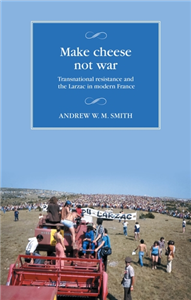
In 1971, the French government announced a massive extension of its military base on the Larzac plateau in southern France. Land was to be expropriated from 107 farms around the small town of La Cavalerie. Limited resistance was expected, but what happened next exceeded all expectations. Local sheep farmers set up protest camps and occupied the land. They soon attracted an astonishing level of support, pioneering a form of regional radicalism with global implications. Drawing out the international dimensions of the protest, Make cheese not war explores a transnational resistance movement in the 1970s that challenged dominant visions of modernity and became a wellspring of radical alternatives. Exploring previously unconsulted archives in France and elsewhere, the book offers an in-depth analysis of the decade-long peasant movement and its aftermath. Repositioning the Larzac struggle within a wider network of French and international solidarities, from the US to the UK, Germany, Burkina Faso, New Caledonia and Japan, the book retraces political networks of pacifist activism, as well as environmental movements and anti-nuclear protest. It shows how this French peasant campaign became both a platform and a model for popular engagement.
Trusted Partner

Taking five or more medications – this is part of the daily routine of many, especially elderly people. But polymedication increases the risk of drug-related problems. This is where the pharmaceutical service „Extended medication counselling for polymedication“ comes in. This comprehensive guide shows how to establish and implement such knowledge in the pharmacy: ■ Part A explains the legal and contractual basis of the service. In addition, the publication highlights the risks of polymedication, drug-related problems and goals, and the benefits of the service for the stakeholders involved in the pharmacy, the doctor‘s practice, and for the patients themselves. ■ Part B is dedicated to the organisation in the pharmacy: team preparation, quality management, required documents, consulting and workplaces, and staff qualification. Aspects such as time management, patient recruitment and public liability are also considered. ■ Part C describes the individual process steps flanked by aids such as work tables, checklists, sample texts (for download at www.Online-PlusBase.de) and a comparison table for supporting AMTS software tools, including screenshots. ■ Part D offers case studies, including the initiation of extended medication counselling, the pharmaceutical AMTS review (software-supported), solution paths and communication (including formulation examples) with the various stakeholders involved. A medication analysis promotes drug therapy safety, strengthens customer loyalty and creates new opportunities for interdisciplinary cooperation with the medical profession – good reasons for starting immediately!
Trusted Partner
 Trusted Partner



