
Groundwood Books
Livres Canada Books
View Rights Portal

Discover our JUNGLE list: comic series for kids, teens and YA. Jungle recently published best-selling comic series, adapted from teens novels such as The Enola Holmes Mysteries (now on Netflix) and The Diary of an 8-bit warrior (Cube Kid). Discover our STEINKIS list: graphic documentaries and graphic adaptation for adults. Steinkis essentially publishes non-fiction graphic books (memoirs, docu-fiction, investigations) and also published graphic adaptation of literary works.
View Rights Portal
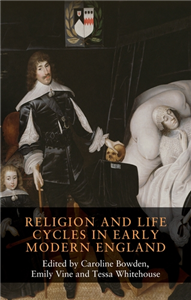
Religion and life cycles in early modern England assembles scholars working in the fields of history, English literature and art history to further our understanding of the intersection between religion and the life course in the period c. 1550-1800. Featuring chapters on Catholic, Protestant and Jewish communities, it encourages cross-confessional comparison between life stages and rites of passage that were of religious significance to all faiths in early modern England. The book considers biological processes such as birth and death, aspects of the social life cycle including schooling, coming of age and marriage and understandings of religious transition points such as spiritual awakenings and conversion. Through this inclusive and interdisciplinary approach, it seeks to show that the life cycle was not something fixed or predetermined and that early modern individuals experienced multiple, overlapping life cycles.
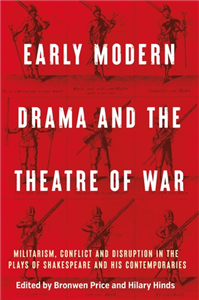
This volume explores the disruptive effects of militarism, war and social unrest in early modern drama. Engaging with Simon Barker's seminal work on dramatic representations of war and militarism, contributors highlight what often lies hidden beneath the surface of martial narratives, treating them as formative interventions in contemporary discourses, whether in justifying war, excluding dissident voices or shaping cultural identities. Discussions include new examinations of militarism, the figure of the soldier and early modern theories of war in Shakespearean tragedy, history and comedy, alongside antimasque and dramatic satire by lesser-known playwrights. The essays investigate how ideas of war underpin emerging concepts of gender, leadership, marriage and the family, as well as the continuing mobilisation of Shakespearean drama in the context of modern armed conflict. Together, they offer rich new contributions to the current lively critical debates on this topic.
 Trusted Partner
Trusted Partner
Trusted Partner


Explores flms according to the diagnostic criteria of DSM5 and ICD11 • Provides psychological ratings of nearly 1,500 flms • Includes downloadable teaching materials Films can be a powerful aid to learning about mental illness and psychopathology. Movies and Mental Illness has established a great reputation as a uniquely enjoyable and highly memorable text for learning about psychopathology. The new edition of this acclaimed book has been updated to include the latest flms and new topics. Includes downloadable material for teachers and discussion groups.


A pioneering work in the movement to free art from its traditional bonds to material reality, this book is one of the most important documents in the history of modern art. Written by the famous nonobjective painter Wassily Kandinsky (1866–1944), it explains Kandinsky's own theory of painting and crystallizes the ideas that were influencing many other modern artists of the period. Along with his own groundbreaking paintings, this book had a tremendous impact on the development of modern art. Kandinsky's ideas are presented in two parts. The first part, called "About General Aesthetic," issues a call for a spiritual revolution in painting that will let artists express their own inner lives in abstract, non-material terms. Just as musicians do not depend upon the material world for their music, so artists should not have to depend upon the material world for their art. In the second part, "About Painting," Kandinsky discusses the psychology of colors, the language of form and color, and the responsibilities of the artist. An Introduction by the translator, Michael T. H. Sadler, offers additional explanation of Kandinsky's art and theories, while a new Preface by Richard Stratton discusses Kandinsky's career as a whole and the impact of the book. Making the book even more valuable are nine woodcuts by Kandinsky himself that appear at the chapter headings. This English translation of Über das Geistige in der Kunst was a significant contribution to the understanding of nonobjectivism in art. It continues to be a stimulating and necessary reading experience for every artist, art student, and art patron concerned with the direction of 20th-century painting.
Trusted Partner

This book uses movies as a medium for learning about the latest research and concepts, such as mindfulness, resilience, meaning, positive relationships, achievement, well-being, as well as the 24 character strengths laid out by the VIA Institute of Character. This book systematically discusses each of the 24 character strengths, balancing film discussion, related psychological research, and practical applications. Resources provided in this book include a suggested syllabus for a complete positive psychology course based on movies, a list of suitable movies for children, adolescents, and families as well as a list of questions for classroom and therapy discussions. Target Group: Psychologists, consultants, therapists and counselors, movie enthusiasts, and all those interested in positive psychology and improving life.
Trusted Partner

This volume is the first ever attempt to unite and translate some of the key texts which informed Johan Huizinga's famous study of the Burgundian court, The Waning of the Middle Ages, a work which has never gone out of print. It combines these texts with sources that Huizinga did not consider, those that illuminate the wider civic world that the Burgundian court inhabited and the dynamic interaction between court and city. Through these sources, and an introduction offering new perspectives on recent historiography, the book tests whether Huizinga's controversial vision of the period still stands. Covering subjects including ceremonial events, such as the spectacles and gargantuan banquets that made the Burgundian dukes the talk of Europe, the workings of the court, and jousting, archery and rhetoric competitions, the book will appeal to students of late medieval and early modern Europe and to those with wider interests in court culture, ritual and ceremony.
Trusted Partner


Design Thinking: Solve problems together, user-centered and iterative, develop innovations and have fun doing so! - Practical cards for innovation project work with change of perspective- Consistently customer-oriented and iterative- Targeted use of the maps in project planning and implementation with Design Thinking- Pragmatic, compact and wonderfully descriptive- Suitable for the most diverse questions or problems- With folding poster for targeted use of maps in project planning and decorative at the workplace- From the authors "Design Thinking Quick Start
Trusted Partner
A powerful guide to understanding cultural identity and bias – through f lm and TV. This practical book uses com-pelling scenes to raise awareness for racism, patriarchy, and social justice while helping readers refl ect on their own perspectives. With relatable examples and thoughtful prompts, it offers accessible insights into multicultural living and the emotional impact of media narratives. • Uses movies and shows to teach cultural awareness • Practical tools for refl ection and growth • Tackles identity, bias, and belonging
Trusted Partner

An archaeology of innovation is the first monograph-length investigation of innovation and the innovation process from an archaeological perspective. It interrogates the idea of innovation that permeates our popular media and our political and scientific discourse, setting this against the long-term perspective that only archaeology can offer. Case studies span the entire breadth of human history, from our earliest hominin ancestors to the contemporary world. The book argues that the present narrow focus on pushing the adoption of technical innovations ignores the complex interplay of social, technological and environmental systems that underlies truly innovative societies; the inherent connections between new technologies, technologists and social structure that give them meaning and make them valuable; and the significance and value of conservative social practices that lead to the frequent rejection of innovations.
Trusted Partner
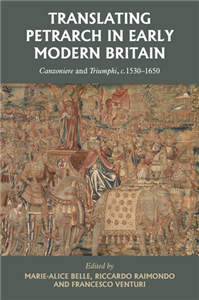
Translating Petrarch in early modern Britain gathers twelve essays by international scholars focusing on the translation of Petrarch's vernacular verse (Canzoniere and Triumphi) into English, from the Tudor age to the mid-seventeenth century (and beyond). Approaching translation as an interpretive process, but also a mode of literary emulation and cultural engagement with Petrarch's prestigious precedent, the collection explores the complex and interconnected trajectories of both poetic works in English and Scottish literary milieux. While situating each translation in its distinct historical, material, and literary context, the essays trace the reception of Petrarch's works in early modern Britain through the combined processes of linguistic and metric innovation, literary imitation, musical adaptation and cultural and material 'domestication'. The collection sheds light on the origins and development of early modern English Petrarchism as part of wider transnational - and indeed, translational-European literary culture.
Trusted Partner

This volume questions and qualifies commonly accepted assumptions about the early modern English sonnet: that it was a strictly codified form, most often organised in sequences, which only emerged at the very end of the sixteenth century and declined as fast as it had bloomed, and that minor poets merely participated in the sonnet fashion by replicating established conventions. Drawing from book history and relying on close reading and textual criticism, this collection offers a more nuanced account of the history of the sonnet. It discusses how sonnets were written, published and received in England as compared to mainland Europe, and explores the works of major (Shakespeare, Sidney, Spenser) and minor (Barnes, Harvey) poets alike. Reflecting on current editorial practices, it also provides the first modern edition of an early seventeenth-century Elizabethan miscellany including sonnets presumably by Sidney and Spenser.
Trusted Partner
Death in modern theatre offers a unique account of modern Western theatre, focusing on the ways in which dramatists and theatre-makers have explored historically informed ideas about death and dying in their work. It investigates the opportunities theatre affords to reflect on the end of life in a compelling and socially meaningful fashion. In a series of interrelated, mostly chronological, micronarratives beginning in the late nineteenth century and ending in the early twenty-first century, this book considers how and why death and dying are represented at certain historical moments using dramaturgy and aesthetics that challenge audiences' conceptions, sensibilities, and sense-making faculties. It includes a mix of well-known and lesser-known plays from an international range of dramatists and theatre-makers, and offers original interpretations through close reading and performance analysis.
Trusted Partner

Touting informal settlements or informality in general as illegal, crime-ridden, unsafe, filthy, chaotic, and formal developments as legal, orderly or safe, and so forth has not solved anything and informality as a way of life or an economic reality lingers and grows. Demystifying informal urban design and planning delves deeper into this conundrum and seeks to debunk some common misguided perceptions about it. Borrowing popular philosophical and political analogies from Isaiah Berlin and Gregory Treverton and others, it encourages urban designers and planners to become multitaskers like foxes rather than hedgehogs who can do one thing right. The book ends with some general takeaways on assuming more proactive roles in informal urban design issues and avoiding two potential pitfalls while interacting with them.
Trusted Partner
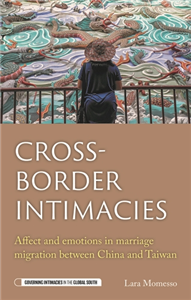
Since the early 1990s, economic exchanges between China and Taiwan have paved the way to migration across a previously closed border and to social and cultural interactions between the two populations. Despite these broader changes, the unresolved issue of Taiwan sovereignty has tainted not only the relations between the two governments but also the everyday life of those who move across the Taiwan Strait. In this politicised environment, intimate and affective practices linked to cross-border marriage and family formation are never just private. Instead, they are deeply entangled with the emotional and affective processes generated at the macro and meso level of political and social life and revolving around national interests. Tracing the intimate, emotional and affective practices linked to family creation, identity formation and integration with the local and national communities, this ethnographic study offers a subjective, dynamic, and complex picture of what it means to be a mainland spouse in Taiwan.
Trusted Partner

In the mid-ninth century, Francia was rocked by the first royal divorce scandal of the Middle Ages: the attempt by King Lothar II of Lotharingia to rid himself of his queen, Theutberga and remarry. Even 'women in their weaving sheds' were allegedly gossiping about the lurid accusations made. Kings and bishops from neighbouring kingdoms, and several popes, were gradually drawn into a crisis affecting the fate of an entire kingdom. This is the first professionally published translation of a key source for this extraordinary episode: Archbishop Hincmar of Rheims's De divortio Lotharii regis et Theutbergae reginae. This text offers eye-opening insight both on the political wrangling of the time and on early medieval attitudes towards magic, penance, gender, the ordeal, marriage, sodomy, the role of bishops, and kingship.The translation includes a substantial introduction and annotations, putting the case into its early medieval context and explaining Hincmar's sometimes-dubious methods of argument.
Trusted Partner
To prevent suicide effectively, we must understand the powerful infl uence of culture. This groundbreaking volume challenges narrow biomedical views and emphasizes the urgent need for culturally informed research and preven-tion strategies – showing how honoring diverse perspec-tives can truly save lives. • Written by leading suicide researchers • Explores suicide in different cultural contexts • Highlights how to conduct culturally sensitive studies.
Trusted Partner
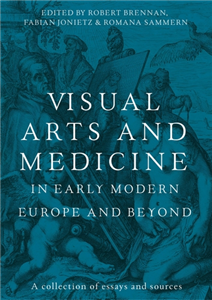
This book opens up new perspectives on the relationship between art, medicine, and science in late-medieval and early modern Europe. Looking beyond the traditional nexus of art, anatomy, and optics, the volume sheds light on a broader array of connections between artists and physicians: collaborations between painters and doctors on colour charts, handwork skills common to sculptors and surgeons, the transmission of art theory through medical texts long before the emergence of art writing itself as an independent genre, and the kinship of medical diagnosis with early modes of connoisseurship. Reconfiguring the histories of art, medicine, and science, the book also traverses conventional boundaries between physical and mental health, religious and medical modes of healing, menial and exalted forms of knowledge and labour, as well as vernacular and scientific understandings of human difference, including gender, race, and neurodiversity.
Trusted Partner

In this groundbreaking reassessment of the conventional understanding of a cohesive 'Arts and Crafts movement' in Britain, Imogen Hart argues that a sophisticated mode of looking at decorative art developed in England during the second half of the nineteenth century. Bringing to light a significant number of little-known visual and textual sources, Arts and Crafts Objects insists that the history of British design between the 1830s and the 1910s is more complex and interwoven than concepts of clearly differentiated 'movements' allow for. Reinvesting the objects with the original importance ascribed to them by their makers and users, this book places furniture, metalwork, tiles, vases, chintzes, carpets, and wallpaper at the centre of a rigorous reassessment of the concept of 'Arts and Crafts'. The book offers radical new interpretations of the Arts and Crafts Exhibition Society and the homes of William Morris, alongside illuminating analyses of less familiar but equally rich contexts. ;
Trusted Partner
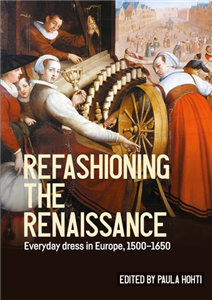
How did ordinary men and women dress in early modern Europe? What fabrics and garments formed the essential elements of fashion for artisans and shopkeepers? Did they rely on affordable alternatives to the silks, jewellery, and decorations favoured by the wealthy elite? Or did those with modest means find innovative ways to express their fashion sense? This book provides new perspectives on early modern clothing and fashion history byinvestigating the consumption and meaning of fashionable clothing and accessories among the 'popular' classes. Through a close examination of the materials, craftsmanship and cultural significance of fashion items owned by and available to a broad group of consumers, it challenges conventional assumptions that the everyday dress of ordinary families was limited to a narrow selection of garments made of coarse textiles, often produced at home and resistant to change.


