Haupt Verlag AG
Haupt Verlag publishes high-quality non-fiction books and apps and is one of the leading nature and crafts publishers in the German-speaking world.
View Rights Portal
Haupt Verlag publishes high-quality non-fiction books and apps and is one of the leading nature and crafts publishers in the German-speaking world.
View Rights Portal

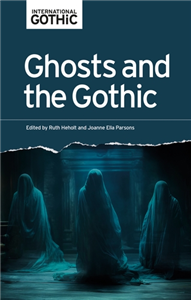
Ghosts have long been connected with the Gothic, but until now there has not been a book dedicated to the subject. This collection examines ghostly presences (and absences) in both classic and lesser-known Gothic texts from the beginning of the genre to the present in a global context. Arguing that the undead, in the form of ghosts, are intrinsic to the Gothic mode, essays in the collection question the place of manifested spirits. The Gothic has always been 'political', and essays in this collection examine some of the most relevant issues facing us today: from the destruction of the natural environment, to questions of 'freedom', to gender politics.
 Trusted Partner
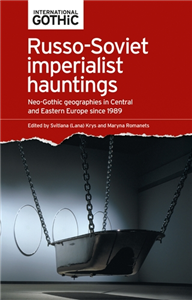
Russo-Soviet imperialist hauntings attempts to capture some of the ghosts of the colonial and totalitarian past that have been proliferating in international political and cultural landscapes after the collapse of the USSR. By conflating postcolonial, post-totalitarian, postcommunist, and Gothic discourses, it maps virtually untouched aspects of cultural decolonization, focusing on unsettling "hauntings" of unresolved memory traces of Russo-Soviet domination in the former Eastern Bloc countries and Soviet republics. Operating within a vast intertextual field of social, cultural, and ideological discourses, the volume enables a productive exchange across distinct (inter)disciplinary boundaries and represents a range of voices from Europe and North America. The contributors' diverse interests draw on transmedia (literature, visual arts, and film), transnational, and translingual (diasporic literature) approaches, providing insights into a variety of forms that the Gothic has taken in the (late) twentieth and twenty-first centuries, and demonstrating its consistent engagement with history, ideology, and politics.
Trusted Partner

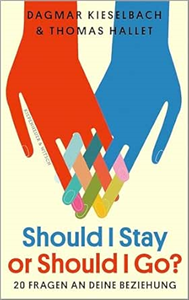
Die Liebe neu entfachen oder sich doch verabschieden? 20 klärende Fragen für Frauen in langjährigen Beziehungen. Fühlen Sie sich in Ihrer Beziehung festgefahren oder stecken gar in einer Ehekrise?Haben Sie das Gefühl, nur noch nebeneinanderher zu leben?Fehlt die Leidenschaft, und der Zweifel an der Partnerschaft nagt an Ihnen? Besonders Frauen in der Lebensmitte stellen sich oft die Frage: War das schon alles oder kommt da noch was? Soll ich gehen oder bleiben? In »Should I Stay or Should I Go?« stellen die erfahrenen Paartherapeuten Dagmar Kieselbach und Thomas Hallet, selbst seit über 30 Jahren verheiratet, 20 essenzielle Fragen, die Ihnen dabei helfen, ehrlich Bilanz zu ziehen. Anhand von aufschlussreichen Fallbeispielen aus ihrer Praxis und konkreten Hilfestellungen zeigen sie Wege auf, wie Sie Ihre Beziehung wieder mit Leben füllen können – oder woran Sie erkennen, dass es Zeit ist, loszulassen und über eine Scheidung oder Trennung nachzudenken. Persönlich, provokant und praxisnah liefert dieses Buch wertvolle Einsichten statt plumpe Ratgeberfloskeln. »Das Einzige, was nachweislich glücklich macht, sind gute Beziehungen. Dank dieses Buches wissen wir, ob unser Miteinander überhaupt ›gut‹ ist und wie wir es vor allem besser machen können. Ein Muss für alle, die Liebe in ihrem Leben haben möchten!« Nicole Staudinger
Trusted Partner

An archaeology of innovation is the first monograph-length investigation of innovation and the innovation process from an archaeological perspective. It interrogates the idea of innovation that permeates our popular media and our political and scientific discourse, setting this against the long-term perspective that only archaeology can offer. Case studies span the entire breadth of human history, from our earliest hominin ancestors to the contemporary world. The book argues that the present narrow focus on pushing the adoption of technical innovations ignores the complex interplay of social, technological and environmental systems that underlies truly innovative societies; the inherent connections between new technologies, technologists and social structure that give them meaning and make them valuable; and the significance and value of conservative social practices that lead to the frequent rejection of innovations.
Trusted Partner

The term 'conversation' is one of today's jargon terms. This book explores in depth what conversation means in national terms. Its premise is that to be English is to participate in a conversation about the country's history, politics, culture and society. The conversation changes, of course, but there is also continuity which illustrates a distinct tradition. It is a conversation, the book argues, which requires the plural notion of these Englands rather than the singularity of this England. Englishness, then, is the tone, register and idiom of it subject matters, its anxieties and certainties, differences and commonalities. The book explores the English conversation through historical, political, literary and popular voices and tries to identify the character of contemporary Englishness.
Trusted Partner
Trusted Partner
Trusted Partner
Trusted Partner

This book provides a comprehensive account and critical analysis of the literary career of Pat Barker. It offers readings of Barker's innovations in narrative form, her revisionist perspectives on history, class and gender, and her preoccupation with themes of trauma, haunting and terror. It also analyses the reasons for her success and significance as a novelist. The chapters draw on contemporary theories of critical realism, gender and social identities, memory and narrative, in order to outline the debates with which Barker's work has consistently engaged. Brannigan argues that Barker is one of the most important writers in modern English literary history. She is principally renowned and widely acclaimed for her 'Regeneration' trilogy, the last volume of which, 'The Ghost Road', won the Booker Prize in 1995. In recent novels, Barker has continued to deal with controversial and shocking themes, including child murderers and the meanings of 'terror' in the contemporary world. ;
Trusted Partner

Gothic television is the first full length study of the Gothic released on British and US television. An historical account, the book combines detailed archival research with analyses of key programmes, from Mystery and Imagination and Dark Shadows, to The Woman in White and Twin Peaks, and uncovers an aspect of television drama history which has, until now, remained critically unexplored. While some have seen television as too literal or homely a medium to successfully present Gothic fictions, Gothic television argues that the genre, in its many guises, is, and has always been, well-suited to television as a domestic medium, given the genre's obsessions with haunted houses and troubled families. This book will be of interest to lecturers and students across a number of disciplines including television studies, Gothic studies, and adaptation studies, as well as to the general reader with an interest in the Gothic, and in the history of television drama.
Trusted Partner
Trusted Partner

Nordic Gothic traces Gothic fiction in the Nordic region from its beginnings in the nineteenth century, with a main focus on the development of Gothic from the 1990s onwards in literature, film, TV and new media. The volume gives an overview of Nordic Gothic fiction in relation to transnational developments and provides a number of case studies and in-depth analyses of individual narratives. It creates an understanding of this under-researched cultural phenomenon by showing how the narratives make visible cultural anxieties haunting the Nordic countries, their welfare systems, identities and ideologies. Nordic Gothic examines how figures from Nordic folklore function as metaphorical expressions of Gothic themes and Nordic settings are explored from perspectives such as ecocriticism and postcolonialism. The book will be of interest to researchers and post- and- undergraduate students in various fields within the Humanities.
Trusted Partner

Heinrich Böll’s taut and haunting first novel tells the story of twenty-four-year-old Private Andreas as he journeys on a troop train across the German countryside to the Eastern front. Trapped, he knows that Hitler has already lost the war ... yet he is suddenly galvanized by the thought that he is on the way to his death. As the train hurtles on, he riffs through prayers and memories, talks with other soldiers about what they’ve been through, and gazes desperately out the window at his country racing away. With mounting suspense, Andreas is gripped by one thought over all: Is there a way to defy his fate? Nowhere in Böll’s work is there a more powerful statement of his core theme than in this tense and moving ode to the fate of the common man in wartime.
Trusted Partner
Trusted Partner
Trusted Partner
Trusted Partner
Trusted Partner
Trusted Partner