
Your Search Results


-
Promoted Content
-
Promoted Content

 Literature & Literary StudiesJune 2025
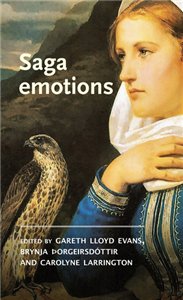
Saga emotions
by Gareth Lloyd Evans, Brynja Þorgeirsdóttir, Carolyne Larrington
Focusing particularly on historically oriented sagas, Saga emotions identifies and examines a range of emotions from across Old Norse-Icelandic saga literature. Each chapter begins with a discrete emotion term, such as reiði (anger), gleði (joy), or the peculiarly Old Norse víghugr (killing-mood), exploring its usages within the broad saga corpus, and focusing on its contextual meanings and narrative purposes. The contributions explore the specifics of the lexical terms used for different emotion states and offer in-depth case studies that consider how various emotions manifest within particular examples of saga literature. The book offers the emotional granularity lacking in current studies of Norse emotion and serves as an essential foundation for future research and study into emotional depiction in Old Norse-Icelandic saga literature.
-
 Trusted Partner
 Literature & Literary StudiesOctober 2025
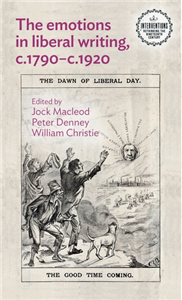
The emotions in liberal writing, c.1790–c.1920
by Jock Macleod, Peter Denney, William Christie
This volume of essays from a selection of distinguished international scholars is the first of its kind to explore in depth the emotional dimensions of liberal writing in Britain over the long nineteenth century. Addressing liberal writing in the public sphere rather than high political or parliamentary liberalism, it comprises a clear, context-setting introduction and eleven substantive chapters. The chapters analyse key texts and figures from the 1790s through to the 1920s and offer several different approaches to the central concern with the emotions and liberalism. These include examining the place of the emotions in the 'good life'; the social and political function of the emotions; emotional rhetoric in liberal writing; and liberal theories of the emotions. Both individually and as a collection, the essays provide an essential foundation for further scholarly work in this emerging field.
-
Trusted Partner
 Humanities & Social SciencesJune 2021
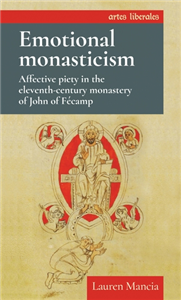
Emotional monasticism
Affective piety in the eleventh-century monastery of John of Fécamp
by Lauren Mancia
Medievalists have long taught that highly emotional Christian devotion, often called 'affective piety', appeared in Europe after the twelfth century and was primarily practiced by communities of mendicants, lay people and women. Emotional monasticism challenges this view. The first study of affective piety in an eleventh-century monastic context, it traces the early history of affective devotion through the life and works of the earliest known writer of emotional prayers, John of Fécamp, abbot of the Norman monastery of Fécamp from 1028-78. Exposing the early medieval monastic roots of later medieval affective piety, the book casts a new light on the devotional life of monks in Europe before the twelfth century and redefines how medievalists should teach the history of Christianity.
-
Trusted Partner
-
Trusted Partner
 Literature & Literary StudiesJanuary 2026
Approaches to emotion in Middle English literature
by Carolyne Larrington
-
Trusted Partner
-
Trusted Partner
 Humanities & Social SciencesJanuary 2026
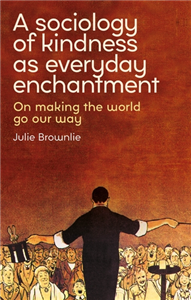
A sociology of kindness as everyday enchantment
On making the world go our way
by Julie Brownlie
This book asks us to consider how and why the notion of random acts of kindness and the idea of kindness more generally have come to take a hold in many contemporary English-speaking societies. By introducing and mapping the contours of an emergent kindness industry, marshalling empirical research on contemporary framings of everyday kindness and theoretical resources from cultural sociology to the sociology of emotions and relationships, Brownlie makes the case for a critical sociological engagement with the idea of kindness. In doing so, she argues for kindness to be seen as a form of everyday enchantment - one that, like all enchantments, is ultimately ambivalent.
-
Trusted Partner
 Literature & Literary StudiesApril 2021
Positive emotions in early modern literature and culture
by Cora Fox, Bradley J. Irish, Cassie M. Miura
-
Trusted Partner
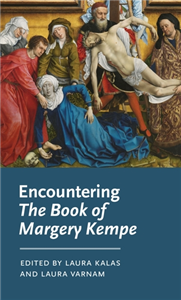 Literature & Literary StudiesNovember 2021
Encountering The Book of Margery Kempe
by Laura Kalas, Laura Varnam, David Matthews, Anke Bernau, James Paz
This innovative critical volume brings the study of Margery Kempe into the twenty-first century. Structured around four categories of 'encounter' - textual, internal, external and performative - the volume offers a capacious exploration of The Book of Margery Kempe, characterised by multiple complementary and dissonant approaches. It employs a multiplicity of scholarly and critical lenses, including the intertextual history of medieval women's literary culture, medical humanities, history of science, digital humanities, literary criticism, oral history, the global Middle Ages, archival research and creative re-imagining. Revealing several new discoveries about Margery Kempe and her Book in its global contexts, and offering multiple ways of reading the Book in the modern world, it will be an essential companion for years to come.
-
Trusted Partner
Literature & Literary StudiesApril 2023
Encountering The Book of Margery Kempe
by Laura Kalas, Laura Varnam
This innovative critical volume brings the study of Margery Kempe into the twenty-first century. Structured around four categories of 'encounter' - textual, internal, external and performative - the volume offers a capacious exploration of The Book of Margery Kempe, characterised by multiple complementary and dissonant approaches. It employs a multiplicity of scholarly and critical lenses, including the intertextual history of medieval women's literary culture, medical humanities, history of science, digital humanities, literary criticism, oral history, the global Middle Ages, archival research and creative re-imagining. Revealing several new discoveries about Margery Kempe and her Book in its global contexts, and offering multiple ways of reading the Book in the modern world, it will be an essential companion for years to come.
-
Trusted Partner
 Humanities & Social SciencesFebruary 2025
An unorthodox history
British Jews since 1945
by Gavin Schaffer
A bold, new history of British Jewish life since the Second World War. Historian Gavin Schaffer wrestles Jewish history away from the question of what others have thought about Jews, focusing instead on the experiences of Jewish people themselves. Exploring the complexities of inclusion and exclusion, he shines a light on groups that have been marginalised within Jewish history and culture, such as queer Jews, Jews married to non-Jews, Israel-critical Jews and even Messianic Jews, while offering a fresh look at Jewish activism, Jewish religiosity and Zionism. Weaving these stories together, Schaffer argues that there are good reasons to consider Jewish Britons as a unitary whole, even as debates rage about who is entitled to call themselves a Jew. Challenging the idea that British Jewish life is in terminal decline. An unorthodox history demonstrates that Jewish Britain is thriving and that Jewishness is deeply embedded in the country's history and culture.
-
Trusted Partner
-
Trusted Partner

 May 2021
On the Amazement of the World
(Im-)Possibilities of science
by Ernst Peter Fischer
The current debate on the corona virus shows that knowledge, and with that science, plays a central role in the struggle to preserve humanity. Knowledge provides opportunities to influence the world, for better or worse. In times when emotions and appeals to baser instincts often triumph over reason and humanity, Ernst Peter Fischer reminds us of the goal of science that has been pursued since the Enlightenment: “to facilitate the conditions of human existence”. In his new book, the bestselling author takes us on an instructive, varied and enjoyable journey through the history of knowledge and science.
-
Trusted Partner
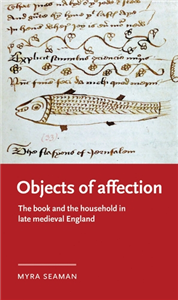 Literature & Literary StudiesJanuary 2023
Objects of affection
The book and the household in late medieval England
by Myra Seaman
Objects of affection recovers the emotional attraction of the medieval book through an engagement with a fifteenth-century literary collection known as Oxford, Bodleian Library Manuscript Ashmole 61. Exploring how the inhabitants of the book's pages - human and nonhuman, tangible and intangible - collaborate with its readers then and now, this book addresses the manuscript's material appeal in the ways it binds itself to different cultural, historical and material environments. In doing so it traces the affective literacy training that the manuscript provided its late-medieval English household, whose diverse inhabitants are incorporated into the ecology of the book itself as it fashions spiritually generous and socially mindful household members.
-
Trusted Partner
 Humanities & Social SciencesJune 2019
Emotional monasticism
by Lauren Mancia, T. J. H. McCarthy, Stephen Mossman, Carrie Beneš, Jochen Schenk
-
Trusted Partner
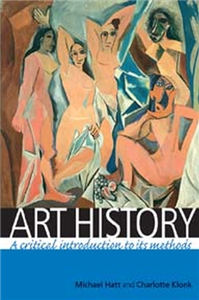 The ArtsMarch 2006
Art history
A critical introduction to its methods
by Michael Hatt, Charlotte Klonk
Art History: A critical introduction to its methods provides a lively and stimulating introduction to methodological debates within art history. Offering a lucid account of approaches from Hegel to post-colonialism, the book provides a sense of art history's own history as a discipline from its emergence in the late-eighteenth century to contemporary debates. By explaining the underlying philosophical and political assumptions behind each method, along with clear examples of how these are brought to bear on visual and historical analysis, the authors show that an adherence to a certain method is, in effect, a commitment to a set of beliefs and values. The book makes a strong case for the vitality of the discipline and its methodological centrality to new fields such as visual culture. This book will be of enormous value to undergraduate and graduate students, and also makes its own contributions to ongoing scholarly debates about theory and method. ;
-
Trusted Partner
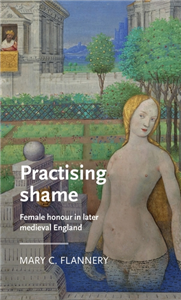 Literature & Literary StudiesNovember 2021
Practising shame
Female honour in later medieval England
by Mary C. Flannery, Anke Bernau, David Matthews
Practicing shame investigates how the literature of medieval England encouraged women to safeguard their honour by cultivating hypervigilance against the possibility of sexual shame. A combination of inward reflection and outward comportment, this practice of 'shamefastness' was believed to reinforce women's chastity of mind and body, and to communicate that chastity to others by means of conventional gestures. The book uncovers the paradoxes and complications that emerged from these emotional practices, as well as the ways in which they were satirised and reappropriated by male authors. Working at the intersection of literary studies, gender studies and the history of emotions, it transforms our understanding of the ethical construction of femininity in the past and provides a new framework for thinking about honourable womanhood now and in the years to come.
-
Trusted Partner
-
Trusted Partner
 2020
2020History of the German Language
A textbook for German studies; Part 1: Introduction, prehistory and history; Part 2: Old High German, Middle High German and Early New High German
by Wilhelm Schmidt, Edited by Dr. Elisabeth Berner and Prof. Dr. Dr. h.c. Dr. h.c. Norbert Richard Wolf
The 12th revised and updated version of the History of the German language – long regarded as an indispensable standard work for German Studies, has just been published. From now on, this comprehensive textbook on the history of the language is divided into two volumes. In addition to introducing questions about historical linguistics, the first volume provides a detailed account of the prehistory and history of German right up to the present day. Based on extensive source analyses, the focus is on aspects of culture and social history; only the chapters on the Indo-Germanic and Germanic language include key information about structural history. The second part contains concise, but readily understandable accounts of Old, Middle and Early New High German in terms of phonology, graphemics, morphology and syntax. Not only are synchronous descriptions given of the particular language period, but also the development of German language construction at all structural levels is explained. The association of grammatical synchrony and structural diachrony is a particular characteristic of this second part of Schmidt’s work on the history of language.



