
PHI Learning Pvt. Ltd.
Leading Indian academic publisher with 58 years' experience in higher education textbooks in print and digital format.
View Rights Portal
Leading Indian academic publisher with 58 years' experience in higher education textbooks in print and digital format.
View Rights Portal
Learnetic is an innovative educational digital publisher, content developer and eLearning technology provider. We are a technology-based company with over 20 years of experience operating in international educational publishing business. We offer a complete suite of advanced software applications supporting all stages of ePublishing, providing our partners with professional Authoring Tools, eLearning Platforms and ready-made interactive learning content.
View Rights Portal

Playful learning is an excellent way to help children acquire skills from an early age. This book illustrates ways to promote the development of preschool- age children through play in everyday family and kindergarten life – entirely without expensive resources! Promotion of (written) language development and mathematical development forms a focus of this book, while preparing your child optimally for the two school subjects English and Mathematics. For:• parents and guardians• interested laypeople• educational specialists (such asteachers, childcare workers, socialworkers)


This collection brings together scholars from disciplines including Children's Literature, Classics, and History to develop fresh approaches to children's culture and the uses of the past. It charts the significance of historical episodes and characters during the long nineteenth-century (1750-1914), a critical period in children's culture. Boys and girls across social classes often experienced different pasts simultaneously, for purposes of amusement and instruction. The book highlights an active and shifting market in history for children, and reveals how children were actively involved in consuming and repackaging the past: from playing with historically themed toys and games to performing in plays and pageants. Each chapter reconstructs encounters across different media, uncovering the cultural work done by particular pasts and exposing the key role of playfulness in the British historical imagination.
 Trusted Partner
 Trusted Partner
 Trusted Partner

 Trusted Partner


Begleite Familie Knister auf ein aufregendes neues Abenteuer in „Kleine Feuerwehr. Drunter und drüber“, dem zweiten Band der beliebten Kinderbuchreihe, inspiriert von der erfolgreichen Kinder-App von Fox & Sheep. Dieses Mal erwartet die Familie Knister hochspannende Gäste aus China: eine Feuerwehrmannschaft! Doch die Überraschung ist groß, als die Besucher aus Fernost ganz anders aussehen, als man es erwartet hätte. Sind das wirklich Feuerwehrleute? Ohne gemeinsame Sprache entsteht ein buntes Durcheinander, das Familie Knister und ihre Gäste von einem verrückten Abenteuer ins nächste führt. Witzige Missverständnisse und spannende Herausforderungen warten auf die ungewöhnliche Truppe, die trotz aller Unterschiede zeigt, wie Freundschaft und Zusammenarbeit Barrieren überwinden können. Thematisiert die Begegnung zwischen unterschiedlichen Kulturen auf humorvolle Weise und hebt die Bedeutung von Offenheit und Verständnis hervor. Abenteuerliche Reise voller unerwarteter Wendungen, die Jung und Alt gleichermaßen begeistert. Integrierte Bastelbögen laden zum kreativen Spielen ein. Kinder können ihr eigenes Feuerwehrauto bauen und eine Feuerwache gestalten, um die Geschichte lebendig werden zu lassen. So lassen sich Sprachbarrieren überwinden: Charaktere finden trotz fehlender gemeinsamer Sprache Wege, miteinander zu kommunizieren und zu kooperieren. Reich illustrierte Seiten und ausklappbare Elemente fördern die Vorstellungskraft und Kreativität junger Leser. Eine Geschichte, die zeigt, wie wichtig es ist, einander zu helfen, zusammenzustehen und gemeinsam Lösungen zu finden.
Trusted Partner

Popular television drama: critical perspectives' is a collection of essays examining landmark programmes of the last forty years, from 'Doctor Who' to 'The Office', and from 'The Demon Headmaster' to 'Queer As Folk'. Contributions from prominent academics focus on the full range of popular genres, from sitcoms to science fiction, gothic horror and children's drama, and challenge received wisdom by reconsidering how British television drama can be analysed. Each section is preceded by an introduction in which the editors discuss how the essays address existing problems in the field and also suggest new directions for study. The book is split into three sections, addressing the enduring appeal of popular genres, the notion of 'quality' in television drama, and analysing a range of programmes past and present. Popular television drama: critical perspectives will be of interest to students and researchers in many academic disciplines that study television drama. Its breadth and focus on popular programmes will also appeal to those interested in the shows themselves.
Trusted Partner
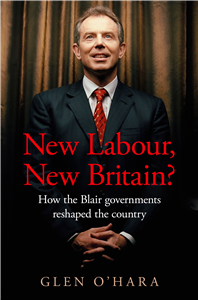
A bold and balanced re-appraisal of New Labour in power. Rewriting the story of New Labour, Glen O'Hara challenges the prevailing narrative to present a more balanced and positive assessment. New Labour, new Britain is the first book to examine both the intentions behind New Labour's domestic policies and their real-world effects, moving beyond the entrenched left-right debates that have dominated the party's legacy. The period from 1997 to 2007 marked a pivotal moment in modern British history, as New Labour sought to reshape Britain into a more cohesive and forward-thinking society. It saw the rise of socially liberal attitudes and flourishing public services under a government committed to rebuilding and investing in them. Yet New Labour's track record was far from flawless and its legacy remains complicated and contested. Through interviews with key players and rigorous archival research, O'Hara offers a new perspective on Tony Blair's years in power. Painting a fuller picture of New Labour's successes and challenges, he highlights its lasting impact on Britain and offers a thoughtful reassessment of its place in history.
Trusted Partner

Critical Games is about the games we play (whether we know it or not), the ways we play them (for fun, but also to win, and to gain approval from others), and what happens when they get out of hand. The book interrogates the theory of play and gaming, with a particular focus on the games played by literary authors and literary critics. Drawing on (often self-critical) autobiography, as well as readings in texts across a range of languages, Tim Beasley-Murray plays with academic conventions to highlight what is at stake in them, turning to the Game of Literature, from Kafka to Carrère, to seek models and warnings of the outcomes of taking games too seriously, or not taking them seriously enough.
Trusted Partner
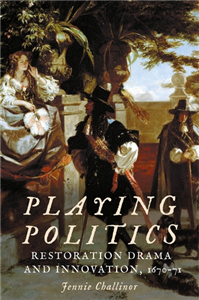
This study focuses on the 1670-71 season in the Restoration playhouses, an exciting and formative moment in theatrical and political history. The year proved to be difficult and damaging to King Charles II, as political, religious, and personal matters provoked controversy and disquiet, and the country teetered on the brink of major constitutional problems. My research sets drama against this backdrop. Theatrical records for this period are patchy and, for the most part, frustratingly incomplete: this book does not attempt to reconstruct the day-to-day operations of the playhouses, but rather it uses the available evidence of the extant new and revived plays we know (or believe) to have been performed in the 1670-71 theatrical season, and argues that this was the period in which serious and far-reaching political and dramatic questions began to be seriously asked and (tentatively) answered.
Trusted Partner
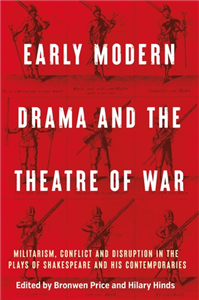
This volume explores the disruptive effects of militarism, war and social unrest in early modern drama. Engaging with Simon Barker's seminal work on dramatic representations of war and militarism, contributors highlight what often lies hidden beneath the surface of martial narratives, treating them as formative interventions in contemporary discourses, whether in justifying war, excluding dissident voices or shaping cultural identities. Discussions include new examinations of militarism, the figure of the soldier and early modern theories of war in Shakespearean tragedy, history and comedy, alongside antimasque and dramatic satire by lesser-known playwrights. The essays investigate how ideas of war underpin emerging concepts of gender, leadership, marriage and the family, as well as the continuing mobilisation of Shakespearean drama in the context of modern armed conflict. Together, they offer rich new contributions to the current lively critical debates on this topic.
Trusted Partner
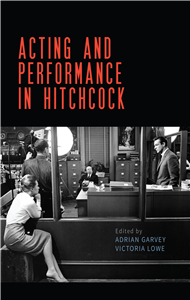
Hitchcock's professed disdain for actors is belied by the extraordinary range and depth of performances featured in his films. It might even be argued that many stars gave their richest and most complex performances in his work. Hitchcock's films are also imbued with the theme of performance, as when his fugitive men and errant women assume fragile new identities and move between roles. Actors and other performers also often feature as characters. However, the exhaustive academic literature on Hitchcock has to date produced surprisingly little work about acting and performance in his films. The collection includes contributions from a range of leading scholars on Hitchcock, performance, stardom, and British Cinema, including Charles Barr, David Greven, Mark Glancy, Lucy Bolton, Lawrence Napper and Michael Williams, and an interview with leading composers/accompanists Neil Brand and Stephen Horne on scoring performance in Silent Hitchcock.
Trusted Partner

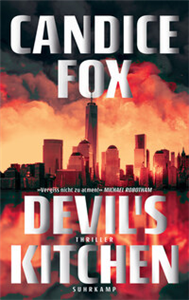
Heldentrupp oder Verbrecherbande? Die Feuerwehrleute von »Engine 99« gelten als die Besten in New York – mutig, unerschrocken, verehrt. Doch was niemand ahnt: Sie selbst legen Brände, um im Chaos Banken und Juweliere auszurauben. Das FBI setzt die freiberufliche Ermittlerin Andy Nearland auf die Truppe an. Undercover muss sie sich in einer gefährlichen Männerwelt behaupten – stets zwischen Vertrauen und Verrat, Loyalität und Lüge. Doch als der größte Coup der Truppe bevorsteht, läuft Andy die Zeit davon.
Trusted Partner

This book is the first full-length study of contemporary American fiction of passing. Its takes as its point of departure the return of racial and gender passing in the 1990s in order to make claims about wider trends in contemporary American fiction. The book accounts for the return of tropes of passing in fiction by Phillip Roth, Percival Everett, Louise Erdrich, Danzy Senna, Jeffrey Eugenides and Paul Beatty, by arguing meta-critical and meta-fictional tool. These writers are attracted to the trope of passing because passing narratives have always foregrounded the notion of textuality in relation to the (il)legibility of "black" subjects passing as white. The central argument of this book, then, is that contemporary narratives of passing are concerned with articulating and unpacking an analogy between passing and authorship. The title promises to inaugurate dialogue on the relationships between passing, postmodernism and authorship in contemporary American fiction.
Trusted Partner
 Trusted Partner
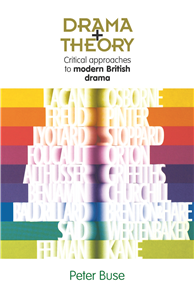
Energetically places modern British drama and contemporary critical and cultural theory in dialogue, demonstrating how theory allows fresh insights into familiar plays. Each chapter pairs a well-known play from the post-war period with a classic theory text, the theoretical text is not simply applied to the dramatic one: instead, the play and the theoretical text reflect on each other in a mutual illumination. Examples include: So Look Back in Anger is read by and reads Lacan's Signification of the Phallus Pinter's The Homecoming is made uncanny with Freud Stoppard's Rosencrantz and Guildenstern are Dead finds affinities with Lyotard's The Postmodern Condition Timberlake Wertenbaker's Our Country's Good agrees and disagrees with Edward Said Sarah Kane's Blasted thinks through trauma with Shoshana Felman. In each case, the theoretical position is explained lucidly and economically. The result is a series of new interpretations not only of the plays, but of the theoretical texts, which take on new relevance when linked with modern British drama. The first textbook of its kind, linking contemporary drama with critical and cultural theory. ;
Trusted Partner
Trusted Partner
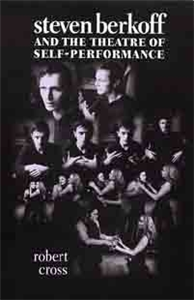
This book is the first substantial study of Steven Berkoff's career, examining the construction and projection of his notorious public persona through his plays and writings. ;
Trusted Partner
 Trusted Partner



