
PHI Learning Pvt. Ltd.
Leading Indian academic publisher with 58 years' experience in higher education textbooks in print and digital format.
View Rights Portal
Leading Indian academic publisher with 58 years' experience in higher education textbooks in print and digital format.
View Rights Portal
Learnetic is an innovative educational digital publisher, content developer and eLearning technology provider. We are a technology-based company with over 20 years of experience operating in international educational publishing business. We offer a complete suite of advanced software applications supporting all stages of ePublishing, providing our partners with professional Authoring Tools, eLearning Platforms and ready-made interactive learning content.
View Rights Portal

Are you or a loved one suffering from anxiety and panic and you are wondering what you can do? To whom you can turn? What the options for treatment are? And how relatives can help? This self-help book gives affected people and their relatives: • clear and comprehensive information based on up-to-date research findings • concrete self-help strategies and exercises with worksheets • descriptions of recognized treatment methods • instructions on coping with stress and using relaxation techniques • detailed answers to frequently asked questions • a helpful list of useful contacts and websites • an idea of how mindfulness can be incorporated. The authors have first-hand knowledge of these problems from their extensive experience of counseling and treating people with anxiety disorders and their relatives. This book summarizes their knowledge in clear and comprehensible form. It is ideal both for self-help and to complement ongoing treatment. Target Group: affected people and their relatives and friends; psychologists, therapists, doctors, counseling centers.

The school years are a major challenge, not only for your child but also for you as a parent. You may be asking yourself questions like: • How can I motivate my child to study and learn? • How should I handle homework conflicts? • How can I help my child to become more independent? • What learning strategies are appropriate for primary school children? • How can I help if my child has problems with math, reading, or spelling? Answers to these and many other questions about homework, learning, and studying can be found in this book. It describes practical methods and effective strategies, and shows how providing just a little support can be a big help to your child. Target Group: psychologists, education specialists, parents.
 Trusted Partner


The Love of Books examines the affective bond between people and books in the UK. In the context of the unprecedented abundance of media offering information, storytelling and entertainment, it investigates the attachment to print and digital books amongst readers from a range of backgrounds who read for pleasure, wish to be surrounded by print copies of books, and have trouble discarding books. Unlike existing research, which focuses on prestige, social status, and cultural capital, this study centres on meaning, materiality and emotion. Drawing on interviews and archive material, it shows how attachment emerges from the practical fusion of three elements that have so far been examined separately: the material, surface properties of books, the act of reading, and books' symbolic power.
Trusted Partner
 Trusted Partner

Parents as well as those working with children can find themselves confronted with questions about children’s rude, angry, or downright aggressive behavior. This book seeks to inform parents, teachers, and other caregivers about behavioral issues, how to get to the bottom of the problem and evaluate whether external help should be sought. It provides practical tips that help reduce harmful behavior. This title can also be used in youth mental healthcare for psychoeducation. Target Group: Parents, caregivers, teachers
Trusted Partner
 Trusted Partner

An illuminating account of how Americans have been divided by the very value that unites them. America today is being torn apart by the struggle over a single concept, deeply rooted in the country's sense of self: freedom. Battered by wave after wave of crises, ordinary people of all political persuasions have come to feel that their freedom is under threat - and with it, nothing less than the soul of the nation. In The trouble with freedom, journalist and researcher Melissa Butcher takes a trip into the ferociously polarised world of American politics, hoping to find out what's going on beneath the surface. Criss-crossing the country, she talks to a wide range of people: Democrat and Republican, gay and straight, urban and rural, immigrants, First Nations, Black, white, the incarcerated. What she discovers is that political conflict is often the outcome of very personal experiences of managing cultural change. Exploring the different ways freedom has been used to define what it means to be American, Butcher encounters anger and distrust, but also untapped possibilities for empathy and care.
Trusted Partner
Writing power radically rethinks the place of the canon and canonicity as objects and concepts in contemporary academia and the everyday intellectual practices of academics. It is distinctive in its demonstration of how academics' engagements with canons shape their writing practices but also how scholars' writing practices, spaces, proclivities, and desires shape the canon and changing ideas of value in canonicity. The book thinks through frequently discussed problems of legitimacy and knowledge production from fresh perspectives of lived experience and the everyday to offer new insights into the politics of knowledge in contemporary social sciences.
Trusted Partner

In this accessible and sophisticated exploration of the nature and workings of social and political power, Haugaard examines the interrelation between domination and empowerment. Building upon the perspectives of Steven Lukes, Michel Foucault, Amy Allen, Hannah Arendt, Anthony Giddens, Pierre Bourdieu and others, he offers a clear theoretical framework, delineating power in four interrelated dimensions. The first and second dimensions of power entail two different types of social conflict. The third dimension concerns tacit knowledge, uses of truth and reification. Drawing upon genealogical theory and accounts of slavery as social death, the fourth dimension of power concerns the power to create social subjects. The book concludes with an original normative pragmatist power-based account of democracy. Offering lucid and entertaining illustrations of complex theoretical perspectives, this book is essential reading for scholars and activists.
Trusted Partner

This groundbreaking book is the first full-length study of British horror radio from the pioneering days of recording and broadcasting right through to the digital audio cultures of our own time. The book offers an historical, critical and theoretical exploration of horror radio and audio performance examining key areas such as writing, narrative, performance practice and reception throughout the history of that most unjustly neglected of popular art forms: radio drama and 'spoken word' auditory cultures. The volume draws on extensive archival research as well as insightful interviews with significant writers, producers and actors. The book offers detailed analysis of major radio series such as Appointment with Fear, The Man in Black, The Price of Fear and Fear on Four as well as one-off horror plays, comedy-horror and experimental uses of binaural and digital technology in producing uncanny audio. ;
Trusted Partner

A unique guide to creating political theatre, produced by one of the UK's most exciting companies. Do It Yourself is a vital resource for anyone interested in exploring theatre culture grounded in and produced by working-class, multi-racial communities. Designed for artists, activists and community organisers, the book offers a step-by-step guide to creating political theatre that is relevant, impactful and rooted in the lives of everyday people. Common Wealth have spent fifteen years working at the cutting edge of political theatre. In Do It Yourself, they share their experimental and activist approach to performance-making, based on DIY principles and the belief that ground-breaking theatre can be made with anyone, anywhere, in ways that truly resonate with the communities it serves. Do It Yourself introduces Common Wealth's artistic and political ethos, provides unique insights into their most significant performances and offers practical exercises for creating your own work. But this is not just a manual. It is a celebration of culture as a collective endeavour, one that can challenge the status quo and inspire change.
Trusted Partner
A compelling tour of Shakespeare's England that makes a powerful contribution to the 'authorship question'. How do we know Shakespeare was Shakespeare? Could a glover's son who left school at fifteen really be the author behind such masterpieces as Hamlet, King Lear and The Tempest? Yes! says historian Susan Amussen. She transports readers back to early modern England, to travel the path that carried William Shakespeare from humble origins in Stratford to literary greatness on the London stage. This was a society undergoing rapid change. Grammar schools made education in Latin and Greek available to commoners, while touring players brought the latest dramatic productions to the masses. And in London, a metropolis filled with European visitors, ordinary people had the opportunity to see courtly life up close. No serious historian doubts that Shakespeare was the author of the plays that bear his name. Susan Amussen shares what they know: that Shakespeare's England was a complex and cosmopolitan place, with everything a talented young playwright needed to develop his craft and furnish his imagination.
Trusted Partner
Trusted Partner
Trusted Partner
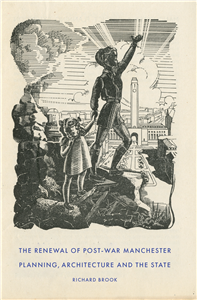
A compelling account of the project to transform post-war Manchester, revealing the clash between utopian vision and compromised reality. Urban renewal in Britain was thrilling in its vision, yet partial and incomplete in its implementation. For the first time, this deep study of a renewal city reveals the complex networks of actors behind physical change and stagnation in post-war Britain. Using the nested scales of region, city and case-study sites, the book explores the relationships between Whitehall legislation, its interpretation by local government planning officers and the on-the-ground impact through urban architectural projects. Each chapter highlights the connections between policy goals, global narratives and the design and construction of cities. The Cold War, decolonialisation, rising consumerism and the oil crisis all feature in a richly illustrated account of architecture and planning in post-war Manchester.
Trusted Partner
A moving exploration of the life and work of the celebrated American writer, blending biography and memoir with literary criticism. Since James Baldwin's death in 1987, his writing - including The Fire Next Time, one of the manifestoes of the Civil Rights Movement, and Giovanni's Room, a pioneering work of gay fiction - has only grown in relevance. Douglas Field was introduced to Baldwin's essays and novels by his father, who witnessed the writer's debate with William F. Buckley at Cambridge University in 1965. In Walking in the dark, he embarks on a journey to unravel his life-long fascination and to understand why Baldwin continues to enthral us decades after his death. Tracing Baldwin's footsteps in France, the US and Switzerland, and digging into archives, Field paints an intimate portrait of the writer's life and influence. At the same time, he offers a poignant account of coming to terms with his father's Alzheimer's disease. Interweaving Baldwin's writings on family, illness, memory and place, Walking in the dark is an eloquent testament to the enduring power of great literature to illuminate our paths.
Trusted Partner
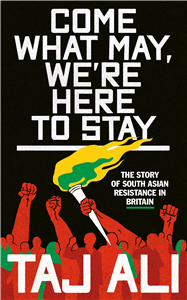
As British South Asians reel from the riots of summer 2025, this book tells the inspirational story of how the community organised against racism in the past and how it continues to fight in the present. British South Asians have a long tradition of radical political activism. The 1970s and 1980s saw the community grappling with prejudice in the workplace and violence in the streets. But this history is deeper than you might think, from students agitating for independence at the heart of the British Empire to seafarers organising global strikes on the eve of the Second World War. In Come what may, we're here to stay, Taj Ali reveals how successive generations fought for rights, dignity and a sense of belonging while actively shaping the country they now call home. He shows that British South Asian political life has often been defined less by religious difference than by shared commitments to anti-imperialism and anti-racism. In pursuit of these goals, alliances have been forged with other movements, from Irish republicanism to Black Power. As racism rears its ugly head again, Come what may, we're here to stay asks: are we are doomed to repeat the past or will we learn from our mistakes and build a better world together?
Trusted Partner

Expert help on overcoming feelings of embitterment• Understand how these difficultfeelings come about• Learn problem-solving skills toreorientate to the future• Also ideal reading for anyone living orworking with an embittered person Embitterment is an emotional reaction anyone can have to injustices, humiliation, and breaches of trust. Like other feelings, feelings of embitterment normally subside, but they can persist and cause a great deal of suffering. This book helps you understand what embitterment is and how it can come about. Learn how to detach from these negative feelings and find ways to better deal with the hurtful situations, including learning to look to the future. You will learn about problem-solving strategies that focus on the psychology of wisdom, which include identifying facts and problem solutions, changing perspectives, self-relativizing, and emotional empathy. For:• clients, relatives and friends ofclients• clinical psychologists• psychotherapists• psychiatrists• counselors
Trusted Partner
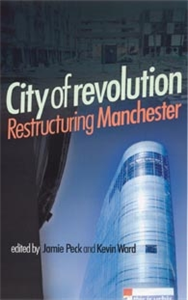
Provides a critical account of one of Europe's most celebrated examples of urban transformation, getting beneath the hype to ask what has really changed in the 'new' Manchester.. The first comprehensive account of contemporary political and economic change in Manchester.. Explores the costs and consequences of making the transition from an industrial to a post-industrial or 'entrepreneurial' city, with broad implications for other major cities. ;
Trusted Partner



