Your Search Results

      • Veronika Engler

        Best-selling author Veronika Engler was born in 1982 in the beautiful state capital of Munich. Even today she lives and works there with her husband and their son. As the daughter of an Oscar winner in film technology, she came into contact with the world of stories and entertainment at an early age. One day, her love of reading gave her the idea of ​​writing a novel according to her wishes. This is how her first love story came about in 2014, which was published that same year. Today she inspires a wide readership in all age groups 18+ with her romance novels from the genres of erotic, new adult and romantasy.

        View Rights Portal
      • Smart English Company Limited

        Smart English Company Limited is committed to developing a line of fun and educational products, which currently includes Inspirational English and Robin Education, to help young learners acquire the four skills in the English language. With 'Baby Animals', 'Dinosaurs in my Garden', and 'Mirabelle and Milo', Robin Education aims to develop young learners’ ability to use authentic English language in line with the Cambridge English Qualifications syllabus, as they explore the fascinating stories in each series.

        View Rights Portal
      • Trusted Partner
        Humanities & Social Sciences
        January 2020

        Political culture in later medieval England

        Essays by Simon Walker

        by Michael J. Braddick

        This is an important collection of pioneering essays penned by the late Simon Walker, a highly respected historian of late medieval England. One of the finest scholars of his generation, Walker's writing is lucid, inspirational, and has permanently enriched our understanding of the period. The eleven essays featured here examine themes such as kingship, lordship, warfare and sanctity. There are specific studies on subjects such as the changing fortunes of the family of Sir Richard Abberbury; Yorkshire's Justices of the Peace; the service of medieval man-at-arms, Janico Dartasso; Richard II's views on kingship, political saints, and an investigation of rumour, sedition and popular protest in the reign of Henry IV. An introduction by G.L. Harriss looks back across Walker's career, and discusses the historiographical context of his work. Both the new and previously published pieces here will be essential reading for those working on the late medieval period.

      • Trusted Partner
        Literature & Literary Studies
        January 2023

        The gift of narrative in medieval England

        by Nicholas Perkins

        This invigorating study places medieval romance narrative in dialogue with theories and practices of gift and exchange, opening new approaches to questions of storytelling, agency, gender and materiality in some of the most engaging literature from the Middle Ages. It argues that the dynamics of the gift are powerfully at work in romances: through exchanges of objects and people; repeated patterns of love, loyalty and revenge; promises made or broken; and the complex effects that time works on such objects, exchanges and promises. Ranging from the twelfth century to the fifteenth, and including close discussions of poetry by Chaucer, the Gawain-Poet and romances in the Auchinleck Manuscript, this book will prompt new ideas and debate amongst students and scholars of medieval literature, as well as anyone curious about the pleasures that romance narratives bring.

      • Trusted Partner
        Humanities & Social Sciences
        January 2006

        Gentry culture in late-medieval England

        by Raluca Radulescu, Steve Rigby, Alison Truelove

        Essays in this fascinating and important collection examine the lifestyles and attitudes of the gentry in late medieval England. They consider the emergence of the gentry as a group distinct from the nobility, and explore the various available routes to gentility. Through surveys of the gentry's military background, administrative and political roles, social behaviour, and education, the reader is provided with an overview of how the group's culture evolved, and how it was disseminated. Studies of the gentry's literacy, creation and use of literature, cultural networks, religious activities and their experiences of music and the visual arts more directly address the practice and expression of this culture, exploring the extent to which the gentry's activities were different from those of the wider population. Joining the editors in contributing essays to this collection is an impressive array of eminent scholars, all specialists in their respective fields: Christine Carpenter, Peter Fleming, Maurice Keen, Philippa Maddern, Nicholas Orme, Tim Shaw, Thomas Tolley and Deborah Youngs. As a whole, the book offers a broad view of gentry culture that explores, reassesses, and sometimes even challenges the idea that members of the gentry cultivated their own distinctive cultural identity. It will appeal to students looking for a comprehensive introduction to late medieval gentry culture, as well as to researchers interested in gentry studies more generally. ;

      • Trusted Partner
        Humanities & Social Sciences
        May 2023

        Medieval women and urban justice

        Commerce, crime and community in England, 1300–1500

        by Teresa Phipps

        This book provides a detailed analysis of women's involvement in litigation and other legal actions within their local communities in late-medieval England. It draws upon the rich records of three English towns - Nottingham, Chester and Winchester - and their courts to bring to life the experiences of hundreds of women within the systems of local justice. Through comparison of the records of three towns, and of women's roles in different types of legal action, the book reveals the complex ways in which individual women's legal status could vary according to their marital status, different types of plea and the town that they lived in. At this lowest level of medieval law, women's status was malleable, making each woman's experience of justice unique.

      • Trusted Partner
        Humanities & Social Sciences
        January 2013

        Women of the English Nobility and Gentry, 1066-1500

        by Jennifer Ward

        While there is increasing interest in the lives of medieval women, the documentary evidence for their activities remains little known. This book provides a collection of sources for an important and influential group of women in medieval England, and examines changes in their role and activities between 1066 and 1500. For most noble and gentry-women, early marriage led to responsibilities for family and household, and, in the absence of their husbands, for the family estates and retainers. Widowhood enabled them to take control of their affairs and to play an independent part in the local community and sometimes further afield. Although many women's lives followed a conventional pattern, great variety existed within family relationships, and individuality can also be seen in religious practices and patronage. Piety could take a number of different forms, whether a woman became a nun, a vowess or a noted philanthropist and benefactor to religious institutions. This volume provides a broad-ranging and accessible coverage of the role of noble women in medieval society. It highlights the significant role played by these women within their families, households, estates and communities.

      • Trusted Partner
        Literature & Literary Studies
        September 2025

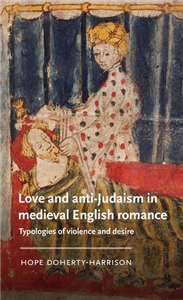
        Love and anti-Judaism in medieval English romance

        Typologies of violence and desire

        by Hope Doherty-Harrison

        Love and anti-Judaism is a new examination of medieval romance for the questions it poses of the most significant events in Christian history. Providing new readings of Sir Gawain and the Green Knight, Sir Orfeo, Sir Gowther and Sir Amadace, the book argues that romance explores depictions of love-and the sacrifices it may necessitate-in the Hebrew Bible, especially where they do not easily fit into interpretations asserting that this history must prefigure Christ and the crucifixion. An examination of anti-Judaism as a discourse of violence and desire that could be turned inwardly to expose the irresolution in Christianity, this book will provoke new investigations into the religious crises of medieval romance.

      • Trusted Partner
      • Trusted Partner
        The Arts
        June 2021

        Medieval film

        by Anke Bernau, Bettina Bildhauer

        Medieval film explores theoretical questions about the ideological, artistic, emotional and financial investments inhering in cinematic renditions of the medieval period. What does it mean to create and watch a 'medieval film'? What is a medieval film and why are they successful? This is the first work that attempts to answer these questions, drawing, for instance, on film theory, postcolonial theory, cultural studies and the growing body of work on medievalism. Contributors investigate British, German, Italian, Australian, French, Swedish and American film, exploring topics such translation, temporality, film noir, framing and period film - and find the medieval lurking in inexpected corners. In addition it provides in-depth studies of individual films from different countries including The Birth of a Nation to Nosferatu, and Robin Hood: Prince of Thieves. Medieval Film will be of interest to medievalists working in disciplines including literature, history, to scholars working on film and in cultural studies. It will also be of interest to undergraduates, postgraduates and to an informed enthusiast in film or/and medieval culture.

      • Trusted Partner
        The Arts
        January 2019

        Medieval film

        by Anke Bernau, Bettina Bildhauer

        Medieval film explores theoretical questions about the ideological, artistic, emotional and financial investments inhering in cinematic renditions of the medieval period. What does it mean to create and watch a 'medieval film'? What is a medieval film and why are they successful? This is the first work that attempts to answer these questions, drawing, for instance, on film theory, postcolonial theory, cultural studies and the growing body of work on medievalism. Contributors investigate British, German, Italian, Australian, French, Swedish and American film, exploring topics such translation, temporality, film noir, framing and period film - and find the medieval lurking in unexpected corners. In addition it provides in-depth studies of individual films from different countries including The Birth of a Nation to Nosferatu, and Robin Hood: Prince of Thieves. Medieval film will be of interest to medievalists working in disciplines including literature, history, art history, to scholars working on film and in cultural studies. It will also be of interest to undergraduates, postgraduates and to an informed enthusiast in film or/and medieval culture.

      • Trusted Partner
        Literature & Literary Studies
        January 2013

        Women in England, 1275–1525

        by P. J. P. Goldberg

      • Trusted Partner
        July 2000

        Reisen eines Deutschen in England im Jahr 1782

        by Karl Philipp Moritz, Heide Hollmer

        Karl Philipp Moritz unternimmt 1782 eine Reise nach England. Seine Notizen und Briefe, die unterwegs entstanden, liegendem Reisebericht zugrunde, der 1783 als Buch veröffentlichtwurde, die erste authentische Schilderung einer Englandreise überhaupt

      • Trusted Partner
      • Trusted Partner
        Humanities & Social Sciences
        January 2013

        Catholic England

        by R. N. Swanson

      • Trusted Partner
        Literature & Literary Studies
        May 2024

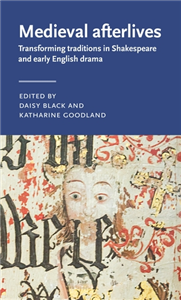
        Medieval afterlives

        Transforming traditions in Shakespeare and early English drama

        by Daisy Black, Katharine Goodland

        A collection of essays which show how early drama traditions were transformed, recycled, re-used and reformed across time to form new relationships with their audiences. Medieval afterlives brings new insight to the ways in which peoples in the sixteenth century understood, manipulated and responded to the history of their performance spaces, stage technologies, characterisation and popular dramatic tropes. In doing so, this volume advocates for a new understanding of sixteenth-seventeenth century theatre makers as highly aware of the medieval traditions that formed their performance practices, and audiences who recognised and appreciated the recycling of these practices between plays.

      • Trusted Partner
        Literature & Literary Studies
        January 2013

        Popular protest in late-medieval Europe

        Italy, France and Flanders

        by Samuel Kline Cohn

        The documents in this stimulating volume span from 1245 to 1424 but focus on the 'contagion of rebellion' from 1355 to 1382 that followed in the wake of the plague. They comprise a diversity of sources and cover a variety of forms of popular protest in different social, political and economic settings. Their authors range across a wide political and intellectual horizon and include revolutionaries, the artistocracy, merchants and representatives from the church. They tell gripping and often gruesome stories of personal and collective violence, anguish, anger, terror, bravery, and foolishness. Of over 200 documents presented here, most have been translated into English for the first time, providing students and scholars with a new opportunity to compare social movements across Europe over two centuries, allowing a re-evaluation of pre-industrial revolts, the Black Death and its consequences for political culture and action. This book will be essential reading for those seeking to better understand popular attitudes and protest in medieval Europe.

      • Trusted Partner
        Medicine
        April 2021

        Leprosy and identity in the Middle Ages

        From England to the Mediterranean

        by Elma Brenner, François-Olivier Touati

        For the first time, this volume explores the identities of leprosy sufferers and other people affected by the disease in medieval Europe. The chapters, including contributions by leading voices such as Luke Demaitre, Carole Rawcliffe and Charlotte Roberts, challenge the view that people with leprosy were uniformly excluded and stigmatised. Instead, they reveal the complexity of responses to this disease and the fine line between segregation and integration. Ranging across disciplines, from history to bioarchaeology, Leprosy and identity in the Middle Ages encompasses post-medieval perspectives as well as the attitudes and responses of contemporaries. Subjects include hospital care, diet, sanctity, miraculous healing, diagnosis, iconography and public health regulation. This richly illustrated collection presents previously unpublished archival and material sources from England to the Mediterranean.

      • Trusted Partner
        Humanities & Social Sciences
        September 2025

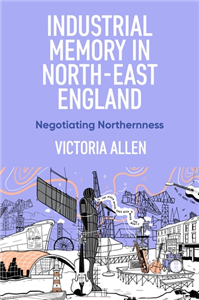
        Industrial memory in North East England

        Negotiating northernness

        by Victoria Allen

        Industrial memory in North East England examines how the region's industrial myth and memory have been articulated in the renegotiation of northernness. The book offers a critical contextualisation of the concept of northernness and the English North, and an introduction to the concept of the PopCultural Portfolio, a mixed-methods approach to conjunctural analysis in cultural and memory studies. The book provides six richly illustrated case studies to demonstrate the practical application of cultural studies' expansive and inclusive understanding of texts, bringing together materials from North East football, folk, indie and exhibition culture to establish how the North East's industrial past continues to be remembered and functionalised as industrial memory. In turn, the conjunctural analysis demonstrates how industrial memory is articulated and mythologised as north(east)ernes in contemporary popular culture.

      • Trusted Partner
        Humanities & Social Sciences
        June 2025

        Debating medieval Europe

        by Stephen Mossman

      Subscribe to our

      newsletter