
Sell Out
Sell Out is a generalist imprint with strong commercial catalog.
View Rights Portal

Sell Out Kids is a series of our imprint Sell Out, for children and YA titles.
View Rights Portal
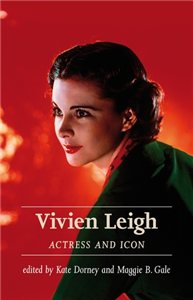
This edited volume provides new readings of the life and career of iconic actress Vivien Leigh (1913-67), written by experts from theatre and film studies and curators from the Victoria & Albert Museum, London. The collection uses newly accessible family archives to explore the intensely complex relationship between Vivien Leigh's approach to the craft of acting for stage and screen, and how she shaped, developed and projected her public persona as one of the most talked about and photographed actresses of her era. With key contributors from the UK, France and the US, chapters range from analyses of her work on stage and screen to her collaborations with designers and photographers, an analysis of her fan base, her interior designs and the 'public ownership' of Leigh's celebrity status during her lifetime and beyond.

Moving images of the British monarchy are almost as old as the moving image itself, dating back to an 1895 American drama, The Execution of Mary Queen of Scots. And from 1896, actual British monarchs appeared in the new 'animated photography', led by Queen Victoria. Half a century later the 1953 coronation of Elizabeth II was a milestone in the adoption of television, watched by 20 million Britons and 100 million North Americans. At the century's end, Princess Diana's funeral was viewed by 2.5 billion worldwide. In the first book length examination of film and television representations of this enduring institution, distinguished scholars of media and political history analyze the screen representations of royalty from Henry VIII to 'William and Kate'. Seventeen essays by Ian Christie, Elisabeth Bronfen, Andrew Higson, Karen Lury, Glynn Davies, Jane Landman and other international commentators examine the portrayal of royalty in the 'actuality' picture, the early extended feature, amateur cinema, the movie melodrama, the Commonwealth documentary, New Queer Cinema, TV current affairs, the big screen ceremonial and the post-historical boxed set. A long overdue contribution to film and television studies, this book will be essential reading for scholars and students of British media and political history.
 Trusted Partner
Projected-image art occupies an increasingly important place in the contemporary art-world. But does the projected image have its own specificity, beyond the histories of experimental film and video on the one hand, and installation art on the other? What is a projected image, and what is the history of projected-image art? These questions and others are explored in this thoughtful collection of nine essays by leading international scholars of film and projected-image art. Clearly structured in three sections - 'Histories', 'Screen', 'Space' - the book argues for recognition of the projected image as a distinctive category in contemporary art, which demands new critical and theoretical approaches. The contributors explore a range of interpretive perspectives, offering new insights into the work of artists including Michael Snow, Carolee Schneemann, Pipilotti Rist, Stan Douglas, Gillian Wearing, Tacita Dean, Jane and Louise Wilson, amongst others. The Introduction supplies a concise summary of the history of projected-image art and its interpretation, and there is a focus throughout the book on detailed analysis of individual artworks. ;
Trusted Partner
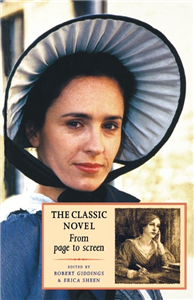
This book critically examines the long established tradition of adapting classic novels to film or TV screen.. An emerging area of interest - the relationship between film and literature and the way cinema and television have translated classic novels into moving pictures from the 30s to the 90s.. A wide-ranging but focused collection that is bang up to date and free of media jargon that looks at both the film and the book.. Includes discussion of: The English Patient, Pride and Prejudice and Middlemarch, Pickwick Papers, Dracula, Dickens, Conrad, Hardy and Waugh. ;
Trusted Partner
This monograph addresses the twenty-first century upsurge in Gothic screen media emanating from the Autonomous Basque Community, Euskadi, in Northern Spain. The book focuses on online video sharing, streaming and social media platforms, demonstrating the impact of multi-national co-production and distribution on the development of Basque film production; looking to the future of regional production in the digital era. This monograph fills a critical gap, presenting Basque Gothic screen media as a regionalist challenge to national models of cinema and identity. Wynne-Walsh establishes Basque Gothic as an expression of transgenerational trauma engendered by a history of state-suppression and socio-political violence. This regional iteration of the mode is addressed as a window into community perception and projection. While this project centres a Basque case study, it establishes a model for the reimagination of critical approaches to global, twenty-first century screen cultures.
Trusted Partner
Trusted Partner
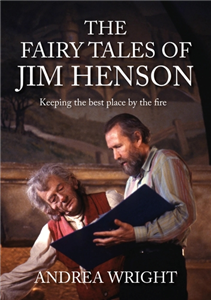
The Fairy Tales of Jim Henson: The best place by the fire is the first book to specifically consider Henson, best known for the immensely popular The Muppet Show, as an important creator of screen fairy tales. In a chronological overview of Henson's career from the late 1950s to his death in 1990, it explores key themes, artistic practices and innovations that make his contribution to the genre unique. Drawing upon a range of fairy tale scholarship, it also situates Henson's work within the wider context of the genre, specifically its conventions, themes and inherent intertextuality.
Trusted Partner
Trusted Partner
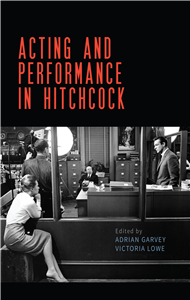
Hitchcock's professed disdain for actors is belied by the extraordinary range and depth of performances featured in his films. It might even be argued that many stars gave their richest and most complex performances in his work. Hitchcock's films are also imbued with the theme of performance, as when his fugitive men and errant women assume fragile new identities and move between roles. Actors and other performers also often feature as characters. However, the exhaustive academic literature on Hitchcock has to date produced surprisingly little work about acting and performance in his films. The collection includes contributions from a range of leading scholars on Hitchcock, performance, stardom, and British Cinema, including Charles Barr, David Greven, Mark Glancy, Lucy Bolton, Lawrence Napper and Michael Williams, and an interview with leading composers/accompanists Neil Brand and Stephen Horne on scoring performance in Silent Hitchcock.
Trusted Partner
Trusted Partner
Trusted Partner
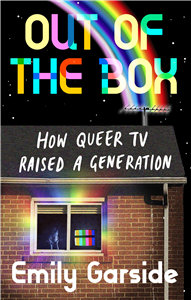
A celebration of queer TV's past, present and exciting future. In Out of the box, Emily Garside takes the reader on a tour through the colourful, complicated world of queer television - where representation is never just entertainment. Examining a wide array of programmes, from Queer as Folk and Buffy the Vampire Slayer to Schitt's Creek and Heartstopper, she explores how queer viewers find themselves in the stories TV tells. Part I dives into the genres that have shaped queer visibility on screen, from the closeted tensions of TV drama to the evolving landscape of sitcoms, musicals, sci-fi and period pieces. Whether it's gay aliens, campy dance numbers or the queerness hidden in historical narratives, these chapters reveal how genre both limits and liberates LGBTQ+ storytelling. Part II turns to the stories themselves: queer teens navigating first love, coming-out arcs, the thorny politics of sex on screen and the lasting need for AIDS narratives. The book also tackles the negative sides of queer TV, from queerbaiting to the 'bury your gays' trope, and looks at how fans push back through creativity and fanfiction.
Trusted Partner
Trusted Partner
Trusted Partner
Trusted Partner
Trusted Partner
Trusted Partner
Trusted Partner
Trusted Partner

Looking at contemporary film and television, this book explores how popular genres frame our understanding of on-screen performance. Previous studies of screen performance have tended to fix upon star actors, directors, or programme makers, or they have concentrated upon particular training and acting styles. Moving outside of these confines, this book provides a truly interdisciplinary account of performance in film and television and examines a much neglected area in our understanding of how popular genres and performance intersect on screen. Each chapter concentrates upon a particular genre or draws upon generic case studies in examining the significance of screen performance. Individual chapters examine contemporary film noir, horror, the biopic, drama-documentary, the western, science fiction, comedy performance in 'spoof news' programmes and the television 'sit com' and popular Bollywood films.




