
Self-Counsel Press
Livres Canada Books
View Rights Portal

GAPSK and YLPSK are the standardized test of Chinese language for children from 3 to 15. From the world- renowned Peking University, GAPSK and YLPSK are certified and approved by the Chinese Ministry of Education as language proficiency measuring tool for children . GAPSK, YLPSK could be conducted on site or completely online. Come join over 100,000 students who taken the tests, contact us at info@gapsk.org. Find out more at www.ylpsk.org
View Rights Portal

This book offers the first sustained investigation into non-elite understandings of radicalisation and counter-radicalisation policy. Drawing on original focus group research with students from universities across England and Wales, the book explores how 'ordinary' citizens understand radicalisation, how they make sense of counter-radicalisation initiatives like the UK Prevent Strategy, and how they evaluate its functioning and effects across society. Radicalisation, counter-radicalisation and Prevent demonstrates that these non-elite insights often contradict and diverge from traditional (elite) security knowledge and thus shed new light on wider questions around the politics of security. This has vitally important implications not only for counter-radicalisation and counter-terrorism policy but for the very study and practice of security.


Working at the sales counter is never dull: Every day, people come to you with the widest possible variety of questions and expect good advice. It does not matter whether it is about self-medication for adults, pregnant women, children, about aids and appliances, vegan diets or alternative medicine: Whatever your customer’s concerns – you always offer well-founded counselling. Based on real-life counselling situations routinely encountered in a pharmacy, the authors – all pharmacists with experience of retail sales – provide important information for such conversations and suggest helpful questions to ask when patients seek advice. Become a sales counter expert in no time!
 Trusted Partner
 Trusted Partner
 Trusted Partner

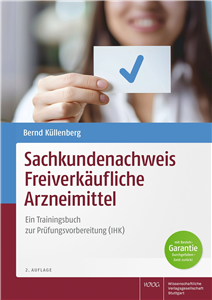
Every retail employee who dispenses over-the-counter medicines must demonstrate their expertise to the German Chamber of Industry and Commerce. However, the volume of learning material is often difficult to manage alongside day-to-day work. This training book focuses solely on exam-relevant content and is divided into 30 concise, easily digestible learning units. With a daily commitment of just half an hour, it will optimally prepare readers within a month. Subsequent mock examinations provide readers with confidence by simulating real-life conditions. Making study-related stress and exam anxiety a thing of the past. Through his seminars, the author has successfully pre- pared hundreds of candidates for the subject knowledge test – achieving a success rate close to 100%. Anyone who works through this training book consistently will be well- positioned to pass with confidence. Target group: Candidates for the expertise examination ‘Over-the-Counter Medicines’ in retail
Trusted Partner

This volume examines the underlying foundations on which the European Union's counter-terrorism and police co-operation policies have been built since the inception of the Treaty on European Union, questioning both the effectiveness and legitimacy of the EU's efforts in these two critically important security areas. Given the importance of such developments to the wider credibility of the EU as a security actor, this volume adopts a more structured analysis of key stages of the implementation process. These include the establishment of objectives, both at the wider level of internal security co-operation and in terms of both counter-terrorism and policing, particularly in relation to the European Police Office, the nature of information exchange and the 'value added' by legislative and operational developments at the European level. It also offers a more accurate appraisal of the official characterisation of the terrorist threat within the EU as a 'matter of common concern'. In doing so, not only does it raise important questions about the utility of the European level for organising internal security co-operation, but it also provides a more comprehensive assessment of the EU's activities throughout the lifetime of the Third Pillar, placing in a wider and more realistic context the EU's reaction to the events of 11 September 2001 and the greater prominence of Islamist terrorism. ;
Trusted Partner
 Trusted Partner

Between 1983 and 1987, mercenaries adopting the pseudonym GAL (Grupos Antiterroristas de Liberación, Antiterrorist Liberation Group) paid by the Spanish treasury and relying upon national intelligence support were at war with the Basque militant group ETA (Euskadi (e)Ta Askatasuna, Basque Country and Freedom). Over four years, their campaign of extrajudicial assassinations spanned the French-Spanish border. Nearly thirty people were killed in a campaign comprised of torture, kidnapping, bombing and the assassination of suspected ETA activists and Basque refugees. This establishment of unofficial counterterrorist squads by a Spanish Government was a blatant detour from legality. It was also a rare case in Europe where no less than fourteen high-ranking Spanish police officers and senior government officials, including the Minister of Interior himself, were eventually arrested and condemned for counter-terrorism wrongdoings and illiberal practices. Thirty years later, this campaign of intimidation, coercion and targeted killings continues to grip Spain. The GAL affair was not only a serious example of a major departure from accepted liberal democratic constitutional principles of law and order, but also a brutal campaign that postponed by decades the possibility of a political solution for the Basque conflict. Counter-terror by proxy uncovers why and how a democratic government in a liberal society turned to a 'dirty war' and went down the route of illegal and extrajudicial killing actions. It offers a fuller examination of the long-term implications of the use of unorthodox counter-terrorist strategies in a liberal democracy.
Trusted Partner
 Trusted Partner
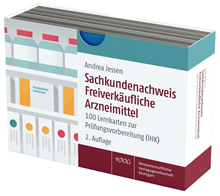
These flashcards are ideal for anyone seeking to prepare quickly and effectively for the ‘Over-the-Counter Medicines’ knowledge test. The content is based on the German Chamber of Industry and Commerce (DIHK) list of questions and includes all the essential information needed to pass: From key exam content with exercises, format, success tips, question types and original exam questions with solutions to descriptions and illustrations of all 40 herbal medicines, with matching exercises. Prepare for the exam in no time. Target group: Candidates for the expertise examination ‘Over-the-Counter Medicines’ in retail
Trusted Partner
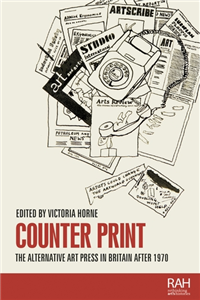
The history of contemporary art is also a history of its newsletters, manifestos, magazines, pamphlets, and journals. Those periodical publications do not simply communicate or record ideas but have worked in exciting ways to shape art's practices, histories and communities. As a new generation of artists, activists and scholars seek to uncover the histories of alternative publishing and artistic networks, this book gathers original archival discoveries while offering methodologies for studying and thinking with those artefacts. As the first essay collection to focus on the periodical art press and the ways we study it, Counter print offers readers an alternative route into the past fifty years of contemporary art, one that is defiantly collaborative, border crossing and disruptive.
Trusted Partner

Emigrant Homecomings addresses the significant but neglected issue of return migration to Britain and Europe since 1600. While emigration studies have become prominent in both scholarly and popular circles in recent years, return migration has remained comparatively under-researched, despite evidence that in the nineteenth and twentieth centuries between a quarter and a third of all emigrants from many parts of Britain and Europe ultimately returned to their countries of origin. Emigrant Homecomings analyses the motives, experiences and impact of these returning migrants in a wide range of locations over four hundred years, as well as examining the mechanisms and technologies which enabled their return. The book examines the multiple identities that migrants adopted and the huge range and complexity of homecomers' motives and experiences. It also dissects migrants' perception of 'home' and the social, economic, cultural and political change that their return engendered.
Trusted Partner
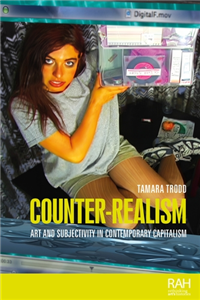
Counter-Realism: Art and subjectivity in contemporary capitalism is an ambitious and original study of key works of film and video art made since 2008 by leading contemporary artists, including William Kentridge, Amalia Ulman, Melanie Gilligan, Lizzie Fitch/Ryan Trecartin and Elizabeth Price. It argues their work should be understood as a reconfigured form of 'realism', expressing economic forces and political pressures across contexts ranging from post-apartheid South Africa, through austerity-era Spain, to contemporary Britain and North America. Supported by original artist interviews and detailed visual analysis of individual works of art, as well as a wide-ranging research base, which synthesises arguments from a variety of disciplines including art history, literary, film and political studies, the book is clearly written, and makes legible the ways in which some of the most vivid and compelling works of contemporary moving-image art engage with historical and contemporary political debates.
Trusted Partner

This collection aims to inaugurate a new direction in research on counterterrorism by exploring global connections - both in terms of practices and discourses, as well as shared ideas and epistemes - that animate counterterrorism practices. The chapters - grouped under the themes of postcoloniality and coloniality, and entanglements of the transnational and the local, and counterterrorism and right-wing extremism - are attentive to global connections and are mindful of the complexities of global historical processes that constitute the politics of counterterrorism. This book aims to bring together scholars studying counterterrorism in the global North and the global South to explore convergence and divergence in how counterterrorism policies function in a range of national and local contexts.
Trusted Partner


Jürgen Teller war ein außerordentlicher Briefschreiber. Die vorliegende Sammlung enthält Briefe an seine Familie, an Ernst und Karola Bloch und ihren Sohn Jan Robert; an Sigrid Damm, Volker Braun, Friedrich Dieckmann, an Freunde und Schüler. Die in den Briefen geäußerte Kritik an Politik und Gesellschaft der DDR und auch der Bundesrepublik beruht auf dem Glauben an die Unzerstörbarkeit humanistischer Traditionen. Jürgen Teller wurde 1926 bei Leipzig geboren. Nach Krieg und Gefangenschaft gaben Literatur und Philosophie und neue Freundschaften seinem Leben eine andere Richtung. Die Begegnung mit Ernst Bloch war für ihn bestimmend, sie wurde ihm zur »Kopernikanischen Wende«. »Ernst hatte einen Assistenten«, schreibt Karola Bloch, »Jürgen Teller, den wir besonders schätzten. Als die Kampagne gegen Bloch entbrannt war, verlangte die Parteileitung der Universität auch von Teller eine negative Stellungnahme. Doch Teller weigerte sich, seinen Lehrer zu verleumden. Er wurde aus der SED ausgeschlossen und entlassen. Er fand Arbeit in einem Stahlwerk. Dort verunglückte er und verlor seinen linken Arm. Der Fall Teller führte zu erheblicher Unruhe in Kreisen der Intelligenz.
Trusted Partner
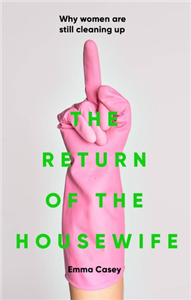
An illuminating look at the world of cleanfluencers that asks why the burden of housework still falls on women. Housework is good for you. Housework sparks joy. Housework is beautiful. Housework is glamorous. Housework is key to a happy family. Housework shows that you care. Housework is women's work. Social media is flooded with images of the perfect home. TikTok and Instagram 'cleanfluencers' produce endless photos and videos of women cleaning, tidying and putting things right. Figures such as Marie Kondo and Mrs Hinch have placed housework, with its promise of a life of love and contentment, at the centre of self-care and positive thinking. And yet housework remains one of the world's most unequal institutions. Women, especially poorer women and women of colour, do most low-paid and unpaid domestic labour. In The return of the housewife, Emma Casey asks why these inequalities matter and why they persist after a century of dramatic advances in women's rights. She offers a powerful call to challenge the prevailing myths around housework and the 'naturally competent' woman homemaker.
Trusted Partner

This book offers a unique account of British and United States government's attempts to adapt their propaganda strategies to global terrorist threats in a post-9/11 media environment. It discusses Anglo-American coordination and domestic struggles that brought in far-reaching changes to propaganda. These changes had implications for the structures of legitimacy yet occurred largely in isolation from public debate and raise questions regarding their governance. The author argues that independent and public reexamination of continuing strategy development is essential for government accountability and the formation of systems and policies that both respect citizens and build constructive foreign relations. The book's themes will appeal to a wide readership including scholars and professionals. It draws on illuminating interviews with high-profile British/US sources including journalists, PR professionals and key foreign policy, defence and intelligence personnel.
Trusted Partner
Trusted Partner
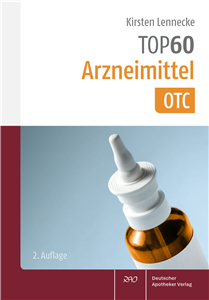
„I’d like the green cough medicine!“ Experienced pharmacy staff instantly know what the customer means. This book helps newcomers identify the right medicine for each customer. Concise information organised according to the Pareto principle, and numerous packaging images combine the knowledge that is essential for providing effective advice with key self-medication preparations. • Patient consultations. From usage instructions to important notes: This information is crucial for effective consultations! • At the back of your mind. From comparable preparations to information for special patient groups: Bonus material for professional expertise! • At a glance. Over 200 package photos: Instantly recognise customer requests! TOP 60 knowledge: Dive deep and address 80% of customer questions with confidence! Target group: Pharmacy interns, pharmaceutical technician interns, returnees
Trusted Partner



