Your Search Results

      • Kia Persia Literary Agency

        KIA Literary Agency was founded in 2002 in Tehran with the aim of promoting and supporting fine literary works in all forms throughout the world. It brings about opportunities for authors, illustrators, publishers, translators, and those involved in this field to meet their counterparts. And at the same time, it introduces them to the world and will inform them of all the related events which take place in the world of art and literature.

        View Rights Portal
      • Trusted Partner
        Literature & Literary Studies
        October 2009

        Aura

        By Carlos Fuentes

        by Mike Thompson, Peter Standish

        Since its publication in 1962, Carlos Fuentes' novel, Aura, remains not merely an object of academic interest but a continuous source of controversy in Mexico. It was the explosive combination of sex and religion that incensed the Ministro de Hacienda, Salvador Abascal, and linked Aura to the recent polemical Mexican film El crimen del Padre Amaro. Aura is preoccupied with the place and persistence of the sacred in modern Mexico rather than simply the secret abuses of institutional Catholicism. This critical edition of the work is accompanied by an introduction and notes on the text. ;

      • Trusted Partner
        Humanities & Social Sciences
        May 2020

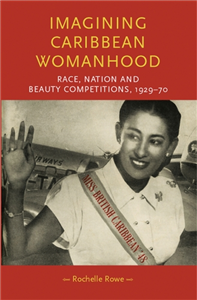
        Imagining Caribbean womanhood

        Race, nation and beauty competitions, 1929–70

        by Pamela Sharpe, Rochelle Rowe, Penny Summerfield, Lynn Abrams, Cordelia Beattie

        Over fifty years after Jamaican and Trinidadian independence, Imagining Caribbean womanhood examines the links between beauty and politics in the Anglophone Caribbean, providing a first cultural history of Caribbean beauty competitions, spanning from Kingston to London. It traces the origins and transformation of female beauty contests in the British Caribbean from 1929 to 1970, through the development of cultural nationalism, race-conscious politics and decolonisation. The beauty contest, a seemingly marginal phenomenon, is used to illuminate the persistence of racial supremacy, the advance of consumer culture and the negotiation of race and nation through the idealised performance of cultured, modern beauty. Modern Caribbean femininity was intended to be politically functional but also commercially viable and subtly eroticised.

      • Trusted Partner
        Humanities & Social Sciences
        September 2024

        Settlers at the end of empire

        Race and the politics of migration in South Africa, Rhodesia and the United Kingdom

        by Jean Smith

        Settlers at the end of empire traces the development of racialised migration regimes in South Africa, Rhodesia (present-day Zimbabwe) and the United Kingdom from the Second World War to the end of apartheid in 1994. While South Africa and Rhodesia, like other settler colonies, had a long history of restricting the entry of migrants of colour, in the 1960s under existential threat and after abandoning formal ties with the Commonwealth they began to actively recruit white migrants, the majority of whom were British. At the same time, with the 1962 Commonwealth Immigrants Act, the British government began to implement restrictions aimed at slowing the migration of British subjects of colour. In all three nations, these policies were aimed at the preservation of nations imagined as white, revealing the persistence of the racial ideologies of empire across the era of decolonisation.

      • Trusted Partner
        Humanities & Social Sciences
        September 2018

        Westminster 1640–60

        A royal city in a time of revolution

        by Peter Lake, J. F. Merritt, Anthony Milton, Jason Peacey, Alexandra Gajda

        This book examines the varied and fascinating ways that Westminster - traditionally home to the royal court, the fashionable West End and parliament - became the seat of the successive, non-monarchical regimes of the 1640s and 1650s. It first explores the town as the venue that helped to shape the breakdown of relations between the king and parliament in 1640-42. Subsequent chapters explore the role Westminster performed as both the ceremonial and administrative heart of shifting regimes, the hitherto unnoticed militarisation of local society through the 1640s and 1650s, and the fluctuating fortunes of the fashionable society of the West End in this revolutionary context. Analyses of religious life and patterns of local political allegiance and government unveil a complex and dynamic picture, in which the area not only witnessed major political and cultural change in these turbulent decades, but also the persistence of conservatism on the very doorstep of government.

      • Trusted Partner
        The Arts
        February 2025

        Passage works

        Ruth Beckermann’s art

        by Patricia Allmer, John Sears

        Passage Works is the first book-length English language critical analysis of the transdisciplinary work of the Austrian film-maker, writer, and artist Ruth Beckermann (b. 1952, Vienna). Beckermann's works interrogate identity and geography as formations of the intersections between the past and the contemporary. Taking as her central topics Austria and its history and politics, her own identity as a Jewish woman, and the contemporary global geopolitics of migration and displacement, Beckermann develops wider meditations in film, art, and writing on the persistence of European memory, and the meanings of Europe itself; on borders, migrations, and identities; on memories, traumas, and traditions; on the image as marker of presence and absence, repository of the traces of historical violence; and on the passage as metaphor for a range of physical, psychological, and ideological movements defining the complexities of contemporary cosmopolitan identities.

      • Trusted Partner
        Humanities & Social Sciences
        March 2023

        Socialist republic

        Remaking the British left in 1980s Sheffield

        by Daisy Payling

        Socialist republic is a timely account of 1980s left-wing politics in South Yorkshire. It explores how Sheffield City Council set out to renew the British Left. Through careful analysis of the Council's agenda and how it interacted with trade unions, women's groups, lesbian and gay rights groups and acted on issues such as peace, environmentalism, anti-apartheid and anti-racism, the book draws out the complexities involved in building a broad-based politics which aimed unite class and identity politics. Running counter to 1980s narratives dominated by Thatcherism, the book examines the persistence of social democracy locally, demonstrating how grassroots local histories can enrich our understanding of political developments on a national and international level. The book is essential reading for students, scholars, and activists with an interest in left-wing politics and history.

      • Trusted Partner
        Humanities & Social Sciences
        April 2010

        The flâneur and his city

        Patterns of daily life in Paris 1815–1851

        by Richard D. E. Burton, Mike Thompson

        The book provides a 'flâneur's eye view' of Parisian life in the first half of the nineteenth century: dress, cafés and restaurants, but also shops and passages, the omnibus, bals publics and carnival. The author provides general conclusions about the private and public spheres in 'le vieux Paris'. Like the flâneur, the author concentrates less on factual information for its own sake - which may be found in the secondary works cited in the text and footnotes - than on the 'semiological' or anthropological significance of the cultural forms in question. Links are drawn between cultural institutions and class relations in pre-1850 Paris, with particular emphasis on cultural inequality, on the persistence of cross-class contacts, and the growing differences between classes as reflected in behaviour and attitudes. ;

      • Trusted Partner
        Humanities & Social Sciences
        March 2014

        Children's rights, Eastern enlargement and the EU human rights regime

        by Ingi Iusmen, Dimitris Papadimitriou, Simon Bulmer, Andrew Geddes, Peter Humphreys

        This book critically examines how and why Eastern enlargement has impacted on EU human rights policy. By drawing on the EU's intervention in human rights provision in Romania before 2007, it is demonstrated that the feedback effects of this intervention have led to the emergence of an EU child rights policy. Eastern enlargement has also raised the profile of Roma protection, international adoptions and mental health at the EU level. The impact of these developments has been further reinforced by the constitutional and legal provisions included in the Lisbon Treaty. It is argued that Eastern enlargement has led to the emergence of a more robust and well-defined EU human rights regime in terms of its scope and institutional clout. This book makes a substantial contribution to the scholarship on EU enlargement, Europeanisation and EU human rights policy by providing empirical evidence for the emergence and persistence of EU institutional and policy structures upholding human rights. ;

      • Trusted Partner
        Humanities & Social Sciences
        October 2006

        Blair’s community

        Communitarian thought and New Labour

        by Sarah Hale, Chantal Hamill

        Blair's community is an exciting and timely book which challenges the accepted wisdom about the role of communitarian thought in the development of New Labour under Tony Blair. From the mid-1990s there has been a widespread view that Labour policies have reflected, or even been influenced by, the work of communitarian writers like Amitai Etzioni and John Macmurray, and philosophers such as Alasdair MacIntyre and Michael Sandel. The book begins by establishing that such a view was widely, and frequently unquestioningly, held, in both popular and academic forums. It then identifies reasons for the persistence of this impression, the evidence on which it was based, and the understandings of communitarianism used by commentators. The book argues that existing accounts of 'New Labour's communitarianism' fail to present an accurate picture because they are - in some cases explicitly - working with a generic or composite conception of communitarianism which bears little relation to the work of the communitarian writers whose names have been associated with the party. ;

      • Trusted Partner
        Humanities & Social Sciences
        June 2005

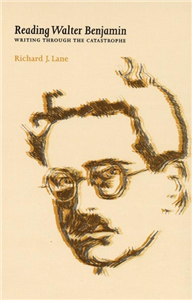
        Reading Walter Benjamin

        Writing through the catastrophe

        by Richard Lane

        'Reading Walter Benjamin' explores the persistence of absolute in Benjamin's work by sketching-out the relationship between philosphy and theology apparent in his diverse writings, from the early youth-movement essays to the later books, essays and fragments. The book examines Benjamin from two main perspectives: a history-of-ideas approach situating Benjamin in relation to the new German-Jewish thinking at the turn of the twentieth-century, as well as the German youth movements, Surrealism and the 'Georgekreis'; and a conceptual approach examining more critical issues in relation to Benjamin and Kant, modern aesthetics and narrative order. Chapters cover: 'Kulturpessimismus' and the new thinking; metaphysics of youth: Wyneken and 'Rausch'; history: surreal Messianism; Goethe and the 'Georgekreis'; Kant's experience; casting the work of art; disrupting textual order; and exile and the time of crisis. The book uses new translations of Benjamin's essays, fragments and his 'Arcades Project', and makes substantial reference to previously untranslated material. Lane's text allows the non-specialist entry into complex areas of critical theory, simultaneously offering original readings of Benjamin and twentieth-century arts and literature. ;

      • Trusted Partner
        Humanities & Social Sciences
        August 2006

        History matters

        Patriarchy and the challenge of Feminism

        by Judith Bennett

        Written for everyone interested in women's and gender history, History matters reaffirms the importance to feminist theory and activism of long-term historical perspectives. Judith M. Bennett takes as her central problem the growing chasm between feminism and history which, although closely allied in the 1970s, have now moved away from one another. Seeking to narrow this gap, Bennett proposes that feminist historians turn their attention to the intellectual challenges posed by the persistence of patriarchy. She posits a 'patriarchal equilibrium' whereby, despite many changes in women's experiences over past centuries, women's status vis-à-vis men has remained remarkably unchanged. Bennett argues that the theoretical challenge posed by this 'patriarchal equilibrium' will be best met by long-term historical perspectives that reach back well before the modern era. A new manifesto, History matters engages forthrightly with the challenges faced by feminist historians today. It argues for the radical potential of a history that is focused on feminist issues, aware of the distant past, attentive to continuities over time, and alert to the workings of patriarchal power. ;

      • Trusted Partner
        Health & Personal Development

        Autism Spectrum Disorders in Adults

        A Practical Guide for Adults with ASD

        by Annelies Spek

        Lately, autism spectrum disorders (ASD) in adults have received more and more attention. A decade ago, autism was only recognised and diagnosed in children. Oddly enough, the fact that ASD could also occur in adults has been neglected for a long time. By now it has become clear that the symptoms of ASD change over the lifetime. Though people with ASD definitely have many strengths (eye for detail, perseverance, sincerity, a sense of humour, reliability, and consistency), they also have shortcomings. This book brings the reader up to date about ASD. In Part 1, the causes of ASD are described, both in nature and nurture. This part also includes a discussion about information processing in relation to ASD. Part 2 deals with the behavioural aspects as described in the DSM-5. In Part 3, several important themes are discussed, such as the diagnostic process, sexuality, gender differences, and changes that people with ASD experience throughout their lives.    ‘I wish I had read this book 15 years ago. I finally understand why people respond to me the way they do.’ Joost, diagnosed with ASD.   Target Group: adults with autism, relatives, therapists.

      • Trusted Partner
        Humanities & Social Sciences
        January 2025

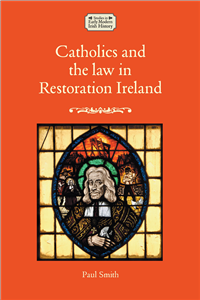
        Catholics and the law in Restoration Ireland

        by Paul Smith

        In 1660 Charles II was restored to the thrones of England, Scotland and Ireland, but his hold on power was precarious. In particular, Ireland was fundamentally unstable - Catholics formed the majority of the population in a country where Protestantism was the established religion, a state of affairs unique in Europe. It was through the law that the restored Stuart monarchy governed its subjects and its colonial dependencies, and this book examines how Catholics engaged with and experienced English common law primarily through the eyes of Catholic clerics and Gaelic poets. It also examines how Catholics engaged with the Courts and the particular challenges they faced as lawyers. The book draws on an extensive body of primary source materials, including Irish-language poetry and little-used archival material relating to elite Catholic families.

      • Trusted Partner
        Humanities & Social Sciences
        March 2018

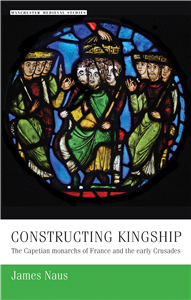
        Constructing kingship

        The Capetian monarchs of France and the early Crusades

        by S. H. Rigby, James Naus

        Crusading kings such as Louis IX of France and Richard I of England exert a unique hold on our historical imagination. For this reason, it can be easy to forget that European rulers were not always eager participants in holy war. The First Crusade was launched in 1095, and yet the first monarch did not join the movement until 1146, when the French king Louis VII took the cross to lead the Second Crusade. One contemporary went so far as to compare the crusades to 'Creation and man's redemption on the cross', so what impact did fifty years of non-participation have on the image and practice of European kingship and the parameters of cultural development? Constructing kingship considers this question by examining the challenge to political authority that confronted the French kings and their family members as a direct result of their failure to join the early crusades, and their less-than-impressive involvement in later ones.

      • Trusted Partner
        Humanities & Social Sciences

        How to Overcome Embitterment with Wisdom

        by Christopher Patrick Arnold, Michael Linden

        Expert help on overcoming feelings of embitterment• Understand how these difficultfeelings come about• Learn problem-solving skills toreorientate to the future• Also ideal reading for anyone living orworking with an embittered person Embitterment is an emotional reaction anyone can have to injustices, humiliation, and breaches of trust. Like other feelings, feelings of embitterment normally subside, but they can persist and cause a great deal of suffering. This book helps you understand what embitterment is and how it can come about. Learn how to detach from these negative feelings and find ways to better deal with the hurtful situations, including learning to look to the future. You will learn about problem-solving strategies that focus on the psychology of wisdom, which include identifying facts and problem solutions, changing perspectives, self-relativizing, and emotional empathy. For:• clients, relatives and friends ofclients• clinical psychologists• psychotherapists• psychiatrists• counselors

      • Trusted Partner
        Humanities & Social Sciences
        April 2025

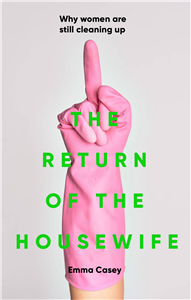
        The return of the housewife

        Why women are still cleaning up

        by Emma Casey

        An illuminating look at the world of cleanfluencers that asks why the burden of housework still falls on women. Housework is good for you. Housework sparks joy. Housework is beautiful. Housework is glamorous. Housework is key to a happy family. Housework shows that you care. Housework is women's work. Social media is flooded with images of the perfect home. TikTok and Instagram 'cleanfluencers' produce endless photos and videos of women cleaning, tidying and putting things right. Figures such as Marie Kondo and Mrs Hinch have placed housework, with its promise of a life of love and contentment, at the centre of self-care and positive thinking. And yet housework remains one of the world's most unequal institutions. Women, especially poorer women and women of colour, do most low-paid and unpaid domestic labour. In The return of the housewife, Emma Casey asks why these inequalities matter and why they persist after a century of dramatic advances in women's rights. She offers a powerful call to challenge the prevailing myths around housework and the 'naturally competent' woman homemaker.

      • Trusted Partner
        March 2021

        Columbus, the Discarded Explorer

        Disaster of the legendary sailor

        by Wolfgang Wissler

        There he stands, the man the whole of Spain cheered, before whom the most catholic regents Isabella and Ferdinand rose to their feet, his eyes on his ship Capitana, devoured by shipworm, stranded off Jamaica. Some of the crew mutiny, the locals can no longer be fobbed off with glass beads, the Spanish on the nearby island of Hispaniola do not help, the world doesn‘t want anything to do with him, the demanding whinger. He, Christopher Columbus, is a John Lackland, a king without land, a conqueror without conquest. Between fiction and historical truth, Wolfgang Wissler recounts the legendary sailor‘s last expedition in an entirely new way – and what a story it is!

      • Trusted Partner
        Humanities & Social Sciences
        January 2007

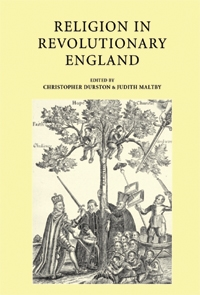
        Religion in Revolutionary England

        by Christopher Durston, Judith Maltby

        This book offers a collection of essays tightly focused around the issue of religion in England between 1640 and 1660, a time of upheaval and civil war in England. Edited by well-known scholars of the subject, topics include the toleration controversy, women's theological writing, observance of the Lord's Day and prayer books. To aid understanding, the essays are divided into three sections examining theology in revolutionary England, inside and outside the revolutionary National Church and local impacts of religious revolution. Carefully and thoughtfully presented, this book will be of great use for those seeking to better understand the practices and patterns of religious life in England in this important and fascinating period. ;

      Subscribe to our

      newsletter