
Phileas Fogg Agency
Agency representing picture books projects, Foreign rights for publishers of picture books, representation of portfolios, contract consultancies.
View Rights Portal
Agency representing picture books projects, Foreign rights for publishers of picture books, representation of portfolios, contract consultancies.
View Rights Portal
The University of the Philippines Press (or the U.P. Press) is the official publishing house for all constituent units of the U.P. system, and is the first university press in the country. It is mandated to encourage, publish, and disseminate scholarly, creative, and scientific works that represent distinct contributions to knowledge in various academic disciplines, which commercial publishers would not ordinarily undertake to publish.
View Rights Portal
This book shows that Max Horkheimer's program of critical theory and his research throughout his career as a university professor and thinker are rooted in the cogency of philosophical questions and an in-depth knowledge of the historical development of philosophical problems in their close correlation with the socio-economic framework which shaped the 'bourgeois society' and the Modern Era. Indeed, his analyses of modern philosophers allows us to understand how the bourgeoisie seeks legitimisation and consolidation of its position, partly through the voices of its thinkers. In this way, in his investigation of early modern philosophy problems, and through constant dialogue with his colleagues Adorno, Marcuse, Pollock and Fromm, Horkheimer expresses a profound awareness of the critical force inherent in thought which, admittedly, is ever vulnerable to crisis and weakening, but which can always be reactivated.


— Philosophy for beginners — For philosophy enthusiasts — A pleasant read This truly brilliant book tells of the sometimes sublime, sometimes exhilarating efforts of philosophers to maintain their attitude in everyday life without forgetting the meaning of their own words – and how they ultimately failed to do so. The minor, sometimes bizarre events in the lives of the great philosophers fit so aptly in the picture of the respective philosophy that one has to assume they could have been conceived to keep the associated intellectual giant in a strange and memorable mood. A book of cheerful science, full of wit, narrative and linguistic eloquence.
 Trusted Partner
 Trusted Partner
 Trusted Partner
As artificial intelligence continues to transform modern warfare, the rapid development of AI-driven weaponry presents profound ethical, legal, and security challenges. Artificial Intelligence and International Security: Redefining Arms Races and Contemporary Warfare offers a critical examination of this emerging arms race, exploring issues of arms control, international law, diplomacy, and long-term security. Bringing together expert perspectives, this volume assesses the risks and implications of autonomous weapon systems while proposing solutions to ensure ethical AI deployment. Through a comprehensive analysis of this urgent issue, it seeks to contribute to global debates and inform policies that foster peace, stability, and the responsible use of AI in warfare.
Trusted Partner

Intervening at the crossroads of philosophy, politics, and cinema, this book argues that the career of Robert Guédiguian is the result of one of the most original and coherent projects in contemporary French cinema: to make a committed, historically-conscious cinema, in a local space, over a long period of time, but most especially with friends. The account starts with in-depth consideration of friendship and its relation to philosophy, politics, time, and space. The book chronologically traces this project as it begins in Guédiguian's hometown, the Communist-leaning Marseille. It further unfolds through the political transformations of the 1980s Left and the local activism and utopias of the 1990s, and spreads into Guédiguian's varied explorations of genre and register. Close analysis is accompanied with historical and social contextualization, but also with a consistent return to the underlying, radical and philosophically rich project.
Trusted Partner
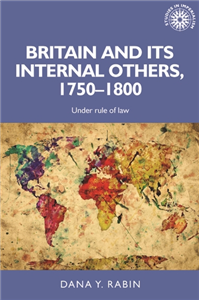
The rule of law, an ideology of equality and universality that justified Britain's eighteenth-century imperial claims, was the product not of abstract principles but imperial contact. As the Empire expanded, encompassing greater religious, ethnic and racial diversity, the law paradoxically contained and maintained these very differences. This book revisits six notorious incidents that occasioned vigorous debate in London's courtrooms, streets and presses: the Jewish Naturalization Act and the Elizabeth Canning case (1753-54); the Somerset Case (1771-72); the Gordon Riots (1780); the mutinies of 1797; and Union with Ireland (1800). Each of these cases adjudicated the presence of outsiders in London - from Jews and Gypsies to Africans and Catholics. The demands of these internal others to equality before the law drew them into the legal system, challenging longstanding notions of English identity and exposing contradictions in the rule of law.
Trusted Partner


■ How many omega-3 fatty acids does salmon contain? ■ Which dairy product contains the most calcium? ■ How iron-rich is spinach, really? Whether calories, vitamins or amino acids – whether in field beans, bananas, eggs, chicken, parmesan cheese or onion – it is all here. The compact edition of the time-tested „large SFK [Souci/Fachmann/Kraut]“ offers tested data on over 70 ingredients in more than 360 foods, systematically structured according to food groups. This edition with thousands of values has been completely revised and updated by the Leibniz Institute of Food Systems Biology at the Technical University of Munich. Extra: 32 summary tables cover more than 300 other, less common foods and allow for targeted, clear comparisons. 16 orientation tables provide information about foods with particularly high or low amounts of ingredients. Nutritional values, energy content, main components and ingredients displayed in uniform systematics and a practical format – just look it up!
Trusted Partner

The musician, doctor and philosopher Axel Braig considers philosophy a little like the weather: he looks for the right clothes for every situation. Braig is primarily concerned with practical, effective things from the two-and-a-half millennia fund of (Western) thinking, such as helpful approaches in existential crises. In this book, he introduces us to philosophical thinkers from Plato to Montaigne to Levinas and Feyerabend. Braig not only shares his own philosophical biography, but above all encourages us to philosophise ourselves.
Trusted Partner
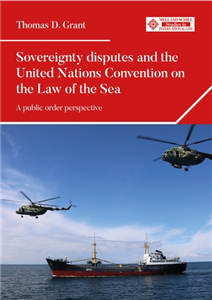
Because maritime questions are often admixed with territorial sovereignty questions, parties sometimes seek to settle them together. Jurisdiction under the United Nations Convention on the Law of the Sea-UNCLOS-according to the received view does not encompass disputes concerning territorial sovereignty. In this book, international law scholar and practitioner Thomas D. Grant argues that the received view overstates the exclusion of sovereignty disputes. In Coastal State Rights, UNCLOS Annex VII arbitrators overstated the scope of the term 'sovereignty dispute' as well, an error of definition compounded when they ignored evidence probative as to whether a sovereignty dispute exists. Examining UNCLOS, its drafting history, and decades of decided cases, Sovereignty Disputes and the United Nations Convention on the Law of the Sea relates an important problem of international dispute settlement to the public order of which UNCLOS forms part.
Trusted Partner

The Derby Philosophers focuses upon the activities of a group of Midland intellectuals that included the evolutionist and physician Erasmus Darwin, Rev. Thomas Gisborne the evangelical philosopher and poet, Robert Bage the novelist, Charles Sylvester the chemist and engineer, William George and his son Herbert Spencer, the internationally renowned evolutionist philosopher who coined the phrase 'survival of the fittest', and members of the Wedgwood and Strutt families. The book explores how, inspired by science and through educational activities, publications and institutions including the famous Derbyshire General Infirmary (1810) and Derby Arboretum (1840), the Derby philosophers strove to promote social, political and urban improvements with national and international consequences. Much more than a parochial history of one intellectual group or town, this book examines science, politics and culture during one of the most turbulent periods of British history.
Trusted Partner
Why are constitutionalist ideals so prominent in science fiction? Does Independence Day depict self-defence as a legal concept with absolute limits? Is international law lost in space? This innovative interdisciplinary volume represents the first exploration of the relationship between international law and cinema. From Star Wars to Werner Herzog, The Godfather to The West Wing, this book uncovers a diverse range of representations of international law and its norms in film and television. Examining the wider links between international law, cinema, and ideology, the contributions not only examine visual representations of international law, but they offer an essential insight into the functions fulfilled by these cinematic representations. Providing an extraordinary introduction to a variety of perspectives on core international legal questions, Cinematic perspectives on international law extends a valuable methodology by which international lawyers can critique the depiction of international law in film.
Trusted Partner
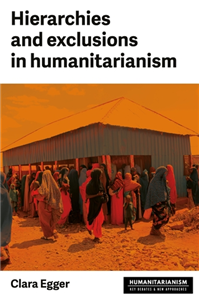
While humanitarians generally present themselves as 'do-gooders' and use this image to gather support and funding, this edited volume addresses hierarchies and exclusions in humanitarianism - an issue that has gained increased attention. Contributions analyse how hierarchies, power asymmetries and exclusion emerge, are maintained and can ultimately be challenged in humanitarian governance. Leading scholars on humanitarianism coming from a variety of disciplinary fields such as international relations, philosophy, organisational science and management, and sociology analyse exclusion dynamics at the individual, organisational and structural levels. Authors thereby combine data from a diverse range of methods, including ethnography, survey and statistical analysis. The volume informs current efforts to increase inclusiveness and equity in humanitarian practice.
Trusted Partner
 Trusted Partner

In this now classic textbook, Richard Kearney surveys the work of nineteen of this century's most influential European thinkers, and acts as an introduction to three major movements: phenomenology, critical theory and structuralism. This edition includes a chapter devoted to Julia Kristeva, whose work in the fields of semiotics and psychoanalytic theory has made a significant contribution to recent continental thought. ;
Trusted Partner

How much religion can the secular state tolerate? And how much democracy can religion tolerate? Encounters between politics and religion carry a high potential for conflict. How can we handle this? The internationally renowned ethicist and philosopher Otfried Höffe explores these questions in depth in his essay, referring to ideas from antiquity to modernity as he does so. His knowledgeable and fascinating remarks are more relevant than ever in a time in which more and more political conflicts around the world are religiously charged.
Trusted Partner

The revival of recognition theory has brought new energy to critical theory. In general terms, recognition theory aims to critically evaluate social structures against a standard of social freedom identified with norms of interaction which are freely recognised by all parties. Until now, attention has primarily focused on the categories and forms of recognition theory. However, the influence of contemporary French theory upon the development of theories of recognition has not yet received the consideration it merits. This collection outlines the current state of recognition theory, studies the impact of French theory, and uses French thought to identity aspects of the recognitive process which are often overlooked. Exploring French accounts of agonistic identity construction, vulnerability, power, ethical obligation and reflexive theory construction, this book supports the intentions of critical theory with heightened attentiveness to oppression in all of its forms.
Trusted Partner

The revival of recognition theory has brought new energy to critical theory. In general terms, recognition theory aims to critically evaluate social structures against a standard of social freedom identified with norms of interaction which are freely recognised by all parties. Until now, attention has primarily focused on the categories and forms of recognition theory. However, the influence of contemporary French theory upon the development of theories of recognition has not yet received the consideration it merits. The book takes up this task. With chapters by internationally recognised authors, the collection outlines the current state of recognition theory, studies the impact of French theory, and uses French thought to identity aspects of the recognitive process which are often overlooked. Exploring French accounts of agonistic identity construction, vulnerability, power, ethical obligation and reflexive theory construction, this book supports the intentions of critical theory with heightened attentiveness to oppression in all of its forms. ;
Trusted Partner
In this book, the complexity and the significance of the foods we eat are analysed from a variety of perspectives, by sociologists, economists, geographers and anthropologists. Chapters address a number of intriguing questions: how do people make judgments about taste? How do such judgments come to be shared by groups of people?; what social and organisational processes result in foods being certified as of decent or proper quality? How has dissatisfaction with the food system been expressed? What alternatives are thought to be possible? The multi-disciplinary analysis of this book explores many different answers to such questions. The first part of the book focuses on theoretical and conceptual issues, the second part considers processes of formal and informal regulation, while the third part examines social and political responses to industrialised food production and mass consumption. Qualities of food will be of interest to researchers and students in all the social science disciplines that are concerned with food, whether marketing, sociology, cultural studies, anthropology, human nutrition or economics.
Trusted Partner
This book explores radical dissent from orthodox mainstream economics, and sets out a theoretically grounded vision for the emerging paradigm of social ecological economics. At the heart of this paradigmatic shift lies an acknowledgement of the inextricable embeddedness of economies in biophysical reality and social structure. The struggle for this transformative vision unfolds through a critical examination of mainstream environmental thought, followed by a nuanced evaluation of contributions from Marxists, socialists, critical institutionalists, feminists and Post-Keynesians grappling with the urgent environmental crisis. Synthesising insights from these diverse and heterodox schools, the book navigates the philosophical underpinnings of science, embracing a critical realist approach that challenges not only mainstream economic thought but also eclectic pluralism, relativism and strong constructionism. The question of what constitutes revolutionary science is explored in light of works by Kuhn, Schumpeter and Neurath, emphasising the pivotal role of values and ideology in works from Marx to Gramsci. Building on these radical and philosophical foundations, the book articulates a preanalytic vision of social ecological economics, dismantling entrenched notions of growth and efficiency in favour of a framework centered on social provisioning and needs embedded in ethics. In a thought-provoking conclusion, the book applies its analytical lens to the multiple crises of modernity within industrialised capital-accumulating economies. An agenda for social ecological transformation toward diverse alternative economies emerges, providing a compelling call to action in the face of contemporary challenges.

