Your Search Results

      • Trusted Partner
        2023

        Formularium paediatricum

        Prescriptions for children in paediatric practice

        by Edited by Dr. Andreas S. Ziegler, Nadine Metzger and Prof. Dr. Dagmar Fischer. In collaboration with Prof. Dr. Peter Langguth, Dr. Stefan Seyferth and Dr. Norbert Ohem

        When children are ill, there is often a lack of suitable proprietary medicines. With experience and expertise, pharmacies close this gap. In the process, they are often confronted with complex questions before preparing a medicine: Is the dosage right? Which dosage form will be accepted by the child? How do I process the active ingredient in a child-friendly way? Which excipients are suitable? Formularium paediatricum provides answers to these and numerous other questions: ■ 70 monographs on tested standard formulations describe the preparation process step-by-step and explain paediatric specifics in terms of formulation. ■ an annotated list of common paediatric excipients as well as comprehensive explanations for evaluating children‘s formulations help to assess unknown, non-standardised formulations. Whenever it is a case of extemporaneous medicines for children: the Formularium paediatricum assists in the preparation in the pharmacy to succeed safely and confidently.

      • Trusted Partner
        2022

        Cannabis

        A handbook for theory and practice

        by Dr. Andreas S. Ziegler, Philipp Böhmer, Prof. Dr. Udo Bonnet, Prof. Dr. Peter Cremer-Schaeffer, Dr. Manfred Fankhauser, Dr. Hendrik Greve, Jackie Grünert, Dr. Klaus Häußermann, Carla Heldt, Prof. Dr. Thomas Herdegen, Dr. Michael Jeitler, Prof. Matthias Karst, PD Dr. Christian S. Kessler, PD Dr. Werner Knöß, Dr. Alberto Manasse Laginha, Dr. Kirsten Müller-Vahl, Dr. Frank Musshoff, Dr. Dr. Gerhard Nahler, Dr. Thorsten Opitz, Prof. Dr. Michael Orth, Albina Petker, PD Dr. Magdalena Prüß, Klaus Reh, Prof. Dr. Roman Rolke, PD Dr. Gisela Skopp, Dr. Felix Stehle, Prof. Dr. Philipp Steven, Prof. Dr. Markus Veit, Dr. Sascha Weber, Jakob Johann Wiese, Dr. Jacqueline Wiesner, Dr. Anne Katrin Wolf, Prof. Dr. Astrid Zobel

        Cannabis has been used as a drug since antiquity – but only recently has it progressed to become one of the most exciting medical-pharmaceutical topics of our times. In scarcely any other area of pharmacotherapy has the state of knowledge recently developed at comparable speed. Experts from a variety of fields are constantly working to generate new scientific evidence for the therapeutic use of cannabis and/or cannabinoids and to provide patients with quality-assured medicinal cannabis. This book is the first to give representatives of all relevant areas of expertise the chance to speak. Alongside medical-therapeutic aspects, they address such questions as cultivation, quality assurance, patient care practices and patient counselling. The result of this accumulated knowledge and skill is a unique overall picture that, for the first time, combines and consolidates the current legal and scientific framework of medicinal cannabis provision! All facts have been painstakingly researched and checked. The result is a scientifically valid work, which sets the standard. This excellent compendium is indispensable for everyone who comes into contact with cannabis for professional or personal reasons.

      • Trusted Partner
        2022

        Integrative Oncology

        A consultation manual for physicians and pharmacists

        by Prof. Dr. Harald Matthes, Dr. Friedemann Schad and Prof. Dr. Ralf-Dieter Hofheinz

        Conventional oncological treatment regimens predominantly target the pathogenesis of the disease and are thereby often deficient – a multidimensional view of the whole person and the therapeutic relationship opens up new, complementary treatment options. Scientific data and sound experience of a meaningful holistic concept are now available. 39 experts in their specialist disciplines present the principles of integrative oncology: - Carcinogenesis, what it means to be human, deficiencies of conventional therapy - Integrative therapy systems, scientific confirmation - Specialised drugs, evaluation of specific disease situations - Common malignancies, treatment - Oncological guidelines Conventional and complementary medicine can draw inspiration from each other – we broaden the view.

      • Trusted Partner
        2022

        Cannabis

        Prescribing aid for physicians

        by Dr. Franjo Grotenhermen and Dr. Klaus Häußermann

        The therapeutic use of cannabis follows the maxim: Start low, go slow! That is how to reach the optimum dose and efficacy with minimum side effects. But this balancing act requires relevant information. Our authors, recognised cannabis experts, have put everything important together in one place: - Indications and routes of administration - Effects, interactions and side effects - Selection and prescription of suitable cannabis-based medicines - Practical tips, e.g. about travelling or driving and road use The 4th edition includes updates on the legal situation, the pharmacology of the endocannabinoid system and of cannabidiol. Directions for use and tips for patients taking cannabis have been added, together with the new prescribing modalities for physicians as well as a list of available cannabis products. This prescribing aid covers the expanded range of cannabis-based medicines and the current legal position.

      • Trusted Partner
        2022

        Drugs as Micronutrient Robbers

        What your doctor and pharmacist ought to tell you

        by Uwe Gröber and Prof. Dr. Klaus Kisters

        Many of us have to take drugs on a regular basis. But birth control pills, antibiotics, blood pressure medication, statins, diabetes medication, diuretics, anti-cancer drugs, gastrointestinal remedies or preparations against osteoporosis can all rob the body of essential vitamins and minerals. Often, drug-related micronutrient deficiency is the unrecognized cause of drug side effects. Symptoms such as exhaustion, depression, lack of concentration, irritability, sleep disorders or even dementia can result. Such problems can be prevented. Informed patients can take preventive measures, avoid unwanted side effects and make their drug therapy more effective. This guide explains what to watch out for and how to improve quality of life.

      • Trusted Partner
        2021

        Drugs in Pregnancy and Lactation

        Guidelines for physicians and pharmacists

        by Prof. Dr. Klaus Friese, Prof. Dr. Klaus Mörike Prof. Dr. Gerd Neumann and Dr. Wolfgang E. Paulus

        The risks in connection with the unborn child and infant when prescribing and dispensing medicinal products are adequately known. However, a sound knowledge of safety issues and precise recommendations – rather than the blanket forgoing of medicinal treatment – is crucial for providing expert, professional advice. To meet this special responsibility, a reliable source of information is essential. The now ninth edition of this standard reference work provides the necessary professional knowledge not only for all physicians and pharmacists who wish to support their pregnant and breast-feeding patients through competent advice, but also for midwives: - Information about embryonal development and developmental disorders - Well over 1000 drug substances with all important medicinal products, assessed individually - Classification according to FDA and ADEC - Differentiated risk assessment, based on current literature - Personal recommendations of the experienced and well-known team of authors from the realms of gynaecology, paediatric medicine and clinical pharmacology. The new edition contains many new assessments from current studies.

      • Trusted Partner
        2020

        Interactions between Medicines and Food

        by Prof. Dr. Martin Smollich and Dr. Julia Podlogar

        Interactions between medicines and foodstuffs may be just as clinically relevant as interactions between individual drugs. A single meal contains several hundred potentially interacting compounds that, in an individual patient, may be the deciding factor as to whether a treatment is successful or not. The resulting, sometimes serious risks are not known to most patients – nor to many physicians and pharmacists. This practical handbook enables anyone interested in applied pharmacotherapy to keep abreast of the complex field of drug interactions. The authors – proven experts in clinical pharmacology and pharmaconutrition – describe the most important interactions and give concrete recommendations for action. Tables and overviews permit fast access to potentially problematic combinations. This completely updated edition now also includes information about fruit juices and curcumin as well as a new chapter on food interactions in oncology.

      • Trusted Partner
        May 2025

        Pain treatment in Nursing Care

        Training for nursing staff

        by Dr. C. Schäfer

        Key information for nurses treating elderly and multimorbid patients in pain: • How does pain manifest and how can it be assessed? • Which analgesics are used and how are they administered? • What roles do opioids and cannabis play? • Which interactions and contraindications must be avoided? The goal: to raise awareness of optimal pain treatment among nursing staff. The training package includes a brochure with presentation texts for 39 PowerPoint slides, plus a downloadable version of the presentation. All materials can be customised as needed. Target group: Pharmacists, physicians, nursing managers in geriatric care

      • Trusted Partner
        2022

        Superfoods

        Facts from the realm of the miracle cures

        by Reinhild Berger, Prof. Dr. Martin Smollich, Friederike Schmidt

        Whereas expressions like “healthy vegetables” or “wholegrain” tend to sound off-putting and intent on spoiling our fun, the term “superfood” makes our hearts sing. Superfoods are considered hip and cool. Self-proclaimed nutritional experts promise the solution to all health problems, including the problem of being overweight. But what is behind these highly praised products? In this compact and entertaining “mini reference guide”, Reinhild Berger takes a critical look at the most popular and most-promoted examples. With introductory sections by Friederike Schmidt. Come and explore the fascinating world of natural products with us!

      • Trusted Partner
        May 2025

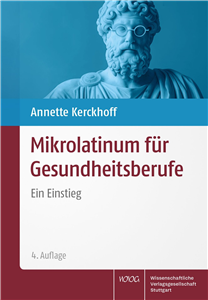
        Microlatinum for Healthcare Professions

        An introduction

        by Prof. Dr. A. Kerckhoff

        In daily healthcare work, communication needs to be quick and clear – and that requires a solid grasp of the right medical terms. This compact book presents the essential foundations of Latin grammar and medical terminology – in a clear, concise and memorable way. The author provides extensive insight into prefixes, suffixes and word roots related to the body and its diseases. • What is post-operative hyperparathyroidism? • What is hyperhidrosis? • What do prophylaxis, provisional and prolapse have in common? Bonus: ‘The Top 40’ exercise section and a ‘Short Overview of the Names of Medicinal Plants’. Who said Latin had to be boring? Target group: Students of pharmacy, medicine, biology, pharmacists, physicians, nursing and healthcare professions

      • Trusted Partner
        January 2025

        Psychotropic Drugs

        Training for nursing staff

        by Dr. C. Schäfer

        Psychotropic drugs in the elderly carry significant risks of dangerous side effects, such as cognitive impairment, falls and confusion, and their use requires careful evaluation of the patient‘s condition and concurrent medications. Nursing staff have the best insight here and play a key role in identi- fying and preventing sometimes serious side effects. This training equips nurses with the basic knowledge they need! Concise, care-focused content featuring key information on common mental illnesses in old age and their treatments. The content covers delirium, unipolar and bipolar depres- sion, schizophrenia, sleep disorders, Parkinson‘s disease, dementia and epilepsy. Nursing staff should be familiar with typical symptoms and commonly used medications, as understanding side effects and interactions can save lives. The content of the second edition has been updated to reflect current therapeutic guidelines and the latest scientific findings. Now available with a practical brochure (replacing the CD). It includes lecture texts for the 37 training slides. The PowerPoint presentation can be downloaded from www.Online-PlusBase.de. If needed, it can be customised by the lecturer or home care pharmacy to meet the specific needs of the corresponding nursing facility. A colour-coded system on the slides offers guidance through the drug groups. Target group: Pharmacists, pharmacies supplying nursing homes, physicians, nursing management

      • Trusted Partner
      • Trusted Partner
        2022

        Paediatric Pharmacy

        Handbook for further training from the PädiaAkademie

        by Dr. MHA Constanze Schäfer, Dr. Christian Ude, Dr. Miriam Ude (eds.)

        The treatment of small and growing patients requires a broad knowledge - and the advising of these patients and their parents calls for great skill! The interdisciplinary team of pharmacist and physician authors addresses the central themes of paediatrics: - What is important for a high degree of safety in pharmacotherapy? - Which prophylactic measures maintain health? - Administration and adherence: what are the special features? - Comprehensive information for advising on the most important indications from the point of view of pharmacists and paediatricians. The handbook has become an established reference work in pharmacies. The second, updated edition provides the fundamental knowledge for certified further training “Specialist Adviser Paediatrics” and for skilful advice at the pharmacy in a tried and tested way.

      • Trusted Partner
        2024

        The second half of your life - a manual

        Tips and strategies for successful ageing

        by Dr. Petra Kiedaisch

        In the middle of our lives, the cards are reshuffled: marriages are divorced, careers are questioned, friendships are ended, questions of meaning are asked, bodies change - and not just hormonally. At the same time, children leave home and parents become carers. From the age of 45, the majority of our population is at the centre of a second upheaval that affects all facets of our lives and leaves us at a loss in many ways. Not only in our daily lives, but also when it comes to planning for our own old age. This guide is designed to help us find our way. It presents the most important information from all areas relevant to a good life after 45. Leading experts from the fields of medicine, nutrition, philosophy, theology, psychology, care, law and finance give recommendations on what to look out for and what tools are needed to get through these challenging years unscathed. Useful checklists round off the articles. The book shows us the unique opportunity to see these challenges not as a crisis but as a source of strength. Not only can we come through this period of our lives healthy and happy, but we can also shape it so that the next age threshold is no longer frightening. During the second phase of adolescence, we lay the foundations for whether and how we will grow older. Be it in terms of health or living together with family and friends. With contributions from: Prof. Dr. Martin Gessmann (philosophy), Dipl. Psych. Claudia Kühner (psychology), Dr Suso Lederle (medicine), Dr Petra Forster (nutrition), Christian Hald, Anja Heine (law), Prof Dr Philipp Schreiber (finance), Prof Dr Thomas Klie (nursing care insurance), Georg Eberhardt (religion).

      • Trusted Partner
      • Trusted Partner
        2022

        Medication Management in the Hospital

        A workbook for ward pharmacists

        by Dr. Insa Gross, MSc Andreas Fischer and Dr. Holger Knoth

        The ward pharmacist in the hospital is like the airbag in a car. As part of a fail-safe system, they monitor and optimise the patient’s drug therapy. Ward pharmacists work hand in hand with medical and nursing staff. That situation is also reflected in this workbook. All the cases presented were patients who had been cared for, evaluated and documented by a physician-pharmacist duo or similar team with combined medical and pharmaceutical expertise. The editorial team considered it important to illustrate all critical indications typically encountered in a hospital. In assessing and selecting the examples, they were able to draw upon the many years’ experience of their pioneering work as hospital and ward pharmacists. Practical tips, checklists, comments and advice for working in the ward environment round off the individual chapters. By learning from actual cases, this book offers the unique chance to develop an instinct for the pitfalls of drug safety. That applies to those who have successfully completed further training in the field of “Medication Management in the Hospital” and for all who wish to ensure the optimum treatment for their patients through competent work in clinical pharmacy.

      • Trusted Partner
        2023

        Food Composition Table for the Practice

        The small Souci/Fachmann/Kraut

        by Founded by S.W. Souci, W. Fachmann and H. Kraut. Revised by Dr. Petra Steinhaus. Edited by the Leibniz Institute of Food Systems Biology at the Technical University of Munich.

        ■ How many omega-3 fatty acids does salmon contain? ■ Which dairy product contains the most calcium? ■ How iron-rich is spinach, really? Whether calories, vitamins or amino acids – whether in field beans, bananas, eggs, chicken, parmesan cheese or onion – it is all here. The compact edition of the time-tested „large SFK [Souci/Fachmann/Kraut]“ offers tested data on over 70 ingredients in more than 360 foods, systematically structured according to food groups. This edition with thousands of values has been completely revised and updated by the Leibniz Institute of Food Systems Biology at the Technical University of Munich. Extra: 32 summary tables cover more than 300 other, less common foods and allow for targeted, clear comparisons. 16 orientation tables provide information about foods with particularly high or low amounts of ingredients. Nutritional values, energy content, main components and ingredients displayed in uniform systematics and a practical format – just look it up!

      • Trusted Partner
        October 2020

        The Eco-Balance on the Plate

        How What We Eat Can Protect the Climate

        by Dr. Malte Rubach

        How much CO₂ is emitted by one serving of spaghetti bolognese? About 1.5 kilograms! This example shows what the meat industry and food logistics mean for the eco-balance of our food. But is it enough to switch to meat-free and dairy-free alternatives or local specialities? Dr. Malte Rubach takes a closer look and reviews our food regime and its impact on our climate. We live in a society influenced by technology and the rising consumption of resources. Rubach argues for a sensible attitude to food and shows what we can still eat with a clear conscience.

      Subscribe to our

      newsletter