Your Search Results

      • Círculo de Poesía

        Círculo de Poesía is a publishing group specialized in poetry with three publishing houses. In addition we publish the most widespread digital poetry magazine in the entire Spanish language world to share poems and information about books and authors with more than 12,000,000 readers (https://circulodepoesia.com/) We have built an extensive distribution and advertising networks specialized in poetry books.

        View Rights Portal
      • Trusted Partner

        Books from Chile - Longlist (Fiction, Essays, Poetry)

        Chile is Guest of Honour at Frankfurter Buchmesse 2027. At the Chilean organiser’s invitation, an open call was conducted among Chilean publishers to find out which titles they would recommend for translation. This is the result. The Chilean Ministry of Foreign Affairs supports the translation and production of Chilean books through the programmeTranslating Chile. Next call for all languages 2026-2027: November 2025 More information:https://www.dirac.gob.cl/open-call-2026-for-translating-chilean-literature

        View Rights Portal
      • Trusted Partner
        March 2026

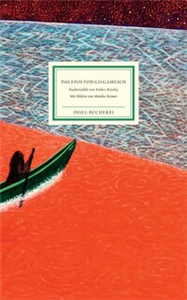
        Das Epos von Gilgamesch

        Nacherzählt und mit einem Nachwort von Esther Kinsky

        by Monika Beisner, Esther Kinsky, Esther Kinsky

        Zwischen den Flüssen Euphrat und Tigris in Mesopotamien, dem heutigen Irak, entstand vor rund 3000 Jahren das Gilgamesch-Epos, eine der ältesten Dichtungen der Menschheit. In Keilschrift auf 12 Tontafeln verfasst, die in unzähligen Scherben erhalten sind, ist die Geschichte des Halbgottes Gilgamesch und seines geliebten Freundes Enkidu bis heute nicht vollständig rekonstruiert und entziffert; erst im 19. Jahrhundert gab es eine erste übersetzte Version davon. Der Wunsch nach Unsterblichkeit, die Angst vor dem Tod und das Fortleben der Verstorbenen im Gedenken der Hinterbliebenen bleiben als universelle Erfahrungen über die Jahrtausende hinweg aktuell. In ihrer fesselnden, die Form des Epos aufnehmenden Nacherzählung zeigt Esther Kinsky, wie modern die Gedanken und Einsichten dieser großen Heldenerzählung auch heute noch sind.

      • Trusted Partner
        Literature & Literary Studies
        January 2019

        The art of The Faerie Queene

        by J. B. Lethbridge, Richard Brown

        The Art of The Faerie Queene is the first book centrally focused on the forms and poetic techniques employed by Spenser. It offers a sharp new perspective on Spenser by rereading The Faerie Queene as poetry which is at once absorbing, demanding and experimental. Instead of the traditional conservative model of Spenser as poet, this book presents the poem as radical, edgy and unconventional, thus proposing new ways of understanding the Elizabethan poetic Renaissance. The book moves from the individual words of the poem to metre, rhyme and stanza form onto its larger structures of canto and book. It will be of particular relevance to undergraduates studying Elizabethan poetry, graduate students and scholars of Renaissance poetry, for whom the formal aspect of the poetry has been a topic of growing relevance in recent years.

      • Trusted Partner
        Literature & Literary Studies
        May 2016

        Early modern women and the poem

        by Susan Wiseman

      • Trusted Partner
        Literature & Literary Studies
        April 2026

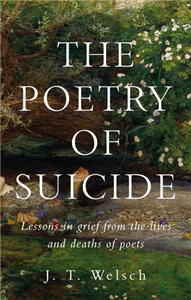
        The poetry of suicide

        Lessons in grief from the lives and deaths of poets

        by J. T. Welsch

        A profound exploration of the connection between poetry and suicide. 'Suicides have a special language,' Anne Sexton wrote in her 1964 poem 'Wanting to Die'. But is it a language we can learn to read? In The poetry of suicide, J. T. Welsch interweaves stories of poets who took their own lives with the long history of suicide in his own family, searching for a new way of understanding these difficult deaths. Beginning with Hamlet's 'To be or not to be?', he delves into the work of Dante, Sylvia Plath, Vladimir Mayakovsky and others, asking what it can teach us about suicide's messy reality. Suicide is more like poetry than we realise, Welsch argues. Both are filled with ambiguities, contradictions and unknowable intentions. Both demand and resist interpretation. Recovering the personal dimension often lost in our medicalised public discourse, Welsch finds practical ways of confronting suicide's poem-like difficulties.

      • Trusted Partner
        Literature & Literary Studies
        March 2024

        Borrowed objects and the art of poetry

        Spolia in Old English verse

        by Denis Ferhatovic

        This study examines Exeter riddles, Anglo-Saxon biblical poems (Exodus, Andreas, Judith) and Beowulf in order to uncover the poetics of spolia, an imaginative use of recycled fictional artefacts to create sites of metatextual reflection. Old English poetry famously lacks an explicit ars poetica. This book argues that attention to particularly charged moments within texts - especially those concerned with translation, transformation and the layering of various pasts - yields a previously unrecognised means for theorising Anglo-Saxon poetic creativity. Borrowed objects and the art of poetry works at the intersections of materiality and poetics, balancing insights from thing theory and related approaches with close readings of passages from Old English texts.

      • Trusted Partner
        Literature & Literary Studies
        September 2025

        Shakespeare the Reviser

        A Lover's Complaint

        by Marina Tarlinskaya

        The project researches the difference between a revision vs. a rewriting. The book explores the English poems and plays of the Early New English period, from the sixteenth to the beginning of seventeenth century, with over 50 entries examined. The main material is the poem A Lover's Complaint; the play Double Falsehood by Lewis Theobald; the revised and rewritten post-Restoration plays such as Richard II (revised by Lewis Theobald), and The Fatal Secret (rewritten Webster's The Duchess of Malfi) by Lewis Theobald. An example of authorial revision is Sonnets 2 and 138.

      • Trusted Partner
        Literature & Literary Studies
        July 2009

        John Ashbery and American Poetry

        by David Herd

        starting point. David Herd sets out to provide readers with a new critical language through which they can appreciate the beauty and complexity of Ashbery's writing. Presenting the poet in all his forms -avant-garde, nostalgic, sublime and camp - the book argues that the perpetual inventiveness of Ashbery's work has always been underpinned by the poets desire to write the poem fit to cope with its occasion. Tracing Ashbery's development in the light of this idea, and from its origins in the dazzling artistic environment of 1950's New York, the book evaluates his poetry against the aesthetic, literary and historical backgrounds that have informed it. The story of a brilliant career, and a history of the period in which that career has taken shape, John Ashbery and American Poetry provides a compelling account of Ashbery's importance to Twentieth Century Literature. ;

      • Trusted Partner
      • Trusted Partner
        Literature & Literary Studies
        October 2009

        Euphues: The Anatomy of Wit and Euphues and His England John Lyly

        An annotated, modern-spelling edition

        by Paul Edmondson, Martin White

        John Lyly's Euphues: The Anatomy of Wit and Euphues and his England, created a literary sensation in their own age, and had a profound influence on Elizabethan prose. This modern-spelling edition of the two works, the first for nearly a century, is designed to allow the twenty-first century reader access to this culturally significant text and to explore the fascination that it exerted. Attuned to the needs of both students and specialists, the text is edited from the earliest complete witnesses, is richly annotated, and facilitates an understanding of Lyly's narrative technique by distinguishing typographically between narrative levels. The introduction explores the relationship between the dramatic and non-dramatic work, locating Lyly's highly influential plays in a wider context and Euphues' Latin poem in praise of Elizabeth I, translated for the first time, is discussed in an Appendix. A work of primary importance for students of Renaissance prose, this edition complements the on-going publication of Lyly's dramatic works in The Revels Plays. ;

      • Trusted Partner
        Literature & Literary Studies
        April 2024

        Riddles at work in the early medieval tradition

        Words, ideas, interactions

        by Megan Cavell, Jennifer Neville

        Capitalising on developments in the field over the past decade, Riddles at work provides an up-to-date microcosm of research on the early medieval riddle tradition. The book presents a wide range of traditional and experimental methodologies. The contributors treat the riddles both as individual poems and as parts of a tradition, but, most importantly, they address Latin and Old English riddles side-by-side, bringing together texts that originally developed in conversation with each other but have often been separated by scholarship. Together, the chapters reveal that there is no single, right way to read these texts but rather a multitude of productive paths. This book will appeal to students and scholars of early medieval studies. It contains new as well as established voices, including Jonathan Wilcox, Mercedes Salvador-Bello and Jennifer Neville.

      • Trusted Partner
      • Trusted Partner
      • Trusted Partner
      • Trusted Partner
        Literature & Literary Studies
        June 2015

        A Supplement of the Faery Queene

        By Ralph Knevet

        by J. B. Lethbridge

        Ralph Knevet's Supplement of the Faery Queene (1635) is a narrative and allegorical work, which weaves together a complex collection of tales and episodes, featuring knights, ladies, sorcerers, monsters, vertiginous fortresses and deadly battles - a chivalric romp in Spenser's cod medieval style. The poem shadows recent English history, and the major military and political events of the Thirty Years War. But the Supplement is also an ambitiously intertextual poem, weaving together materials from mythic, literary, historical, scientific, theological, and many other kinds of written sources. Its encyclopaedic ambitions combine with Knevet's historical focus to produce an allegorical epic poem of considerable interest and power. This new edition of Knevet's Supplement, the first scholarly text of the poem ever published, situates it in its literary, historical, biographical, and intellectual contexts. An extensive introduction and copious critical commentary, positioned at the back of the book, will enable students and scholars alike to access Knevet's complicated and enigmatic meanings, structures, and allusions. ;

      • Trusted Partner
        Literature & Literary Studies
        January 2021

        A Supplement of the Faery Queene

        By Ralph Knevet

        by Christopher Burlinson, J. B. Lethbridge, Andrew Zurcher

        Ralph Knevet's Supplement of the Faery Queene (1635) is a narrative and allegorical work, which weaves together a complex collection of tales and episodes, featuring knights, ladies, sorcerers, monsters, vertiginous fortresses and deadly battles - a chivalric romp in Spenser's cod medieval style. The poem shadows recent English history, and the major military and political events of the Thirty Years War. But the Supplement is also an ambitiously intertextual poem, weaving together materials from mythic, literary, historical, scientific, theological, and many other kinds of written sources. Its encyclopaedic ambitions combine with Knevet's historical focus to produce an allegorical epic poem of considerable interest and power. This new edition of Knevet's Supplement, the first scholarly text of the poem ever published, situates it in its literary, historical, biographical, and intellectual contexts. An extensive introduction and copious critical commentary, positioned at the back of the book, will enable students and scholars alike to access Knevet's complicated and enigmatic meanings, structures, and allusions.

      • Trusted Partner
        Literature & Literary Studies
        August 2002

        An Apology for Poetry (or The Defence of Poesy)

        Sir Philip Sidney

        by R. W. Maslen

        An Apology for Poetry (or The Defence of Poesy), by the celebrated soldier-poet Sir Philip Sidney, is the most important work of literary theory published in the Renaissance. The new introduction and notes include a wealth of new information and new readings drawing on recent developments in Renassance Studies. Unfamiliar words and phrases are glossed, classical and other references explained, and difficult passages analysed in detail. The first separate edition of Sidney's seminal text to be published for more than a decade. Since 1965 Geoffrey Shepherd's edition of the Apology has been the standard, and this revision of Shepherd's edition, with a new introduction and extensive notes, is designed to introduce Sidney's best-known work to a new generation of readers at the beginning. ;

      • Trusted Partner
      • Trusted Partner
        Literature & Literary Studies
        December 2003

        The poetry of Carol Ann Duffy

        Choosing tough words

        by Angelica Michelis, Anthony Rowland

        The first full-length collection of essays on the poetry of Carol Ann Duffy. Duffy's poetry is both respected by academics, and widely read and enjoyed by both children and adults. Approaches Duffy's work from a variety of literary theoretical perspectives, including feminism, masculinity, national identity and post-structuralism. Situates Duffy's work in relation to current debates about the state, value and social relevance of contemporary British poetry. Will become the benchmark anthology on Duffy. ;

      Subscribe to our

      newsletter