
Self-Counsel Press
Livres Canada Books
View Rights Portal


Minor illness or a serious disease ? Through systematic questioning, pharmacists or pharmaceutical technicians can establish the possibilities and limits of self-medication. Each monograph on the over 100 indications for self-medication includes: - A flow chart: basis for the structured consultation - A brief description: additional information about the symptoms - Recommended medications/groups of medications: the treatment options - Additional advice: individual supportive and alternative treatment options - Specific knowledge for advising particular patient groups: e.g. pregnant women, children and senior citizens New for the 7th edition: Monographs that explore the possibilities of supportive self-medication for indications such as hypertension and diabetes. Information about what to do in the case of poisoning, scabies or inflammation of the nail bed (paronychia) is also provided! The details about active substances, products and additional tips have been updated. The pocket guide has long been the standard for providing advice on self-medication – a “must-have”!

Critical theory and Independent Living explores intersections between contemporary critical theory and disabled people's struggle for self-determination. The book highlights the affinities between the Independent Living movement and studies of epistemic injustice, biopower, and psychopower. It discusses in depth the activists' critical engagement with welfare-state paternalism, neoliberal marketisation, and familialism. This helps develop a pioneering comparison between various welfare regimes grounded in Independent Living advocacy. The book draws on the activism of disabled people from the European Network on Independent Living (ENIL) by developing case studies of the ENIL's campaigning for deinstitutionalisation and personal assistance. It is argued that this work helps rethink independence as a form of interdependence, and that this reframing is pivotal for critical theorising in the twenty-first century.
 Trusted Partner

Cough, hay fever or herpes are at least as troublesome during pregnancy and breast-feeding as under normal “conditions” - and yet everything is different. Physiological changes to the body in pregnancy and lactation, together with the vulnerability of the unborn baby or infant, set particular requirements when selecting the correct, safe medication. Especially in the area of self-medication, the needs of pregnant and breast-feeding women for information are great and call for competent advice! This comprehensive handbook is the key: General information about pharmacotherapy, supplementary measures, vaccinations, questions about diet and infections in pregnancy and lactation creates a broad knowledge base. The core feature of the book are the traffic light tables, with precise recommendations for medicinal products for all types of treatment. All the important indications for selfmedication in pregnancy and lactation are listed and the tables are supported by detailed explanations of the individual assessments. The sections “Advice from medical specialists” are particularly useful, with additional tips from gynaecologists and “Footnotes” with relevant information on the use of prescription- only medicines – and as the ultimate practical tool: the enclosed sales counter leaflets with all traffic light tables to enable quick reference for first-class advice!
Trusted Partner
In his wide-ranging study of architecture and cultural evolution, Chris Abel argues that, despite progress in sustainable development and design, resistance to changing personal and social identities shaped by a technology-based and energy-hungry culture is impeding efforts to avert drastic climate change. The book traces the roots of that culture to the coevolution of Homo sapiens and technology, from the first use of tools as artificial extensions to the human body, to the motorized cities spreading around the world, whose uncontrolled effects are changing the planet itself. Advancing a new concept of the meme, called the 'technical meme,' as the primary agent of cognitive extension and technical embodiment, Abel proposes a theory of the 'extended self' encompassing material and spatial as well as psychological and social elements. Drawing upon research from philosophy, psychology and the neurosciences, the book presents a new approach to environmental and cultural studies that will appeal to a broad readership searching for insights into the origins of the crisis.
Trusted Partner
 Trusted Partner

Suicide and the Gothic is the first protracted study of how the act of self-destruction recurs and functions within one of the most enduring and popular forms of fiction. Comprising eleven original essays and an authoritative introduction, this collection explores how the act of suicide has been portrayed, interrogated and pathologised from the eighteenth century to the present. The featured fictions embrace both canonical and the less-studied texts and examine the crisis of suicide - a crisis that has personal, familial, religious, legal and medical implications - in European, American and Asian contexts. Featuring detailed interventions into the understanding of texts as temporally distant as Thomas Percy's Reliques and Patricia Highsmith's crime fictions, and movements as diverse as Wertherism, Romanticism and fin-de-siècle decadence, Suicide and the Gothic provides a comprehensive and compelling overview of this recurrent crisis in fiction and culture.
Trusted Partner

In this bold and exhilarating mix of memoir and writing guide, Melissa Febos tackles the emotional, psychological, and physical work of writing intimately while offering an utterly fresh examination of the storyteller's life and the challenges it presents. How do we write about the relationships that have formed us? How do we describe our bodies, their desires and traumas? What does it mean to have your writing, or living, dismissed as "navel-gazing"-or else hailed as "so brave, so raw"? And to whom, in the end, do our most intimate stories belong? Drawing on her journey from aspiring writer to acclaimed author and writing professor-via addiction and recovery, sex work and academia-Melissa Febos has created a captivating guide to the writing life, and a brilliantly unusual exploration of subjectivity, privacy, and the power of divulgence. Candid and inspiring, Body Work will empower readers and writers alike, offering ideas-and occasional notes of caution-to anyone who has ever hoped to see their true self reflecting back from the open page.
Trusted Partner

In this bold and exhilarating mix of memoir and writing guide, Melissa Febos tackles the emotional, psychological, and physical work of writing intimately while offering an utterly fresh examination of the storyteller's life and the challenges it presents. How do we write about the relationships that have formed us? How do we describe our bodies, their desires and traumas? What does it mean to have your writing, or living, dismissed as "navel-gazing"-or else hailed as "so brave, so raw"? And to whom, in the end, do our most intimate stories belong? Drawing on her journey from aspiring writer to acclaimed author and writing professor-via addiction and recovery, sex work and academia-Melissa Febos has created a captivating guide to the writing life, and a brilliantly unusual exploration of subjectivity, privacy, and the power of divulgence. Candid and inspiring, Body Work will empower readers and writers alike, offering ideas-and occasional notes of caution-to anyone who has ever hoped to see their true self reflecting back from the open page.
Trusted Partner
Trusted Partner
In this bold and exhilarating mix of memoir and writing guide, Melissa Febos tackles the emotional, psychological, and physical work of writing intimately while offering an utterly fresh examination of the storyteller's life and the challenges it presents. How do we write about the relationships that have formed us? How do we describe our bodies, their desires and traumas? What does it mean to have your writing, or living, dismissed as "navel-gazing"-or else hailed as "so brave, so raw"? And to whom, in the end, do our most intimate stories belong? Drawing on her journey from aspiring writer to acclaimed author and writing professor-via addiction and recovery, sex work and academia-Melissa Febos has created a captivating guide to the writing life, and a brilliantly unusual exploration of subjectivity, privacy, and the power of divulgence. Candid and inspiring, Body Work will empower readers and writers alike, offering ideas-and occasional notes of caution-to anyone who has ever hoped to see their true self reflecting back from the open page.
Trusted Partner
Works of travel have been the subject of increasingly sophisticated studies in recent years. This book undermines the conviction with which nineteenth-century British writers talked about darkest Africa. It places the works of travel within the rapidly developing dynamic of Victorian imperialism. Images of Abyssinia and the means of communicating those images changed in response to social developments in Britain. As bourgeois values became increasingly important in the nineteenth century and technology advanced, the distance between the consumer and the product were justified by the scorn of African ways of eating. The book argues that the ambiguities and ambivalence of the travellers are revealed in their relation to a range of objects and commodities mentioned in narratives. For instance, beads occupy the dual role of currency and commodity. The book deals with Henry Morton Stanley's expedition to relieve Emin Pasha, and attempts to prove that racial representations are in large part determined by the cultural conditions of the traveller's society. By looking at Joseph Conrad's Heart of Darkness, it argues that the text is best read as what it purports to be: a kind of travel narrative. Only when it is seen as such and is regarded in the context of the fin de siecle can one begin to appreciate both the extent and the limitations of Conrad's innovativeness.
Trusted Partner
A profound exploration of the connection between poetry and suicide. 'Suicides have a special language,' Anne Sexton wrote in her 1964 poem 'Wanting to Die'. But is it a language we can learn to read? In The poetry of suicide, J. T. Welsch interweaves stories of poets who took their own lives with the long history of suicide in his own family, searching for a new way of understanding these difficult deaths. Beginning with Hamlet's 'To be or not to be?', he delves into the work of Dante, Sylvia Plath, Vladimir Mayakovsky and others, asking what it can teach us about suicide's messy reality. Suicide is more like poetry than we realise, Welsch argues. Both are filled with ambiguities, contradictions and unknowable intentions. Both demand and resist interpretation. Recovering the personal dimension often lost in our medicalised public discourse, Welsch finds practical ways of confronting suicide's poem-like difficulties.
Trusted Partner
From A for allergic rhinitis to Z for zoster, providing guidance on self-medication is a key responsibility in pharmacy – and one that spans a wide range of topics. The 8th edition of this compact, practical standard work delivers both pharma- ceutical knowledge and counselling competence. Over 100 indications, presented in a proven, systematic format: • Flowcharts provide a structured foundation for each consultation • Concise descriptions summarise the key aspects of each condition • Recommended active ingredients and substance classes present treatment options at a glance • Supplementary information offers additional recom- mendations, alternative approaches and practical tips • Guidance for special patient groups supports tailored coun- selling during pregnancy, in childhood and for senior patients This practical pocket guide is a must-have companion for pharmacy consultations. Target group: Pharmacists, pharmaceutical technicians, pharmacy interns, pharmaceutical technician students, pharmaceutical technician trainees, returnees
Trusted Partner
The moral problem of authority is the challenge of reconciling legitimate authority (the right to rule) with the demands of freedom and rationality. In this book, I argue that authority can have legitimacy, but when it does it generates a moral dilemma, where the obligation to obey comes at some cost to freedom and reason. Hence, not only do I depart from the views of those who insist that authority can never have legitimacy, but also those who maintain that insofar as authority is legitimate it simply satisfies the demands of freedom or rationality. My focus here will be on both what it is that justifies authority (in particular focusing on membership, and the goods of membership) as well what type of reason an authoritative directive is, how it can come into conflict with others reasons, and how those conflicts are resolved.
Trusted Partner
Trusted Partner
Trusted Partner

Air empire is a fresh study of civil aviation as a tool of late British imperialism. The first pioneering flights across the British empire in 1919-20 were flag-waving adventures that recreated an era of plucky British maritime exploration and conquest. Britain's development of international air routes and services was approved, organised and celebrated largely in London; there was some resistance in and beyond the subordinate colonies and dominions. Negotiating the financing and geopolitics of regular commercial air service delayed its inception until the 1930s. Technological, managerial and logistical problems also meant that Britain was slow into the air and slow in the air. Propaganda concealed underperformance and criticism. The study uses archival sources, biographies, industry magazines and newspapers to chronicle the disputed progress toward air empire. The rhetoric behind imperial air service offers a glimpse of late imperial hopes, fears, attitudes and style. Empire air service had emotional appeal and symbolic value, but disappointed in practice.
Trusted Partner
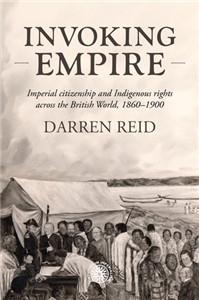
Invoking Empire examines the histories of Canada, South Africa, Australia, and New Zealand during the transitional decades between 1860-1900, when each gained some degree of self-government yet still remained within the sovereignty of the British Empire. It applies the conceptual framework of imperial citizenship to nine case studies of settlers and Indigenous peoples who lived through these decades to make two main arguments. It argues that colonial subjects adapted imperial citizenship to both support and challenge settler sovereignty, revealing the continuing importance of imperial authority in self-governing settler spaces. It also posits that imperial citizenship was rendered inoperable by a combination of factors in both Britian and the colonies, highlighting the contingency of settler colonialism on imperial governmental structures and challenging teleological assumptions that the rise of settler nation states was an inevitable result of settler self-government.
Trusted Partner

The new activity of trans-continental civil flying in the 1930s is a useful vantage point for viewing the extension of British imperial attitudes and practices. Cultures and caricatures of British imperial aviation examines the experiences of those (mostly men) who flew solo or with a companion (racing or for leisure), who were airline passengers (doing colonial administration, business or research), or who flew as civilian air and ground crews. For airborne elites, flying was a modern and often enviable way of managing, using and experiencing empire. On the ground, aviation was a device for asserting old empire: adventure and modernity were accompanied by supremacism. At the time, however, British civil imperial flying was presented romantically in books, magazines and exhibitions. Eighty years on, imperial flying is still remembered, reproduced and re-enacted in caricature.
Trusted Partner


— An extraordinary story of migration — Contemporary history of the 70s and backgrounds to India, Afghanistan, Iran, Turkey, Bulgaria, the former Yugoslavia, the GDR and the Federal Republic of Germany He was the son of the Sikh priest, a successful 400-meter runner and, eventually, a migrant. In 1979, Bagicha Singh turned his back on his homeland and set off with a head full of dreams on the long, turbulent overland journey from India to Germany. It was the year the Soviet Union invaded Afghanistan and the Islamic Revolution raged in Iran. A year whose aftermath continues to shape the world to this day. More than 40 years later, his daughter tells the story of Bagicha's adventurous journey. The result is a touching document on origin, contemporary history, and the meaning of migration.



