
October 1998
Your Search Results
-
Promoted Content


-
Promoted Content
-
 Trusted Partner
 Literature & Literary StudiesMarch 2023
Sleep and its spaces in Middle English literature
Emotions, ethics, dreams
by Megan Leitch
Middle English literature is intimately concerned with sleep and the spaces in which it takes place. In the medieval English imagination, sleep is an embodied and culturally determined act. It is both performed and interpreted by characters and contemporaries, subject to a particular habitus and understood through particular hermeneutic lenses. While illuminating the intersecting medical and moral discourses by which it is shaped, sleep also sheds light on subjects in favour of which it has hitherto been overlooked: what sleep can enable (dreams and dream poetry) or what it can stand in for or supersede (desire and sex). This book argues that sleep mediates thematic concerns and questions in ways that have ethical, affective and oneiric implications. At the same time, it offers important contributions to understanding different Middle English genres: romance, dream vision, drama and fabliau.
-
Trusted Partner
 Literature & Literary StudiesJune 2021
Sleep and its spaces in Middle English literature
by Megan Leitch, Anke Bernau, David Matthews, James Paz
-
Trusted Partner

 2019
2019Good Evening, Good Night
The cultural history of sleep
by Karoline Walter
What we associate with sleep is shaped by the culture we live in. Whereas the God of the Bible never sleeps, the sinful human falls asleep every night and is thus marked as an inferior being. In the Age of Enlightenment, (too much) sleep was considered a waste of strength, which could otherwise be used to change the world. These days, sleep seems to be subject to the same tenets of usefulness as everything else and is seen to assist with the optimization of one’s self. However, culture and technology also influence how we sleep: for example, the constant availability of light, the modern conditions of work and all sorts of distractions have meant that we no longer follow our natural rhythm – a first sleep before midnight and a second sleep after a longer period of wakefulness, during which we may be active. In “Good Evening, Good Night”, Karoline Walter uses numerous examples from history, literature and research to illustrate how sleep and sleeping have changed across cultures and eras – an entertaining read, certainly nothing to put you to sleep.
-
Trusted Partner
 Literature & Literary StudiesSeptember 2025
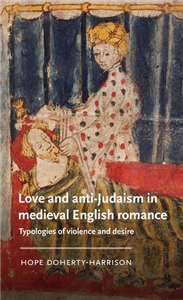
Love and anti-Judaism in medieval English romance
Typologies of violence and desire
by Hope Doherty-Harrison
Love and anti-Judaism is a new examination of medieval romance for the questions it poses of the most significant events in Christian history. Providing new readings of Sir Gawain and the Green Knight, Sir Orfeo, Sir Gowther and Sir Amadace, the book argues that romance explores depictions of love-and the sacrifices it may necessitate-in the Hebrew Bible, especially where they do not easily fit into interpretations asserting that this history must prefigure Christ and the crucifixion. An examination of anti-Judaism as a discourse of violence and desire that could be turned inwardly to expose the irresolution in Christianity, this book will provoke new investigations into the religious crises of medieval romance.
-
Trusted Partner
-
Trusted Partner
-
Trusted Partner
-
Trusted Partner
-
Trusted Partner
-
Trusted Partner
-
Trusted Partner
-
Trusted Partner
 Humanities & Social SciencesJuly 2026
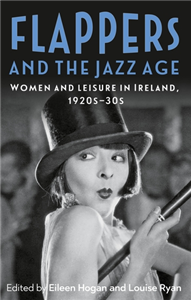
Flappers and the Jazz Age
Women and leisure in Ireland, 1920s–30s
by Eileen Hogan, Louise Ryan
People's ordinary, everyday lives - and more specifically, their leisure activities - are often obscured within existing academic research on 1920s-30s Ireland. This book seeks to redress that neglect by exploring the relationship between identity, recreation, and culture both North and South of the border, with particular attention to women's lived experiences. Leisurely pursuits during this period were commonly overshadowed by religious influence and the nation-building projects in post-partition Ireland. Nevertheless, there existed alternative spaces, where people enjoyed dancing, singing, listening to music, shopping, glamour, reading magazines, swimming, travelling, and going to the cinema. Such activities reflected international trends beyond national borders. This book documents those activities and spaces through a feminist lens and intersectional analysis of gender, class, religion and rural/urban identities. It brings together multi-disciplinary perspectives including cultural studies, architecture, geography, fashion, and musicology. In so doing, we present new insights and advance understanding of this under-researched aspect of Irish history.
-
Trusted Partner

 Children's & YAJuly 2010
Die Abenteuerfahrten des Kip Parvati
by Larrea, Miguel / Spanisch Fischer, Martin B.
-
Trusted Partner
-
Trusted Partner
-
Trusted Partner
-
Trusted Partner
-
Trusted Partner

 Children's & YAAugust 2020
Cryptos
by Poznanski, Ursula
Where do we go when Nowhere is the only destination left? Kerrybrook is Jana‘s favourite virtual escape. An idyllic fishing village with beautiful nature and, every now and then, a breeze of fresh air from the nearby sea. Jana, is this world‘s designer and person in power, she’s satisfied with her masterpiece. Best job so far. Until one day, a dead body is found, in both, ’Virtual Reality‘ and the real world. In times of climate change, VR is the only safe place for humankind. That‘s why Jana needs to solve the crime, she’s responsible for stopping the destruction. • CliFi Thriller (Climate Fiction): Climate change & virtual reality • For fans of Black Mirror (Netflix) • All age readers • Strong, female protagonist • Highly relevant topic WHITE RAVENS recommendation (2021): "In the not too distant future, the world is an inhospitable place: droughts, storms, floods. That’s why world designers construct »alternative realities«, such as landscapes populated by dinosaurs, life at court in the Middle Ages, and surfing and chilling out on a beach. People can switch between these worlds at will and, when they die there, they are not truly dead; instead, they merely return to the »real world« – same as at night when they sleep. Then they are reunited with their body, which is lying inside a capsule. In »Cryptos«, Ursula Poznanski pulls out all the stops of storytelling: She embeds numerous references to human and intellectual history in an action-packed and extremely suspenseful thriller plot. In the process, she raises central existential and ontological questions that result from the interplay between the real and the virtual worlds. This complex dystopian novel is narrated in such an enjoyable way that readers will hardly notice their brains going into overdrive as they devour it."



