Your Search Results

      • China Social Sciences Press

        Established in June, 1978, China Social Sciences Press is sponsored by Chinese Academy of Social Sciences. CSSP is a national level publishing house focusing on academic publications mainly in the field of humanities and social sciences. In 1993, CSSP won the honorary title of “national outstanding press” granted by Propaganda Department of CPC and General Administration of Press and Publication.The missions and the publication targets of CSSP are: first, editing and publishing the most outstanding academic results of CASS and great achievements from the fields of social sciences and culture circle in China, including academic works, text books, reference books and popular books; second, translating Chinese versions of significant humanities and social sciences books written by western authors.

        View Rights Portal
      • Strange Days Books, Social Cooperative Enterprise

        Strange Days Books is a social cooperative publishing firm based in Crete, Greece. Since 2012 we have published almost 100 books. Every year we organize Sand Festival, an online Writers’ Workshop and - in cooperation with www.eyelands.gr literary magazine - the one and only international short story competition based in Greece, plus our International Book Awards. In 2019 SDB was the only publishing house in Greece to receive approval by the European Union’s Creative Europe translation funding program for its project "Strange Days in Europe”. Strange Days Books is an entirely independent publisher, primarily interested in showcasing the wealth of new writing voices in Greece. We work closely with our authors to create books that will appeal to booklovers, books about the present, books that strive to push the art of literature forward, books written with talent and passion, books that challenge the way we see the world, books bursting with new ideas and intriguing perspectives.

        View Rights Portal

      • Trusted Partner
        Humanities & Social Sciences
        February 2013

        Building a neighborly community

        Post-cold war China, Japan, and Southeast Asia

        by Daojiong Zha, Weixing Hu

        Building a neighborly community, available for the first time in paperback, explores the political economy of post-cold war East Asian co-operation by examining the history of intra-regional co-operation, against the background of China's rise and Japan's relative decline, both real and perceived. The book in particular examines how East Asian states have dealt with the South China Sea as a region-wide security challenge and the imperative for self-help after the 1997 economic crisis. The book builds on the explanatory strength of analytical eclecticism, and ultimately concludes that China, South Korea, Japan, and ASEAN states have aimed for constructing a neighborly community. The fundamental differences between a neighborly community and the kind of community that has emerged in Europe and North America are that qualification for membership is not conditional, the process of routine interactions is itself one of reassurance, the aim of inter-state interactions is to foster acceptance of each other, and changes in a member's foreign policy behaviour are accepted. ;

      • Trusted Partner
        Humanities & Social Sciences
        October 2006

        Blair’s community

        Communitarian thought and New Labour

        by Sarah Hale, Chantal Hamill

        Blair's community is an exciting and timely book which challenges the accepted wisdom about the role of communitarian thought in the development of New Labour under Tony Blair. From the mid-1990s there has been a widespread view that Labour policies have reflected, or even been influenced by, the work of communitarian writers like Amitai Etzioni and John Macmurray, and philosophers such as Alasdair MacIntyre and Michael Sandel. The book begins by establishing that such a view was widely, and frequently unquestioningly, held, in both popular and academic forums. It then identifies reasons for the persistence of this impression, the evidence on which it was based, and the understandings of communitarianism used by commentators. The book argues that existing accounts of 'New Labour's communitarianism' fail to present an accurate picture because they are - in some cases explicitly - working with a generic or composite conception of communitarianism which bears little relation to the work of the communitarian writers whose names have been associated with the party. ;

      • Trusted Partner
        Humanities & Social Sciences
        May 2009

        Governance as social and political communication

        by Henrik Bang, Martin Hargreaves

        Governance is among the most used of new ideas in the social sciences, most notably in the fields of political science, public administration, sociology, social and political theory. As ever, debates within disciplines rarely transcend disciplinary boundaries. This volume, newly available in paperback, brings together authors from these fields to elaborate on the development of governance analysis in new conceptions of political and democratic communication. It not only seeks to identify, describe and evaluate the contribution of each discipline to a theory of communicative governance, but also lays the foundation of a multidisciplinary framework for studying the mediation in communicative governance of societal concerns for effectiveness, order and participation. The book is theoretical and comparative, drawing on authors and research in Britain, Denmark, France, Germany, the Netherlands and the US. It adopts an anti-foundational approach to deconstruct the essentialist discourses endemic in each discipline and the disciplinary traditions of each country. Notions such as steering and control in public administration, identities and domination in sociology, and the community and self in social and political theory are analysed in depth. The book will demonstrate clearly how the distinctive traditions of each discipline lead them to construct overlapping, loosely coupled, and sometimes incommensurable ideas about the institutions, politics and policies of governance. ;

      • Trusted Partner
        Humanities & Social Sciences
        October 2023

        Towards a just Europe

        A theory of distributive justice for the European Union

        by João Labareda

        This highly original book constitutes one of the first attempts to examine the problem of distributive justice in the European Union in a systematic manner. João Labareda argues that the set of shared political institutions at EU level, including the European Parliament and the Court of Justice of the EU, generate democratic duties of redistribution among EU citizens. Furthermore, the economic structure of the EU, comprising a common market, a common currency and a free-movement area, triggers duties of reciprocity among member states. The responsibilities to fulfil these duties, Labareda argues, should be shared by the local, national and supranational levels of government. Not only should the EU act as a safety net to the national welfare systems, applying the principle of subsidiarity, but common market and Eurozone regulations should balance their efficiency targets with fair cooperation terms. The concrete policy proposals presented in this book include a threshold of basic goods for all EU citizens, an EU labour code, a minimum EU corporate tax rate and an EU fund for competitiveness. Labarada argues that his proposals match the political culture of the member states, are economically feasible, can be translated into functioning institutions and policies and are consistent with the limited degree of social solidarity in Europe. This book is a major contribution to the understanding of what a just Europe would look like and what it might take to get us there. This book is relevant to United Nations Sustainable Development Goal 10, Reduced inequalities

      • Trusted Partner
        Humanities & Social Sciences
        July 2025

        Threads of labour

        Tapestry of an ex-industrial community

        by Lisa Taylor

        Charting a collaborative art-based project using carpet-making skills and the industrial heritage of the region, the book investigates how a cleaved ex-industrial community used arts methodologies as a cohesion strategy. Drawing on images from the company's archives, the book mines the history of Firths Carpets Limited, a firm that carpeted interiors across the globe from the mid-1800s. Women's labour and tastes were business critical to the production and sale of Firths carpets. Drawing on the author's personal connection to the village, an ethnographic sensibility and novel research techniques, ex-worker responses to a village radically altered by ruination are explored. Ex-workers felt nostalgia for the dignity of work and a sense of homesickness in a village ghosted by industrial spectres of the past. Threads of Labour argues that left-behind deindustrialised places require acts of social re-making if their communities are to survive.

      • Trusted Partner
        Business, Economics & Law
        February 2025

        The political economy of Turkey’s integration to Europe

        Uneven development and hegemony

        by Elif Uzgören

        This book examines Turkey's integration with Europe within structural dynamics of globalisation from a critical political economy perspective. Critical approaches have been sidelined within European Studies. Turkish enlargement is not an exemption. The analyses are based on original data generated by 109 interviews conducted in 2010, 2017 and 2023 with five categories of actors: representatives of capital and labour, political parties, state officials, and struggles around ecology, patriarchy and migration. It argues that the pro-membership was hegemonic in the 2000s which was contested by two rival class strategies, Ha-vet and neo-mercantilism. In the 2010s, pro-membership is no longer hegemonic within rising critical tone of social forces supporting rival class strategies. Unevenness of Turkey's trajectory of integration to Europe is likely to be consolidated through market integration and management of migration through transactional approach.

      • Trusted Partner
        Humanities & Social Sciences
        April 2020

        The British political elite and Europe, 1959-1984

        A higher loyalty

        by Bob Nicholls

        This book offers an original interpretation of Britain's relationship with Europe over a 25 year period: 1959-84 and advances the argument that the current problems over EU membership resulted from much earlier political machinations. This evidence based account of the seminal period analyses the applications for EEC membership, the 1975 referendum, and the role of the press. Was the British public misled over the true aims of the European project? How significant was the role of the press in changing public opinion from anti, to pro Common Market membership? Why, after over 40 years since Britain became a member of the European community, does the issue continue to deeply divide not only the political elite, but also the British public? These, and other pertinent questions are answered in this timely book on a subject that remains topical and highly controversial.

      • Trusted Partner
        Humanities & Social Sciences
        April 2018

        Disability in the Industrial Revolution

        Physical impairment in British coalmining, 1780–1880

        by David M. Turner, Daniel Blackie, Julie Anderson

        An electronic version of this book is also available under a Creative Commons (CC-BY-NC-ND) license, thanks to the support of the Wellcome Trust. The Industrial Revolution produced injury, illness and disablement on a large scale and nowhere was this more visible than in coalmining. Disability in the Industrial Revolution sheds new light on the human cost of industrialisation by examining the lives and experiences of those disabled in an industry that was vital to Britain's economic growth. Although it is commonly assumed that industrialisation led to increasing marginalisation of people with impairments from the workforce, disabled mineworkers were expected to return to work wherever possible, and new medical services developed to assist in this endeavour. This book explores the working lives of disabled miners and analyses the medical, welfare and community responses to disablement in the coalfields. It shows how disability affected industrial relations and shaped the class identity of mineworkers. The book will appeal to students and academics interested in disability, occupational health and social history.

      • Trusted Partner
        Medicine
        May 2024

        Creative approaches to wellbeing

        The pandemic and beyond

        by Victoria Tischler, Karen Gray

        A compilation of case studies illustrating the use of arts, culture and other community assets individuals and communities used to cope and develop resilience during the Covid-19 pandemic, demonstrating valuable lessons that might help us develop resilience in similar future crises.

      • Trusted Partner
        Humanities & Social Sciences
        April 2025

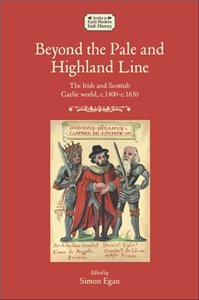
        Beyond the Pale and Highland Line

        The Irish and Scottish Gaelic world

        by Simon Egan

        This book offers important new insights into the history and culture of the Gaelic-speaking world from the mid-fifteenth century through to the reign of James VI and I. Throughout this period, the reach of the English and Scottish crowns within these western regions was limited. The initiative lay with local communities and royal power was contingent upon negotiating with well-established and largely autonomous aristocratic lineages. Moreover, events within this western world could exert a powerful, often unpredictable, influence upon the affairs of the wider archipelago. Using a series of case studies, this collection examines the evolving relationship between Ireland and Scotland in rich detail. It demonstrates how this world interacted with the encroaching English and Scottish states and underlines the importance of paying closer attention to this neglected area of Irish and British history.

      • Trusted Partner
        The Arts
        September 2025

        Do It Yourself

        Making political theatre

        by Common Wealth

        A unique guide to creating political theatre, produced by one of the UK's most exciting companies. Do It Yourself is a vital resource for anyone interested in exploring theatre culture grounded in and produced by working-class, multi-racial communities. Designed for artists, activists and community organisers, the book offers a step-by-step guide to creating political theatre that is relevant, impactful and rooted in the lives of everyday people. Common Wealth have spent fifteen years working at the cutting edge of political theatre. In Do It Yourself, they share their experimental and activist approach to performance-making, based on DIY principles and the belief that ground-breaking theatre can be made with anyone, anywhere, in ways that truly resonate with the communities it serves. Do It Yourself introduces Common Wealth's artistic and political ethos, provides unique insights into their most significant performances and offers practical exercises for creating your own work. But this is not just a manual. It is a celebration of culture as a collective endeavour, one that can challenge the status quo and inspire change.

      • Trusted Partner
        Humanities & Social Sciences
        September 2006

        The struggle for a social Europe

        Trade unions and EMU in times of global restructuring

        by Andreas Bieler, Steven Fielding, John Callaghan, Steve Ludlam

        This book provides a detailed investigation and comparison of the trade unions of five EU member states: Austria, Britain, France, Germany and Sweden, and their positions on Economic and Monetary Union (EMU). Several European-level trade union organisations are also examined. The focus of this project, however, is not limited to EMU as a case study. Rather, EMU is regarded as a vehicle to assess trade unions' options and possibilities to respond to global structural change in general and to participate in the formation of the future economic-political system of the EU in particular. Two principal hypotheses are investigated. Firstly, that a labour movement's position on EMU depends crucially on its length and degree of exposure to the competitive pressures of globalisation, and secondly, that those trade unions which lose influence within the domestic institutional set-up are most in favour of the establishment of an industrial relations system and social regulation at the European level to counter global pressures. By contrast, unions which continue to enjoy a strong position at the national level, are less likely to engage in European co-operation. ;

      • Trusted Partner
        Humanities & Social Sciences
        August 2014

        EU enlargement, the clash of capitalisms and the European social dimension

        by Paul Copeland, Dimitris Papadimitriou, Simon Bulmer, Andrew Geddes, Peter Humphreys

        At the heart of the European integration process is the political economy debate over whether the EU should be a market-making project, or if it should combine this with integration in employment and social policy. What has been the impact of the 2004 and 2007 rounds of enlargement upon the political economy of European integration? EU enlargement, the clash of capitalisms and the European social dimension analyses the impact of the 2004 and 2007 enlargements upon the politics of European integration within EU employment and social policy. This book analyses the main policy negotiations in the field and analyses the political positions and contributions of the Central and Eastern European Member States. Through analyses of the negotiations of the Services Directive, the revision of the Working Time Directive and the Europe 2020 poverty target, the book argues that the addition of the Central and Eastern European states has strengthened liberal forces at the EU level and undermined integration with EU employment and social policy. ;

      • Trusted Partner
        Literature & Literary Studies
        January 2013

        Popular protest in late-medieval Europe

        Italy, France and Flanders

        by Samuel Kline Cohn

        The documents in this stimulating volume span from 1245 to 1424 but focus on the 'contagion of rebellion' from 1355 to 1382 that followed in the wake of the plague. They comprise a diversity of sources and cover a variety of forms of popular protest in different social, political and economic settings. Their authors range across a wide political and intellectual horizon and include revolutionaries, the artistocracy, merchants and representatives from the church. They tell gripping and often gruesome stories of personal and collective violence, anguish, anger, terror, bravery, and foolishness. Of over 200 documents presented here, most have been translated into English for the first time, providing students and scholars with a new opportunity to compare social movements across Europe over two centuries, allowing a re-evaluation of pre-industrial revolts, the Black Death and its consequences for political culture and action. This book will be essential reading for those seeking to better understand popular attitudes and protest in medieval Europe.

      • Trusted Partner
        Humanities & Social Sciences
        April 2005

        Democracy, social resources and political power in the European Union

        by Niilo Kauppi

        In this book Kauppi develops a structural constructivist theory of the European Union and critically analyses, through French and Finnish empirical cases, the political practices that maintain the Union's 'democratic deficit'. Kauppi conceptualises the European Union as both an arena for political contention and a nascent political order. In this evolving, multi-levelled European political field, individuals and groups construct material and symbolic structures of political power, grounded in a variety of social resources such as nationality, culture, and gender. The author shows how the dominance of both executive political resources and domestic political cultures has prevented the development of European democracy. Supranational executive networks have become more autonomous, reinforcing the dominance of the resources they control. At the same time, national political cultures condition the political status of elected institutions such as the European parliament. The book is particularly suited for undergraduate and graduate students in the fields of European Politics, European Union Studies and International Relations. ;

      • Trusted Partner
        Humanities & Social Sciences
        October 2020

        The European Union and its eastern neighbourhood

        Europeanisation and its twenty-first-century contradictions

        by Mike Mannin, Paul Flenley

        This volume is timely in that it explores key issues which are currently at the forefront of the EU's relations with its eastern neighbours. It considers the impact of a more assertive Russia, the significance of Turkey, the limitations of the Eastern Partnership with Belarus and Moldova, the position of a Ukraine in crisis and pulled between Russia and the EU, security and democracy in the South Caucasus. It looks at the contested nature of European identity in areas such as the Balkans. In addition it looks at ways in which the EU's interests and values can be tested in sectors such as trade and migration. The interplay between values, identity and interests and their effect on the interpretation of europeanisation between the EU and its neighbours is a core theme of the volume.

      • Trusted Partner
        Politics & government
        January 2013

        Blair’s community

        by Sarah Hale

      • Trusted Partner
        Revolutions, uprisings, rebellions
        July 2013

        Brave community

        by John Gurney

      Subscribe to our

      newsletter