Your Search Results

      • China Social Sciences Press

        Established in June, 1978, China Social Sciences Press is sponsored by Chinese Academy of Social Sciences. CSSP is a national level publishing house focusing on academic publications mainly in the field of humanities and social sciences. In 1993, CSSP won the honorary title of “national outstanding press” granted by Propaganda Department of CPC and General Administration of Press and Publication.The missions and the publication targets of CSSP are: first, editing and publishing the most outstanding academic results of CASS and great achievements from the fields of social sciences and culture circle in China, including academic works, text books, reference books and popular books; second, translating Chinese versions of significant humanities and social sciences books written by western authors.

        View Rights Portal
      • Strange Days Books, Social Cooperative Enterprise

        Strange Days Books is a social cooperative publishing firm based in Crete, Greece. Since 2012 we have published almost 100 books. Every year we organize Sand Festival, an online Writers’ Workshop and - in cooperation with www.eyelands.gr literary magazine - the one and only international short story competition based in Greece, plus our International Book Awards. In 2019 SDB was the only publishing house in Greece to receive approval by the European Union’s Creative Europe translation funding program for its project "Strange Days in Europe”. Strange Days Books is an entirely independent publisher, primarily interested in showcasing the wealth of new writing voices in Greece. We work closely with our authors to create books that will appeal to booklovers, books about the present, books that strive to push the art of literature forward, books written with talent and passion, books that challenge the way we see the world, books bursting with new ideas and intriguing perspectives.

        View Rights Portal
      • Trusted Partner
        Humanities & Social Sciences
        January 2025

        The four dimensions of power

        Understanding domination, empowerment and democracy

        by Mark Haugaard

        In this accessible and sophisticated exploration of the nature and workings of social and political power, Haugaard examines the interrelation between domination and empowerment. Building upon the perspectives of Steven Lukes, Michel Foucault, Amy Allen, Hannah Arendt, Anthony Giddens, Pierre Bourdieu and others, he offers a clear theoretical framework, delineating power in four interrelated dimensions. The first and second dimensions of power entail two different types of social conflict. The third dimension concerns tacit knowledge, uses of truth and reification. Drawing upon genealogical theory and accounts of slavery as social death, the fourth dimension of power concerns the power to create social subjects. The book concludes with an original normative pragmatist power-based account of democracy. Offering lucid and entertaining illustrations of complex theoretical perspectives, this book is essential reading for scholars and activists.

      • Trusted Partner
        Humanities & Social Sciences
        April 2014

        Radical democracy

        Politics between abundance and lack

        by Simon Tormey, Lars Toender, Lasse Thomassen, Jon Simons

        Available at last in paperback, Radical democracy brings together original contributions from established and emerging scholars. The contributors discuss the theoretical and practical implications of the two dominant approaches to radical democracy: theories of abundance inspired by Gilles Deleuze and theories of lack inspired by Jacques Lacan. They examine the idea of radical democracy from a wide variety of perspectives: identity/difference, the public sphere, social movements, nature, popular culture, right wing populism and political economy. In addition, the volume relates the work of contemporary thinkers such as Deleuze, Lacan, Derrida and Foucault to classical thinkers such as Spinoza, Hegel, Marx and Nietzsche. William Connolly and Ernesto Laclau conclude the volume with two afterwords on the future of radical democracy. With its original contributions, Radical democracy is essential reading for advanced students and scholars who have an interest in the political and theoretical problems of radical democracy. ;

      • Trusted Partner
        Humanities & Social Sciences
        March 2023

        Socialist republic

        Remaking the British left in 1980s Sheffield

        by Daisy Payling

        Socialist republic is a timely account of 1980s left-wing politics in South Yorkshire. It explores how Sheffield City Council set out to renew the British Left. Through careful analysis of the Council's agenda and how it interacted with trade unions, women's groups, lesbian and gay rights groups and acted on issues such as peace, environmentalism, anti-apartheid and anti-racism, the book draws out the complexities involved in building a broad-based politics which aimed unite class and identity politics. Running counter to 1980s narratives dominated by Thatcherism, the book examines the persistence of social democracy locally, demonstrating how grassroots local histories can enrich our understanding of political developments on a national and international level. The book is essential reading for students, scholars, and activists with an interest in left-wing politics and history.

      • Trusted Partner
        Humanities & Social Sciences
        April 2005

        Democracy, social resources and political power in the European Union

        by Niilo Kauppi

        In this book Kauppi develops a structural constructivist theory of the European Union and critically analyses, through French and Finnish empirical cases, the political practices that maintain the Union's 'democratic deficit'. Kauppi conceptualises the European Union as both an arena for political contention and a nascent political order. In this evolving, multi-levelled European political field, individuals and groups construct material and symbolic structures of political power, grounded in a variety of social resources such as nationality, culture, and gender. The author shows how the dominance of both executive political resources and domestic political cultures has prevented the development of European democracy. Supranational executive networks have become more autonomous, reinforcing the dominance of the resources they control. At the same time, national political cultures condition the political status of elected institutions such as the European parliament. The book is particularly suited for undergraduate and graduate students in the fields of European Politics, European Union Studies and International Relations. ;

      • Trusted Partner
        Business, Economics & Law
        August 2008

        Globalizing democracy

        Power, legitimacy and the interpretation of democratic ideas (2nd ed.)

        by Katherine Fierlbeck

        This new edition examines some of the philosophical and theoretical issues underlying the 'democratic project' which increasingly dominates the fields of comparative development and international relations. The first concern presented here is normative and epistemological: as democracy becomes more widely accepted as the political currency of legitimacy, the more broadly it is defined. But as agreement decreases regarding the definition of democracy, the less we are able to evaluate how it is working, or indeed whether it is working at all. The second issue is causal: what are the claims being made regarding how best to secure a democratic system in developing states? To what extent do our beliefs and expectations of how political relations ought to be governed distort our understanding of how democratic societies do in fact emerge; and, conversely, to what extent does our understanding of how democracy manifests itself temper our conception of what it ought to be? The volume will be of interest to those in international development studies, as well as political theorists with an interest in applied ethics. ;

      • Trusted Partner
        Business, Economics & Law
        September 2004

        Trade unions and democracy

        Strategies and perspectives

        by Mark Harcourt, Geoffrey Wood

        This book explores the changing role of trade unions as products of, and agents for, democracy. Despite conventionally being portrayed as politically marginalised and in terminal decline, trade unions continue to represent a significant component of society within most industrialised countries and have demonstrated a capacity for revival and renewal in the face of difficult corcumstances. It brings together a distinguished panel of leading and emerging scholars in the field, and provides a critical assessment of the current role of trade unions in society, their capacity to impact on state policies in such a manner as to ensure greater accountability and fairness, and the nature and extent of internal representative democracy within the labour movement. This volume will be of interest to students and academics in industrial relations, critical management studies, political studies and sociology. ;

      • Trusted Partner
      • Trusted Partner
        Humanities & Social Sciences
        July 2010

        Groups, representation and democracy

        Between promise and practice

        by Darren Halpin

        Whether called pressure groups, NGOs, social movement organisations or organised civil society, the value of 'groups' to the policy process, to economic growth, to governance, to political representation and to democracy has always been contested. However, there seems to be a contemporary resurgence in this debate largely centred on their democratising potential: can groups effectively link citizens to political institutions and policy processes? Are groups an antidote to emerging democratic deficits? Or do groups themselves face challenges in demonstrating their legitimacy and representativeness? This book debates the democratic potential and practice of groups; focussing on the vibrancy of internal democracies, and modes of accountability with those who join such groups and to the constituencies they advocate for. It draws on literatures covering national, European and global levels, and presents new empirical material from the UK and Australia ;

      • Trusted Partner
        July 2023

        Democracy Into Children's Minds

        Why our future will be decided in schools

        by Julian Nida-Rümelin/Klaus Zierer

        — By two renowned authors from the fields of philosophy and education — Julian Nida-Rümelin – a popular talk show guest The debate about the correct school policy has been going on for many years. And there's no end to the bad news regarding the shortage of teachers, poor performance by students at PISA or the lack of suitable equipment in schools. What is being neglected in the discussions about the education policy but is, in fact, a central momentum in its development, is the school's task of conveying democratic values and patterns of action. This is the only way our society's supporting pillars can be strengthened in future generations. In the light of the complex situation, from the authors' point of view it is important to formulate a wake-up call: Democracy education – now!

      • Trusted Partner
        Humanities & Social Sciences
        April 2026

        Elites in civil society

        A comparative perspective

        by Niklas Altermark, Malin Arvidson, Jayeon Lee, Roberto Scaramuzzino

        Where civil society is often seen as a driving force for equality, this book addresses a challenging topic: civil society elites. Drawing on a comprehensive study of Italy, Poland, Sweden, and the UK, this ground-breaking research investigates the often-overlooked power structures within civil society. By combining elite studies with civil society research, the book uncovers how a distinct civil society elite emerges and how it interacts with leaders in politics and business. The findings reveal a fascinating paradox. While this elite may be a powerful engine for social change, its integration into wider power circles risks reproducing the very inequalities it seeks to dismantle. By exploring how this elite can become disconnected from its grassroots, the book provides essential insights into the future of civil society and its democratic promise.

      • Trusted Partner
        Social welfare & social services
        July 2013

        After the new social democracy

        by Fitzpatrick

      • Trusted Partner
        Humanities & Social Sciences
        July 2018

        After the new social democracy

        by Tony Fitzpatrick

      • Trusted Partner
        Trade unions
        April 2009

        Trade unions and democracy

        Strategies and perspectives

        by Edited by Mark Harcourt and Geoffrey Wood

        Available for the first time in paperback, this book explores the role of trade unions as products of, and agents for, democracy. The crisis facing established democratic institutions in the advanced societies has been widely noted. In response, there has been increasing interest in the role of civil society actors, ranging from established socio-political collectives to new grassroots organisations. On the one hand, conventional wisdom holds that organised labour in the advanced societies has remained locked in a cycle of political marginalisation and decline. On the other hand, unions continue to represent a significant component of society within most industrialised countries. Indeed, in many cases, they have demonstrated a capacity for effective renewal and for co-ordinating their efforts with other civil society actors as part and parcel of the current groudswell of public opinion against the neo-liberal orthodoxy. The book brings together a distinguished panel of leading and emerging scholars in the field, and provides a critical assessment of the current role of unions in society, their capacity to impact on state policies in such a manner as to ensure greater accountability and fairness, and the nature and extent of internal representative democracy within the labour movement. This volume will be of interest to students and academics in the fields of industrial relations, critical management studies, political studies and sociology, as well as trade union and community activists.

      • Trusted Partner
      • Trusted Partner
        Humanities & Social Sciences
        January 2026

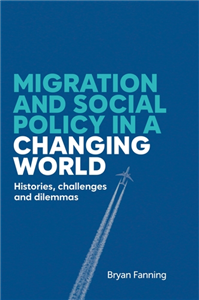
        Migration and social policy in a changing world

        Histories, challenges and dilemmas

        by Bryan Fanning

        Migration and social policy in a changing world bridges the generally separate fields of social policy and migration studies. This book traces social policy responses to migration from the Industrial Revolution to today's era of globalisation and large-scale migration. Through case studies from across the globe, the book explores key themes including rural-urban migration, social citizenship, welfare internationalism and diasporic care systems. It examines how migrants are included in or excluded from social citizenship in host societies, and how they become providers of welfare services such as health and social care. Moving beyond a methodological nationalist focus, the book investigates migrant incorporation into welfare states through family networks, faith communities, and other informal welfare structures. It combines migrants' experiences with host societies' immigration politics, institutional perspectives and policies to present a comprehensive analysis of the migration-welfare relationship. This volume fills a gap in academic literature and offers policymakers, practitioners and scholars a framework for understanding the interplay between migration and social policy in our changing world.

      • Trusted Partner
      • Trusted Partner
      • Trusted Partner
        Business, Economics & Law
        June 2025

        Foundations of social ecological economics

        The fight for revolutionary change in economic thought

        by Clive L Spash

        This book explores radical dissent from orthodox mainstream economics, and sets out a theoretically grounded vision for the emerging paradigm of social ecological economics. At the heart of this paradigmatic shift lies an acknowledgement of the inextricable embeddedness of economies in biophysical reality and social structure. The struggle for this transformative vision unfolds through a critical examination of mainstream environmental thought, followed by a nuanced evaluation of contributions from Marxists, socialists, critical institutionalists, feminists and Post-Keynesians grappling with the urgent environmental crisis. Synthesising insights from these diverse and heterodox schools, the book navigates the philosophical underpinnings of science, embracing a critical realist approach that challenges not only mainstream economic thought but also eclectic pluralism, relativism and strong constructionism. The question of what constitutes revolutionary science is explored in light of works by Kuhn, Schumpeter and Neurath, emphasising the pivotal role of values and ideology in works from Marx to Gramsci. Building on these radical and philosophical foundations, the book articulates a preanalytic vision of social ecological economics, dismantling entrenched notions of growth and efficiency in favour of a framework centered on social provisioning and needs embedded in ethics. In a thought-provoking conclusion, the book applies its analytical lens to the multiple crises of modernity within industrialised capital-accumulating economies. An agenda for social ecological transformation toward diverse alternative economies emerges, providing a compelling call to action in the face of contemporary challenges.

      Subscribe to our

      newsletter